Documents
 United States
 Lockheed Martin
AGM-158C LRASM
Long Range Anti-Ship Missile derived from the JASSM-ER airframe, built to autonomously detect and engage specific ships within a group using onboard sensors when GPS or datalink guidance is degraded or denied.
In service since 2018 · 1 operator countries
Compiled from public sources ·primary reference ↗ ·last verified 2026-07-02
370
km range
0.85
Mach
450
kg warhead
💲 ≈ $3,000,000, Approximate unit cost
Procurement snapshot
Availability & export
US ITAR-controlled
Export needs U.S. State Dept (DDTC) approval; end-use & re-transfer restrictions apply.
Channel: Foreign Military Sales (FMS) or Direct Commercial Sale
Fielded & proven
Limited · 1 operator
In service since 2018. Status: active · ~200 built.
Lifecycle cost (est.)
Unit cost known; one-shot / small-arms class has no meaningful O&S tail to model.
Interoperability
No standardised NATO calibre / datalink detected in public specs.
Derived guidance from public data, export regime by country of origin, lifecycle from the GAO ~30% acquisition rule. Verify eligibility, pricing and offsets with the manufacturer and your acquisition authority.
Full specifications
Performance
Speed, range, altitude and engagement capability.
| Max speed (Mach) Maximum speed as a multiple of the speed of sound. Mach 2+ is typical for air-superiority fighters. | 0.85 Mach |
|---|---|
| Range Maximum distance: ferry range for aircraft, operational range for vehicles, maximum engagement distance for missiles. Higher means more standoff or persistence. | 370 km |
Firepower
Armament, payload and guidance.
| Warhead Warhead mass. Heavier generally means larger effect radius, at the cost of range. | 450 kg |
|---|---|
| Warhead type Blast-fragmentation, shaped charge (HEAT), penetrator, thermobaric or nuclear-capable. | Penetrator blast fragmentation |
| Guidance How the weapon finds its target: inertial, GPS/GLONASS, active/semi-active radar, infrared, laser, TV, wire. | GPS/INS, Passive RF sensor, Imaging infrared terminal seeker |
Physical
Dimensions, weight and crew.
| Length Overall length including gun/probe where applicable. | 4.36 m |
|---|---|
| Combat weight Fully loaded weight. Lighter eases transport and bridging limits; heavier often means more armor. | 1,111 kg |
Propulsion
Engine, power and fuel.
| Propulsion type Turbofan, turboshaft, diesel, gas turbine, solid-fuel rocket, ramjet… | Turbojet with solid rocket booster |
|---|
Program
Cost, production scale and operators.
| Unit cost Approximate flyaway/unit cost where public. Defense pricing varies hugely by contract, offsets and configuration. Lower is cheaper. | $3,000,000 |
|---|---|
| Units built Total production run. Higher means proven manufacturing, mature logistics and spares availability. | 200 |
| Operator countries Number of countries operating the system. More operators means broader support ecosystem. | 1 |
Specifications compiled from public Lockheed Martin and reference sources ↗. Published defense figures are approximations, treat comparisons as directional. Last verified 2026-07-02.
Compare with rivals
See how it stacks up
Head-to-head comparisons
AGM-158C LRASM vs
Frequently asked questions
What is the range of the Lockheed Martin AGM-158C LRASM? +
The Lockheed Martin AGM-158C LRASM has a maximum range of 370 km.
How much does the Lockheed Martin AGM-158C LRASM weigh? +
The Lockheed Martin AGM-158C LRASM has a combat weight of 1,111 kg.
How many countries operate the Lockheed Martin AGM-158C LRASM? +
The Lockheed Martin AGM-158C LRASM is operated by 1 countries.
How much does the Lockheed Martin AGM-158C LRASM cost? +
The Lockheed Martin AGM-158C LRASM has an approximate unit cost of 3,000,000 USD. Defense pricing varies by contract, offsets and configuration, treat this as directional.
Similar systems
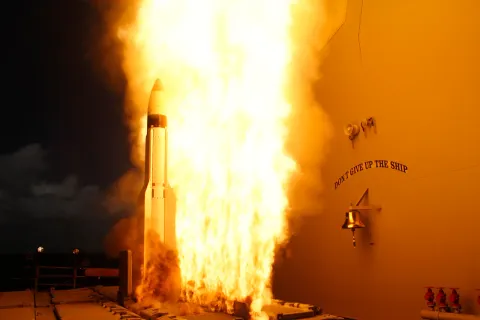
Raytheon (RTX)
SM-3 Block IIA
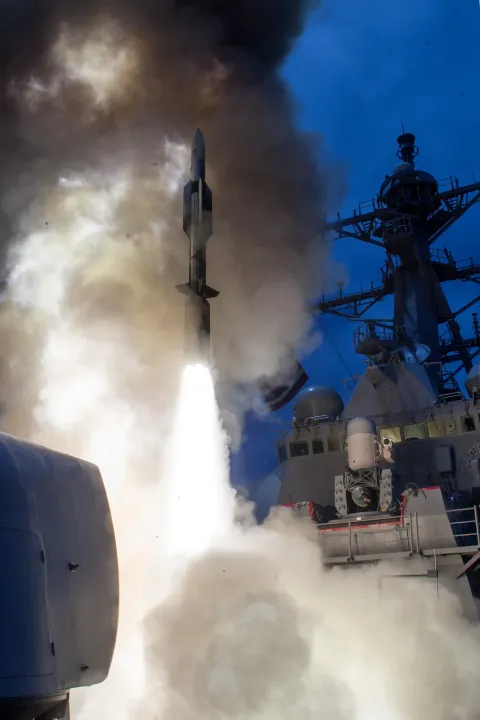
Raytheon (RTX)
SM-6
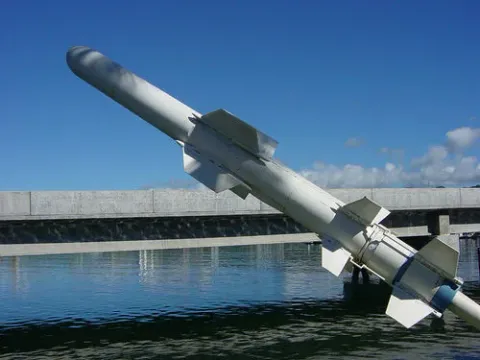
Boeing
Harpoon Block II
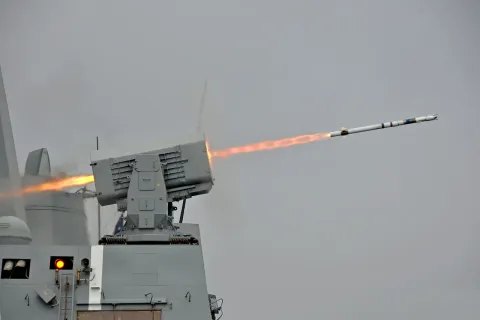
Raytheon (RTX)