Documents
 India In development
 Hindustan Aeronautics Limited
Tejas Mk2
An enlarged, more powerful evolution of the Tejas light fighter, sized between the Mk1A and a true medium fighter with a more powerful engine, greater fuel and weapons load, and canards for improved agility. It is intended to replace the Indian Air Force's aging Jaguar, Mirage 2000 and MiG-29 fleets.
Planned service entry 2027 · 0 operator countries
Compiled from public sources ·primary reference ↗ ·last verified 2026-07-02
2,120
km/h
2,500
km range
17,000
m ceiling
6,500
kg payload
1.05
T/W
Pricing: Unit cost not yet disclosed; program still in development
Procurement snapshot
Availability & export
National export licensing
Subject to India export-control approval; verify eligibility with the manufacturer.
Channel: Direct commercial / G2G
Development status
Not yet exported
Planned service entry 2027. Status: announced.
Lifecycle cost (est.)
No public unit price to model from. Why so few systems publish one →
Interoperability
No standardised NATO calibre / datalink detected in public specs.
Derived guidance from public data, export regime by country of origin, lifecycle from the GAO ~30% acquisition rule. Verify eligibility, pricing and offsets with the manufacturer and your acquisition authority.
Compatible munitions & weapons
Publicly reported weapons the Tejas Mk2 can carry. Linked items have a full spec page.


Powerplant
The Tejas Mk2's engine has its own full spec page.

Full specifications
Performance
Speed, range, altitude and engagement capability.
| Max speed Maximum level speed. For aircraft this is at optimal altitude; for ground vehicles, top road speed. Higher means faster response and better kinematic performance. | 2,120 km/h |
|---|---|
| Max speed (Mach) Maximum speed as a multiple of the speed of sound. Mach 2+ is typical for air-superiority fighters. | 1.8 Mach |
| Range Maximum distance: ferry range for aircraft, operational range for vehicles, maximum engagement distance for missiles. Higher means more standoff or persistence. | 2,500 km |
| Combat radius Distance an aircraft can fly, complete its mission and return without refueling. Roughly a third of ferry range. | 700 km |
| Service ceiling Maximum operating altitude. Higher gives energy advantage and sensor horizon. | 17,000 m |
| Thrust-to-weight Engine thrust divided by loaded weight. Above 1.0 the aircraft can accelerate going straight up. On a standalone engine record, this is the engine's own thrust divided by its dry weight, the standard figure of merit for jet engines. | 1.05 |
Firepower
Armament, payload and guidance.
| Main armament Primary weapon: main gun, cannon or missile type. | 23 mm GSh-23 twin-barrel cannon |
|---|---|
| Hardpoints External stations for weapons and pods. More means bigger and more flexible loadouts. | 11 |
| Weapons payload Maximum ordnance weight the platform can carry. Higher means more strike capacity per sortie. | 6,500 kg |
Physical
Dimensions, weight and crew.
| Length Overall length including gun/probe where applicable. | 14.6 m |
|---|---|
| Wingspan Wingtip-to-wingtip span. | 8.5 m |
| Empty weight Weight without fuel, ammunition or crew. | 7,800 kg |
| Combat weight Fully loaded weight. Lighter eases transport and bridging limits; heavier often means more armor. | 17,500 kg |
| Crew Personnel required to operate. Fewer reduces exposure; autoloaders trade a loader for mechanical complexity. | 1 |
Propulsion
Engine, power and fuel.
| Engine Powerplant model and type. | General Electric F414-INS6 afterburning turbofan |
|---|---|
| Engines Number of engines. Twin-engine gives redundancy at higher cost. | 1 |
| Thrust Total engine thrust (with afterburner where applicable). | 98 kN |
| Propulsion type Turbofan, turboshaft, diesel, gas turbine, solid-fuel rocket, ramjet… | Turbofan |
Sensors & avionics
Radar, sensor suite and datalinks.
| Radar Primary radar. AESA (active electronically scanned array) is the current state of the art. | Uttam AESA |
|---|---|
| Sensors IRST, EO/IR turrets, laser designators, sniper pods, thermal sights. | indigenous EW suite |
Program
Cost, production scale and operators.
| Units built Total production run. Higher means proven manufacturing, mature logistics and spares availability. | 0 |
|---|---|
| Operator countries Number of countries operating the system. More operators means broader support ecosystem. | 0 |
Specifications compiled from public Hindustan Aeronautics Limited and reference sources ↗. Published defense figures are approximations, treat comparisons as directional. Last verified 2026-07-02.
Compare with rivals
See how it stacks up
 Lockheed Martin F-22A Raptor
  Dassault Aviation Rafale F4
 Frequently asked questions
What is the top speed of the Hindustan Aeronautics Limited Tejas Mk2? +
The Hindustan Aeronautics Limited Tejas Mk2 has a maximum speed of 2,120 km/h.
What is the range of the Hindustan Aeronautics Limited Tejas Mk2? +
The Hindustan Aeronautics Limited Tejas Mk2 has a maximum range of 2,500 km.
What is the weapons payload of the Hindustan Aeronautics Limited Tejas Mk2? +
The Hindustan Aeronautics Limited Tejas Mk2 can carry up to 6,500 kg of weapons payload.
How much does the Hindustan Aeronautics Limited Tejas Mk2 weigh? +
The Hindustan Aeronautics Limited Tejas Mk2 has a combat weight of 17,500 kg.
How many crew does the Hindustan Aeronautics Limited Tejas Mk2 require? +
The Hindustan Aeronautics Limited Tejas Mk2 requires a crew of 1.
What is the main armament of the Hindustan Aeronautics Limited Tejas Mk2? +
The Hindustan Aeronautics Limited Tejas Mk2's primary weapon is the 23 mm GSh-23 twin-barrel cannon.
What engine does the Hindustan Aeronautics Limited Tejas Mk2 use? +
The Hindustan Aeronautics Limited Tejas Mk2 is powered by the General Electric F414-INS6 afterburning turbofan.
What is the Hindustan Aeronautics Limited Tejas Mk2 used for? +
The Hindustan Aeronautics Limited Tejas Mk2 is a fighter aircraft typically used for air superiority, multirole combat, close air support.
How many countries operate the Hindustan Aeronautics Limited Tejas Mk2? +
The Hindustan Aeronautics Limited Tejas Mk2 is operated by 0 countries.
How much does the Hindustan Aeronautics Limited Tejas Mk2 cost? +
Hindustan Aeronautics Limited Tejas Mk2: Unit cost not yet disclosed; program still in development. Defense program costs are rarely fully public and vary by contract and configuration.
Similar systems
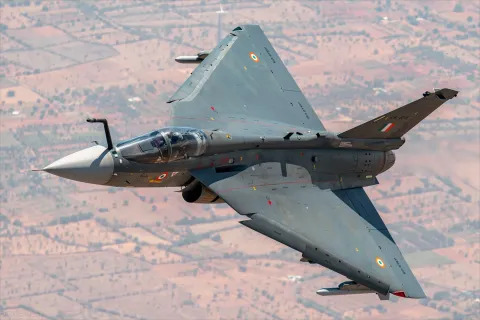
Hindustan Aeronautics Limited
Tejas Mk1A
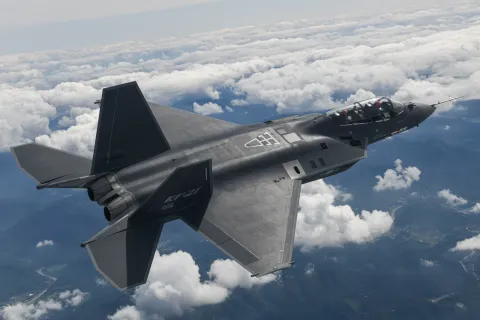
Korea Aerospace Industries (KAI)
KF-21 Boramae
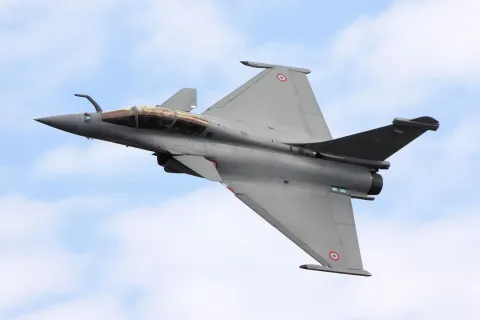
Dassault Aviation
Rafale F4
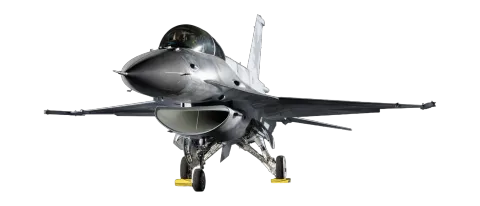
Lockheed Martin