Documents
 United States
 Lockheed Martin
F-35B Lightning II
Short take-off and vertical landing (STOVL) variant of the F-35 family, using a shaft-driven lift fan to operate from amphibious assault ships and short runways. Flown by the US Marine Corps, UK, Italy and Japan.
In service since 2015 · 7 operator countries
Compiled from public sources ·primary reference ↗ ·last verified 2026-07-02
1,930
km/h
2,220
km range
15,240
m ceiling
6,800
kg payload
0.94
T/W
💲 ≈ $109,000,000, Lot 15-17 flyaway cost, F-35B
Procurement snapshot
Availability & export
US ITAR-controlled
Export needs U.S. State Dept (DDTC) approval; end-use & re-transfer restrictions apply.
Channel: Foreign Military Sales (FMS) or Direct Commercial Sale
Fielded & proven
Established · 7 operators
In service since 2015. Status: active · ~550 built.
Lifecycle cost (est.)
$273M – $382M
Acquisition is only ~30% of lifecycle cost, operating & support dominate over ~30 yrs. Rough 2.5–3.5× the unit price. How we estimate this →
Interoperability
Derived guidance from public data, export regime by country of origin, lifecycle from the GAO ~30% acquisition rule. Verify eligibility, pricing and offsets with the manufacturer and your acquisition authority.
Compatible munitions & weapons
Publicly reported weapons the F-35B Lightning II can carry. Linked items have a full spec page.


Powerplant
The F-35B Lightning II's engine has its own full spec page.

Full specifications
Performance
Speed, range, altitude and engagement capability.
| Max speed Maximum level speed. For aircraft this is at optimal altitude; for ground vehicles, top road speed. Higher means faster response and better kinematic performance. | 1,930 km/h |
|---|---|
| Max speed (Mach) Maximum speed as a multiple of the speed of sound. Mach 2+ is typical for air-superiority fighters. | 1.6 Mach |
| Range Maximum distance: ferry range for aircraft, operational range for vehicles, maximum engagement distance for missiles. Higher means more standoff or persistence. | 2,220 km |
| Combat radius Distance an aircraft can fly, complete its mission and return without refueling. Roughly a third of ferry range. | 900 km |
| Service ceiling Maximum operating altitude. Higher gives energy advantage and sensor horizon. | 15,240 m |
| Thrust-to-weight Engine thrust divided by loaded weight. Above 1.0 the aircraft can accelerate going straight up. On a standalone engine record, this is the engine's own thrust divided by its dry weight, the standard figure of merit for jet engines. | 0.94 |
Firepower
Armament, payload and guidance.
| Main armament Primary weapon: main gun, cannon or missile type. | 25 mm GAU-22/A cannon (external gun pod) |
|---|---|
| Hardpoints External stations for weapons and pods. More means bigger and more flexible loadouts. | 8 |
| Weapons payload Maximum ordnance weight the platform can carry. Higher means more strike capacity per sortie. | 6,800 kg |
Protection
Armor, countermeasures and survivability.
| Countermeasures Self-protection: chaff, flares, DIRCM, towed decoys, smoke dischargers, jammers. | AN/ASQ-239 Barracuda EW suite, chaff, flares |
|---|---|
| Signature reduction Radar cross-section shaping, RAM coatings, IR suppression. Actual RCS values are classified. | Very low observable airframe shaping with fiber-mat RAM; internal weapons bays |
Physical
Dimensions, weight and crew.
| Length Overall length including gun/probe where applicable. | 15.67 m |
|---|---|
| Wingspan Wingtip-to-wingtip span. | 10.7 m |
| Height Overall height. Lower profile is harder to spot and hit for ground vehicles. | 4.36 m |
| Empty weight Weight without fuel, ammunition or crew. | 14,650 kg |
| Combat weight Fully loaded weight. Lighter eases transport and bridging limits; heavier often means more armor. | 22,700 kg |
| Crew Personnel required to operate. Fewer reduces exposure; autoloaders trade a loader for mechanical complexity. | 1 |
Propulsion
Engine, power and fuel.
| Engine Powerplant model and type. | Pratt & Whitney F135-PW-600 afterburning turbofan with lift fan |
|---|---|
| Engines Number of engines. Twin-engine gives redundancy at higher cost. | 1 |
| Thrust Total engine thrust (with afterburner where applicable). | 178 kN |
| Fuel capacity Internal fuel volume. | 6,032 L |
| Propulsion type Turbofan, turboshaft, diesel, gas turbine, solid-fuel rocket, ramjet… | Turbofan (STOVL, shaft-driven lift fan) |
Sensors & avionics
Radar, sensor suite and datalinks.
| Radar Primary radar. AESA (active electronically scanned array) is the current state of the art. | AN/APG-81 AESA |
|---|---|
| Sensors IRST, EO/IR turrets, laser designators, sniper pods, thermal sights. | AN/AAQ-40 EOTS, AN/AAQ-37 DAS 360° IR, helmet-mounted display |
| Datalink Network connectivity: Link 16, MADL, national datalinks. Enables cooperative engagement. | MADL, Link 16 |
Program
Cost, production scale and operators.
| Unit cost Approximate flyaway/unit cost where public. Defense pricing varies hugely by contract, offsets and configuration. Lower is cheaper. | $109,000,000 |
|---|---|
| Units built Total production run. Higher means proven manufacturing, mature logistics and spares availability. | 550 |
| Operator countries Number of countries operating the system. More operators means broader support ecosystem. | 7 |
Specifications compiled from public Lockheed Martin and reference sources ↗. Published defense figures are approximations, treat comparisons as directional. Last verified 2026-07-02.
Compare with rivals
See how it stacks up
 Dassault Aviation Rafale F4
 Frequently asked questions
What is the top speed of the Lockheed Martin F-35B Lightning II? +
The Lockheed Martin F-35B Lightning II has a maximum speed of 1,930 km/h.
What is the range of the Lockheed Martin F-35B Lightning II? +
The Lockheed Martin F-35B Lightning II has a maximum range of 2,220 km.
What is the weapons payload of the Lockheed Martin F-35B Lightning II? +
The Lockheed Martin F-35B Lightning II can carry up to 6,800 kg of weapons payload.
How much does the Lockheed Martin F-35B Lightning II weigh? +
The Lockheed Martin F-35B Lightning II has a combat weight of 22,700 kg.
How many crew does the Lockheed Martin F-35B Lightning II require? +
The Lockheed Martin F-35B Lightning II requires a crew of 1.
What is the main armament of the Lockheed Martin F-35B Lightning II? +
The Lockheed Martin F-35B Lightning II's primary weapon is the 25 mm GAU-22/A cannon (external gun pod).
What engine does the Lockheed Martin F-35B Lightning II use? +
The Lockheed Martin F-35B Lightning II is powered by the Pratt & Whitney F135-PW-600 afterburning turbofan with lift fan.
What is the Lockheed Martin F-35B Lightning II used for? +
The Lockheed Martin F-35B Lightning II is a fighter aircraft typically used for multirole combat, air superiority, close air support, isr.
How many countries operate the Lockheed Martin F-35B Lightning II? +
The Lockheed Martin F-35B Lightning II is operated by 7 countries.
How much does the Lockheed Martin F-35B Lightning II cost? +
The Lockheed Martin F-35B Lightning II has an approximate unit cost of 109,000,000 USD. Defense pricing varies by contract, offsets and configuration, treat this as directional.
Similar systems
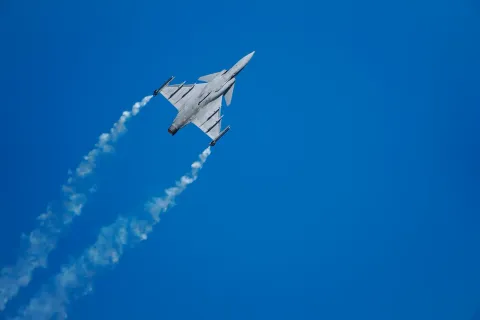
Saab AB
JAS 39E Gripen
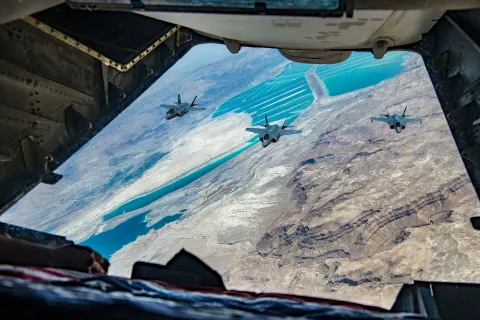
Lockheed Martin
F-35A Lightning II
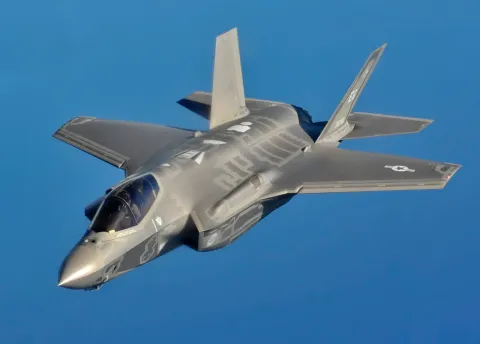
Lockheed Martin
F-35C Lightning II
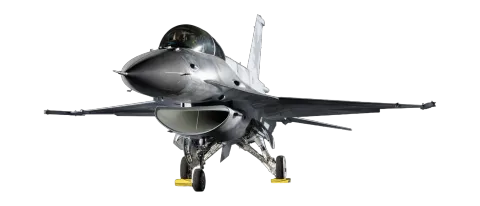
Lockheed Martin
F-16C Block 70/72 Fighting Falcon
Related coverage
F-35B Lightning II in the news
 News
News procurement · Jul 25, 2026
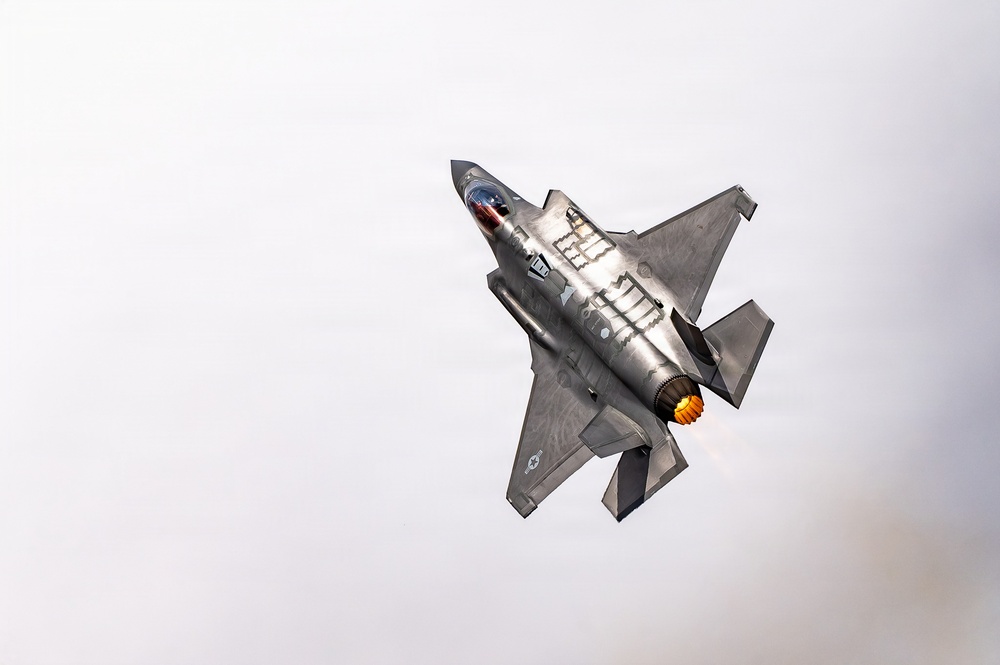
Pentagon Awards Record $1.6B F-35 Spare-Parts Deal
A $1.6B order, the biggest in F-35 history, restocks the global spares pool as the Pentagon doubles down on fleet readiness.
 News
News procurement · Jul 7, 2026
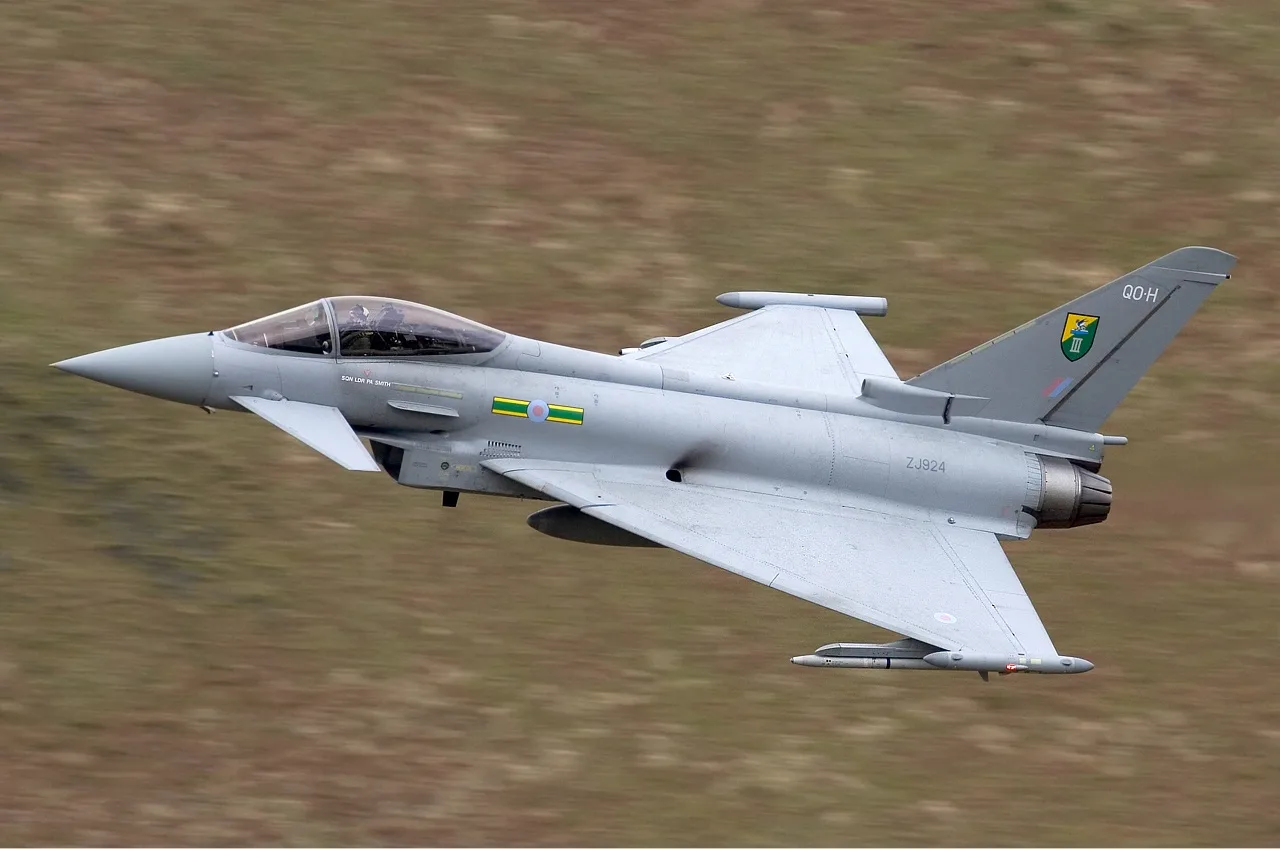
UK Commits £298B to Defense, Doubling Munitions Output by Decade
Britain announces major military overhaul with £15B new funding, targeting 16-fold shell production and hypersonic missiles by the 2030s.