Golden Dome Needs 7,800 Satellites to Stop 10 Missiles
The Pentagon calls Golden Dome's latest test a success. The CBO's own math says its space layer needs 7,800 satellites to stop just 10 missiles.

Ralph Scott, Missile Defense Agency/U.S. Department of Defense, public domain, via Wikimedia Commons
Golden Dome’s program director announced on August 11 that the system had just passed “the most complex integrated missile defense test” the country has run, and that digging had started on a first operational site in Virginia. That is a real milestone. It is also not the number that decides whether Golden Dome works: the Congressional Budget Office’s own cost analysis of the program, released in May 2026, found that the system’s space-based interceptor layer needs 7,800 satellites simultaneously in orbit, roughly 30,000 built over 20 years once replacement cycles are counted, to have a shot at stopping a single wave of just 10 ICBMs from a regional adversary like North Korea or Iran.
What did Golden Dome actually test on August 11?
Gen. Michael Guetlein, the Space Force officer directing the program, told reporters the two recent tests linked command and control, a sensor network, and interceptors against realistic threat profiles, and did it fast.
“A whole host of other agencies all came together in less than six months, starting from scratch, and delivered what I will argue is the most complex integrated missile defense test that we had pulled off as a nation,” said Gen. Michael Guetlein, Golden Dome program director, U.S. Space Force (Aerospace America, Aug. 11, 2026).
He said the tests “demonstrated that the capabilities that we are putting together, both command and control, our sensor network and our effectors, are going to be effective against the threats as they are currently designed,” and announced the program’s first operational site at Fort Story, Virginia: “We are digging dirt around the homeland.” He declined to name additional sites or say how many are planned. The stated target is operational status by 2028, timed to the end of Trump’s term in early 2029.
What that milestone confirms is integration: sensors, command systems, and interceptors can talk to each other and hand off a track. What it says nothing about is scale, and scale is where the space layer’s entire cost and feasibility problem lives.
Why does stopping 10 missiles need 7,800 satellites?
CBO’s May 2026 estimate prices a notional 20-year national missile defense architecture at $1.191 trillion. The space-based interceptor (SBI) layer alone accounts for $743 billion of that, or 62.4% of the total, more than every ground radar, command system, and terminal interceptor battery in the rest of the architecture combined.
One layer, the one made of satellites that don't exist yet, costs more than every ground radar, command system, and terminal interceptor battery in the architecture put together.
The reason the SBI layer needs so many satellites comes down to orbital mechanics, not engineering ambition. A satellite in low Earth orbit, the 300-500 km altitude band CBO’s architecture assumes, circles the planet roughly every 90 minutes. At any given moment, almost the entire constellation is somewhere over open ocean or a continent with nothing to intercept. AEI senior fellow Todd Harrison has summed up the underlying constraint bluntly: it is “not a technical problem, it’s a physics problem,” a matter of how much of a constellation is out of position at any instant rather than how good any single satellite is. Victoria Samson, chief director of space security and stability at the Secure World Foundation, calls the resulting math “a numbers game.” Harrison has separately estimated that roughly 1,900 interceptors would be needed just for continuous coverage of every point on Earth with an average of two interceptors in range, a different and smaller calculation than CBO’s 7,800, worth distinguishing since the two numbers answer different questions: general global coverage versus enough interceptors reliably in position to defeat one specific 10-missile wave.
At full 7,800-satellite strength, CBO’s architecture could engage 10 targets simultaneously. That number is the whole ballgame: this layer is built to defeat a single wave of ICBMs from a regional adversary such as North Korea or Iran, not a war with a peer nuclear power fielding hundreds of warheads. Because atmospheric drag forces each satellite to be replaced roughly every five years, sustaining that 7,800-satellite constellation for 20 years means building close to 30,000 total units, at an estimated $22 million average cost per satellite.
What does the US already have that comes close?
Nothing built at this scale exists in the US inventory today, and our analysis of WeaponSpecs’ own database shows how far the current baseline sits from what Golden Dome’s architecture requires.
| System | Domain | Engagement envelope | Unit / program cost | Scale fielded |
|---|---|---|---|---|
| SM-3 Block IIA | Exo-atmospheric midcourse | 2,500 km, Mach 13.5 | $28M per missile | 250 built, 2 operator nations |
| SM-6 | Terminal / upper atmosphere | 240 km | $4.3M per missile | 500 built, 5 operator nations |
| THAAD | Terminal, high-altitude | 200 km range, Mach 8.24 | $1B per battery | 5 operator nations |
| Patriot PAC-3 | Terminal | 60 km range | $1.1B per battery | 19 operator nations |
| Golden Dome SBI layer (CBO notional) | Boost-phase, space-based, LEO | Engages 10 targets simultaneously at full strength | $22M average per satellite | Zero fielded; ~30,000 needed over 20 years |
The SM-3 Block IIA is the only column that maps directly onto what a space-based interceptor has to do: hit a target outside the atmosphere, at speed, on the first try. It has been in production since around 2018 and has reached roughly 250 units built. Golden Dome’s own math calls for something on the order of 120 times that many satellites, close to 30,000, over a comparable 20-year window. The two production runs aren’t on identical timelines, 250 over roughly eight years versus 30,000 over 20, so a single clean multiplier would overstate precision the underlying numbers don’t have. But even generously adjusted for the longer window, the gap lands in the range of a hundred-fold increase in production tempo for a weapon class the US has never built at anything close to that scale. THAAD and Patriot, priced by the battery rather than the interceptor, show the same pattern from a different angle: even a system fielded across nineteen countries still counts its cost in single-digit billions per battery, not hundreds of billions per layer.
Why do the administration and the CBO disagree by $1 trillion?
There’s a live, unresolved fight over what Golden Dome even costs. Trump put the figure at $175 billion in May 2025, for capability he said would arrive “in less than three years.” Guetlein later projected $185 billion in the program’s 2027 budget submission. CBO’s own comparison states plainly that those administration figures likely reflect a shorter time frame and a narrower scope of activities than the full 20-year notional architecture CBO priced at $1.191 trillion. That’s roughly a six- to seven-fold gap, and it deserves a sentence, not a full derail: these are competing estimates of different things, not two sides pricing the same program and landing a trillion dollars apart.
The honest scope point
CBO’s report closes with a line worth keeping in view every time a test announcement reads like a finished product: “Although the notional NMD system analyzed by CBO would be far more capable than defenses the United States fields today, it would not be an impenetrable shield.” Even fully built, at 7,800 satellites and $743 billion for that one layer, the system prices out a defense against 10 missiles from a minor nuclear actor. It does not price out, and was never meant to price out, a war with Russia or China.
That gap between “successful integrated test” and “operational shield” is exactly the one covered in our own look at how few ICBMs have ever flown their claimed max range: missile defense claims and missile capability claims both tend to outrun what’s actually been demonstrated at scale. For where fielded interceptors stand today, see our ranking of today’s fielded ballistic missile defense systems and the broader air-defense systems category.
Sources
- Guetlein: Golden Dome has 'first operational site' and completed two tests (Aerospace America, Aug 11, 2026)
- 7,800 Interceptors In Space At Core Of $1.2 Trillion Golden Dome Cost Estimate (TWZ)
- How Golden Dome's Space-Based Missile Interceptors Would Work (Scientific American)
- Trump's 'Golden Dome' Defense System: Estimates Vary Between $175B & $1.2T (Military.com)
Systems in this comparison
Every system covered above, with its photo and, where available, a video. Tap a card to open the full spec sheet.
Compare these side by side →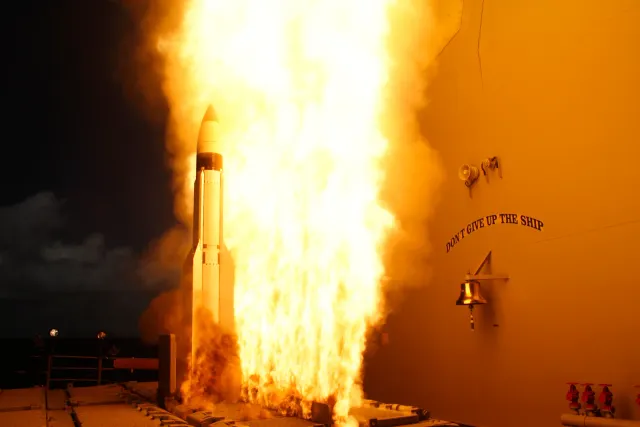
Missile
SM-3 Block IIA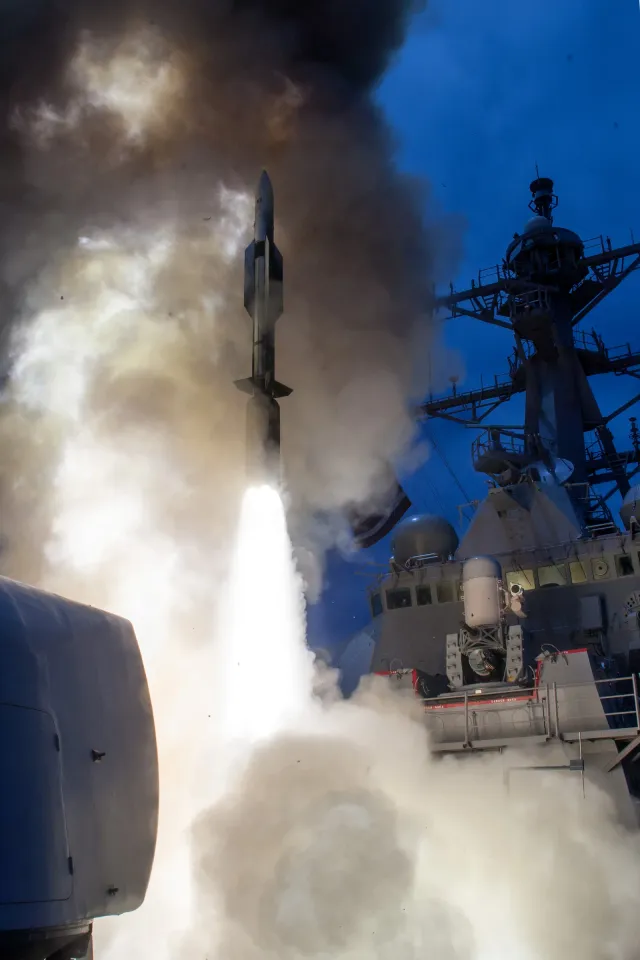

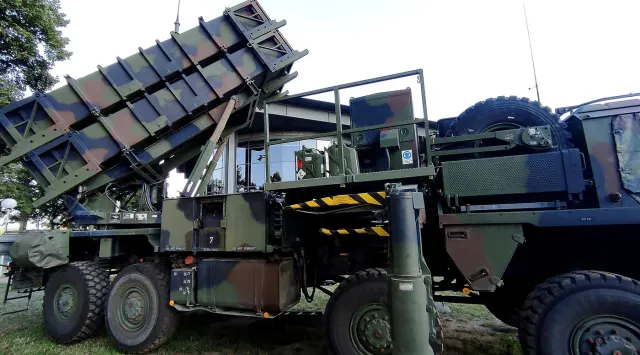
Air defense system
Patriot PAC-3Frequently asked questions
What exactly did Golden Dome test on August 11, 2026? +
Space Force Gen. Michael Guetlein, the program's director, announced two completed tests that linked command and control, a sensor network, and interceptors ('effectors') against realistic threat profiles, plus a first operational site at Fort Story, Virginia. He called it the most complex integrated missile defense test the country has run. The tests validated system integration, not the space-based interceptor layer's full-scale production or coverage, which remains years away.
Why would stopping just 10 missiles require 7,800 satellites in orbit? +
It comes down to orbital mechanics. A satellite in low Earth orbit circles the planet roughly every 90 minutes, so at any given moment almost the entire constellation is somewhere over an ocean or a continent with no threat to intercept. The Congressional Budget Office's May 2026 cost estimate found that guaranteeing enough interceptors are positioned to engage a wave of 10 ICBMs from a regional actor requires 7,800 satellites simultaneously on orbit, at an estimated $743 billion for that single layer.
What's the closest thing the US has fielded to a Golden Dome space interceptor today? +
The Navy's SM-3 Block IIA, the only US interceptor built to hit a target outside the atmosphere. It has been in service since around 2018 and roughly 250 have been built at about $27.9 million each. Golden Dome's own CBO-costed architecture would need on the order of 30,000 space-based interceptors built over 20 years, a gap of roughly two orders of magnitude from anything the US has actually produced at scale.
Why is there a roughly $1 trillion gap between the administration's Golden Dome estimate and the CBO's? +
President Trump cited $175 billion in May 2025, and Golden Dome director Gen. Guetlein later projected $185 billion in the 2027 budget submission. The Congressional Budget Office priced a full 20-year notional national missile defense architecture at $1.191 trillion. CBO itself states the administration's figures likely reflect a shorter time frame and a narrower scope of activities than what CBO analyzed, not a disagreement over the same program.
Would Golden Dome actually stop a Russian or Chinese missile attack? +
No, and the CBO's own analysis does not claim it would. The 7,800-satellite space-based interceptor layer is scoped to defend against a single wave of about 10 ICBMs from a regional adversary such as North Korea or Iran, not the hundreds of warheads a peer nuclear power like Russia or China could launch. CBO's report states plainly that even the full notional system 'would not be an impenetrable shield.'
Related reading


