The 10 Best Ballistic Missile Defense Systems 2026
A 10-to-1 countdown of the best ballistic missile defense systems of 2026, ranked on real intercept record, envelope, export scale and maturity.

Lupus in Saxonia, CC BY-SA 4.0
Iran fired roughly 550 ballistic missiles at Israel during the 12-day war in June 2025. The layered defense, Arrow, David’s Sling, THAAD and Patriot working together, stopped about 86 percent of them. The cost of that success is the real story: the United States alone expended more than 150 THAAD interceptors defending Israel, close to a quarter of its entire stockpile and more than a full year of production, in less than two weeks. The system that tops this list isn’t the one that flies highest. Patriot PAC-3 engages at just 24 kilometers, lower than every system ranked above sixth place, and barely a tenth of THAAD’s ceiling. It ranks first because in a saturation fight, the interceptor you can build, export and resupply at scale beats the one that merely reaches higher.
We ranked ten ballistic missile defense systems from 10 down to 1 on four criteria, in this priority order: real intercept and operational record, and its consequence (a documented combat intercept beats a claimed capability, and we say plainly when a record is thin or state-sourced), engagement envelope and strategic role (exo-atmospheric midcourse versus endo-atmospheric terminal versus point defense), production and export scale, and program maturity. Every Russian and Chinese figure below is flagged as an unverified claim. Photos and full spec sheets for every system on this list are in the gallery below the article.
Key takeaways:
- The top-ranked Patriot PAC-3 engages at just 24 km, the lowest engagement altitude of any system in the top six on this list.
- Iran fired roughly 550 ballistic missiles at Israel in the June 2025 war, and the layered defense stopped about 86 percent of them.
- The United States expended more than 150 THAAD interceptors in that 12-day war, close to a quarter of its stockpile and more than a year of production.
- Russia’s S-500 claims a 200 km engagement altitude, the highest figure on this list, with zero confirmed real-world ballistic intercepts.
- Israel’s Arrow-2 achieved history’s first exo-atmospheric combat intercept on 31 October 2023, nine days before Arrow-3 recorded its own first intercept.
How we ranked them
- Real intercept and operational record, and its consequence. A documented ballistic-missile intercept in combat beats a claimed capability. We weight this most heavily, and say plainly when a record is thin or entirely state-sourced.
- Engagement envelope and strategic role. Exo-atmospheric midcourse versus endo-atmospheric terminal versus point defense, upper-tier versus lower-tier.
- Production and export scale. How many were built, how widely fielded, how sustainable the interceptor supply actually is.
- Program maturity. Fielded and combat-proven at scale, or still in controlled trials.
10. HQ-19 

China’s exo-atmospheric, hit-to-kill midcourse interceptor, roughly the country’s analog to THAAD or the American SM-3, designed to destroy medium- and intermediate-range ballistic missiles outside the atmosphere. It doubles as an anti-satellite weapon. China’s Ministry of Defense certified its performance in a controlled test as early as February 2021, but the system wasn’t publicly unveiled until the Zhuhai Airshow in November 2024, a decade after its first known intercept trials. It has never been used in combat, and every figure attached to it, the target-range class, the altitude, the claim that it “entered limited service around 2018,” is an unverified Chinese state figure.
Advantages: a genuine exo-atmospheric hit-to-kill design with anti-satellite potential; a large associated phased-array radar; part of a serious, funded Chinese midcourse-defense program tested repeatedly since the 2010s.
Disadvantages: zero combat data of any kind; every specification is an unverified state claim, the least transparent entry on this list; no published simultaneous-target or intercept-speed figures at all; a single operator.
China unveiled the HQ-19 to the public for the first time only in November 2024, at a trade show, a full decade after its first intercept tests. The most-hyped Chinese interceptor of the 2020s is still known almost entirely from that reveal and a one-line 2021 certification, not from any battlefield.
9. S-500 Prometheus 

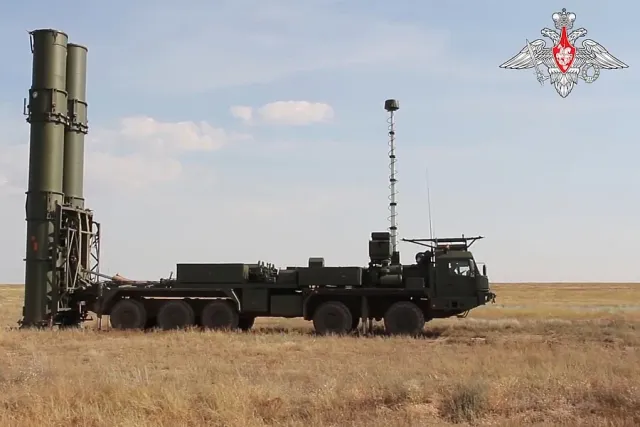
Russia’s newest air-defense generation, in service in small numbers since September 2021, marketed as able to intercept hypersonic weapons and exo-atmospheric ballistic and space targets. Its claimed 200-kilometer engagement altitude is the highest figure on this entire list. There is no confirmed real-world ballistic-missile intercept by an S-500. Russia has reportedly deployed batteries to Crimea, widely read as protecting the Kerch Bridge rather than any demonstrated intercept, and open-source analysis of that deployment remains unverified. Treat every number attached to this system as a Russian state claim until an actual engagement proves otherwise.
Advantages: the most ambitious claimed envelope on this list, exo-atmospheric, anti-hypersonic and anti-satellite in one system; the newest generation of Russian interceptor design.
Disadvantages: essentially no combat exposure of any kind; tiny fielded numbers; every performance figure is an unverified Russian claim; strategic ambition far ahead of any demonstrated result.
Russia reportedly moved S-500 batteries to Crimea to shield the Kerch Bridge, a defensive posture that says more about what Moscow fears losing than about any missile the system has actually stopped.
8. S-300V4

Russia’s dedicated Army theater anti-ballistic-missile design, descended from the Antey-2500 lineage, purpose-built to engage ballistic missiles and high-value airborne targets like AWACS aircraft, a genuinely different design brief than the more famous S-400. It has real deployment in the Russia-Ukraine war, but no independently confirmed ballistic-missile intercept, its documented combat role there is general area air defense, not proven anti-ballistic work. On paper it’s the most BMD-focused Russian system on this list. In practice, Moscow reaches for the more numerous S-400 whenever it wants to advertise an anti-missile shield.
Advantages: the most BMD-dedicated Russian design of the three ranked here; long claimed reach against both ballistic and airborne early-warning targets.
Disadvantages: no confirmed ballistic intercept of any kind; every figure is an unverified state claim; smaller numbers and less export reach than the S-400.
The system Russia built specifically to kill ballistic missiles stays in the shadow of the one it built to kill aircraft. The S-400 gets the marketing. The S-300V4 has the actual anti-ballistic design brief and a thinner public record to show for it.
7. S-400 Triumf

Russia’s flagship long-range surface-to-air system, exported to China, India and Turkey, the Turkish purchase alone triggered US sanctions under CAATSA and Turkey’s removal from the F-35 program, a real measure of how seriously the West treats the sale even without an equally serious anti-ballistic record. It’s marketed with a claimed 400-kilometer reach and a layered anti-ballistic capability. Its 40N6 interceptor has only been tested against maneuvering targets in the Mach 8 class in controlled trials, and there is no confirmed real-world ballistic-missile intercept. Russia claimed its first intercepts of US-made ATACMS in November 2025, entirely Russian Ministry of Defence-sourced and unverified. The most widely fielded S-400 interceptor also carries a fragmentation warhead rather than a hit-to-kill design, a real limitation against a ballistic warhead. And the system’s own reputation has taken hits literally, S-400 launchers and radars have been documented destroyed in occupied Crimea by ATACMS and drone strikes.
Advantages: the most widely fielded and exported system on this list after the Patriot; a genuine long-range anti-aircraft and anti-cruise-missile combat record; powerful associated phased-array radars.
Disadvantages: no confirmed real-world ballistic intercept; a fragmentation-warhead limitation on its most common interceptor; documented combat losses have dented its “invulnerable shield” marketing; every headline performance figure is an unverified claim.
The S-400’s most-documented appearances in this war aren’t intercepts, they’re wreckage, launchers and radars filmed burning in Crimea after ATACMS and drone strikes, the exact reversal of the invulnerable-shield image its export brochure sells.
6. SAMP/T (Aster 30) 

The only fully autonomous air-and-missile-defense system built in Europe, jointly developed by France and Italy. One battery reached Ukraine in early 2023, a deployment French President Emmanuel Macron announced on 20 June 2023. French officials have said SAMP/T intercepted a Kh-47M2 Kinzhal and Iskander ballistic missiles over Ukraine, and claimed it performs better than the Patriot against some modified ballistic threats, real claims, but French-official ones, not independently confirmed the way the Patriot’s own Kinzhal intercept was. The baseline system’s anti-ballistic ceiling is limited to roughly 20 kilometers, and the genuinely ballistic-optimized SAMP/T NG variant only began combat testing in Ukraine in 2026.
Advantages: Europe’s only sovereign ballistic-missile-defense-capable system; a multi-target Aster 30 interceptor with active radar homing; real deployment in a peer war; Ukraine is gaining license production.
Disadvantages: a thin, partly French-claimed ballistic-intercept record; a modest ceiling in baseline form; only two batteries deployed to Ukraine; the genuinely anti-ballistic NG variant is still in trials.
SAMP/T is the system Europe points to when it argues it can defend itself without Washington, and yet its clearest anti-ballistic proof still comes from a French general’s word, with the truly ballistic-optimized version only entering combat testing in 2026.
5. David’s Sling 

Israel’s medium-tier layer, developed by Rafael and Raytheon, built around the Stunner hit-to-kill interceptor, which carries no warhead of its own, paired with the ELM-2084 radar that can guide up to 16 interceptors at once. Its first operational intercept came on 10 May 2023, against a Badr-3 long-range rocket aimed at Tel Aviv from Gaza, a rocket kill, not yet a ballistic one. It was used again during Iran’s October 2024 strikes, but David’s Sling didn’t record its first confirmed ballistic-missile intercept until June 2025, during the 12-day war, more than a decade after the system first went operational. For most of its service life it sat between Iron Dome’s rocket work and Arrow’s exo-atmospheric intercepts. The 2025 war finally gave it a genuine ballistic kill of its own.
Advantages: a combat-proven Stunner hit-to-kill interceptor with a dual electro-optical and radar seeker; a cheaper interceptor, roughly $1 million, than the Arrow family; a real and expanding intercept record from 2023 through 2025.
Disadvantages: the lowest engagement altitude on this list at 15 kilometers, a middle-tier system, not an exo-atmospheric one; its confirmed ballistic intercept is only as recent as June 2025.
For years David’s Sling was Israel’s least-fired layer. The June 2025 war turned it into a front-line workhorse and finally gave it its first ballistic-missile kill, a decade after the system first went operational.
4. Arrow-2

Israel’s older, endo-atmospheric ballistic interceptor, armed with a fragmentation warhead rather than a hit-to-kill design, operational since 2000 and the direct predecessor to Arrow-3. On 31 October 2023, an Arrow-2 achieved history’s first exo-atmospheric combat intercept, destroying a long-range ballistic missile fired by the Houthis before its own successor, Arrow-3, recorded its first intercept nine days later. Some coverage called it “the first instance of space warfare,” striking framing worth noting honestly as media language rather than a formal military category, but the underlying fact, the first missile to kill another missile above the atmosphere in actual combat, is real and independently reported.
Advantages: a genuine historic first, the first ballistic-missile intercept above the atmosphere in combat; a mature, two-decade-old dedicated interceptor; part of Israel’s proven layered shield.
Disadvantages: an older fragmentation-warhead design rather than hit-to-kill; a lower ceiling than Arrow-3; being progressively superseded by its successor as Israel’s top tier.
On 31 October 2023, an Arrow-2 reached above the atmosphere to destroy a Houthi missile, the first time in history one missile killed another in space, and it was the older, supposedly lesser Arrow that did it, nine days before its exo-atmospheric successor got its own first shot.
3. Arrow-3

Israel’s exo-atmospheric top tier, jointly developed with the United States, a hit-to-kill interceptor built to destroy ballistic missiles above the atmosphere, including in space. Its first operational intercept came 9 November 2023 against a Houthi missile headed toward Eilat, and it saw further combat use during Iran’s “True Promise” strikes in April 2024 and twice more against Houthi launches on 14 and 28 September 2024. Germany’s 2023 purchase was Arrow-3’s first export sale. The June 2025 war put real strain on the program, reporting by mid-2025 indicated Israel was running low on Arrow interceptors by the war’s end, an availability problem, not a capability one, but a real constraint all the same.
Advantages: a genuine exo-atmospheric hit-to-kill capability with a real 2023 to 2025 intercept record; the widest ballistic-target envelope of any Israeli tier; a first export sale to Germany broadening its base beyond a single operator.
Disadvantages: very expensive interceptors, likely $2 to 3 million or more each, and a thin magazine depth exposed in June 2025; a single primary operator until the German deal closes; its published target-range figure is a target-class rating, not the interceptor’s own reach, and is easy to misread as the latter.
Arrow-3 spent a decade as a deterrent that had never fired in anger. Between November 2023 and June 2025 it went from unproven to Israel’s most relied-upon exo-atmospheric shield, and by the end of the 12-day war, to a system its own operators were reportedly rationing round by round.
2. THAAD 

The US upper-tier terminal interceptor, hit-to-kill with no warhead of its own, paired with the AN/TPY-2 X-band radar that can track warheads roughly 1,000 kilometers out and cue an entire theater’s defenses. A single battery holds 48 ready interceptors. THAAD’s first-ever combat intercept wasn’t American: the United Arab Emirates used its own battery to destroy a Houthi medium-range ballistic missile near Al-Dhafra Air Base on 17 January 2022, the system’s first operational use by any nation. The US Army’s own first combat use didn’t come until December 2024, defending Israel. THAAD has intercepted roughly six to seven Houthi ballistic missiles defending Israel across 2024 and 2025, but its record isn’t perfect, THAAD and Arrow together failed to stop Houthi missiles that struck near Ben Gurion Airport on 4 and again on 9 May 2025. The June 2025 war defined the system’s real limit: the US fired more than 150 THAAD interceptors in 12 days, roughly a quarter of its entire stockpile and more than a full year of production.
“You know, it used to be that they said you couldn’t hit a bullet with a bullet. Now we’re doing it so frequently, we’re afraid we don’t have enough of them,” said Tom Karako, director of the Missile Defense Project at CSIS, Breaking Defense, December 18, 2025.
Advantages: the most capable dedicated exo and high-endo-atmospheric terminal interceptor on this list; a theater-wide AN/TPY-2 radar; a combat-proven record across two operators; genuine strategic-tier significance.
Disadvantages: documented misses in May 2025; a catastrophic magazine-depth and production problem exposed by the June 2025 war; extremely expensive at roughly $12.7 million per interceptor; a tiny operator and export base.
THAAD spent 15 years as the interceptor that had never been fired in combat, then in a single 12-day war the US burned through more of them than its factories build in a year. The most capable terminal-tier system on this list met its real limit not in accuracy, but in inventory.
1. Patriot PAC-3

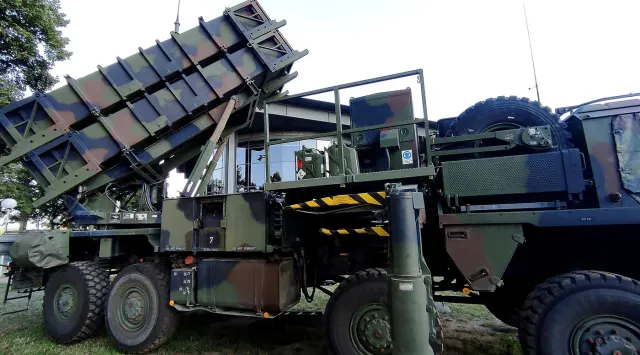
The US Army’s primary mobile air-and-missile-defense system, with the PAC-3 MSE interceptor flying hit-to-kill, operated by roughly 20 nations, by far the widest base of any system on this list. It has the deepest real ballistic-intercept record here too: Saudi Arabia and the UAE have used Patriot against Houthi ballistic missiles since 2015, and Ukraine has used it against Russian ballistics since 2023. Some of that record needs a caveat. The often-cited Saudi figure of 300-plus intercepts at a 90-percent-plus success rate is a Saudi and consultancy-sourced claim, independent analysis of the same conflict has found real Patriot effectiveness against Houthi ballistic missiles considerably lower, treat the headline number skeptically. Ukraine’s record is better documented: on 4 May 2023, a Ukrainian Patriot crew shot down a Kh-47M2 Kinzhal, an air-launched, maneuvering ballistic missile that Russia had marketed as unstoppable and that Western coverage often labels hypersonic, confirmed independently by both Ukraine’s Air Force and the Pentagon. Russia claimed days later that a Kinzhal strike had destroyed five Patriot launchers, a Russian claim; a US official at the time said the battery was likely damaged, not destroyed. A separate, widely reported Ukrainian claim that a single Patriot crew downed five Russian aircraft near Bryansk on 13 May 2023 is real and photographed, but it’s an anti-aircraft feat, not a ballistic-missile-defense data point, worth noting for lethality, not for this list’s actual subject.
Advantages: the deepest and broadest real ballistic-intercept record of any system here, across three separate conflicts; by far the widest production and export base at roughly 20 operators, the decisive magazine-depth and logistics advantage the 2025 war proved matters most; a combat-proven hit-to-kill PAC-3 MSE interceptor in continuous production.
Disadvantages: the lowest genuine ballistic-defense envelope on this list, a 24-kilometer ceiling and 60-kilometer range, a lower-tier terminal system, not an exo-atmospheric one; interceptor inventories deplete fast under saturation, as Ukraine’s 2025 experience showed; its most-cited success figures, the Saudi numbers especially, are inflated state and consultancy claims.
Two systems on this list have actually stopped ballistic missiles in three different wars, and Patriot is the one with the wider margin. It flies lower than almost anything ranked beneath it, but in a form of warfare where the shield runs out of interceptors before the enemy runs out of missiles, the one you can build, export and resupply at scale beats the one that merely reaches higher. That’s why the lowest-flying genuine interceptor on this list tops it.
The 2026 ranking at a glance
| Rank | System | Origin | Tier / role | Max altitude | Intercept speed | Real ballistic-intercept record |
|---|---|---|---|---|---|---|
| 1 | Patriot PAC-3 | United States | Lower-tier terminal, hit-to-kill | 24 km | Mach 5 | Saudi/UAE vs Houthi since 2015; Ukraine 2023 Kinzhal intercept; ~20 operators |
| 2 | THAAD | United States | Upper-tier terminal, hit-to-kill | 150 km | Mach 8 | UAE 2022 (first-ever), US/Israel 2024-25, June 2025 war |
| 3 | Arrow-3 | Israel | Exo-atmospheric, hit-to-kill | 100 km | Mach 9 | Nov 2023, Apr & Sept 2024, June 2025 |
| 4 | Arrow-2 | Israel | Endo-atmospheric, fragmentation | 51 km | Mach 9 | 31 Oct 2023, first exo-atmospheric combat intercept ever |
| 5 | David’s Sling | Israel | Medium-tier, hit-to-kill | 15 km | Mach 8 | Rockets since 2023; first ballistic intercept June 2025 |
| 6 | SAMP/T (Aster 30) | France / Italy | Endo-atmospheric area defense | 20 km | Mach 5 | Ukraine since 2023; ballistic intercepts French-claimed |
| 7 | S-400 Triumf | Russia | Long-range SAM, claimed ABM role | 30 km* | Mach 14* | None confirmed; 2025 ATACMS claims unverified |
| 8 | S-300V4 | Russia | Dedicated theater ABM design | 30 km* | Mach 8* | None confirmed |
| 9 | S-500 Prometheus | Russia | Exo-atmospheric, claimed | 200 km* | Mach 16* | None confirmed |
| 10 | HQ-19 | China | Exo-atmospheric, hit-to-kill | 150 km* | not published | None; controlled trials only |
*Russian or Chinese state/manufacturer figure, not independently verified. Arrow-3's and HQ-19's published range figures denote the class of ballistic target they're built to engage, not the interceptor's own flight range.
The number-one system here, the Patriot PAC-3, engages at just 24 km, lower than every system ranked above sixth place and barely a tenth of THAAD's ceiling. The two tallest bars on the chart, Russia's S-500 at a claimed 200 km and China's HQ-19 at 150 km, both rank in the bottom two, because neither has ever confirmed a single real-world ballistic-missile intercept. Altitude describes the tier a system defends, not how well it has actually defended it.
The bottom line
No system on this list wins on every axis. Patriot leads on record and production scale, THAAD and Arrow-3 lead on envelope and per-shot capability, and all four Russian and Chinese systems lead only on claimed numbers with no confirmed real-world ballistic intercept behind them. Run any two of these systems head-to-head in the comparison tool, browse the full air-defense category for every system in the database, or use the advisor to weigh envelope against record against magazine depth for your own scenario. For more rankings like this, see the rest of the WeaponSpecs articles, including our recent countdowns of the best main battle tanks, best anti-tank guided missiles and best attack drones of 2026.
Sources
- Terminal High Altitude Area Defense, Wikipedia
- Terminal High Altitude Area Defense, Wikipedia
- US used about 25 percent of THAAD interceptors in the Israel-Iran war, CNN
- Arrow 3, Wikipedia
- Israeli assessment reveals 86 percent success rate against Iranian missiles, FDD
- Patriot missile systems, empirical performance data 2020-2025, Norsk Luftvern
- HQ-19, Wikipedia
- SAMP/T, Wikipedia
- No THAADs 'til 2027: Missile defense experts warn of interceptor 'gap', Breaking Defense
Systems in this comparison
Every system covered above, with its photo and, where available, a video. Tap a card to open the full spec sheet.
Compare these side by side →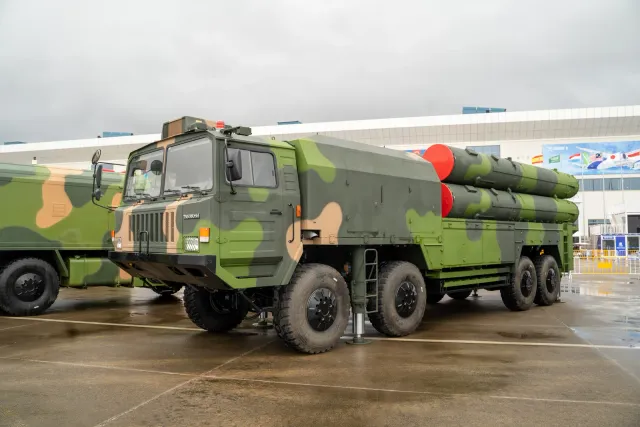
Air defense system
S-500 Prometheus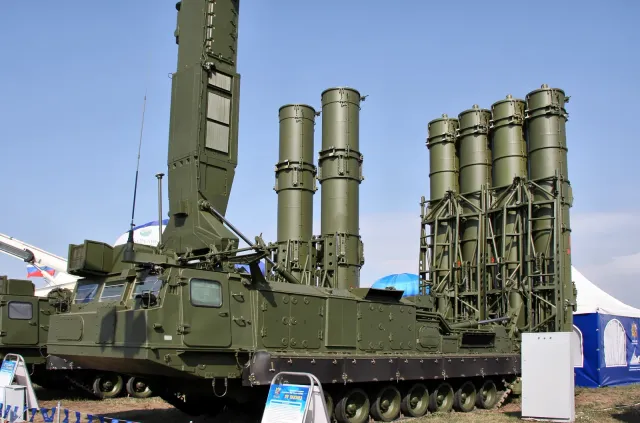

Air defense system
S-400 Triumf
Air defense system
SAMP/T (Aster 30)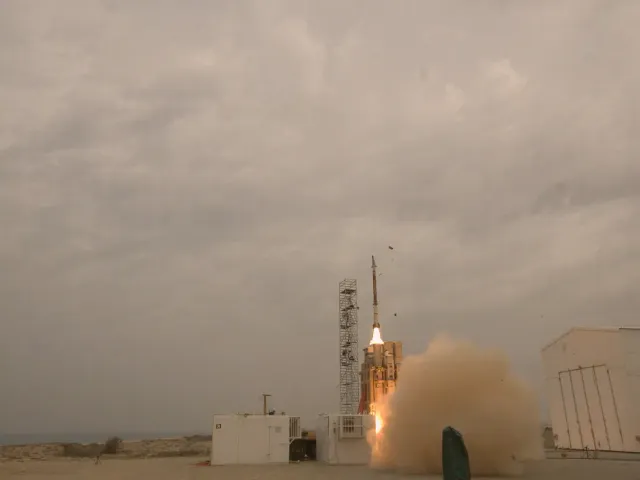
Air defense system
David's Sling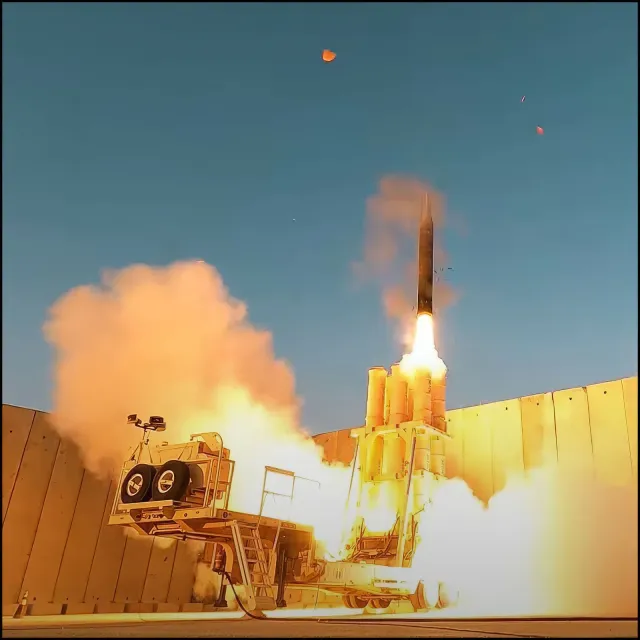

Air defense system
Patriot PAC-3Frequently asked questions
What is the best ballistic missile defense system in 2026? +
The Patriot PAC-3, on balance. It has the deepest real ballistic-intercept record of any system, Saudi Arabia and the UAE against Houthi missiles since 2015, Ukraine against Russian ballistics including the first confirmed Kinzhal intercept in 2023, the widest production and export base at roughly 20 operators, and the most mature program. THAAD and Arrow-3 fly far higher and are more capable per shot, but rank isn't universal fit.
Which system has the strongest real ballistic-intercept record? +
By breadth, the Patriot, proven across three separate conflicts. For historic firsts, Israel's Arrow-2 achieved the first exo-atmospheric combat intercept on 31 October 2023, and Arrow-3 and THAAD carried the exo-atmospheric load through 2023 to 2025. Confirmed real-world ballistic intercepts are overwhelmingly a US and Israeli record.
Do the Russian S-400, S-500 and Chinese HQ-19 actually intercept ballistic missiles? +
There is no independently confirmed real-world ballistic-missile intercept by any of them. Their anti-ballistic-missile capability is a state claim. The most-fielded S-400 interceptor uses a fragmentation warhead rather than hit-to-kill, Russia's 2025 claims of intercepting US-made ATACMS are unverified, and China's HQ-19 has only been tested in controlled trials.
Does engagement altitude decide this ranking? +
No, and the chart proves it. The number-one system, the Patriot, engages at only 24 kilometers, near the bottom of this list, while the two highest-altitude systems, Russia's S-500 at a claimed 200 kilometers and China's HQ-19 at 150 kilometers, both rank last, with zero confirmed real-world intercepts between them.
What did the June 2025 Israel-Iran war reveal about missile defense? +
That magazine depth and production capacity, not peak ceiling, decide the outcome. Iran fired roughly 550 ballistic missiles, the layered defense stopped about 86 percent, and the US alone expended more than 150 THAAD interceptors, close to a quarter of its stockpile and more than a year of production, in 12 days.
Related reading


