The 10 Best Attack Drones of 2026, Ranked
A 10-to-1 countdown of the best attack drones of 2026, ranked on real combat record, strike precision, production scale and program maturity.

Via Wikipedia, Bayraktar TB2 (shown for identification)
In 44 days during the autumn of 2020, Azerbaijani Bayraktar TB2s helped destroy Armenian tanks, artillery and at least nine air-defense systems in Nagorno-Karabakh, the first war the world widely credited to cheap drones deciding a conventional interstate fight. The drone that tops this list flies barely 150 kilometers and carries 150 kilograms, less than a tenth of the American Reaper’s 1,700-kilogram payload. The drone with the longest reach here, Turkey’s own Akinci at 6,000 kilometers, ranks ninth. Even the TB2’s own biggest beneficiary was measured about it: Ukrainian President Volodymyr Zelensky said in April 2022 the drones were not decisive, and their effectiveness faded fast once Russian air defenses organized. Consequence and combat record, not spec-sheet reach, drive this ranking, not the other way around.
We ranked ten attack drones from 10 down to 1 on four criteria, in this priority order: real combat and operational record, weighted toward interstate-war impact and strategic consequence (we say plainly when a record is thin or state-sourced), strike sophistication and precision, production and export scale, and program maturity. Every Russian, Chinese and Iranian figure below is flagged as an unverified claim. Photos and full spec sheets for every drone on this list are in the gallery below the article.
Key takeaways:
- The Bayraktar TB2 tops this list despite a published range of just 150 km and a 150 kg payload, a fraction of the MQ-9A Reaper’s 1,700 kg payload.
- In the 2020 Nagorno-Karabakh war, Azerbaijani TB2s helped destroy at least nine Armenian air-defense systems in 44 days.
- Turkey’s own Bayraktar Akinci has the longest published range on this list at 6,000 km, yet ranks only ninth on a thin combat record.
- Iran’s Shahed-136 carries a high-end state-claimed range of 2,500 km, though Ukraine’s own air force cites a figure closer to 1,000 km.
- Oryx has logged roughly 100 independently confirmed Lancet-3 strikes as of early March 2023, a fraction of Russia’s own claimed totals.
How we ranked them
- Real combat and operational record, and its consequence. A documented, consequential battlefield result beats a better paper spec. We weight interstate-war impact and strategic effect most heavily, and say plainly when a record is thin or state-sourced.
- Strike sophistication and precision. Seeker quality, guided-weapons integration, autonomy and man-in-the-loop control, the difference between a discriminating strike and a blunt instrument.
- Production and export scale. How many were built, how widely fielded, how sustainable the program is.
- Program maturity. Whether the system is actually fielded at scale or still proving itself.
10. Orion-Inokhodets 

Russia’s first indigenous medium-altitude long-endurance strike drone, built to carry KAB-20 guided bombs and Kh-BPLA missiles. Its combat use in Ukraine is real but limited: video-confirmed strikes on Ukrainian vehicles appeared by around April 2022, and the pro-Russian tracking project LostArmour logged roughly 26 strike instances through October 2024, concentrated around Kursk and Sumy. What stands out more than its combat record is its scarcity. At an estimated $5 to 7 million per unit, Orion has been repeatedly destroyed on the ground and shot down in the air by Ukrainian forces, evidence of a fleet too small and too valuable to risk the way Russia risks its Shaheds.
Advantages: a genuine, fielded Russian medium-altitude strike capability with 24-hour endurance; real, if limited, combat strikes documented in Ukraine; being upgraded with additional stand-off munitions.
Disadvantages: produced in very small numbers and repeatedly lost, pointing to a thin fleet; its strike record leans on pro-Russian open-source tracking rather than independent verification; every performance figure is an unverified Russian state claim; the shortest range of any strike drone on this list.
The recurring image of Orion in this war is not a strike, it’s the drone’s own wreckage. Ukraine has repeatedly filmed the multimillion-dollar aircraft being hunted down on the ground and in the air, a program too scarce to spend the way Russia spends its cheaper Shaheds.
9. Bayraktar Akinci 

By far the longest range and one of the heaviest payloads on this list, but its combat record is thin next to its smaller TB2 sibling. Its first real engagement came in Turkey’s Pençe-Kilit operations against the PKK in northern Iraq, striking shelters and cave positions. Its most-cited 2024 mission wasn’t a strike at all, it helped locate the wreckage of the helicopter that killed Iranian President Ebrahim Raisi near Varzaqan in May 2024. The Akinci has also proven vulnerable: PKK-aligned forces claimed to shoot one down over Qandil, Iraq, in March 2025, with wreckage footage, and a Libyan-operated Akinci crashed near Ajaylat in January 2025. It’s a genuine heavyweight platform still writing the combat record its smaller sibling wrote years earlier.
Advantages: by far the longest range and one of the heaviest payloads here, a genuine heavyweight strike and high-altitude airframe; deep munitions integration across the MAM family plus Cirit and L-UMTAS; growing export order book.
Disadvantages: a thin, recent combat record next to the TB2; already shown vulnerable, downed over Iraq and lost over Libya in early 2025; most claims of consequence rest on capability rather than documented strikes.
The Akinci’s most-cited 2024 mission was a search mission, not a strike, finding the wreckage of the helicopter that killed Iran’s president. It’s a telling marker for Turkey’s biggest drone: still building the kind of combat record its smaller sibling wrote years ago.
8. MQ-1C Gray Eagle 

The US Army’s own hunter-killer, flown alongside the Air Force’s Reaper but with far less public profile. Hellfire integration finished in December 2009, and developmental Gray Eagles deployed to Iraq with the 1st Infantry Division’s combat aviation brigade in June 2010, followed by four weaponized aircraft to Afghanistan later that year. The fleet passed 80,000 flight hours by October 2013 and later supported Operation Inherent Resolve against ISIS. One notable capability demonstrated in 2010 testing: the aircraft can self-designate its own Hellfire shots without a separate laser designator, and it scored eight-for-eight hits in that trial. It’s a deep, sustained combat record built almost entirely in permissive airspace.
Advantages: a deep, sustained US Army combat record across Iraq, Afghanistan and the anti-ISIS campaign; self-designating Hellfire strike capability; long endurance and a mature sustainment enterprise.
Disadvantages: a short 400-kilometer range and a modest payload next to the Reaper it operates alongside; a permissive-airspace record only; little export footprint, a narrower program than the top strike drones on this list.
The Gray Eagle is the drone the Army flew so the Air Force’s Reaper didn’t have to, a workhorse with tens of thousands of combat hours and almost no public profile, precisely because its job was to be routine.
7. CH-4 (Caihong-4) 

The strongest documented combat record of the drones ranked below it. Iraq began flying CH-4s against ISIS from mid-2015, running at least 260 recorded strikes between October 2015 and February 2018, contributing to the recapture of Ramadi. The Saudi-led coalition has also flown CH-4s in Yemen since around 2015, with several lost to Houthi air defenses along the way. It’s the most widely exported drone on this list: more than 30 airframes, worth roughly $700 million, have gone to Iraq, Egypt, Saudi Arabia, Algeria, Jordan, Nigeria and other buyers. Two corrections matter here. The widely quoted 96-plus percent strike rate is Chinese state-media marketing, not audited data. And the famous first Nigerian armed-drone strike on Boko Haram in February 2016 used the smaller CH-3, not the CH-4, a common misattribution worth avoiding.
Advantages: a real, independently documented multi-theater combat record, Iraq against ISIS and the Yemen campaign; the widest export base on this list; long endurance and multi-weapon integration.
Disadvantages: all performance figures are unverified Chinese state claims; documented vulnerability, with repeated shootdowns in Yemen; its headline strike-rate figure is manufacturer marketing, not independently audited.
The CH-4’s real résumé isn’t the strike-rate figure its makers advertise, it’s Ramadi, where Iraqi-flown CH-4s ran hundreds of strikes against ISIS, the kind of documented record that makes the brochure numbers unnecessary and the skepticism about them fair.
6. Switchblade 600

A precision anti-armor loitering munition built around a Javelin-derived shaped-charge warhead, with a man-in-the-loop operator who can wave off or retarget mid-flight, the most discriminating loitering munition on this list. The first batch of ten reached Ukraine by the end of 2022, and combat use began in spring 2023. A documented June 2024 strike hit a Russian Buk surface-to-air missile launcher at roughly 30 kilometers, a real precision result. Its combat ledger is still thin next to mass-produced systems like the Lancet or Shahed, reflecting a design built around precision rather than volume.
Advantages: genuine precision with a man-in-the-loop operator and wave-off or abort capability, the most discriminating loitering munition here; a real, if modest, Ukraine combat record including a Buk launcher kill at roughly 30 kilometers; US pedigree and sustainment.
Disadvantages: fielded in small numbers, a thin combat ledger next to Lancet or Shahed; short 40-kilometer reach and a small warhead; expensive per shot for a one-way weapon.
The Switchblade 600 is what a loitering munition looks like when precision, not price, is the point: one operator, one wave-off-capable dive, one Buk launcher 30 kilometers away, the opposite design philosophy from the mass-produced systems ranked above it.
5. Lancet-3

Russia’s primary counter-battery loitering munition, extensively documented in Ukraine since 2022, hunting Ukrainian artillery, self-propelled guns, SAM launchers and radars. It’s real and it’s everywhere in this war’s footage, but it’s also the clearest case on this list of a claim outrunning the evidence. Oryx, which counts only image-confirmed hits, logged roughly 100 successful Lancet strikes by early March 2023, a small fraction of the totals Russia has publicly claimed. Some specific Russian “kill” claims have been publicly debunked, including footage of a supposedly destroyed howitzer that was later shown intact with its crew unhurt. Treat any Russian-sourced Lancet hit-rate or production-total figure as a claim, not a fact.
Advantages: the most prolific and tactically consequential loitering munition of the Russian war effort; a real, independently confirmed record against high-value artillery and air-defense targets; cheap and produced at scale.
Disadvantages: Russian kill counts and hit rates are contested and often inflated, independent tallies are a fraction of the claimed totals; short 40-kilometer reach; a small warhead that frequently damages rather than destroys hardened targets.
For every Russian video claiming a destroyed gun, open-source analysts have logged only a fraction of the claimed kills, and at least one crew filmed as a “kill” walked away from a damaged vehicle. The Lancet is real. Its claimed numbers are not.
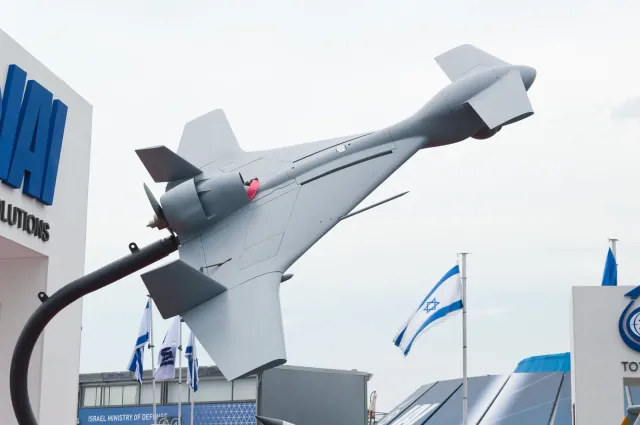
4. Harop 

The loitering-munition era has a birth date: April 2016, during the Nagorno-Karabakh “Four-Day War,” the first documented combat employment of loitering munitions in an interstate conflict. Azerbaijani Harops struck Armenian targets, including a bus, killing several people, and SIPRI has confirmed Israel Aerospace Industries delivered Harops to Azerbaijan starting in 2015. Harops returned in force during the 2020 war, used heavily against Armenian air-defense systems in a suppression role. Worth being precise here: this is the first documented combat use of loitering munitions in an interstate war, not the first loitering munition ever built, Harop’s own predecessor, the anti-radiation Harpy, dates back to around 1989.
Advantages: a genuine historic first, the loitering munition that opened the interstate-combat era in 2016; a sophisticated anti-radiation and electro-optical seeker with man-in-the-loop attack and abort; a 9-hour loiter and 1,000-kilometer reach, far beyond the tactical loitering munitions on this list.
Disadvantages: expensive and specialized compared with mass-produced Shaheds or Lancets; a narrower operator base; its defining combat use includes a civilian-casualty strike that shapes its reputation.
The loitering-munition era has a birth date, April 2016 over Nagorno-Karabakh, and the Harop is the weapon that set it, years before “kamikaze drone” entered the daily war report out of Ukraine.
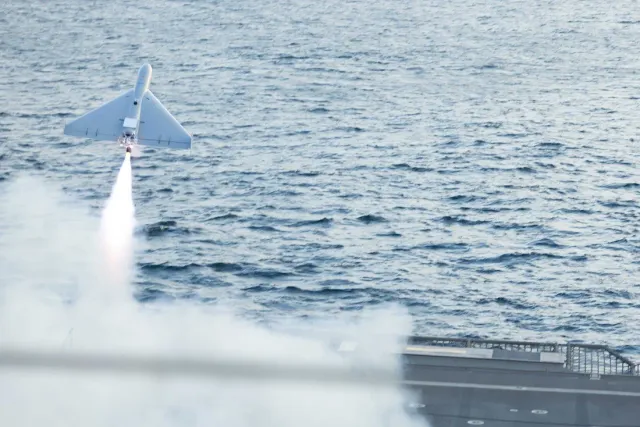
3. Shahed-136 

The first confirmed Shahed-136 use against Ukraine came on 13 September 2022, identified from wreckage stenciled “M412 Геран-2,” Russia’s own redesignation meant to obscure the drone’s Iranian origin. It’s now mass-produced under Russian license as the Geran-2. What makes the Shahed the most strategically disruptive drone of the current war isn’t precision, it’s volume and economics: cheap, one-way drones launched in nightly salvos against Ukraine’s power grid and infrastructure since autumn 2022, forcing Ukraine to expend far costlier interceptors against a far cheaper attacker. Two figures need care. The 2,500-kilometer range in the table above is the high end of Iranian state claims, independent estimates run considerably lower, including a figure closer to 1,000 kilometers cited by Ukraine’s own air force. And the 40-kilogram warhead is the original baseline figure, later Geran-2 variants reportedly carry a heavier charge.
Advantages: the most strategically disruptive drone of the current war by volume; very long claimed reach for a one-way munition; extremely cheap and now mass-produced under Russian license, a genuinely scalable strategic-strike system.
Disadvantages: crude and imprecise, effective against fixed infrastructure rather than discriminating strikes; slow and loud, with a high shoot-down rate; every headline figure, range and warhead alike, is an Iranian or Russian claim, and the numbers keep shifting across variants.
The Shahed didn’t win a battle, it changed an equation. A drone that costs a fraction of the interceptor fired to stop it, launched in nightly swarms, is a different kind of consequence than a precision strike, and it’s why a blunt Iranian loitering munition ranks this high.
2. MQ-9A Reaper

The deepest, most sophisticated combat record on this list. The Reaper’s first confirmed kill came on 28 October 2007 over Oruzgan, Afghanistan, and the type has since flown hundreds of thousands of combat hours across Afghanistan, Iraq, Syria, Yemen, Libya and the Horn of Africa. Its highest-consequence single strike is also the highest-profile of any drone here: the 3 January 2020 strike at Baghdad International Airport that killed Iranian Quds Force commander Qasem Soleimani, carried out with a Reaper-launched Hellfire. Two honest caveats belong here. The record is overwhelmingly permissive-airspace counterterrorism, not peer war, and Reapers have been repeatedly shot down by Houthi air defenses in Yemen, with one lost over the Black Sea in 2023 after a collision with a Russian jet. And exact kill totals aren’t public, so the fair claim is the deepest flight-hour and multi-theater record of any armed drone, not the most kills.
Advantages: the most precise and best-integrated strike drone here, sensor fusion paired with Hellfire missiles and laser or GPS-guided bombs; a 15-plus-year multi-theater combat record and the highest-profile single strike on this list; the highest ceiling and among the heaviest payloads.
Disadvantages: export controls under the Missile Technology Control Regime held production and proliferation far below the TB2’s; its combat record is almost entirely permissive-airspace, and it has proven vulnerable when the airspace is contested; expensive and support-heavy.
The Reaper is the most capable machine on this list and it sits at number two, because this ranking weighs consequence in war between states most heavily, and the Reaper’s deepest record was written over insurgents who couldn’t shoot back, right up until the Houthis started doing exactly that.
1. Bayraktar TB2

No attack drone has a more consequential interstate-war record. In the 2020 Nagorno-Karabakh war, Azerbaijani TB2s destroyed Armenian T-72 tanks, BMPs, BM-30 Smerch launchers and at least nine Osa and Strela-10 air-defense systems, widely credited as the single most important drone of that 44-day war, though two TB2s were also shot down, on 19 October and 8 November 2020, a reminder it wasn’t invulnerable even there. In 2022, TB2s were genuinely effective in the opening weeks of Russia’s invasion, destroying more than ten Russian SAM launchers through mid-March and playing a real role in blunting the advance on Kyiv. It has the widest proliferation of any armed drone in service, more than 30 operators, at a fraction of the Reaper’s cost. The viral “Bayraktar” song, released 1 March 2022, is a real morale and propaganda phenomenon, its own author has called it propaganda, but it shouldn’t be read as evidence of outsized military effect. By summer 2022, TB2 effectiveness fell sharply once Russian air defense and electronic warfare organized, and Zelensky himself said in April 2022 the drones weren’t decisive. By late 2023, TB2 sorties over Ukraine had been curtailed.
“This has allowed the surviving Ukrainian Bayraktar TB-2 armed UAVs to operate with considerable effectiveness in some areas, inflicting significant losses on Russian vehicle columns,” wrote Justin Bronk, Senior Research Fellow for Airpower and Technology at RUSI, February 28, 2022.
Advantages: the most consequential combat record of any armed drone, decisive in an interstate war in 2020 and prominent in the defense of Kyiv in 2022; the widest proliferation and lowest cost in this class, the single biggest force multiplier over a long procurement horizon; combat-proven munitions integration with the MAM-L and MAM-C family.
Disadvantages: a small 150-kilogram payload and just 150 kilometers of range, near the bottom of this list on both; effectiveness collapses against organized air defense and electronic warfare, as summer 2022 showed; its reputation outran its later results, a caveat its own biggest user voiced.
The TB2 tops this list for what it changed, not for what it can still do. In 2020 it made militaries around the world rethink air power. In 2026 it’s the honest lesson of the drone age: the cheap machine that wins the first month can become the target by the third, and it can still be the most consequential attack drone ever fielded.
The 2026 ranking at a glance
| Rank | Drone | Origin | Type | Max range | Payload / warhead | Combat record |
|---|---|---|---|---|---|---|
| 1 | Bayraktar TB2 | Turkey | MALE strike UAV | 150 km | 150 kg payload | Nagorno-Karabakh 2020, Ukraine 2022; 30+ operators |
| 2 | MQ-9A Reaper | United States | MALE hunter-killer | 1,850 km | 1,700 kg payload | Afghanistan 2007-, Iraq/Syria/Yemen, Soleimani strike 2020 |
| 3 | Shahed-136 | Iran | Loitering munition | 2,500 km* | 40 kg warhead* | Ukraine strategic strikes since Sept 2022 (as Geran-2) |
| 4 | Harop | Israel | Loitering munition | 1,000 km | 23 kg warhead | Nagorno-Karabakh 2016 (first) and 2020 |
| 5 | Lancet-3 | Russia | Loitering munition | 40 km* | 3 kg warhead* | Ukraine 2022-, Russian claims contested |
| 6 | Switchblade 600 | United States | Loitering munition | 40 km | 4 kg warhead | Ukraine since spring 2023 |
| 7 | CH-4 (Caihong-4) | China | MALE strike UAV | 3,500 km* | 345 kg payload* | Iraq vs ISIS 2015-, Yemen; wide export |
| 8 | MQ-1C Gray Eagle | United States | MALE strike UAV | 400 km | 488 kg payload | US Army Iraq 2010-, Afghanistan, anti-ISIS |
| 9 | Bayraktar Akinci | Turkey | HALE strike UAV | 6,000 km | 1,500 kg payload | Anti-PKK Iraq; thin, recent record |
| 10 | Orion-Inokhodets | Russia | MALE strike UAV | 250 km* | 250 kg payload* | Ukraine 2022-, limited and rare |
*Russian, Chinese or Iranian state or manufacturer figure, not independently verified.
The #1 drone here, the Bayraktar TB2, flies just 150 km, nearly the shortest range on the list, while the longest-reaching drone, Turkey's own Akinci at 6,000 km, ranks ninth, and the two 40 km loitering munitions rank fifth and sixth. Range doesn't decide this list. Combat record and consequence do.
The bottom line
No drone on this list wins on every axis. The TB2 leads on record and proliferation, the Reaper on precision and depth, the Shahed on strategic disruption by volume, and mission and airspace decide which one actually fits a given campaign. Run any two of these drones head-to-head in the comparison tool, browse the full UAV category for every drone in the database, or use the advisor to weigh record against reach against airspace for your own scenario. For more rankings like this, see the rest of the WeaponSpecs articles, including our recent countdowns of the best main battle tanks, best self-propelled howitzers and best anti-tank guided missiles of 2026.
Sources
Systems in this comparison
Every system covered above, with its photo and, where available, a video. Tap a card to open the full spec sheet.
Compare these side by side →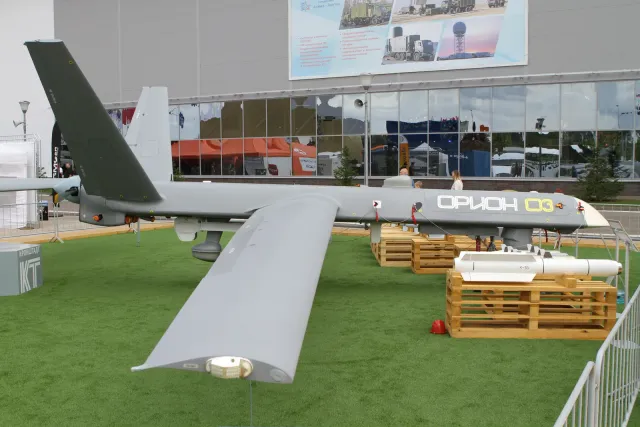
UAV / drone
Orion (Inokhodets)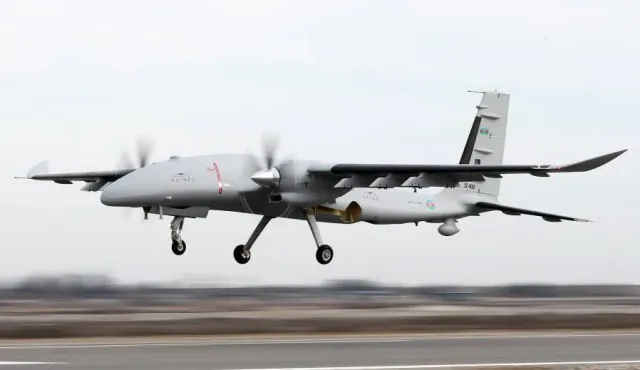
UAV / drone
Bayraktar Akinci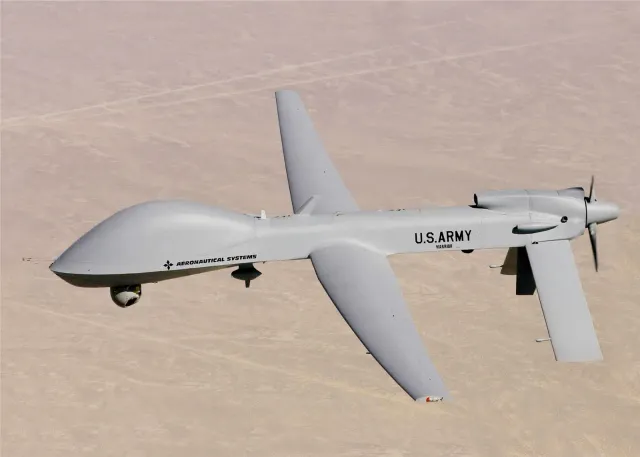
UAV / drone
MQ-1C Gray Eagle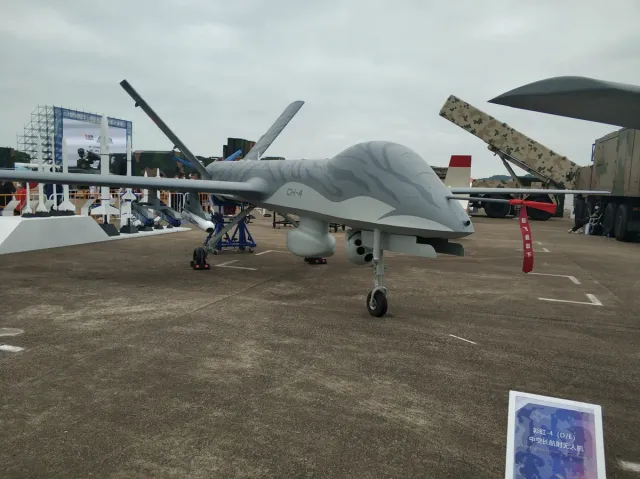
UAV / drone
CH-4 (Caihong-4)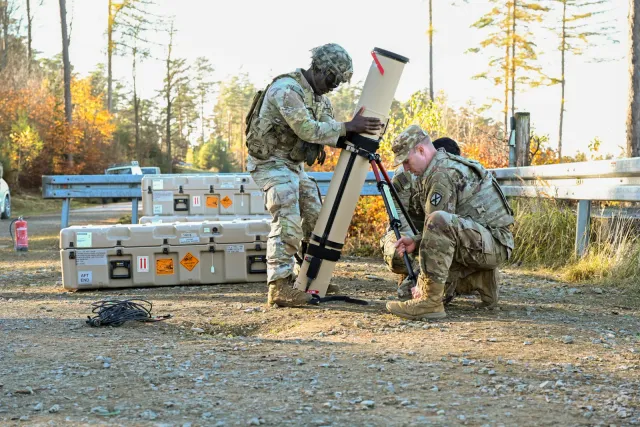
UAV / drone
Switchblade 600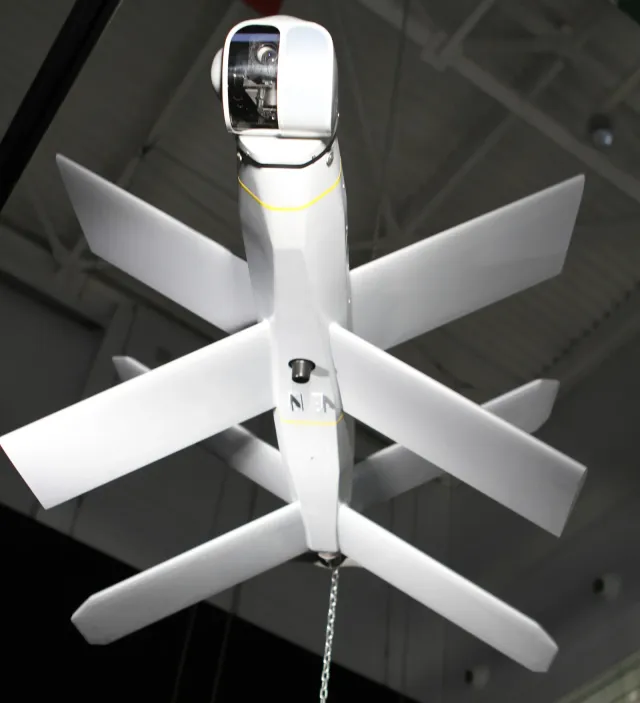
UAV / drone
Shahed-136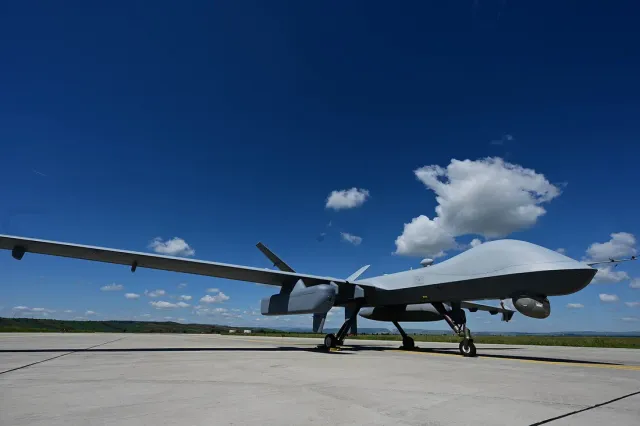
UAV / drone
MQ-9A Reaper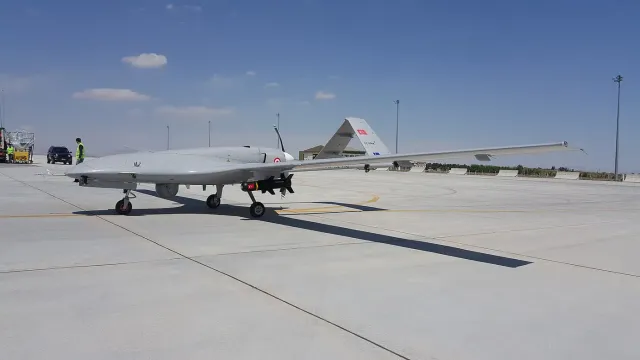
UAV / drone
Bayraktar TB2Frequently asked questions
What is the best attack drone in 2026? +
The Bayraktar TB2, on balance. It pairs the most consequential combat record of any armed drone, decisive in the 2020 Nagorno-Karabakh war and prominent in the early defense of Kyiv in 2022, with the widest proliferation in the class, more than 30 operators. Rank isn't universal fit, the MQ-9 Reaper carries far more, flies far farther and strikes far more precisely, and for a permissive-airspace campaign it's the more capable machine.
Which attack drone has the strongest combat record? +
It depends what you mean. The MQ-9 Reaper has the deepest record by flight hours and theaters, from Afghanistan in 2007 through the 2020 Soleimani strike. The TB2 has the broadest consequence in interstate war. And the Shahed-136 has arguably been the most strategically disruptive by sheer volume, striking Ukrainian infrastructure since September 2022.
Does range or payload decide this ranking? +
No, and the chart proves it. The top-ranked TB2 flies barely 150 kilometers, while the longest-range drone here, Turkey's own Akinci at 6,000 kilometers, ranks ninth. The two loitering munitions with just 40 kilometers of reach rank fifth and sixth. Combat record and consequence decide this list, not reach.
Are Russian, Chinese and Iranian drone figures reliable? +
Treat them as claims. The Shahed-136's 2,500-kilometer range is a high-end Iranian state figure, independent estimates run lower. Russia's published Lancet strike counts are contested by open-source analysts. The CH-4's specifications and its widely quoted strike-rate figure are Chinese state-media numbers, and Orion's record rests largely on pro-Russian sources.
What is the difference between a strike drone and a loitering munition? +
A strike drone (TB2, Reaper, CH-4, Akinci, Gray Eagle, Orion) carries reusable guided weapons and flies home. A loitering munition (Shahed-136, Harop, Lancet, Switchblade 600) is the weapon itself, it loiters, then dives into the target, so it carries a small warhead by design and is expended on every mission.
Related reading


