The 10 Best Submarines of 2026, Ranked
A 10-to-1 countdown of the best submarines of 2026, ranked on stealth, weapons, strategic role and real operational record, not brochure numbers.

Via Wikipedia, Virginia-class submarine (shown for identification)
In 80 years since World War II, a submarine has sunk an enemy warship only about six times. A nuclear-powered submarine has done it exactly once: HMS Conqueror sank the Argentine cruiser General Belgrano on 2 May 1982 with WWII-pattern torpedoes, killing 323 sailors. That single event is still the entire modern combat record of the nuclear attack submarine, the most capable class of warship most navies operate. So this list can’t be ranked the way our tanks and fighter jets rankings were, on documented battlefield kills, because almost no submarine here has ever fired a weapon in anger. What actually separates these boats is acoustic stealth, weapons and strategic role, real operational history short of a torpedo kill, and sustainment.
We ranked ten current submarine classes from 10 down to 1 on four criteria, in this priority order: acoustic stealth and sensors (a boat you can hear is a boat you can kill, weighted toward independently assessed quieting over state claims), weapons and strategic role (a deterrence boat and an attack boat do different jobs and are judged on each), real operational record (not torpedo kills, which barely exist, but genuine documented patrols, incidents and the rare cruise-missile strike), and sustainment at scale. Every Russian and Chinese depth, speed and quieting figure below is flagged as a manufacturer or state claim, not treated as fact. Photos and full spec sheets for every boat are in the gallery below the article.
Key takeaways:
- Since World War II a submarine has sunk a warship only about six times, and a nuclear-powered submarine exactly once: HMS Conqueror sinking the Argentine cruiser General Belgrano on 2 May 1982.
- The #1-ranked Virginia-class has a submerged speed of 25 knots, slower than four of the boats ranked below it, including the 2nd-ranked Astute-class at 29 knots.
- USS John Warner, a Virginia-class submarine, fired six Tomahawk missiles at Syrian chemical-weapons targets on 13 and 14 April 2018, its class’s first combat use.
- Germany’s Type 212A boat U32 ran 18 days fully submerged across the Atlantic in April 2013 on air-independent propulsion, a record for a non-nuclear submarine.
- A 2009 US Office of Naval Intelligence assessment rated China’s Type 094 as noisier than the Project 667BDR Delta III, a Soviet design from the late 1970s.
How we ranked them
- Acoustic stealth and sensors. Quieting is the single decisive attribute of a submarine. Weighted toward independently assessed capability, not state-claimed figures.
- Weapons and strategic role. What the boat is built to do, deterrence patrol or attack and strike, and how well it does that specific job.
- Real operational record. Genuine documented events: record patrols, shadowing incidents, collisions, the handful of real combat cruise-missile launches, first-of-class milestones. Not invented combat narratives.
- Sustainment at scale. Fleet size, allied and industrial base, reactor endurance, reliability.
10. Type 094 Jin 

China’s first credible sea-based nuclear deterrent ranks last because a deterrent boat only works if it can’t be found, and by the West’s own account this one can be. A 2009 US Office of Naval Intelligence assessment rated the Type 094 as noisier than Russia’s Project 667BDR Delta III, a Soviet design from the late 1970s, a nearly 40-year-old acoustic standard for China’s newest boomer. The class carries JL-2 and now JL-3 submarine-launched ballistic missiles, and the US Department of Defense credits China with near-continuous at-sea deterrent patrols since roughly 2015. No submarine of this class has ever fired a weapon in anger.
Advantages: gives China a functioning second-strike leg of its nuclear triad for the first time; the JL-3 missile extends range far enough to threaten the continental United States from waters closer to China’s coast; a growing fleet of roughly six boats with real industrial momentum behind it.
Disadvantages: independently assessed acoustic signature comparable to a 1970s-era Soviet boat, a serious flaw for a boat whose entire mission depends on staying hidden; must transit noisy coastal chokepoints to reach open ocean; every quieting and performance figure is a Chinese state claim.
The most telling public fact about the Type 094 came from Western intelligence, not Chinese disclosure, an American assessment quietly ranking it against a submarine the West learned to track decades before it was built. Beijing’s answer has reportedly been to keep the boats in a defended near-seas bastion rather than risk the open Pacific.
9. Kilo-class (Project 636.3) 

An old design NATO nicknamed the Black Hole for how quiet it runs on batteries, and the one conventional boat on this list with a genuine combat weapons-employment record. On 8 December 2015, the Kilo-class boat Rostov-na-Donu launched Kalibr cruise missiles at targets in Syria, the first time a Russian submarine had fired a weapon in combat since World War II. The same boat was later heavily damaged by a Ukrainian strike in a Sevastopol drydock on 13 September 2023, reportedly repaired, then reportedly hit again in 2024. It’s also the most-exported modern submarine in the world, roughly 70 built across eight or more operators.
Advantages: genuinely quiet on batteries, the Black Hole reputation is real; the Kalibr missile gives a cheap diesel boat real land-attack and anti-ship reach; unmatched export footprint means a deep global spares and training base.
Disadvantages: a 1980s-generation design with no air-independent propulsion in most variants, so it must surface or snorkel to recharge, exposing it; short endurance and range compared with any nuclear boat on this list; every Russian performance figure is a state claim.
The Rostov-na-Donu is this whole list’s thesis in one hull: its combat debut wasn’t sinking a ship but lobbing cruise missiles from the eastern Mediterranean in 2015, and it ended up a cautionary tale, caught and wrecked in its own drydock eight years later.
8. Type 212A 

Germany and Italy’s fuel-cell boat is arguably the quietest submarine on this list when running on air-independent propulsion, and a genuine niche master. It ranks here only because its short range and tiny weapons load keep it from competing with ocean-going nuclear boats. In April 2013, the Type 212A boat U32 ran 18 days fully submerged across the Atlantic without snorkeling, a record for a non-nuclear submarine, made possible by its hydrogen fuel-cell propulsion. No combat record exists for this class.
Advantages: hydrogen fuel-cell propulsion lets it sit near-silent underwater for weeks with almost no detectable signature; an amagnetic hull designed to defeat magnetic-anomaly detection; genuinely one of the hardest boats in the world to find in shallow, cluttered coastal water.
Disadvantages: short range and endurance compared with any nuclear boat here; a small weapons load, torpedo tubes only in German service, no land-attack missile; a tiny fleet with a narrow logistics base.
The kind of threat this boat represents is best shown by a cousin design: in 2005 US Navy wargames, Sweden’s diesel-electric, air-independent Gotland repeatedly simulated sinking the carrier USS Ronald Reagan without ever being detected, and the US Navy was rattled enough to lease the boat and its crew for two years afterward.
7. Soryu-class 

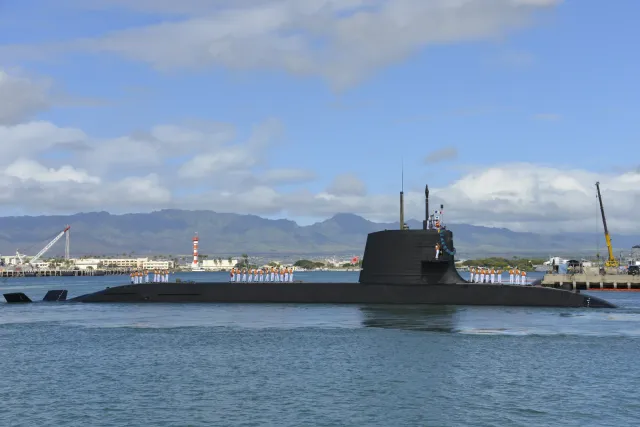
The best large conventional submarine on this list, bigger, longer-legged and better-equipped than the European air-independent boats, and a real technology pathfinder. The world’s largest conventional submarines when introduced, the class produced a genuine first in 2020 when the boat Oryu became the first submarine in the world to enter service with lithium-ion batteries instead of air-independent propulsion. It has also had a real, documented mishap: on 8 February 2021, the lead boat JS Soryu collided with the commercial bulk carrier Ocean Artemis while surfacing off Cape Ashizuri, warping its sail and injuring three crew. No combat record exists for this class.
Advantages: long endurance and a heavy sensor and weapons fit for a conventional boat; lithium-ion power trades air-independent propulsion for higher sustained submerged speed and faster recharge, a real capability step; a disciplined, well-trained force operating in one of the world’s most demanding anti-submarine warfare theaters.
Disadvantages: still a conventional boat, out-ranged and out-endured by every nuclear submarine on this list; single-operator, Japan, so no allied logistics pooling; the 2021 collision exposed the perennial vulnerability of any submarine coming shallow to periscope depth.
The Ocean Artemis collision is a quiet lesson in submarine reality: the most dangerous moment in a modern boat’s day is rarely combat, which essentially never comes, but the blind, exposed act of surfacing, and even a superbly run boat can get it wrong.
6. Borei-class

Russia’s modern deterrent boat is more capable than China’s Jin, but its reputation is held back by the missile it exists to carry. The class is built around the RSM-56 Bulava submarine-launched ballistic missile, whose development was plagued by failures, roughly a quarter of early test launches failed outright. In May 2018, the lead boat Yuri Dolgoruky test-fired a full four-missile Bulava salvo from the White Sea, all four reportedly hitting the Kura test range, a real milestone after years of failed tests. The class is now the backbone of Russia’s sea-based deterrent, on real patrols. As with every ballistic-missile boat on this list, there is no combat record.
Advantages: a genuinely modern, quieter hull than the Soviet-era boats it replaces; carries 16 Bulava missiles, a real second-strike deterrent; pump-jet propulsion and improved quieting over legacy Russian designs.
Disadvantages: the Bulava missile’s long reliability struggles undercut confidence in the whole system; still assessed noisier than top Western ballistic-missile boats; every quieting and performance figure is a Russian state claim.
The 2018 four-missile salvo was Russia demonstrating exactly what had eluded it for a decade. After six mid-flight Bulava failures earlier in the program, putting four intercontinental missiles in the air within twenty seconds was as much a public confidence exercise as a weapons test.
5. Yasen-class

The most capable Russian submarine in service, and the one boat here whose reputation rests on genuine Western assessment rather than only Russian claims, which is why it ranks above the other Russian boats despite this site’s default skepticism toward state figures. In October 2014, the US Navy’s own program executive officer for submarines was reportedly impressed enough with the lead boat Severodvinsk to have a model of it built for display outside his office, an unusual public tribute to an adversary’s design. In June 2024, the newer Yasen-M boat Kazan deployed to Havana, Cuba, a deliberate power-projection signal off the US coast. The class carries Kalibr and Oniks missiles plus a claimed Zircon hypersonic weapon, and our database lists the highest disclosed test depth of any submarine tracked here at 600 meters, a state figure. No combat record exists.
Advantages: genuinely respected by Western naval officers as quiet and capable, a rare distinction for a Russian design; a heavy, versatile weapons fit combining land-attack, anti-ship and a claimed hypersonic missile; vertical launch cells plus torpedo tubes make it a true multi-role attack and strike boat.
Disadvantages: built in tiny numbers and very slowly, a handful of boats against dozens of Western attack submarines; every depth, speed and quieting figure is a state claim; enormously expensive for a fleet Russia has struggled to grow.
When the officer in charge of America’s own submarine force is on record saying he was impressed enough to commission a scale model of a Russian boat, that is worth more than any figure in a Russian brochure.
Independent Western naval analysts back up that assessment. “The Russian Yasen-class is well equipped to avoid acoustic detection,” wrote Dr Sidharth Kaushal, senior research fellow for sea power at the Royal United Services Institute, in a RUSI commentary published 15 March 2023. That’s a rare instance of a Russian-design quieting claim earning genuine outside credibility rather than a caveat.
4. Suffren-class 

France’s newest nuclear attack boat is a genuine top-tier Western design, ranked just below the American and British boats mainly on fleet size and record depth, not raw capability. The lead boat Suffren was commissioned in 2020, entered active service on 3 June 2022, completed its first operational deployment by January 2023, and spent three months deployed to the Indian Ocean and Persian Gulf that year. It’s the first French attack submarine able to launch the MdCN naval cruise missile for deep land-attack, and it can deploy special forces divers through a dry-deck shelter, capabilities its Cold War predecessors simply didn’t have. No combat record exists yet.
Advantages: a modern, quiet Barracuda-design hull with pump-jet propulsion; a real land-attack capability France’s older attack submarines lacked; purpose-built special-forces delivery, a versatility few boats on this list match.
Disadvantages: a very small fleet, just a few boats still being delivered; no combat record and a thin operational history so far; single-operator sustainment.
The Suffren closed a real capability gap for France. For the first time, a French attack submarine can strike targets deep inland with cruise missiles and put combat swimmers ashore from a dry-deck shelter, roles its predecessors simply could not perform.
3. Ohio-class 

The most important submarine in the water, the survivable core of the US nuclear deterrent, and the only class on this list that has genuinely fought, through its guided-missile conversions. Fourteen Ohio-class boats carry the deterrent mission, each with more than 20 Trident II D5 submarine-launched ballistic missiles, while four earlier boats were converted to SSGN guided-missile submarines carrying up to 154 Tomahawk cruise missiles. On 19 and 20 March 2011, the SSGN USS Florida launched 93 Tomahawks at Libyan air-defense targets during Operation Odyssey Dawn, the first combat action by any Ohio-class submarine and one of the largest single-boat cruise-missile strikes in history. There is no torpedo combat record for the class.
Advantages: unmatched deterrent payload and reactor endurance, able to stay hidden on patrol for months at a time; the SSGN conversions add a combat-proven, massive Tomahawk strike capability; the deepest sustainment and crew-training enterprise of any submarine force on Earth.
Disadvantages: the SSBN boats are single-mission deterrent platforms, not hunters; the class is aging and being replaced by the Columbia-class starting in the late 2020s; large and not built for the agile attack role the boats above it on this list fill.
Florida’s 2011 strike is the exception that proves this whole list’s rule. The closest thing to combat most of these boats will ever see isn’t a torpedo duel but a silent volley of cruise missiles fired from below the surface at a target that never even sees the boat that hit it.
2. Astute-class 

A quiet, modern front-line British attack submarine, and the one boat on this list whose lineage actually carries this article’s opening fact: the Royal Navy nuclear attack submarine is the only kind of vessel that has sunk a warship with torpedoes since World War II. The Astute class descends directly from the Cold War force whose HMS Conqueror sank the General Belgrano in 1982. It carries Spearfish heavyweight torpedoes and Tomahawk Block IV cruise missiles, with stowage for around 38 weapons. Its own most-documented incident is not a combat action but an embarrassment: on 22 October 2010, the lead boat HMS Astute ran aground off the Isle of Skye during sea trials after the crew failed to plot their position correctly, and the commanding officer was relieved of command. There is no combat record for the Astute class itself.
Advantages: among the quietest Western attack submarines, with a reactor giving effectively unlimited submerged endurance; combines Tomahawk land-attack with heavyweight-torpedo anti-submarine capability in one hull; inherits the doctrine and pedigree of the only submarine force ever to sink a warship with a nuclear-powered boat.
Disadvantages: a small fleet of a handful of boats, built slowly and expensively; the 2010 grounding and a troubled early construction program are a reminder that even elite boats are unforgiving of a single navigation error; single-operator sustainment.
The class’s own most famous incident isn’t a kill, it’s Britain’s newest, quietest attack submarine running gently aground on silt off Skye in front of onlookers, its captain losing his command over it. The real combat pedigree lives one generation back, in Conqueror’s 1982 torpedoes.
1. Virginia-class

The Virginia-class wins this list on balance, the same logic that put the Leopard 2A7 and F-35A atop our tanks and fighter jets rankings: the most capable all-around attack boat, genuinely combat-employed, quiet, and backed by the largest and best-sustained submarine fleet in the world. On 13 and 14 April 2018, USS John Warner launched six Tomahawk missiles at Syrian chemical-weapons targets, the first time a Virginia-class submarine fired weapons in combat, reportedly while evading a Russian anti-submarine hunt in the process. It’s the US Navy’s newest and most-produced attack boat, with more than 24 built or building, and later production blocks add a Virginia Payload Module that sharply increases strike capacity. The class, and the AUKUS partnership built around it, now anchors allied undersea sustainment for decades to come.
Advantages: the best-balanced attack boat here, quiet, versatile across anti-submarine warfare, land-attack, intelligence and special operations, and genuinely combat-employed; the deepest sustainment, industrial and crew-training base of any submarine force, now extended to allies through AUKUS; continuously upgraded across production blocks, with the Payload Module sharply increasing strike capacity.
Disadvantages: expensive, and US build rates have struggled to keep pace with demand; not the fastest or deepest-diving boat on this list on paper, it wins on stealth and systems, not raw specs; the same high nuclear-boat lifecycle cost every peer design carries.
The John Warner’s 2018 strike is the quiet template for modern submarine combat. It hit its targets and slipped away, reportedly shaking off a Russian hunt in the process, without the enemy ever getting a fix on it. No torpedo duel, no surface battle, just a boat that was never found.
The 2026 ranking at a glance
| Rank | Submarine | Type | Origin | Real record | Submerged speed | Approx. unit cost |
|---|---|---|---|---|---|---|
| 1 | Virginia-class | SSN | United States | Tomahawk strike, Syria 2018 | 25 kn | ~$3.45B |
| 2 | Astute-class | SSN | United Kingdom | None (class); lineage sank Belgrano 1982 | 29 kn | ~$1.9B |
| 3 | Ohio-class | SSBN/SSGN | United States | SSGN Tomahawk strike, Libya 2011 | 25 kn | not published |
| 4 | Suffren-class | SSN | France | None | 24 kn | not published |
| 5 | Yasen-class | SSN/SSGN | Russia | None | 31 kn* | not published |
| 6 | Borei-class | SSBN | Russia | None | 29 kn* | not published |
| 7 | Soryu-class | SSK | Japan | None; 2021 collision | 20 kn | not published |
| 8 | Type 212A | SSK | Germany | None; 2013 endurance record | 20 kn | not published |
| 9 | Kilo-class | SSK | Russia | Kalibr strike, Syria 2015 | 20 kn* | not published |
| 10 | Type 094 Jin | SSBN | China | None | 26 kn* | not published |
*Manufacturer or state figure, not independently verified.
The #1 boat, the Virginia-class, is slower submerged than four boats ranked below it, and two of the slowest boats on this chart, the Soryu and Type 212A, both at 20 knots, are among the stealthiest here. Raw submerged speed doesn't decide this list. Acoustic silence, weapons, a real operational record and sustainment do.
The bottom line
No submarine on this list has fought the way our tanks and fighter jets did, and that absence is the actual finding: a submarine’s value comes overwhelmingly from never being found, not from a combat record most of these boats will spend their entire service life without earning. The Virginia-class leads because it pairs proven quiet performance and real combat employment with the deepest allied sustainment base of any submarine force, but the Astute-class and Ohio-class sit close enough behind it that mission, budget and fleet size should decide a real procurement call.
Compare any two of these boats head-to-head in the comparison tool, browse every submarine in the database on the submarine class page, or get a mission-tailored recommendation from the advisor. More rankings and breakdowns like this live on the articles page.
Sources
- Sinking of ARA General Belgrano, Wikipedia
- USS John Warner first Virginia-class submarine to fire in combat, USNI News
- USS Florida (SSGN-728), reference specifications, Wikipedia
- U.S. Navy impressed with new Russian attack boat, USNI News
- Russian submarine Rostov-na-Donu, Wikipedia
- SSN-AUKUS: Opportunities, Risks and Implications, RUSI
Systems in this comparison
Every system covered above, with its photo and, where available, a video. Tap a card to open the full spec sheet.
Compare these side by side →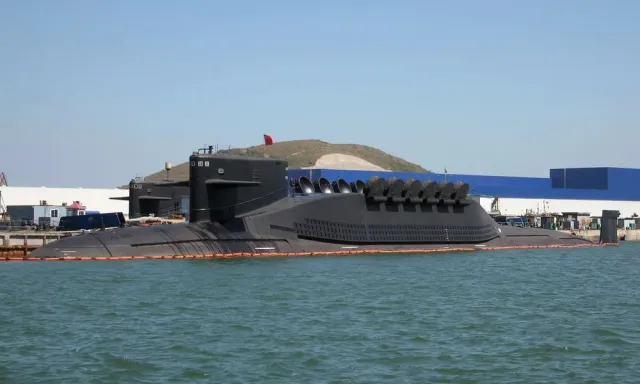
Submarine
Type 094 Jin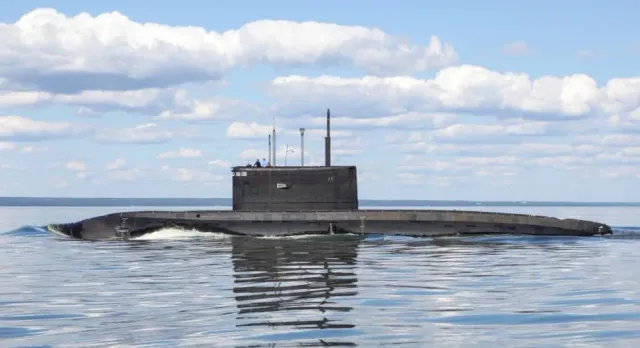
Submarine
Kilo-class (Project 636.3)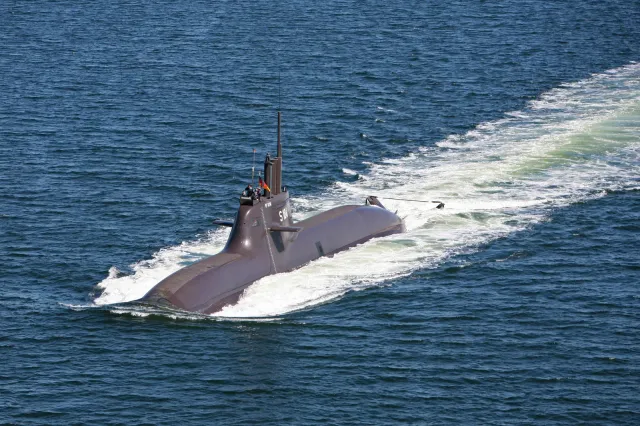
Submarine
Soryu-class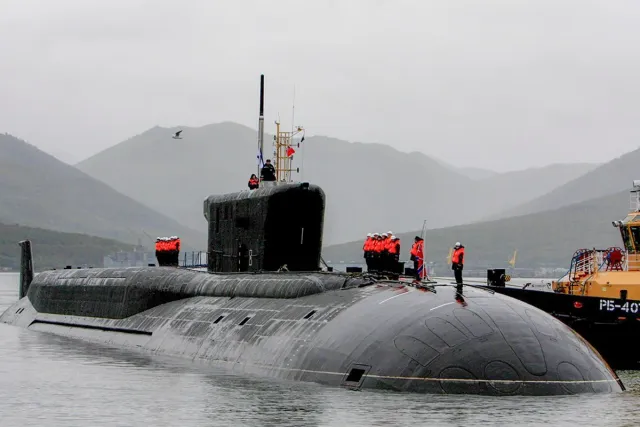
Submarine
Borei-class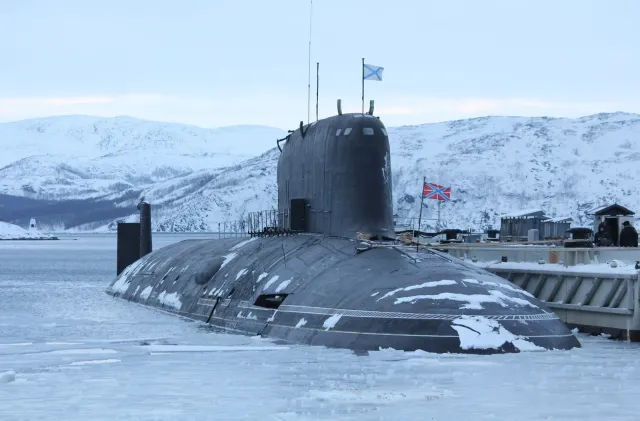
Submarine
Yasen-class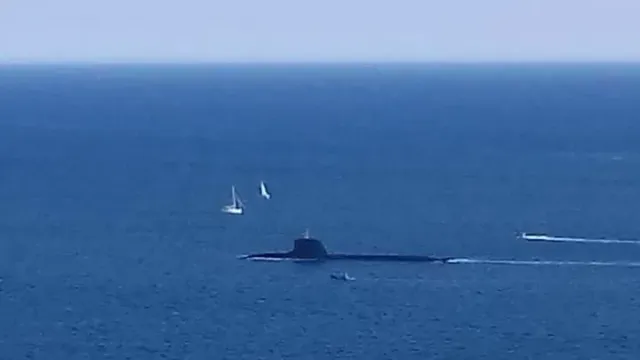
Submarine
Suffren class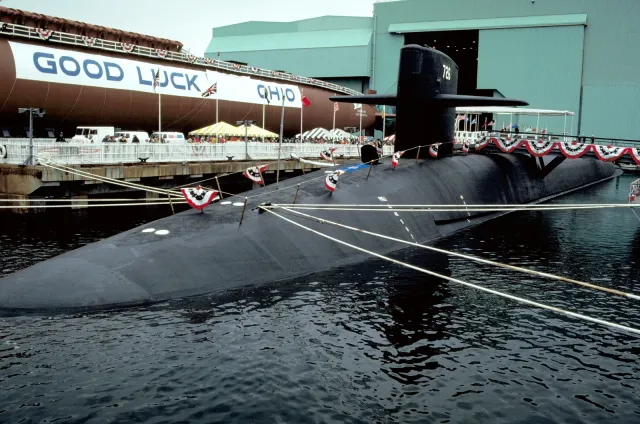
Submarine
Ohio-class Submarine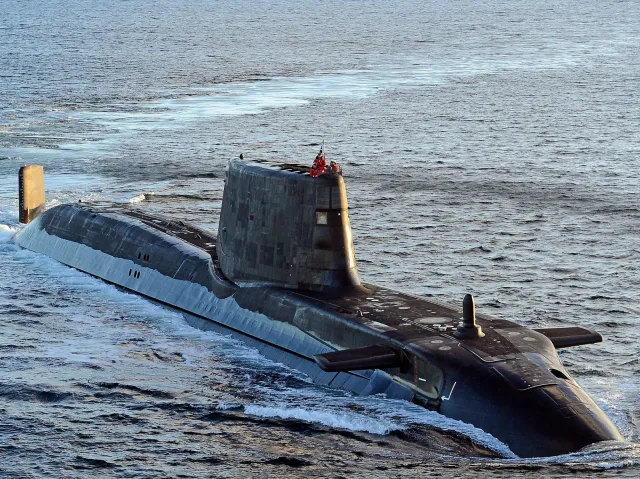
Submarine
Astute class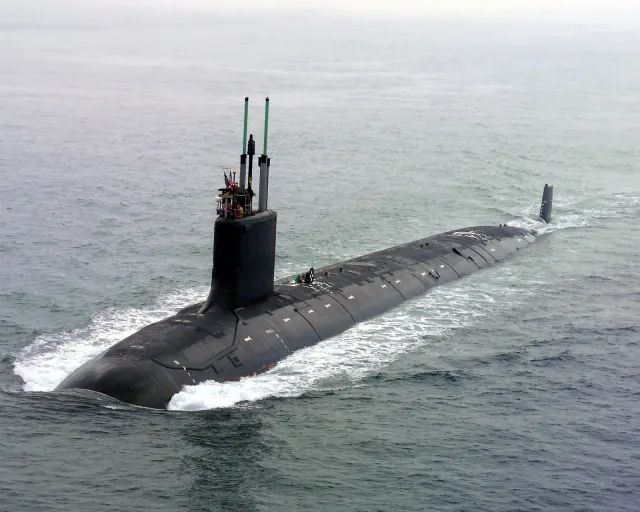
Submarine
Virginia-class SubmarineFrequently asked questions
What is the best submarine in 2026? +
The Virginia-class. It is the best-balanced attack boat in service: quiet, versatile, combat-employed (USS John Warner's 2018 Tomahawk strike on Syria), and backed by the largest and best-sustained submarine force in the world, now extended to allies through AUKUS.
Has a submarine actually sunk a warship in combat recently? +
Almost never. Since World War II a submarine has sunk a warship only about six times, and a nuclear-powered submarine exactly once, HMS Conqueror sinking the Argentine cruiser General Belgrano on 2 May 1982. Modern submarine warfare is defined by deterrence patrols and cruise-missile strikes, not torpedo duels, which is why this list ranks stealth, weapons and real operational record rather than combat kills.
Are Russian and Chinese submarine specifications reliable? +
Treat them as claims. The Yasen, Borei and Kilo depth and speed figures are Russian state disclosures, and the Type 094's are Chinese. Some carry real weight, US officers have publicly praised the Yasen's quieting, but others are contradicted by Western assessment: US naval intelligence rated the Type 094 noisier than a 1970s Soviet boat.
What is the difference between an SSN, an SSBN and an SSK? +
An SSN is a nuclear-powered attack submarine built for hunting ships and other submarines and for strike missions. An SSBN is a nuclear-powered ballistic-missile submarine, a strategic deterrent built to hide for months at a time. An SSK is a conventionally powered submarine, often diesel-electric with air-independent propulsion, cheaper and sometimes extremely quiet but with far shorter range and endurance.
Is a nuclear submarine always better than a diesel-electric one? +
No. A modern air-independent or lithium-ion diesel boat can be quieter than a nuclear submarine, which must run reactor coolant pumps continuously. In 2005 US Navy wargames, the Swedish diesel-electric Gotland repeatedly simulated sinking the carrier USS Ronald Reagan without ever being detected. Nuclear boats win on endurance, range, speed and strike payload. Conventional boats win on cost and, in the right water, silence.
Related reading


