14 of 16 'Trainer' Jets in Our Database Are Armed
14 of 16 jet trainers in WeaponSpecs' database publish a weapons payload, and 5 can fire real air-to-air missiles. Two carry none at all.
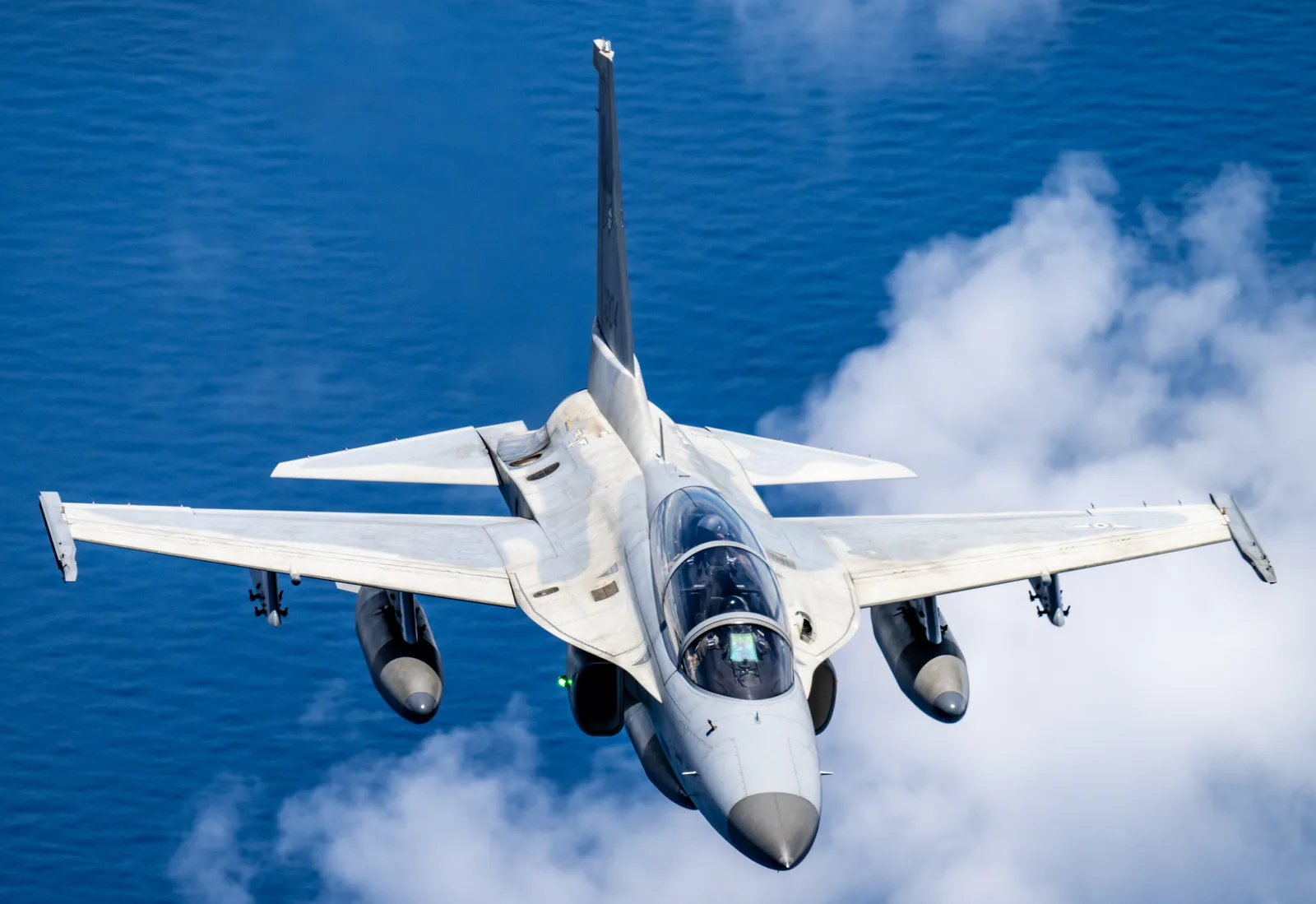
Via Wikipedia, KAI T-50 Golden Eagle (shown for identification)
Of the 16 aircraft classified as trainer in WeaponSpecs’ spec database, 14 publish a real weapons payload figure, and the top of that list is the KAI T-50 Golden Eagle at 5,400 kg, a bigger number than the F-22A Raptor’s published 2,270 kg. Do not read that as the T-50 out-gunning a Raptor. The F-22 is a stealth fighter designed to carry its primary weapons internally to protect its radar cross-section, so its low external payload figure is a design choice, not a capability ceiling. What the comparison actually shows is that “trainer” and “fighter” payload figures live on overlapping ranges in this database, not that a jet built to teach pilots to fly out-arms an air-superiority fighter.
That overlap is the real story. Only 2 of the 16 aircraft WeaponSpecs classifies as trainer carry nothing at all. The other 14 are, to varying degrees, armed aircraft that happen to have a second seat.
How many trainer jets in the database actually carry weapons?
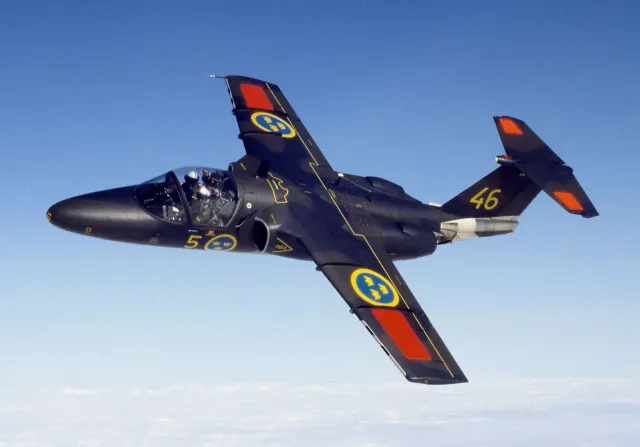
Fourteen of sixteen. That is the split once you pull firepower.weaponsPayloadKg across every system tagged trainer in src/content/systems/. The published figures run from 700 kg (Saab 105) to 5,400 kg (T-50 Golden Eagle), spanning everything from a light gun pod and practice-bomb loadout to a genuine multi-role strike fit.
The top-ranked aircraft by raw payload, the T-50, publishes more than seven times the bottom-ranked Saab 105's figure, but both are air-to-air missile carriers; hardpoint count and missile compatibility matter more here than the raw kilogram total.
| Rank | System | Country | Payload (kg) | Hardpoints | AAM-capable |
|---|---|---|---|---|---|
| 1 | KAI T-50 Golden Eagle | South Korea | 5,400 | 7 | Yes |
| 2 | BAE Hawk T2 | United Kingdom | 3,085 | 5 | No |
| 3 | Hongdu L-15 Falcon | China | 3,000 | 6 | Yes |
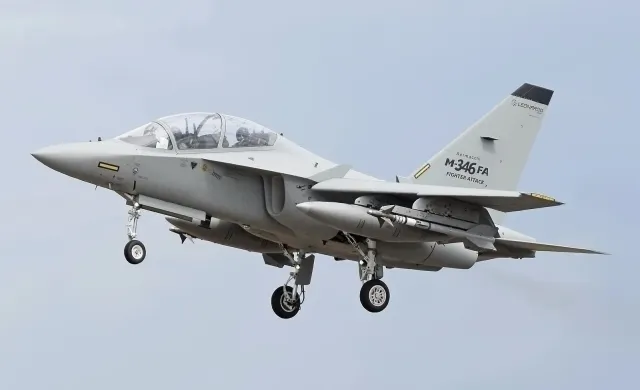
| 3 | Leonardo M-346 Master | Italy | 3,000 | 7 | Yes |
| 3 | Yakovlev Yak-130 | Russia | 3,000 | 9 | Yes |
| 6 | Dassault/Dornier Alpha Jet | France | 2,500 | 5 | No |
| 7 | TAI Hurjet | Turkey | 2,450 | 7 | No |
| 8 | Leonardo/Aermacchi MB-339 | Italy | 1,815 | 6 | No |
| 9 | Embraer A-29 Super Tucano | Brazil | 1,550 | 5 | No |
| 10 | AIDC T-5 Brave Eagle | Taiwan | 1,200 | 5 | No |
| 11 | HAL HJT-36 Sitara/Yashas | India | 1,000 | 5 | No |
| 12 | Hongdu JL-8 | China | 950 | 5 | No |
| 13 | TAI Hurkus | Turkey | 900 | 4 | No |
| 14 | Saab 105 | Sweden | 700 | 6 | Yes |
| - | Kawasaki T-4 | Japan | not published | - | No |
| - | Boeing T-7A Red Hawk | United States | not published | - | No |
Every figure above is the manufacturer or operator-disclosed maximum external stores weight; none of it is independently combat-tested. Treat it as a design-capacity claim, not a verified war load.
Which trainers can fire real air-to-air missiles?
Five of the 14 armed trainers are cleared for actual air-to-air missiles rather than gun pods, rockets, or practice bombs: the T-50 Golden Eagle (AIM-9 Sidewinder and regional derivatives), the L-15 Falcon (PL-5), the M-346 Master in its light-attack fit (AIM-9), the Yak-130 (R-73), and the Saab 105 (Rb 24 Sidewinder, in Swedish and Austrian service).
That is not a footnote, it is a category problem. An aircraft cleared to carry and fire a heat-seeking air-to-air missile is not a pure trainer anymore, it is a light fighter with a two-seat training heritage. The KAI FA-50, Korea Aerospace Industries’ dedicated light-attack derivative of the T-50 family, exists precisely because the line between “advanced jet trainer” and “light fighter” had already blurred in the base airframe, per Wikipedia’s overview of the T-50 program. The Yak-130 and L-15 followed the same commercial logic: Russia and China each built a trainer that could also credibly defend an export customer’s airspace or fly light strike missions, because a trainer-only sale is a much smaller contract than a trainer-plus-light-fighter sale.
Which two are true unarmed trainers?
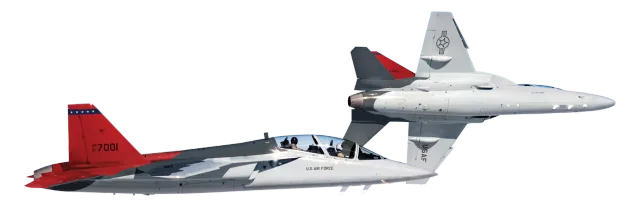
Two aircraft in this set carry nothing: the Boeing T-7A Red Hawk, the US Air Force’s newest pilot-training jet, and the Kawasaki T-4, Japan’s long-serving intermediate trainer. Neither publishes a weapons payload figure in the database, and that is not a data gap, it reflects their actual design brief.
Both are built for one job: producing pilots for a large, well-funded domestic air force that already owns dedicated fighters for combat and does not need its trainer fleet to double as an export light-attack product. That is worth noticing because it is the exception. Most nations building or exporting an “advanced jet trainer” are also building a budget line for light attack, air policing, or a first fast-jet capability, and they fold that requirement into the trainer program rather than paying for two separate aircraft. The US and Japan, with mature fighter fleets and large training pipelines, are among the few customers who can afford to keep the categories separate. See background on the broader category at Wikipedia’s advanced jet trainer overview and Saab’s early example of the armed-trainer template at the Saab 105 page.
Why does this matter for buyers?
Because a procurement office shopping for an “advanced jet trainer” today is very often shopping for a light-attack and point-defense capability at the same time, whether or not the budget line says so. Fourteen of sixteen programs in this dataset built that dual role in from the start: real hardpoints, a real payload figure, and in five cases real air-to-air missile compatibility. A buyer who treats the trainer line item as pure pilot-production cost, and evaluates competing bids only on cockpit ergonomics and syllabus hours, is missing half of what they are actually purchasing, and half of what a rival bidder’s aircraft can do the day the training mission ends.
That has direct budget and classification consequences. An air force that buys an armed trainer usually gets a light strike or air-policing squadron bundled into what looks, on paper, like a training procurement, which can shift where the aircraft sits in doctrine, what export controls apply, and what a follow-on contract for munitions actually costs. Conversely, a buyer who genuinely wants a trainer-only aircraft, no missile rails, no light-attack mission, needs to ask that question explicitly rather than assuming the word “trainer” already answers it, because in this database, it usually does not.
Run the numbers on your own shortlist in the Advisor, or line up any two of these airframes side by side in Compare before you sign anything.
Systems in this comparison
Every system covered above, with its photo and, where available, a video. Tap a card to open the full spec sheet.
Compare these side by side →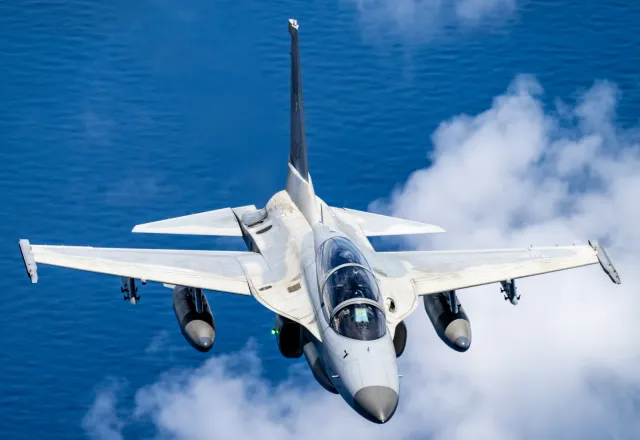
Trainer & light attack
T-50 Golden Eagle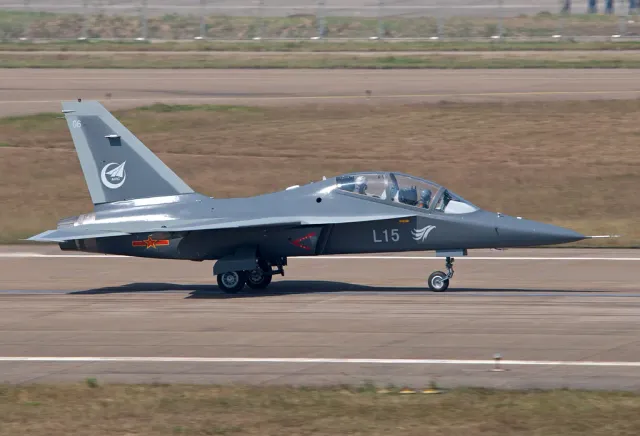
Trainer & light attack
M-346 Master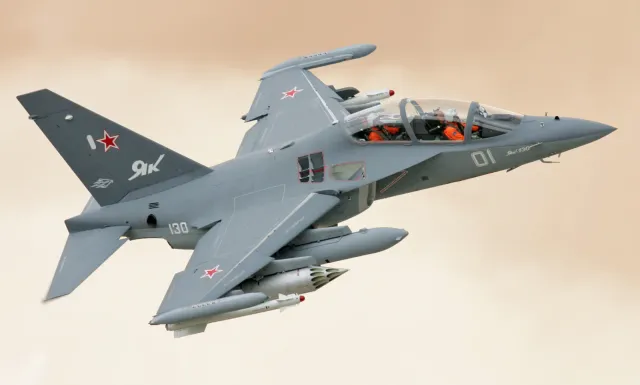
Trainer & light attack
T-7A Red HawkFrequently asked questions
Do trainer jets carry weapons? +
Most do. Of the 16 aircraft classified as trainer in WeaponSpecs' database, 14 publish a real weapons payload figure, ranging from 700 kg to 5,400 kg. Only two, the Boeing T-7A Red Hawk and the Kawasaki T-4, have no published armament at all.
Which trainer aircraft can fire air-to-air missiles? +
Five in the database are compatible with real air-to-air missiles rather than gun pods or rockets: the KAI T-50 Golden Eagle (AIM-9 and derivatives), Hongdu L-15 Falcon (PL-5), Leonardo M-346 Master (AIM-9 on its light-attack fit), Yakovlev Yak-130 (R-73), and Saab 105 (Rb 24 Sidewinder).
What's the difference between the T-50 and the FA-50? +
The T-50 Golden Eagle is the supersonic trainer airframe; the FA-50 is Korea Aerospace Industries' dedicated light-attack derivative of the same design, per Wikipedia. The T-50's published 5,400 kg weapons payload figure already reflects how thin the line is between the two roles.
Are trainer jet payload figures comparable to fighter jet payload figures? +
Not directly. Stealth fighters like the F-22A Raptor carry their primary air-to-air weapons internally to preserve a low radar cross-section, so their published external payload figure understates total capability. A trainer's payload figure is almost entirely external hardpoint capacity, so the two numbers measure different things even when they look comparable on paper.
Which trainer aircraft have no published armament? +
The Boeing T-7A Red Hawk and the Kawasaki T-4 are the two aircraft in WeaponSpecs' 16-trainer set with no published weapons payload figure. Both are flagship advanced trainers built primarily for pilot production rather than export-market light-attack sales.
Related reading