Longest-Range Air-to-Air Missiles, Ranked
Russia's R-37M claims 300km, nearly double the AIM-120D. But not one of the 39 ranged air-to-air missiles in our database publishes an official spec.
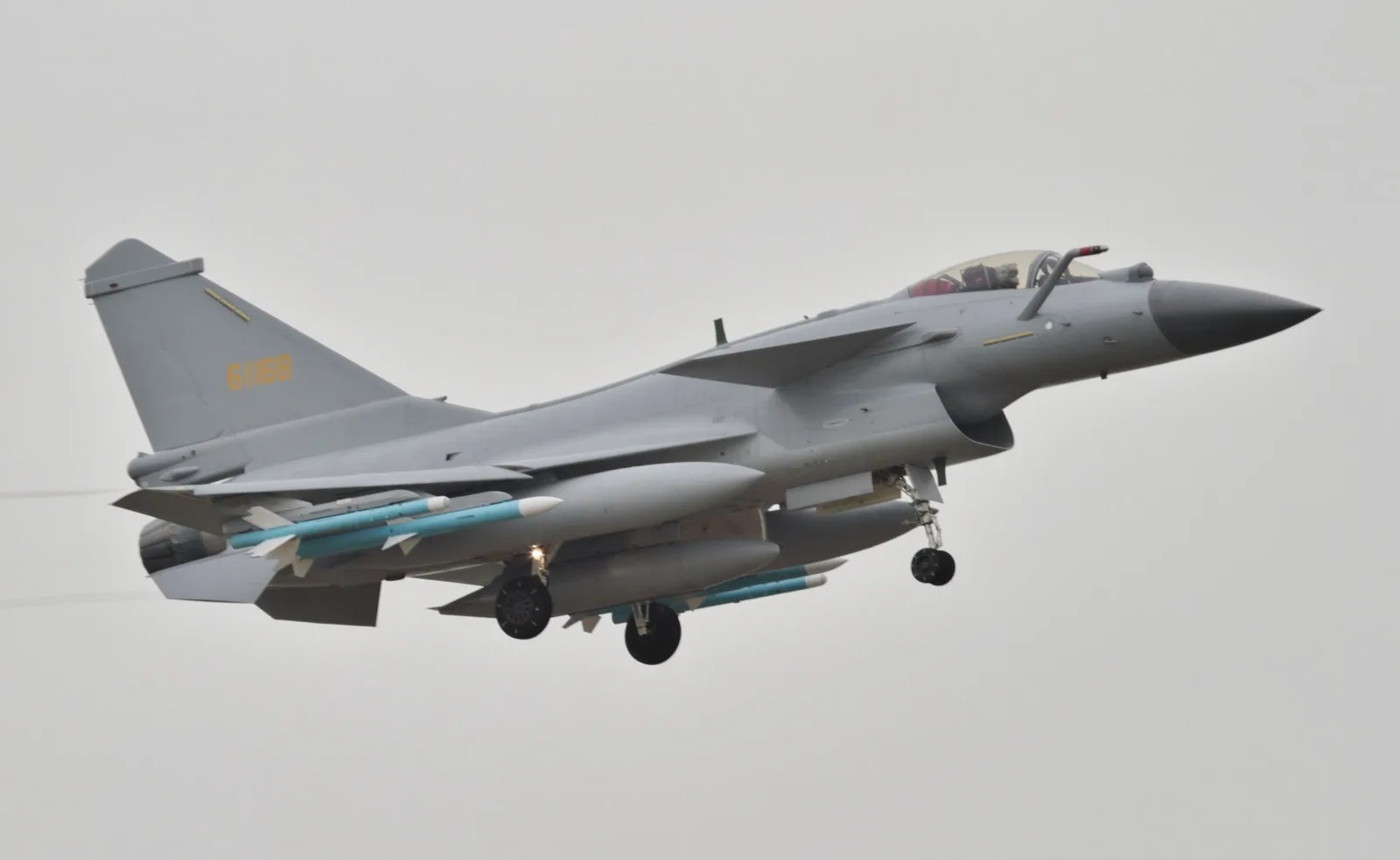
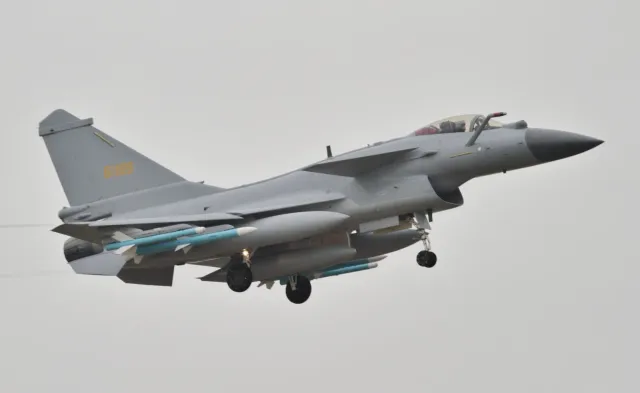
Via Wikipedia, Chengdu J-10 (shown for identification)
Russia’s R-37M is credited with a reach of roughly 300 km, nearly double the 160 km commonly cited for the American AIM-120D AMRAAM. That is a Russian state and manufacturer figure, not an independently verified one, and the gap between the claim and the record is the whole story here. The R-37M’s own most-documented combat kill, reported by 19FortyFive, was a Russian Su-35S downing a Ukrainian MiG-29 at approximately 118 miles, about 190 km1. A genuine long shot, but roughly 110 km short of the number on the brochure. And here is the finding that should frame every entry below: of the 39 air-to-air missiles in the WeaponSpecs database that publish a range figure, not one of those numbers comes from an official manufacturer spec sheet. Air-to-air missile range is one of the most opaque figures in the entire arsenal, on all sides.
How far can an air-to-air missile actually reach?
The database holds 41 air-to-air missiles; 39 of them publish a rangeKm figure. This article ranks the top of that list. Every one of these numbers falls into one of two buckets. Western missiles carry open-source analyst estimates, because the real figures are classified. Russian and Chinese missiles carry explicit state or manufacturer claims, which per this site’s standing rule must be read as claims, not facts, until independent evidence backs them. The chart below flags which is which by color. No air-to-air missile in the set carries what you could honestly call a disclosed, verified maximum range.
That matters because range is the single spec that decides who shoots first. A missile that reaches 50 km farther lets a pilot launch and turn away before the other side is in range at all. It is exactly the figure most worth inflating, and exactly the one hardest to check.
The only demonstrated real-world kill in this set, the R-37M's confirmed 190 km shot over Ukraine, sits nowhere near the 300 km claim topping this chart, and it is still longer than every missile ranked below it.
Read the red bars carefully. The R-37M (300 km), PL-15 (200 km), R-33 (160 km), R-27 (130 km), R-77 (110 km) and PL-12 (100 km) are all Russian or Chinese figures, and each is a manufacturer or state claim, not independently verified. The blue bars, Meteor, AIM-54 Phoenix, AIM-120D, Astra Mk1, AAM-4 and Turkey’s Gökbora, are analyst estimates, which are not spec sheets either but at least are not the manufacturer grading its own homework. One caveat worth flagging on the blue side: the AIM-54 Phoenix is a retired legacy system, and Gökbora is a manufacturer-announced Turkish missile not yet fielded.
Which of these ranges have actually been used in combat, and which are still just claims?
Two 2025-to-2026 engagements turned this from a spec argument into a field test, and both are instructive precisely because of what they do and do not prove.
Over Ukraine, a Russian Su-35S reportedly shot down a Ukrainian MiG-29 with an R-37M at roughly 190 km, while the launch aircraft stayed inside Russian airspace1. What is confirmed is that a very long-range shot connected. What is not confirmed is the missile’s claimed 300 km ceiling, because 190 km is the demonstrated figure and 300 km remains a Russian state claim with no verified flight behind it. The engagement validates the R-37M as a real long-reach threat. It does not validate the brochure.
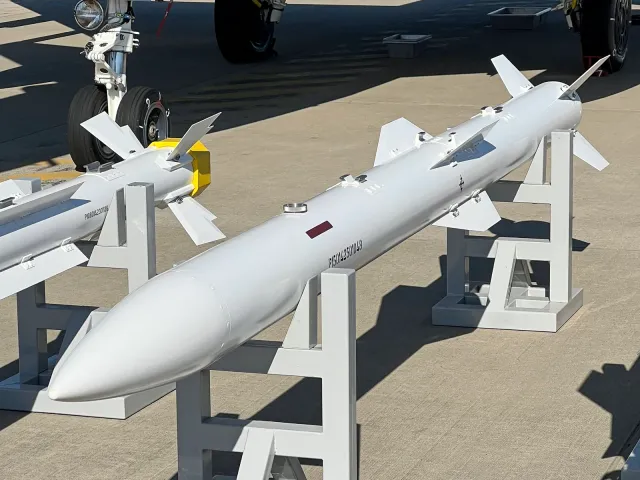
The May 2025 India-Pakistan engagement is the more consequential case. A Reuters reconstruction carried by Arab News reports that a Pakistani J-10C shot down at least one Indian Rafale using a PL-15, fired from around 200 km per the Pakistani account2. Indian officials describe the engagement differently, and the exact range is contested. Here is what is actually settled: PL-15 debris was recovered on Indian soil4, which confirms the missile was used in combat, not the distance it flew. And there is a real limitation buried in the data. The missile fired against India was almost certainly the export PL-15E, which is shorter-ranged than the domestic PL-15. Follow-up analysis notes that Indian pilots reportedly assumed the PL-15E’s reach was closer to 150 km3. Our own database entry lists the PL-15 at 200 km and does not distinguish the domestic round from the shorter export variant that was actually used. That is a flaw in the underlying spec, and it is the kind of thing this column exists to flag rather than paper over. The PL-15 is a Chinese state and manufacturer figure, not independently verified, and the export-variant gap makes even the recovered-debris case murkier than a clean 200 km headline suggests.
Why won’t Washington say how far an AMRAAM can shoot?
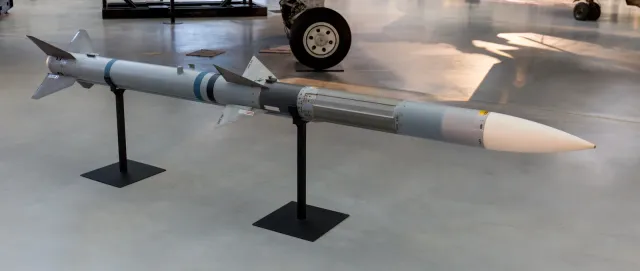
Because it is classified. Air & Space Forces Magazine reported that during flight testing, Raytheon and the US Air Force declined to characterize the AIM-120D’s exact extended range5. The 160 km our database carries, and the 160-180 km commonly cited elsewhere, is an open-source estimate, not a disclosed figure. This is the mirror image of the Russian and Chinese pattern. Moscow and Beijing state their numbers freely, and those numbers cannot be independently checked. Washington will not state its number at all.
It is worth being honest about what that does and does not mean. WeaponSpecs is a Western-friendly dataset with far more detail on far more systems than any Russian or Chinese equivalent publishes. But breadth of the arsenal is not the same as transparency about this one spec. The US publishes a great deal about which missiles exist and roughly what class they are in. It does not publish how far its best one shoots, and that silence is deliberate. So when you see a clean 160 km next to a boastful 300 km, do not read it as honest-West versus lying-East. Read it as two different classification cultures producing two different kinds of unverifiable number.
The full ranking: 12 longest-reach air-to-air missiles
Every missile below is a beyond-visual-range (BVR) weapon. None is a short-range dogfight missile.
| Rank | System | Country | Range (km) | Class | Claim status |
|---|---|---|---|---|---|
| 1 | R-37M | Russia | 300 | BVR | State claim, not independently verified |
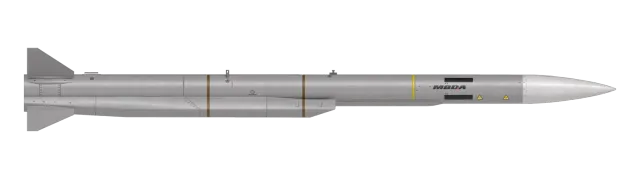
| 2 | Meteor | United Kingdom | 200 | BVR | Analyst estimate |
| 2 | PL-15 | China | 200 | BVR | State claim, not independently verified |
| 4 | AIM-54 Phoenix | United States | 190 | BVR | Analyst estimate (retired/legacy) |
| 5 | AIM-120D AMRAAM | United States | 160 | BVR | Analyst estimate (exact figure classified) |
| 5 | R-33 | Russia | 160 | BVR | State claim, not independently verified |
| 7 | R-27 | Russia | 130 | BVR | State claim, not independently verified |
| 8 | Astra Mk1 | India | 110 | BVR | Analyst estimate |
| 8 | R-77 | Russia | 110 | BVR | State claim, not independently verified |
| 10 | AAM-4 | Japan | 100 | BVR | Analyst estimate |
| 10 | PL-12 | China | 100 | BVR | State claim, not independently verified |
| 10 | Gökbora | Turkey | 100 | BVR | Analyst estimate (announced, not yet fielded) |
The pattern in the right-hand column is the actual takeaway. The three longest published ranges include two unverifiable state claims (R-37M, PL-15), and the one Western number near the top (Meteor) is an estimate. There is no independently disclosed maximum-range figure anywhere on this list.
For a direct head-to-head, compare the AIM-120D AMRAAM against the PL-15, the two missiles whose real-world reach the May 2025 engagement put in question, or the AIM-120D against the Meteor to see how the West’s own two front-line BVR options stack up. And because every number here is a claim or an estimate rather than a fact, the useful exercise is to see the geography for yourself: the Range Envelope Visualizer plots any of these figures as a ring from a launch point, so you can judge what a 300 km claim versus a 190 km demonstrated shot actually covers on a map.
Sources
- A Russian Fighter Just Shot Down a Ukrainian Jet From 118 Miles Away
- Reuters reconstruction of the India-Pakistan air engagement (via Arab News)
- Indian Rafale downed, Reuters analysis
- Pakistan's first combat use of PL-15E confirmed after debris found in India
- AMRAAM Range Extended in Test
- R-37 (missile)
- AIM-120 AMRAAM
Systems in this comparison
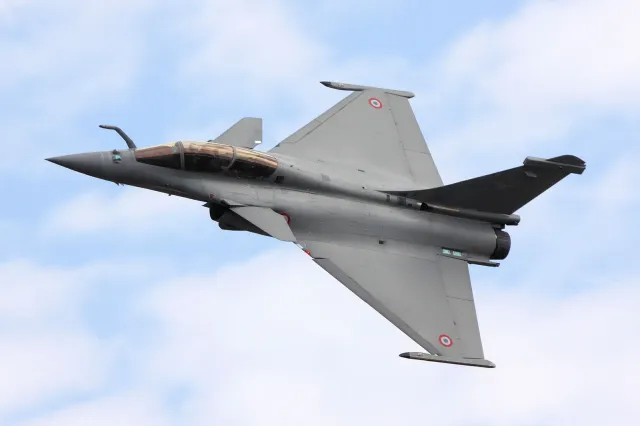
Every system covered above, with its photo and, where available, a video. Tap a card to open the full spec sheet.
Compare these side by side →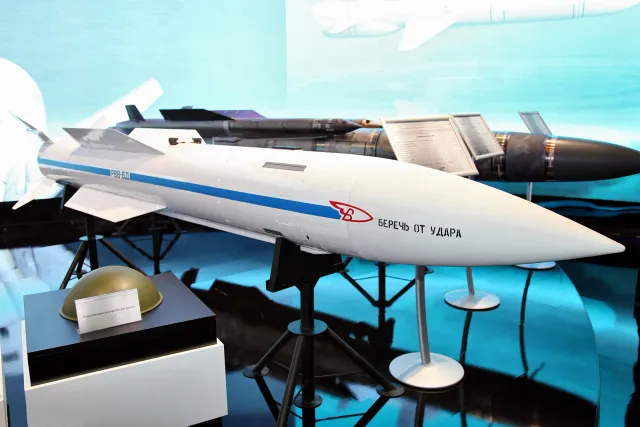
Frequently asked questions
What is the longest-range air-to-air missile in service today? +
By published figure, Russia's R-37M, credited with roughly 300 km. That number is a Russian state/manufacturer claim, not independently verified, and it should be read that way. Its best-documented combat kill, a Ukrainian MiG-29 downed by a Su-35S, was reported at around 190 km, well short of the claimed maximum. The longest range that is actually plausible in Western open-source analysis belongs to the MBDA Meteor and China's PL-15, both cited near 200 km.
Was the R-37M's 300km range ever actually proven in combat? +
No. The R-37M's most-documented combat kill, reported by 19FortyFive, was a Russian Su-35S downing a Ukrainian MiG-29 at approximately 118 miles, about 190 km, with the launch aircraft reportedly staying inside Russian airspace. That is a long shot by any standard, but it is roughly 110 km short of the 300 km the missile is claimed to reach. As with every Russian state figure, treat 300 km as an unverified claim.
Did Pakistan really shoot down an Indian jet from 200km away with a PL-15? +
A Reuters reconstruction carried by Arab News reports that a Pakistani J-10C downed at least one Indian Rafale using a PL-15, fired from around 200 km per the Pakistani account; Indian officials describe the engagement differently. PL-15 debris was later recovered on Indian soil, which confirms the missile was used in combat, not the exact range. There is also a variant nuance: the export PL-15E is shorter-ranged than the domestic PL-15, and our database entry does not distinguish the two.
Why doesn't the US government publish the AIM-120D AMRAAM's exact range? +
Because it is classified. Air & Space Forces Magazine reported that Raytheon and the US Air Force declined to characterize the AIM-120D's exact extended range during flight testing. The commonly cited 160-180 km figure is an open-source analyst estimate, not an official spec-sheet number. US classification norms mean Western openness about the breadth of the arsenal does not extend to this specific figure.
What's the difference between a WVR and a BVR air-to-air missile? +
A within-visual-range (WVR) missile, like the AIM-9 Sidewinder, is a short-range dogfight weapon used when the pilot can see the target, typically inside 30 km. A beyond-visual-range (BVR) missile is designed to engage targets detected only on radar, tens or hundreds of kilometers away. Every missile ranked in this article is a BVR weapon; the entire ranking is a contest among long-reach radar-guided missiles.
Related reading