Documents
 South Korea
 Korea Aerospace Industries (KAI)
T-50 Golden Eagle
South Korea's first indigenous supersonic jet, developed with Lockheed Martin as an advanced trainer that spawned the FA-50 light attack/fighter variant used by multiple export customers. It combines a tandem two-seat cockpit with a single afterburning turbofan to deliver supersonic performance for both pilot training and light combat missions.
In service since 2005 · 6 operator countries
Compiled from public sources ·primary reference ↗ ·last verified 2026-07-02
1,840
km/h
1,851
km range
14,630
m ceiling
5,400
kg payload
0.96
T/W
Procurement snapshot
Availability & export
ROK export-licensed
DAPA-administered; aggressive export posture with financing/offset packages.
Channel: Government-to-government
Fielded & proven
Established · 6 operators
In service since 2005. Status: active · ~200 built.
Lifecycle cost (est.)
No public unit price to model from. Why so few systems publish one →
Interoperability
Derived guidance from public data, export regime by country of origin, lifecycle from the GAO ~30% acquisition rule. Verify eligibility, pricing and offsets with the manufacturer and your acquisition authority.
Compatible munitions & weapons
Publicly reported weapons the T-50 Golden Eagle can carry. Linked items have a full spec page.


Powerplant
The T-50 Golden Eagle's engine has its own full spec page.

Full specifications
Performance
Speed, range, altitude and engagement capability.
| Max speed Maximum level speed. For aircraft this is at optimal altitude; for ground vehicles, top road speed. Higher means faster response and better kinematic performance. | 1,840 km/h |
|---|---|
| Max speed (Mach) Maximum speed as a multiple of the speed of sound. Mach 2+ is typical for air-superiority fighters. | 1.5 Mach |
| Range Maximum distance: ferry range for aircraft, operational range for vehicles, maximum engagement distance for missiles. Higher means more standoff or persistence. | 1,851 km |
| Service ceiling Maximum operating altitude. Higher gives energy advantage and sensor horizon. | 14,630 m |
| Thrust-to-weight Engine thrust divided by loaded weight. Above 1.0 the aircraft can accelerate going straight up. On a standalone engine record, this is the engine's own thrust divided by its dry weight, the standard figure of merit for jet engines. | 0.96 |
Firepower
Armament, payload and guidance.
| Main armament Primary weapon: main gun, cannon or missile type. | 20 mm General Dynamics M197 3-barrel rotary cannon, 205 rounds |
|---|---|
| Hardpoints External stations for weapons and pods. More means bigger and more flexible loadouts. | 7 |
| Weapons payload Maximum ordnance weight the platform can carry. Higher means more strike capacity per sortie. | 5,400 kg |
Physical
Dimensions, weight and crew.
| Length Overall length including gun/probe where applicable. | 13.14 m |
|---|---|
| Wingspan Wingtip-to-wingtip span. | 9.45 m |
| Empty weight Weight without fuel, ammunition or crew. | 6,470 kg |
| Combat weight Fully loaded weight. Lighter eases transport and bridging limits; heavier often means more armor. | 10,722 kg |
| Crew Personnel required to operate. Fewer reduces exposure; autoloaders trade a loader for mechanical complexity. | 2 |
Propulsion
Engine, power and fuel.
| Engine Powerplant model and type. | 1x General Electric F404-GE-102 afterburning turbofan (license-built by Samsung Techwin/Hanwha) |
|---|---|
| Thrust Total engine thrust (with afterburner where applicable). | 79 kN |
| Propulsion type Turbofan, turboshaft, diesel, gas turbine, solid-fuel rocket, ramjet… | Turbofan |
Sensors & avionics
Radar, sensor suite and datalinks.
| Radar Primary radar. AESA (active electronically scanned array) is the current state of the art. | Lockheed Martin AN/APG-67 (T-50); Elta EL/M-2032 (TA-50/FA-50); Raytheon PhantomStrike AESA (FA-50 Block 70) |
|---|---|
| Sensors IRST, EO/IR turrets, laser designators, sniper pods, thermal sights. | electro-optical targeting pod (FA-50 variants) |
Program
Cost, production scale and operators.
| Units built Total production run. Higher means proven manufacturing, mature logistics and spares availability. | 200 |
|---|---|
| Operator countries Number of countries operating the system. More operators means broader support ecosystem. | 6 |
Specifications compiled from public Korea Aerospace Industries (KAI) and reference sources ↗. Published defense figures are approximations, treat comparisons as directional. Last verified 2026-07-02.
Compare with rivals
See how it stacks up
 Leonardo M-346 Master
  Yakovlev Yak-130
  Embraer Defense & Security A-29 Super Tucano
 Head-to-head comparisons
T-50 Golden Eagle vs
 L-15
L-15 Frequently asked questions
What is the top speed of the Korea Aerospace Industries (KAI) T-50 Golden Eagle? +
The Korea Aerospace Industries (KAI) T-50 Golden Eagle has a maximum speed of 1,840 km/h.
What is the range of the Korea Aerospace Industries (KAI) T-50 Golden Eagle? +
The Korea Aerospace Industries (KAI) T-50 Golden Eagle has a maximum range of 1,851 km.
What is the weapons payload of the Korea Aerospace Industries (KAI) T-50 Golden Eagle? +
The Korea Aerospace Industries (KAI) T-50 Golden Eagle can carry up to 5,400 kg of weapons payload.
How much does the Korea Aerospace Industries (KAI) T-50 Golden Eagle weigh? +
The Korea Aerospace Industries (KAI) T-50 Golden Eagle has a combat weight of 10,722 kg.
How many crew does the Korea Aerospace Industries (KAI) T-50 Golden Eagle require? +
The Korea Aerospace Industries (KAI) T-50 Golden Eagle requires a crew of 2.
What is the main armament of the Korea Aerospace Industries (KAI) T-50 Golden Eagle? +
The Korea Aerospace Industries (KAI) T-50 Golden Eagle's primary weapon is the 20 mm General Dynamics M197 3-barrel rotary cannon, 205 rounds.
What engine does the Korea Aerospace Industries (KAI) T-50 Golden Eagle use? +
The Korea Aerospace Industries (KAI) T-50 Golden Eagle is powered by the 1x General Electric F404-GE-102 afterburning turbofan (license-built by Samsung Techwin/Hanwha).
What is the Korea Aerospace Industries (KAI) T-50 Golden Eagle used for? +
The Korea Aerospace Industries (KAI) T-50 Golden Eagle is a trainer & light attack typically used for close air support.
How many countries operate the Korea Aerospace Industries (KAI) T-50 Golden Eagle? +
The Korea Aerospace Industries (KAI) T-50 Golden Eagle is operated by 6 countries.
Similar systems
Korea Aerospace Industries (KAI)
KT-1 Woongbi
Embraer Defense & Security
A-29 Super Tucano
Yakovlev
Yak-130
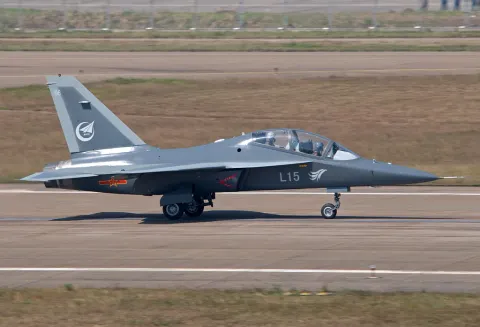
Hongdu Aviation Industry Group
L-15
Related coverage
T-50 Golden Eagle in the news
 Article
 buying · Jul 27, 2026
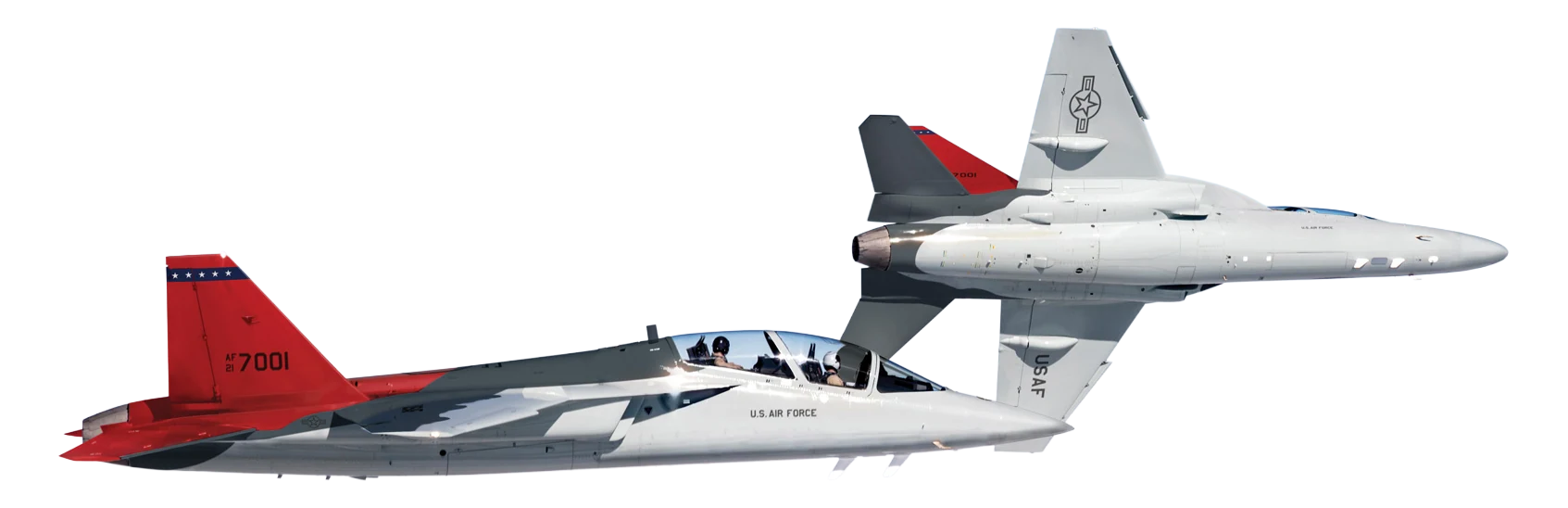
What Top Speed Means on a Trainer Jet Spec Sheet
Trainer aircraft in our database span 574 to 1,840 km/h, a 3.2x spread, and the newest US jet's own sources cannot agree if it clears Mach 1.
 Article
 comparison · Jul 13, 2026
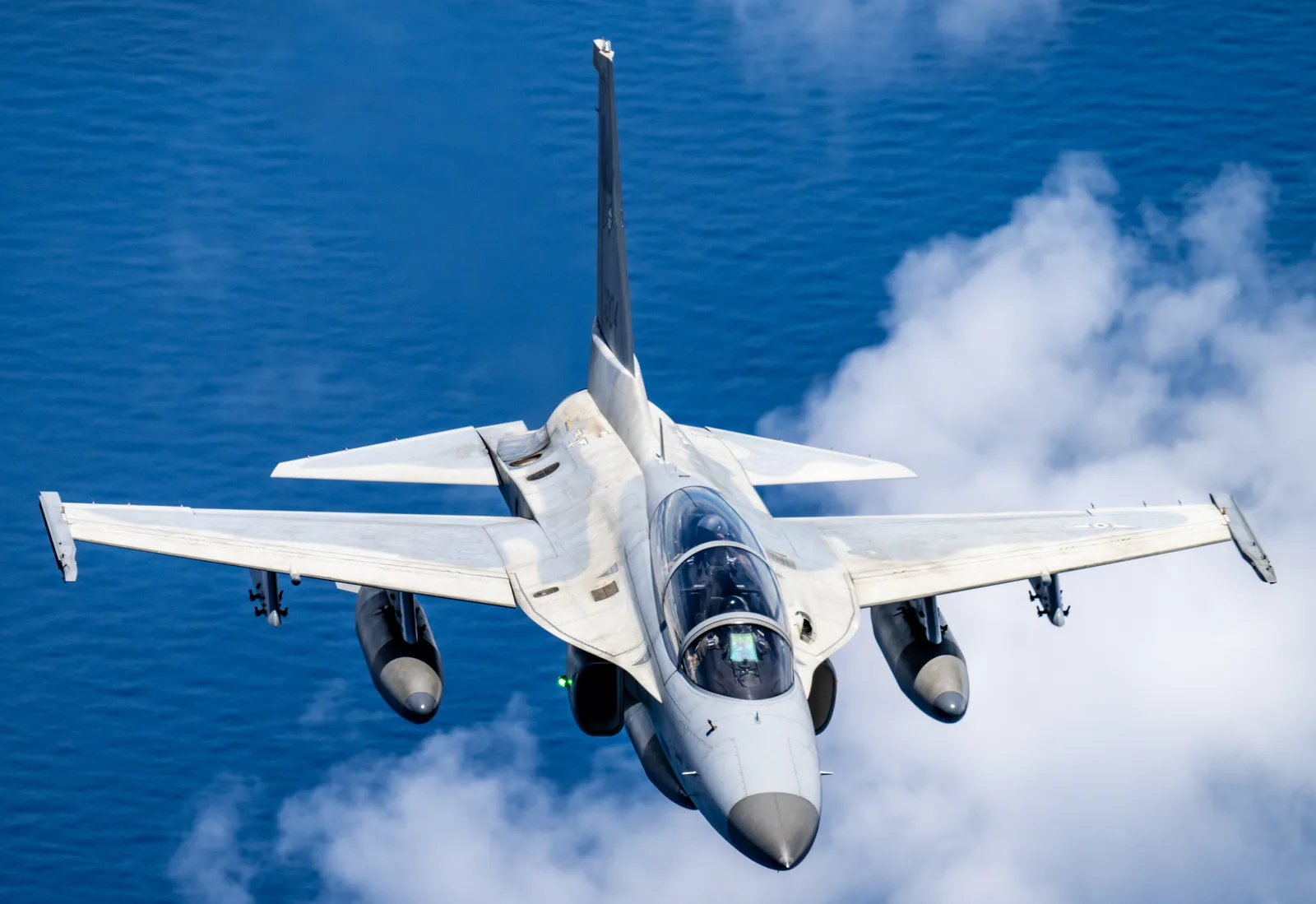
14 of 16 'Trainer' Jets in Our Database Are Armed
14 of 16 jet trainers in WeaponSpecs' database publish a weapons payload, and 5 can fire real air-to-air missiles. Two carry none at all.