South Korea and NATO to negotiate a joint procurement framework
Hanwha Aerospace pitched a localized 'Built with Europe, for Europe' manufacturing strategy at NATO's Ankara industry forum as Seoul and NATO agreed to negotiate a formal framework letting Korean contractors bid into allied joint acquisition programs.
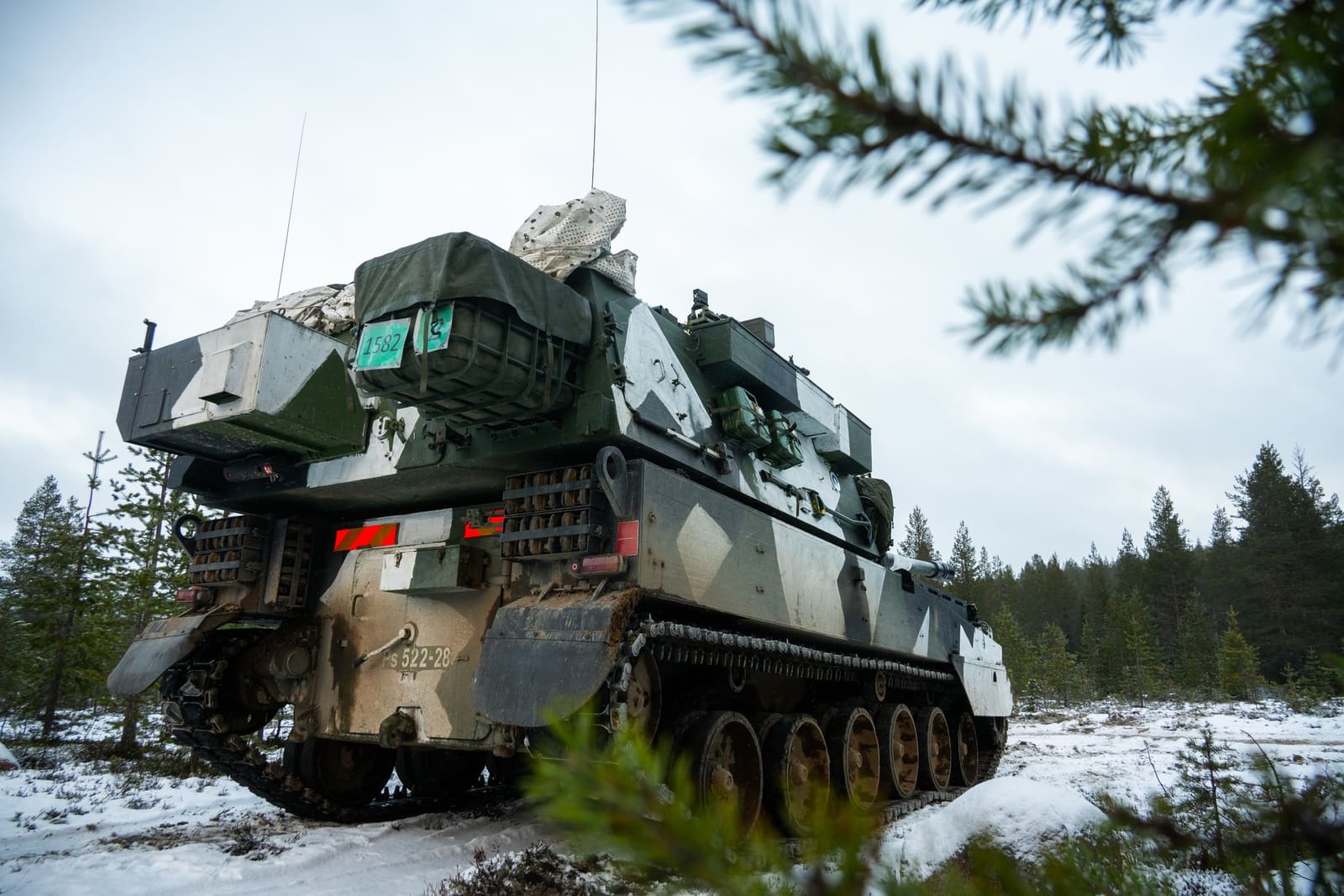
U.S. Army / DVIDS, public domain (Exercise Dynamic Front 25)
By the numbers
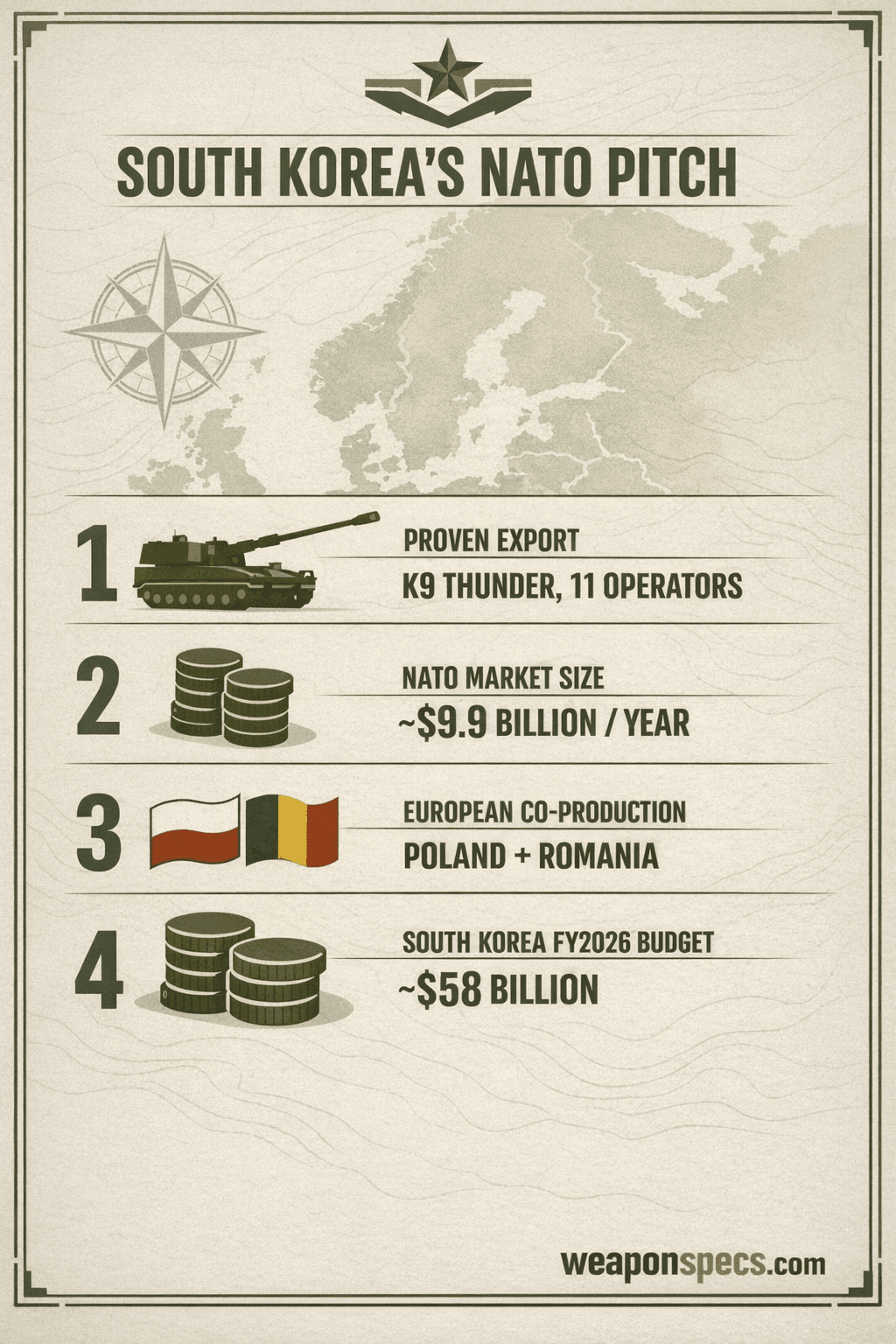
Infographic: WeaponSpecs News Desk
South Korea and NATO have agreed to begin negotiating a formal defense-procurement framework agreement that would let Korean defense contractors bid directly into NATO allies’ joint acquisition programs, a development that surfaced alongside Hanwha Aerospace’s presentation of a “Built with Europe, for Europe” localized-manufacturing strategy at the NATO Defence Industry Forum in Ankara on July 8, 2026, according to Army Recognition, The Korea Herald, and Aju Press. The framework talks would open South Korean firms to a NATO joint-procurement market reported at roughly $9.9 billion a year, formalizing a supplier relationship that has so far been built deal by deal.
A pitch built on an already-proven track record
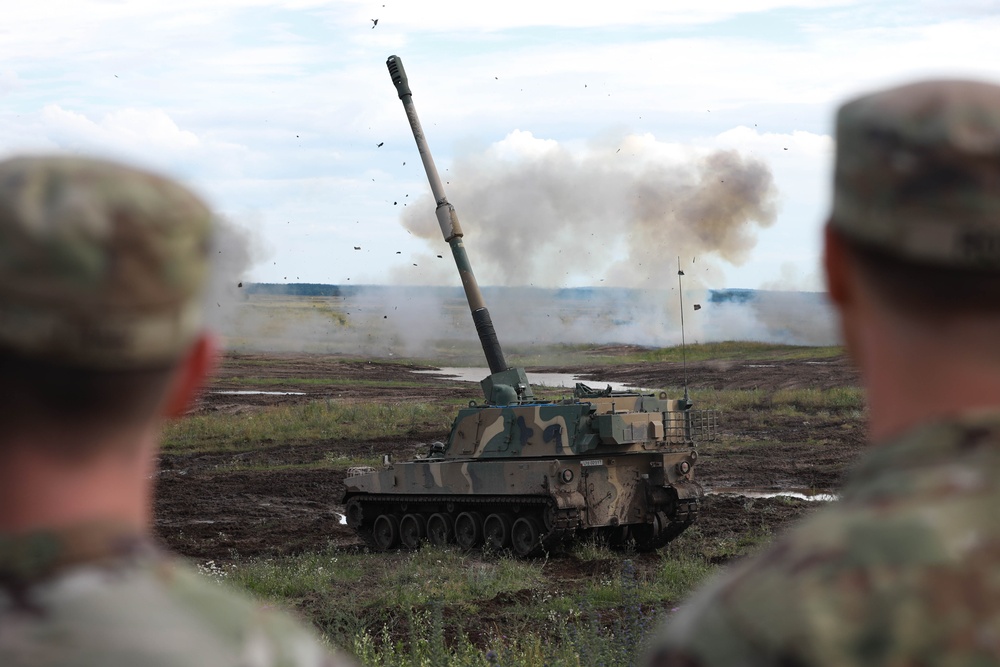
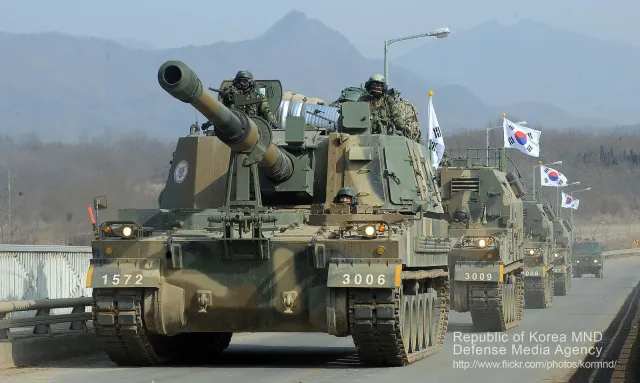
Hanwha Aerospace is not arriving at this pitch as an unproven newcomer. The company’s K9 Thunder self-propelled howitzer is, per WeaponSpecs’ own systems database, the best-selling artillery system of its kind worldwide, with roughly 1,900 units built and 11 operators including Turkey, Poland, Finland, Norway, Estonia, Australia, Egypt, Romania and Vietnam alongside South Korea itself. Its 155mm 52-caliber Hyundai WIA CN98 gun fires at up to 6 rounds per minute with a maximum range around 54 kilometers, and the platform combines a 47,000-kilogram combat weight with a five-person crew and a road speed of 67 kilometers per hour, specifications that have made it a repeat winner in NATO-adjacent procurement competitions well before this week’s forum.
That export record is precisely what “Built with Europe, for Europe” is meant to build on rather than replace. Hanwha already co-produces K9 Thunder units in Poland and is ramping ground-defense production in Romania, alongside manufacturing the Cheonmu multiple-launch rocket system in Poland as well. The pitch in Ankara extends that same model: local manufacturing joint ventures and technology transfer inside NATO member states, rather than simply exporting finished Korean-built hardware, a distinction Hanwha and Korean officials have leaned on because it reduces the political friction that comes with importing complete foreign weapons systems and instead builds production capacity that NATO members can point to as their own.
Why NATO needs the option right now
NATO allies rearming in response to Russia’s war in Ukraine, combined with continued materiel support to Kyiv, have strained European and American munitions and heavy-equipment production lines in ways multiple Pentagon and congressional assessments have flagged as a persistent bottleneck, not a temporary one. That capacity gap is the direct rationale behind NATO wanting diversified, allied suppliers with a proven export record, a group that already includes Finland, Norway and Australia as past K9 buyers, alongside India. A negotiated procurement framework would let South Korean firms bid into NATO’s joint programs on more predictable terms than the current pattern of individual bilateral deals negotiated country by country.
South Korea, for its part, brings meaningful fiscal weight to the table. Its FY2026 defense budget is reported at approximately $58 billion, a figure that Global Firepower’s index places as the world’s fifth-largest, though that ranking is best read as a cited estimate from GFP’s own composite methodology rather than a universally agreed hard fact, since different indices weight defense spending, personnel, and equipment differently. What isn’t in dispute is that South Korea has built, and continues to fund, one of the highest-volume defense-manufacturing bases outside the US and China, which is the underlying capacity NATO’s framework talks are aiming to plug into.
That capacity has been demonstrated under real wartime-adjacent pressure rather than only in peacetime brochures. Poland’s rapid K9 Thunder and Cheonmu orders, placed in the aftermath of Russia’s full-scale invasion of Ukraine, were themselves a stress test of how quickly Hanwha could scale co-production inside a NATO member state facing an acute, immediate need to rearm. Warsaw’s decision to keep ordering, and to expand into local manufacturing rather than a one-time import, is one of the clearest existing signals that Hanwha’s “Built with Europe, for Europe” pitch in Ankara is describing a proven pattern rather than an aspirational one.
What a framework agreement would change
Today, South Korean firms sell into NATO member states through individual national contracts, each negotiated separately, as Hanwha’s existing Poland, Finland, Norway, Estonia, Australia, Egypt and Romania deals show. A formal NATO-level procurement framework would instead give Korean contractors standing to bid into NATO’s own joint acquisition programs, the coordinated multinational purchasing arrangements NATO uses to buy equipment collectively across member states rather than nation by nation. That’s a structurally different door than the one Hanwha has been walking through country by country, and it’s the door this week’s Ankara talks are aimed at formally opening.
Sources
- Hanwha Aerospace presents 'Built with Europe, for Europe' strategy at NATO Defence Industry Forum in Ankara — Army Recognition, Jul 8, 2026
- South Korea, NATO agree to negotiate defense procurement framework — The Korea Herald, Jul 8, 2026
- Hanwha Aerospace's European localization push at NATO forum — Aju Press, Jul 8, 2026
Systems mentioned
Every system named in this story, with its photo and, where available, a video. Tap a card to open the full spec sheet.
Artillery & MLRS
K9 ThunderFrequently asked questions
How big is the NATO procurement market South Korea is targeting? +
NATO's joint-procurement market is reported at roughly $9.9 billion annually, the figure cited at the Ankara forum for the pool of coordinated allied acquisition spending South Korean contractors would be able to bid into under a formal framework agreement.
Why does NATO need South Korean suppliers right now? +
European and US munitions and heavy-equipment production capacity has been strained by allies rearming against Russia and by sustained support for Ukraine. South Korea's Hanwha Aerospace already runs proven, high-volume production of systems like the K9 Thunder howitzer and Cheonmu multiple rocket launcher, making it an attractive diversified supplier rather than a speculative new entrant.
What does 'Built with Europe, for Europe' actually mean? +
It describes local manufacturing joint ventures and technology transfer inside NATO member states, such as K9 Thunder co-production in Poland and ground-defense production ramping in Romania, rather than shipping finished systems from South Korea. That structure is meant to reduce the political friction of importing complete foreign-built weapons and to build sovereign production capacity inside NATO's own borders.
Does this affect NATO's posture toward North Korea? +
The available reporting doesn't suggest a direct North Korea policy shift. It reads more as NATO diversifying its supplier base and reinforcing a broader Indo-Pacific/Euro-Atlantic security linkage than as a North Korea-specific move, and this story does not overstate it as one.
More news