South Korea Orders Bombardier Global 6500 Stand-Off Jammer Aircraft
Korean Air and LIG Nex1 will convert two more Global 6500 business jets into electronic-warfare aircraft, adding a jamming role to the same airframe already ordered for AEW&C.
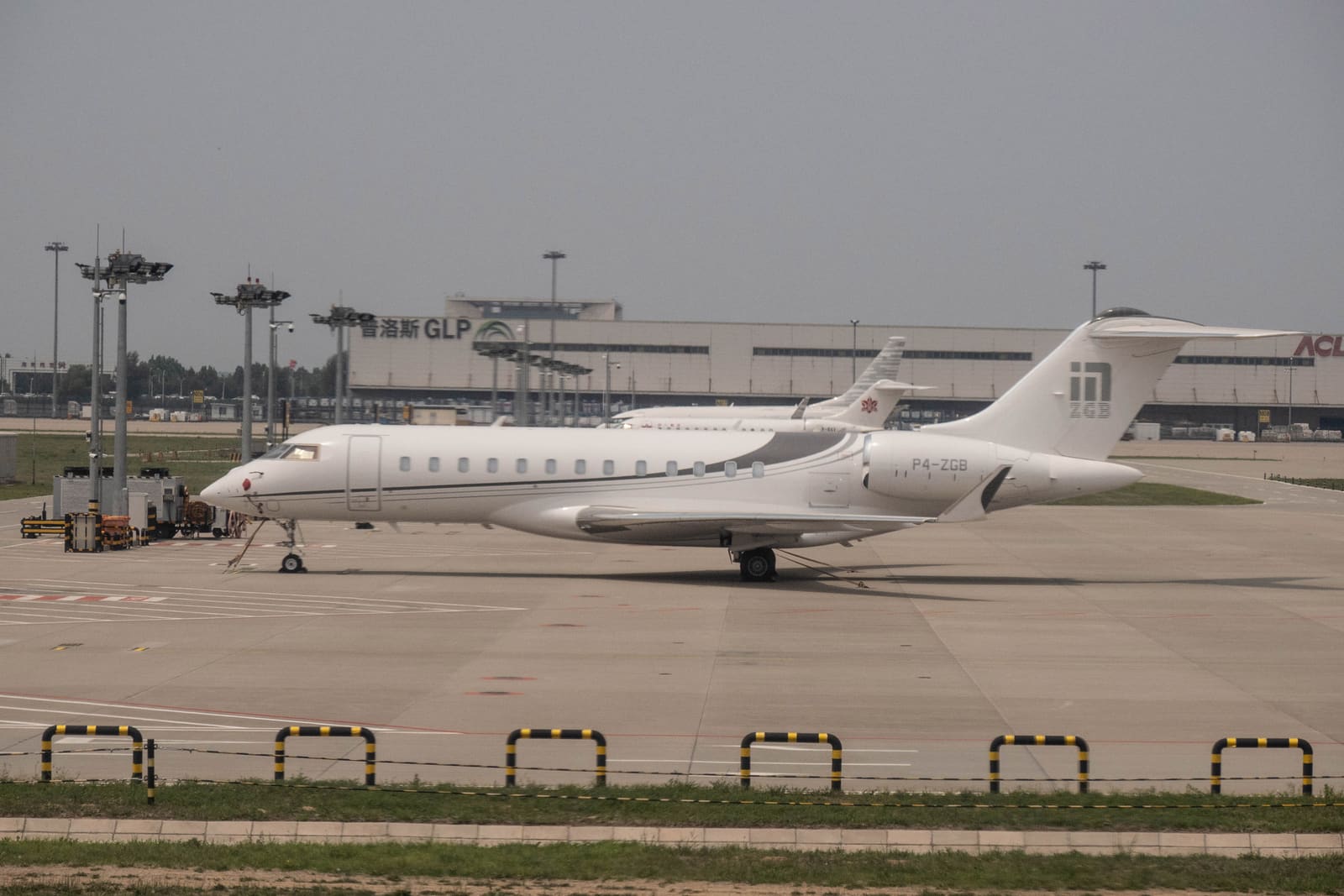
Wikimedia Commons, CC BY-SA 4.0, photo by Siyuwj
South Korea has signed for two more Bombardier Global 6500 business jets, this time to be converted into Stand-Off Jammer (SOJ) electronic-warfare aircraft, Bombardier Defense confirmed July 14. Korean Air will purchase and integrate the aircraft, working with South Korean defense electronics firm LIG Nex1 on the mission systems, under the Republic of Korea Air Force’s Block I Electronic Warfare System Development Project. The order adds a jamming variant to a Global 6500 fleet South Korea already committed to in October 2025, when it selected four of the same jets, fitted out by L3Harris Technologies, for an Airborne Early Warning and Control (AEW&C) role.
Bombardier’s announcement disclosed neither a contract value nor a delivery schedule for the SOJ aircraft specifically. The broader program figure, reported separately by The War Zone, is roughly $1.2 billion allocated through 2034 for the Block I Electronic Warfare System Development Project, which South Korea’s Defense Acquisition Program Administration (DAPA) approved in April 2025. LIG Nex1 was reported to have won a $1.1 billion contract under that program in December 2025. The Republic of Korea Air Force expects the SOJ aircraft to reach service by 2034.
Same airframe, two different missions
The decision to build both the AEW&C and SOJ fleets on the same Global 6500 airframe is deliberate, not incidental. Bombardier’s own materials point to the aircraft’s long range and high-altitude performance as the qualities that suit it to special-mission conversions, and DAPA’s stated preference gave weight to “airframe integration capability” in scoring the competing SOJ bids. A shared airframe across two different special-mission roles means shared maintenance infrastructure, shared pilot training pipelines, and a single spares and support relationship with Bombardier for what will eventually be a fleet of at least six converted jets, a logistics case that likely mattered as much as any single technical spec in DAPA’s evaluation.
The SOJ variant itself is reported to carry conformal AESA (active electronically scanned array) antenna fairings built into the fuselage, including a canoe-shaped fairing under the belly, designed to disrupt enemy radar, command-and-control networks, and wireless communications from outside the range of the systems it is jamming. Trade press reporting on the program put the jamming range at 200-plus kilometers, enough to cover the Korean peninsula from international airspace or friendly territory rather than requiring the aircraft to operate over contested ground. Defence Industry Europe separately reported an endurance figure of more than 10 hours for the converted aircraft, well beyond what a fighter-sized platform can sustain and closer to what a dedicated signals-intelligence or command-and-control aircraft needs to hold station over a target area for an extended mission.
Filling a real capability gap
South Korea has never fielded a dedicated, purpose-built stand-off jamming aircraft of its own. Its electronic-warfare posture has historically leaned on close US-ROK integration, including periodic deployments of US Air Force EC-130H Compass Call aircraft to the peninsula, rather than an indigenous stand-off platform flying under Korean Air Force control around the clock. DAPA’s own framing of the requirement, that the aircraft must be able to “paralyze enemy air-defense networks and wireless command and communication systems in times of crisis,” reflects a specific concern: that in a fast-moving contingency, Seoul cannot assume allied jamming support will be immediately on station, and North Korea’s own air-defense and command networks are dense enough along the DMZ that suppressing them from a stand-off distance is now treated as a first-order requirement rather than a nice-to-have.
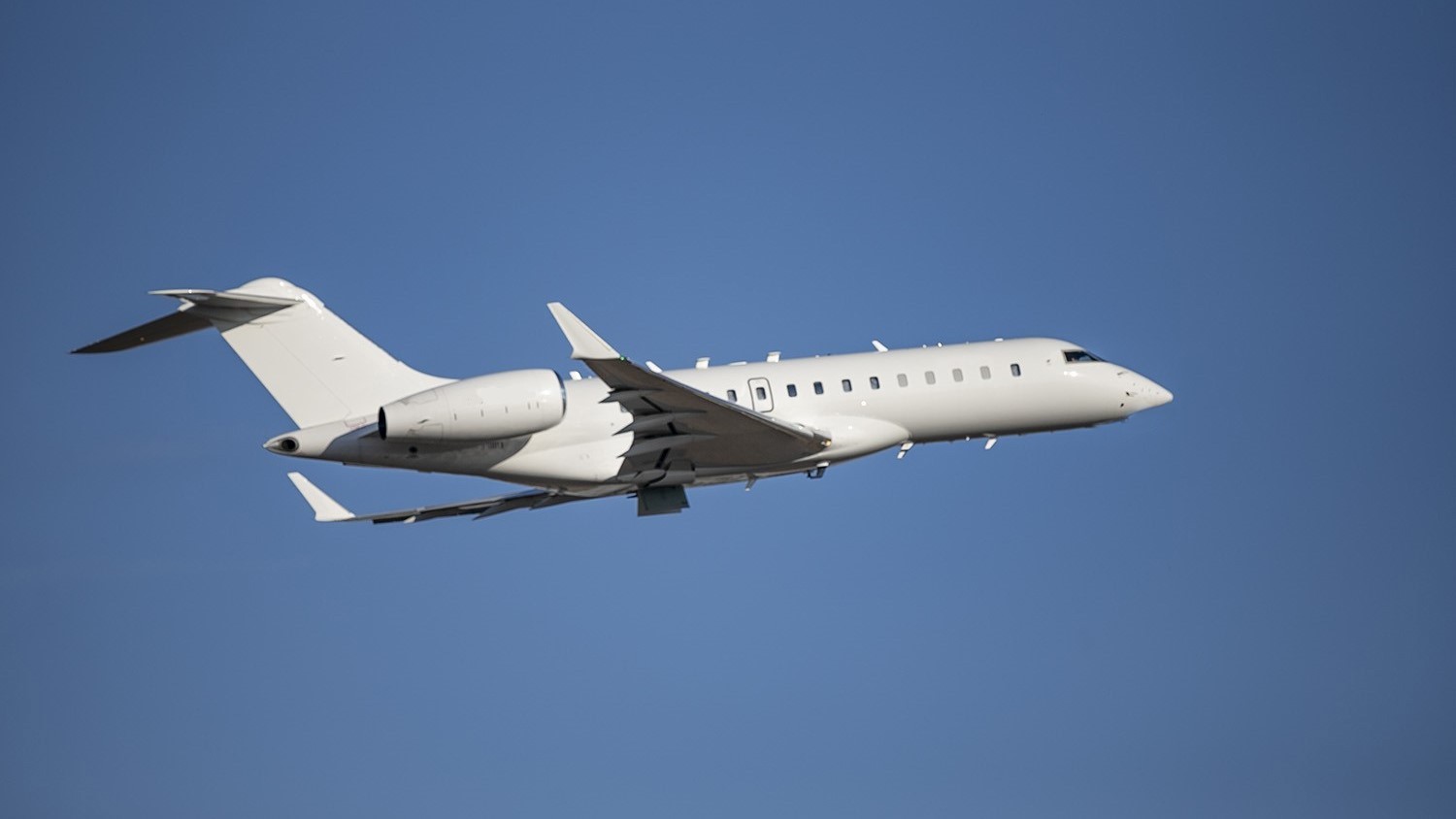
The business-jet-based approach has real precedent elsewhere. Sweden’s Saab has built its GlobalEye airborne early warning aircraft on the same Bombardier Global 6000/6500 airframe family, carrying the Erieye ER AESA radar out to roughly 550 km detection range with up to 11 hours of endurance, proof that the platform scales to demanding, power-hungry sensor and electronics packages well beyond what its original business-jet role required. The US Army has gone further still: its Airborne Reconnaissance and Electronic Warfare System (ARES), built on the same Global 6000/6500 family and first flown in 2021, is specified to operate above 40,000 feet for as long as 14 hours while carrying a suite of electronic and signals intelligence sensors, a demonstrated endurance figure well above the 10-plus hours reported for South Korea’s new SOJ jets and a useful benchmark for what the airframe family is capable of once fully missionized.
For reference, the US Army’s ARES aircraft, a real electronic-warfare and reconnaissance platform already flying on the same Bombardier Global 6000/6500 airframe family South Korea has now selected for its own Stand-Off Jammer fleet, is shown below.
Sources
- Bombardier Defense to Provide the Global 6500 Aircraft for a Second Special Mission Program in South Korea — Bombardier Defense (GlobeNewswire press release), Jul 14, 2026
- South Korea To Get Huge Electronic Attack Boost With Global 6500 Jammer Jets — The War Zone (TWZ), Jul 14, 2026
- South Korea Orders Bombardier Global 6500 for Electronic Warfare — AeroTime, Jul 14, 2026
- Bombardier Defense Global 6500 Selected for South Korea Electronic Warfare Aircraft Programme — Defence Industry Europe, Jul 15, 2026
Frequently asked questions
What makes a business jet suitable for electronic warfare? +
Long endurance, high service ceiling, and a spacious pressurized fuselage that can carry large conformal antenna arrays and power-hungry jamming electronics are the main requirements, the same reasons the US Air Force built its RC-135 signals-intelligence fleet on a converted airliner rather than a fighter. The US Army's own ARES sensor aircraft, built on the same Bombardier Global 6000/6500 airframe family South Korea has now selected, is a direct precedent: the Army specified it to fly above 40,000 feet for as long as 14 hours.
How does 200-plus km jamming range matter for the Korean peninsula specifically? +
South Korea's Defense Acquisition Program Administration says the new aircraft need to disrupt enemy air-defense networks and command-and-control links from a safe stand-off distance. A reported 200-plus km jamming range is enough to cover the width of the Korean peninsula from international airspace or friendly territory, without the jamming aircraft having to cross into contested airspace to be effective.
Why did this go to Korean Air and LIG Nex1 over the competing bid? +
South Korea's Defense Acquisition Program Administration evaluated competing proposals on electronic-warfare equipment technology and airframe integration capability, and LIG Nex1's team scored higher, winning a reported $1.1 billion contract in December 2025. Public reporting on exactly which airframe the losing team, Korea Aerospace Industries partnered with Hanwha Systems, ultimately proposed is inconsistent across outlets, so this story does not assert a specific rival aircraft type beyond noting KAI's bid was not selected.
When does this become operational? +
The Republic of Korea Air Force expects the Stand-Off Jammer aircraft to enter service by 2034, under the Block I Electronic Warfare System Development Project, which DAPA approved in April 2025 with roughly $1.2 billion allocated through that year.
More news