Lockheed wins $850M to extend Trident II D5 missile life
A Navy contract funds a second life extension for the missile carrying roughly 70 percent of America's deployed nuclear deterrent, viable past the 2040s.
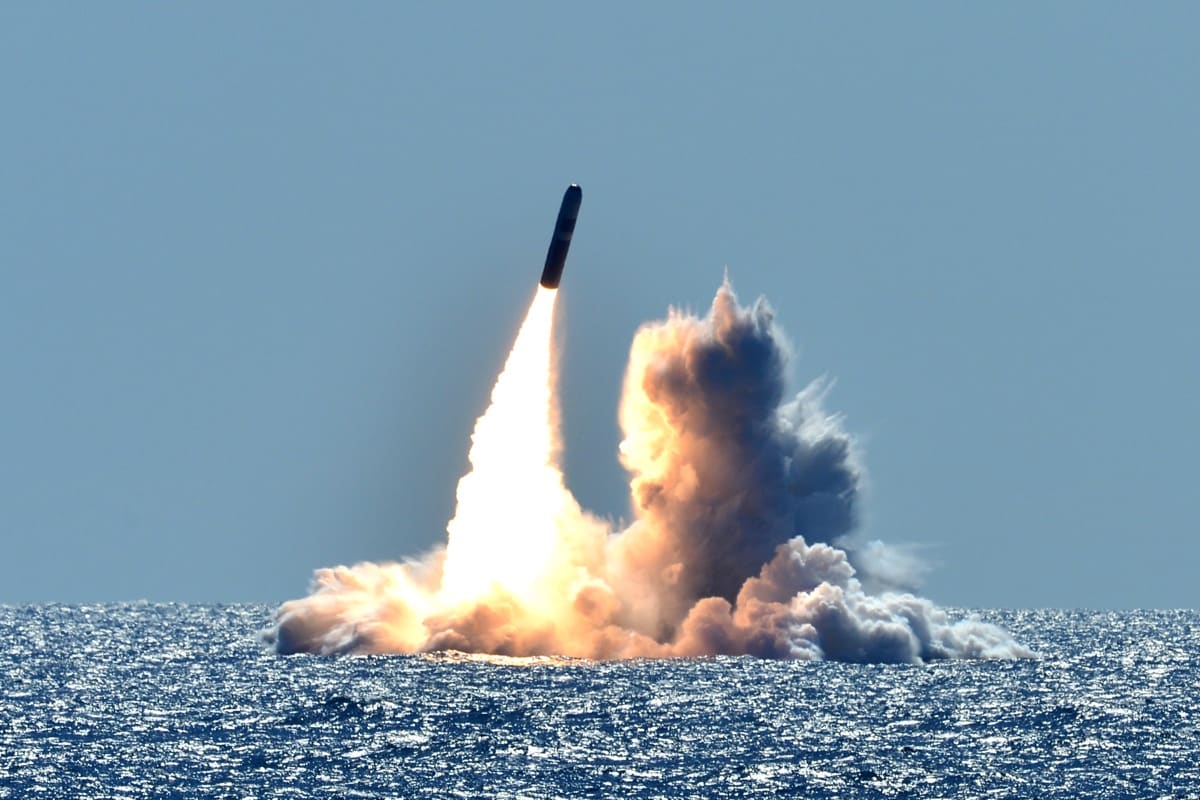
U.S. Navy photo, via Wikimedia Commons, public domain
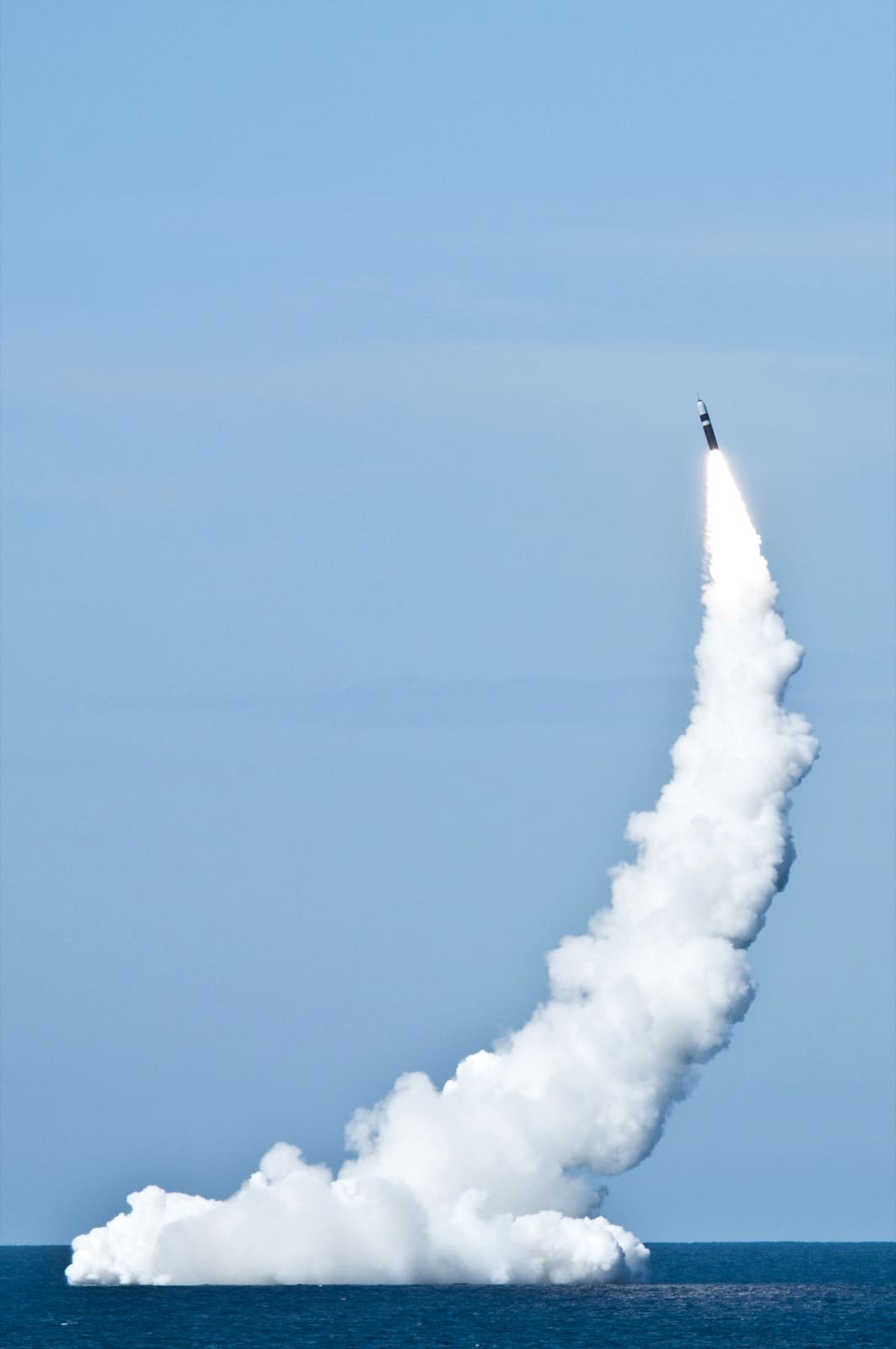
Lockheed Martin announced it has been awarded an $850 million U.S. Navy contract modification to continue design and development of the Trident II D5 Life Extension 2 program, according to its own press release, corroborated by Naval Technology. The contract action underlying this announcement was recorded by the Pentagon around April 15, 2026; Lockheed’s own public disclosure came July 10, with trade press picking it up July 13. D5LE2 is the second life-extension effort for Trident II D5, the submarine-launched ballistic missile that, by Lockheed’s own figure, accounts for roughly 70 percent of the United States’ deployed strategic nuclear deterrent.
A quiet, decades-long sustainment problem
Trident II D5 has been in service since 1990, carried aboard both U.S. Ohio-class and U.K. Vanguard-class ballistic-missile submarines. It is a three-stage, solid-fueled missile with a published range around 12,000 kilometers and the capacity to carry up to eight to twelve independently targetable reentry vehicles (the W76 and W88 warhead families), according to WeaponSpecs’ own systems database. A first life-extension program, D5LE, concluded in 2017, refreshing aging guidance and other components to keep the missile credible through roughly the following decade. D5LE2 picks up where that program left off: replacing further components and incorporating updated technology so the missile remains operational, per Lockheed and Naval Technology’s reporting, “into the 2040s and beyond,” a timeline chosen to bridge the current Ohio-class fleet into the Navy’s incoming Columbia-class submarines and the Royal Navy’s planned Dreadnought-class boats.
That framing matters because this is not a contract that responds to any single event. There is no test failure, no adversary provocation, no launch to report. It is scheduled sustainment engineering for a weapon system whose entire value proposition is that it keeps working reliably, on a predictable timeline, for decades without anyone needing to think about it. The risk this kind of funding manages is not a dramatic one, it is the much quieter risk of a missile design outliving its own components before the submarines meant to carry it are replaced.
What the $850 million actually funds
The cost-plus-incentive-fee modification funds continued design and development, engineering work rather than full-rate production of new missiles, spread across Lockheed Martin facilities in Colorado, Florida, Utah, Washington, Georgia and the National Capital Region, per the company’s release. Eric Scherff, Lockheed Martin’s vice president for the Fleet Ballistic Missile Program, framed the award as incremental progress rather than a milestone in itself: “This award marks another important step along the way as we continue delivering a credible and resilient deterrent for the American forces and allies.” Naval Technology’s reporting places this alongside an earlier, smaller contract modification of approximately $383 million in February 2025, the two disclosed increments giving outside observers at least a partial picture of how the D5LE2 program’s costs are accumulating over time, even though no source reviewed for this story broke out a total planned program value.
Figures per Naval Technology's reporting on the two most recently disclosed D5LE2 contract modifications. Neither figure represents the program's total cost, only the two increments that have been publicly disclosed to date.
Why the timing lines up with the submarine fleet, not a crisis
Nothing in the sources reviewed for this story ties the award to any specific geopolitical trigger, and this piece does not manufacture one. The relevant clock here is the submarine fleet’s own replacement schedule: Ohio-class boats are aging toward retirement, and the Columbia-class program meant to replace them, along with the Royal Navy’s Dreadnought-class, is still under construction. D5LE2 exists to make sure the missile itself is not the limiting factor in that transition, a genuinely unglamorous but consequential piece of how a nuclear deterrent actually gets maintained: not through a single dramatic system, but through recurring, well-funded engineering contracts most people never hear about until, occasionally, one of them becomes news.
Sources
- Lockheed Martin Advances Trident II D5 Modernization with $850M Award — Lockheed Martin (official press release), Jul 10, 2026
- US Navy awards $850m contract to advance Trident II D5LE2 development — Naval Technology, Jul 13, 2026
Systems mentioned
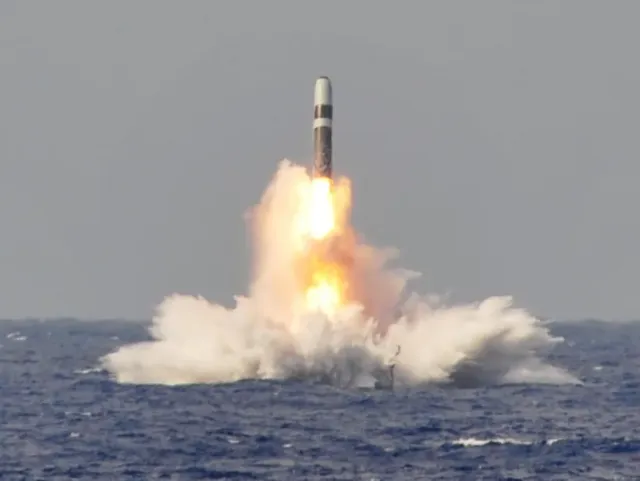
Every system named in this story, with its photo and, where available, a video. Tap a card to open the full spec sheet.
Strategic missiles
UGM-133A Trident II D5Frequently asked questions
What's actually new in this 'second' life extension? +
The first Trident II D5 life extension program (D5LE) concluded in 2017, replacing aging guidance and other components to keep the missile viable through roughly the following decade. D5LE2, the program this contract modification funds, is a second, later round aimed at pushing the missile's effective service life beyond the 2040s, timed to bridge the current Ohio-class submarine fleet into the incoming Columbia-class boats.
Does this contract pay for new missiles or just upgrades to existing ones? +
It funds continued design and development work under a cost-plus-incentive-fee contract modification, engineering rather than full-rate production of new missiles. Trident II D5 production and sustainment for the current fleet continues under separate, previously awarded contracts.
Why does a sustainment contract like this get covered as news? +
It doesn't have a dramatic single event behind it: no test, no launch, no crisis. It matters because the sea-based leg of the nuclear triad depends on this missile remaining reliable on a predictable schedule as the submarine fleet itself transitions from Ohio-class to Columbia-class boats; a missed sustainment milestone here would be a much bigger story than this one is.
How much has the U.S. Navy disclosed spending on D5LE2 so far? +
Public reporting confirms at least two contract modifications: approximately $383 million in February 2025 and $850 million under the action this story covers, recorded by the Pentagon around April 15, 2026 and publicized by Lockheed Martin in July 2026. No source reviewed for this story broke out a total planned program value beyond these two disclosed increments.
More news