Documents
 Israel
 Rafael Advanced Defense Systems
C-Dome
A naval variant of Iron Dome using vertically-launched Tamir interceptors from a shipborne launcher to defend Israeli corvettes and offshore gas platforms against rockets, cruise missiles and aerial threats.
In service since 2021 · 1 operator countries
Compiled from public sources ·primary reference ↗ ·last verified 2026-07-02
25
km range
10,000
m altitude
100
km radar
Pricing: Unit cost not publicly disclosed; per-interceptor cost broadly aligned with land-based Tamir
Procurement snapshot
Availability & export
Israeli export-licensed
Israeli MoD (DECA/SIBAT) licensing; active export programme.
Channel: Direct commercial / G2G
Fielded & proven
Limited · 1 operator
In service since 2021. Status: active.
Lifecycle cost (est.)
No public unit price to model from. Why so few systems publish one →
Interoperability
No standardised NATO calibre / datalink detected in public specs.
Derived guidance from public data, export regime by country of origin, lifecycle from the GAO ~30% acquisition rule. Verify eligibility, pricing and offsets with the manufacturer and your acquisition authority.
Full specifications
Performance
Speed, range, altitude and engagement capability.
| Max speed (Mach) Maximum speed as a multiple of the speed of sound. Mach 2+ is typical for air-superiority fighters. | 2.2 Mach |
|---|---|
| Engagement range Maximum distance at which an air-defense system can intercept targets. Higher covers more airspace. | 25 km |
| Engagement altitude Maximum target altitude the system can reach. | 10,000 m |
Firepower
Armament, payload and guidance.
| Main armament Primary weapon: main gun, cannon or missile type. | Tamir interceptor missile, vertical launch |
|---|---|
| Warhead Warhead mass. Heavier generally means larger effect radius, at the cost of range. | 11 kg |
| Warhead type Blast-fragmentation, shaped charge (HEAT), penetrator, thermobaric or nuclear-capable. | Fragmentation |
| Guidance How the weapon finds its target: inertial, GPS/GLONASS, active/semi-active radar, infrared, laser, TV, wire. | Active radar homing, Electro-optical |
Sensors & avionics
Radar, sensor suite and datalinks.
| Radar Primary radar. AESA (active electronically scanned array) is the current state of the art. | ELM-2248 MF-STAR or ship's integrated combat radar |
|---|---|
| Radar range Published detection range against a typical fighter-sized target. Higher sees first. | 100 km |
Program
Cost, production scale and operators.
| Operator countries Number of countries operating the system. More operators means broader support ecosystem. | 1 |
|---|
Specifications compiled from public Rafael Advanced Defense Systems and reference sources ↗. Published defense figures are approximations, treat comparisons as directional. Last verified 2026-07-02.
Compare with rivals
See how it stacks up
 Rheinmetall Skyranger 30
  KBP Instrument Design Bureau Pantsir-S1
  Raytheon (RTX) Phalanx CIWS (Mk 15)
 Frequently asked questions
What is the engagement range of the Rafael Advanced Defense Systems C-Dome? +
The Rafael Advanced Defense Systems C-Dome has a maximum engagement range of 25 km.
What is the main armament of the Rafael Advanced Defense Systems C-Dome? +
The Rafael Advanced Defense Systems C-Dome's primary weapon is the Tamir interceptor missile, vertical launch.
What is the Rafael Advanced Defense Systems C-Dome used for? +
The Rafael Advanced Defense Systems C-Dome is a air defense system typically used for air defense, anti ship.
How many countries operate the Rafael Advanced Defense Systems C-Dome? +
The Rafael Advanced Defense Systems C-Dome is operated by 1 countries.
How much does the Rafael Advanced Defense Systems C-Dome cost? +
Rafael Advanced Defense Systems C-Dome: Unit cost not publicly disclosed; per-interceptor cost broadly aligned with land-based Tamir. Defense program costs are rarely fully public and vary by contract and configuration.
Similar systems
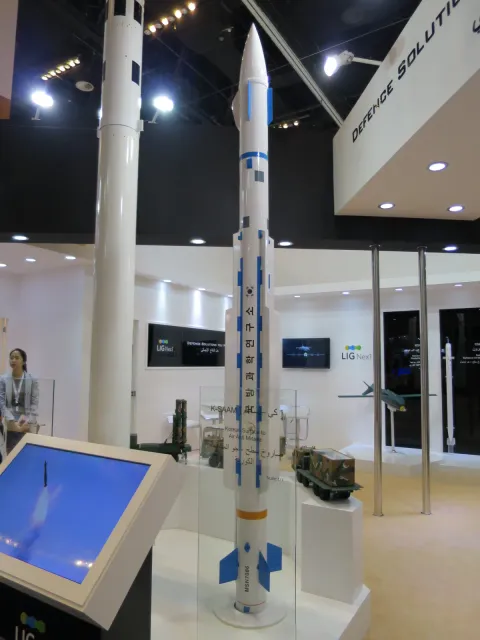
LIG Nex1
K-SAAM (Haegung)
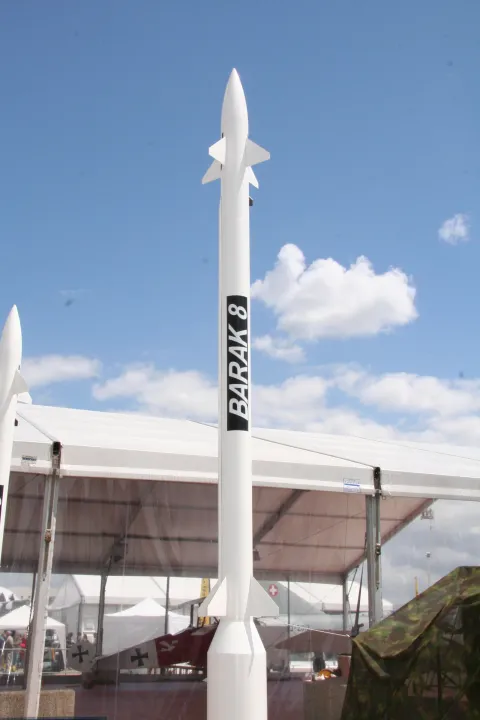
Israel Aerospace Industries
Barak LR
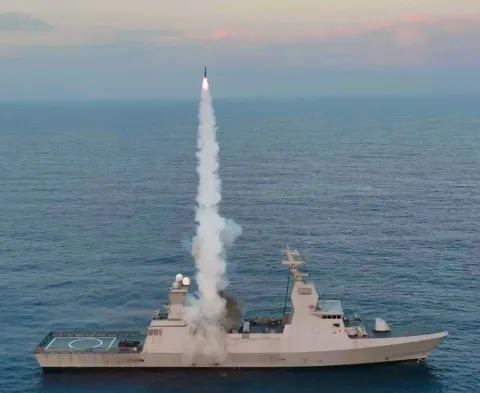
Israel Aerospace Industries
Barak MX
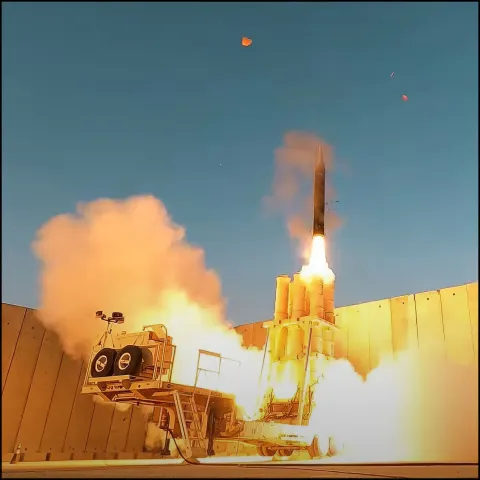
Israel Aerospace Industries