Ukraine Drones Hit Key Unit at Russia's Ufa Refinery Again
A drone strike damaged the AVT-6 primary processing unit at Bashneft-UNPZ, part of Russia's third-largest refining hub, the same unit hit August 2.

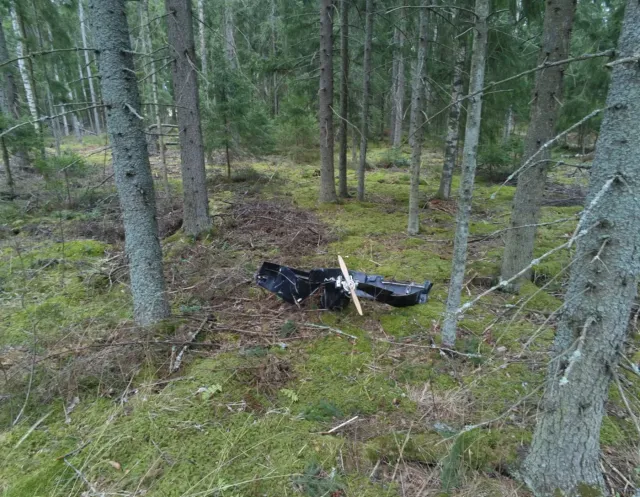
Police of Finland, via Wikimedia Commons, public domain. File photo of a Liutyi drone recovered in Finland, not the drone type confirmed for this strike.
Ukrainian drones struck the Bashneft-UNPZ refinery in Ufa overnight, hitting the plant’s ELOU-AVT-6 primary crude-processing unit for the second time this month and sparking a fire more than 1,400 kilometers from the front line.
Six drones, one confirmed hit, and a residential building caught in between
Six drones targeted the Bashkortostan region overnight between Aug. 18 and 19, according to Russian officials, who said air defenses intercepted four of them. Of the two that got through, one struck a unit at Bashneft-UNPZ that was undergoing maintenance at the time, igniting a fire, while a separate drone hit a residential building in northern Ufa, breaking windows and damaging parked cars. At least one person was hospitalized as a result. A drone threat alert was declared across the region from roughly 4:30 a.m. to 7:40 a.m. local time (The Moscow Times, Aug. 19, 2026).
Open-source imagery analysis, cited by Militarnyi and attributed to the monitoring outlet Exilenova+, identified the struck refinery unit as the ELOU-AVT-6, the plant’s primary processing line, distinguishing this account from Russian officials’ own comments, which described only “a unit undergoing maintenance” without naming it publicly (Militarnyi, Aug. 19, 2026). Both the Russian regional government’s characterization of the damage and its intercept count are state claims, not independently verified figures, and should be read as Moscow’s version of events rather than confirmed fact.
Why AVT-6 keeps coming back into the crosshairs
The AVT-6 unit’s significance is a matter of plumbing, not politics. ELOU-AVT stands for electrical desalting and atmospheric-vacuum distillation, the refining stage that takes raw crude oil and separates it into the fractions, naphtha, diesel, kerosene and heavier residues, that later get processed into finished fuel. AVT-6 alone handles more than 6 million tons of crude a year, making it one of the largest single processing lines at the site. Damage there does not just knock out one product stream; it throttles the volume of crude the whole refinery can even begin working with, which is why the same unit being targeted twice matters more than the raw drone count each time.
This is also not the first time this specific unit has been hit. An earlier fire in the same part of the plant was reported around Aug. 2, meaning Aug. 19 marks the second confirmed strike on AVT-6 within roughly three weeks. Radiy Khabirov, the head of the Republic of Bashkortostan, addressed the latest damage directly and predicted a fast turnaround.
“We’re currently assessing the damage, but preliminary reports indicate that a unit undergoing maintenance was hit,” said Radiy Khabirov, Head of the Republic of Bashkortostan, adding that he expected repairs within “a couple of days” (The Moscow Times, Aug. 19, 2026).
Khabirov’s timeline, like his damage characterization, is a Russian regional official’s public statement, not an independently confirmed repair estimate, and it is worth remembering that the unit was already reportedly still recovering from the Aug. 2 fire when this second strike hit, which raises the question of how much of AVT-6’s capacity was actually back online before it was damaged again.

Part of one of Russia’s largest refining clusters
Bashneft-UNPZ does not stand alone. It is one of three refineries in Ufa, alongside Bashneft-Ufaneftekhim and Bashneft-Novoil, that together form a combined crude-processing capacity of roughly 23.5 million tons a year, one of the largest refining clusters anywhere in Russia. That scale is precisely why the cluster keeps showing up as a target: a single successful strike on one plant’s core unit degrades a meaningful slice of a hub that supplies fuel across a wide stretch of the country, and because the cluster sits so far from Ukraine’s border, Russian air defenses have historically treated the region as lower-priority than facilities closer to the front, an assumption this second AVT-6 strike in three weeks is actively testing.
An inference on the drone, not a confirmed one
No source verified for this story confirmed which drone type carried out the Aug. 19 strike specifically. WeaponSpecs’ own systems database includes the An-196 Liutyi, Ukraine’s roughly 2,000-kilometer-range, 75-kilogram-warhead one-way attack drone built by Ukroboronprom and sometimes described as Ukraine’s answer to the Shahed, whose documented role includes striking Russian oil refineries hundreds of kilometers inside Russian territory, a pattern consistent with this strike’s distance and target type. That consistency is a reasonable basis for context, not for attribution. No official Ukrainian source has publicly claimed the Aug. 19 strike or named the drone used, and this account does not claim otherwise.
Russia’s Ministry of Defense separately claimed it intercepted 453 Ukrainian drones nationwide over the same period, a nationwide figure cited by the Moscow Times that, like Khabirov’s regional damage assessment, is a Russian government claim rather than an independently verified count.
The pattern that matters more than any single night
Two strikes on the same processing unit inside three weeks, at a facility more than 1,400 kilometers from the nearest front line, describes a campaign with a specific list of targets it intends to keep returning to, not a series of one-off, opportunistic hits. Whether AVT-6 gets fully repaired between now and the next attempt is likely to determine how much this specific refinery can actually contribute to Russia’s fuel supply chain over the rest of the year.
Sources
- Ukrainian Drone Strikes Oil Refinery in Bashkortostan — The Moscow Times, Aug 19, 2026
- Ukrainian Drones Strike AVT-6 Unit at Russia's Bashneft-UNPZ Oil Refinery — Militarnyi, Aug 19, 2026
- Drone Attack on Russia on August 19: Key Facility at Bashneft-UNPZ Oil Refinery in Ufa Hit — The New Voice of Ukraine, Aug 19, 2026
Systems mentioned
Every system named in this story, with its photo and, where available, a video. Tap a card to open the full spec sheet.
UAV / drone
AN-196 LiutyiFrequently asked questions
Is this a new strike or a repeat of the August 2 attack? +
It is a new, distinct strike on Aug. 19, hitting the same AVT-6 unit at Bashneft-UNPZ that caught fire in an earlier attack reported around Aug. 2, with a different drone count, a different casualty and a different reported unit-status detail.
Were there casualties? +
At least one person was hospitalized after a separate drone struck a residential building in northern Ufa, breaking windows and damaging cars. No refinery-worker casualties were reported.
What is the AVT-6 unit and why does it matter? +
AVT-6, formally the ELOU-AVT-6, is Bashneft-UNPZ's primary crude-oil processing unit, handling more than 6 million tons of oil a year. Repeated damage to it strikes at the refinery's core throughput rather than peripheral equipment.
How far is Ufa from the front line? +
Roughly 1,400 kilometers, underscoring the extended range of Ukraine's deep-strike drone campaign against Russian energy infrastructure.
More news


