This Week: Allies Build Together, Not Just Buy American
Four allied nations built shared submarine and missile programs this week, while three of the week's biggest conflict claims still can't be verified.

Mass Communication Specialist 1st Class Victoria Mejicanos, U.S. Navy, DVIDS, public domain
This week’s stories read differently placed side by side than they did day by day. Four allied nations, working in two separate groupings, advanced defense-industrial projects that did not run through Washington as the seller. Three governments separately disclosed foreign military sales worth nearly $7 billion combined, for three unrelated reasons. And three of the week’s loudest conflict claims, from North Korea, from Ukraine, and from Yemen’s Houthis, each turned on a specific number or quote that no outside party has been able to confirm. None of that happened in isolation. Taken together, the week describes an alliance system growing more industrially independent even as the information coming out of its conflicts grows harder to verify.
Allies are building with each other, not just buying from Washington
Australia and Western Australia’s state government named the site of the Henderson Defence Precinct on Aug. 24, the physical home for Australia’s AUKUS Pillar 1 obligations and a commitment running to roughly A$33 billion once every linked investment is counted. It is the ground where rotating US and UK nuclear-powered attack submarines are due to begin arriving in 2027. Naval News reported the same day that the site decision moves Henderson into its concept-design phase, one more procedural step converting years of AUKUS press releases into an actual construction plan. But the submarines that will visit still have to come from somewhere, and that is where Henderson’s numbers run into a wall Australia cannot fix on its own: US Virginia-class production still runs at roughly 1.2 boats a year against a Navy target of two, a rate Chief of Naval Operations Adm. Daryl Caudle told appropriators will not be reached until around 2032, four years later than the Navy projected as recently as 2023.
That gap between political commitment and industrial capacity is exactly what the week’s other three alliance stories sidestepped, by building without American production in the loop at all. Germany, Norway and Canada held a four-day planning event in Kiel that started formal trilateral work on the Type 212CD submarine, the follow-through on Canada’s July selection of Germany’s TKMS over South Korea’s Hanwha for the Canadian Patrol Submarine Project.

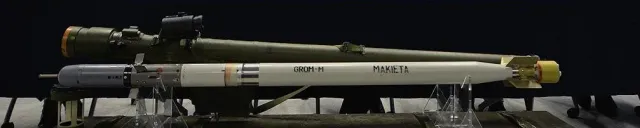
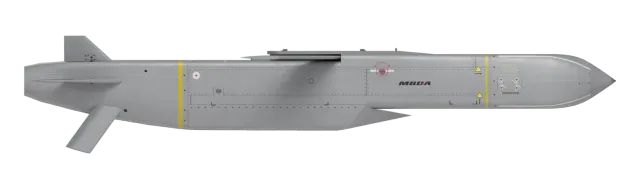
Poland signed an 8 billion zloty, roughly $2.2 billion, framework contract with domestic manufacturer Mesko to build Piorun MANPADS for itself, Lithuania, Latvia and Norway at once, financed through the EU’s SAFE joint-procurement program rather than as a US foreign military sale. And Britain authorized MBDA to declassify the technical data behind Storm Shadow, clearing Ukraine to build the cruise missile domestically, with France leading assembly and the UK gaining reciprocal access to Ukraine’s Avenger AI Labs sensor platform in return.
Three of those four stories, the 212CD program, the Piorun consortium, and Storm Shadow, involve the United States only as a bystander, not a seller. That is a genuine shift from a pattern that has run through most of this year’s allied procurement coverage, allies buying a European or Korean design instead of an American one. This week’s stories were allies building shared industrial capacity with each other directly, with no American transaction anywhere in the chain.
One week, three reasons to buy American, all the same paperwork
Even as three of the four alliance stories bypassed Washington, three separate governments still ran the other track this week, the State Department’s Foreign Military Sale process, for three unrelated reasons.
Qatar’s $4.5 billion purchase of four KC-46A tankers came bundled with 15 Guardian Laser Transmitter Assemblies, the laser-jamming hardware built to defeat the exact heat-seeking missile threat that struck Al Udeid Air Base in 2025. That is a power-projection and force-protection purchase, arriving a month after State Department-approved Gulf Cooperation Council arms sales hit $41 billion in the first half of 2026 alone.
South Korea’s $125 million buy of 103 AIM-9X Block II Sidewinders is Seoul’s second RTX air-to-air missile notification in about ten weeks, after June’s AMRAAM order. South Korean trade press has described a mass North Korean drone-and-cruise-missile raid as capable of burning through roughly 100 AIM-9X rounds within hours, which makes this batch read as insurance against one specific attack scenario rather than routine restocking.
Norway’s $2.3 billion order for 21 UH-60M Black Hawks is its third Sikorsky Foreign Military Sale in roughly 13 months, closing out a fleet rebuild made necessary by the NH90 program’s collapse. Only 13 of a planned fleet were ever delivered, Norway canceled the contract in 2022, and NHIndustries agreed to pay a roughly $432 million settlement in November 2025.
The three FMS transmittals, Qatar, Norway and South Korea, disclose nearly $6.93 billion in potential sales this week. Poland's Piorun deal is kept separate on purpose: it runs through the EU's SAFE joint-procurement mechanism, with no American seller anywhere in that transaction, so folding its roughly $2.2 billion into the FMS total would blur exactly the financing distinction Henderson and the 212CD story above are about.

Three governments, three separate logics: survivability, munitions insurance, program-wreckage cleanup. The mechanism connecting them is identical, a State Department Foreign Military Sale notification to Congress. None of the three has been signed as a final contract yet; each is still a DSCA transmittal opening a congressional review period.
Three of the week’s biggest conflict claims, and what’s still unconfirmed in each
North Korea fired more than 10 short-range ballistic missiles hours after President Trump said he expected to meet Kim Jong Un again this year, the largest of three North Korean tests this month. Trump’s own claim that North Korea holds “57 very powerful nuclear weapons” is his stated assessment, not a confirmed US intelligence estimate or a North Korean disclosure, and Kim Yo Jong’s description of US-North Korea ties as “excellent” is a state figure’s own framing, not independently verified either.
Ukraine’s Unmanned Systems Forces said drones struck two Russian combat aircraft, an Orion strike drone, and layered air defenses across three regions in one overnight raid on Vityazevo airfield. A fresh check of the coverage this claim generated turns up extensive pickup, Kyiv Independent, Militarnyi, Kyiv Post, migflug, Euromaidan Press, all repeating the same Ukrainian account. None of it is independent. There is still no Russian acknowledgment, no released satellite imagery, and no third-party confirmation of any part of the claim.

The Houthis said a ballistic missile hit the Saudi-flagged VLCC Amzan roughly 63 nautical miles off Yanbu. Bahri, the ship’s Saudi operator, confirmed only “a maritime incident,” not the weapon type or the Houthi description of the strike as “precise.” What has newly come into focus since is the damage itself: Splash247 reported no hull breach, no oil spill, and all crew safe, with Egypt’s navy responding to the distress call, a materially less severe outcome than the fire-and-precision-strike framing in the original Houthi statement.
Three separate governments or militant actors, three separate claims, and in each case the exact figure or quote that made the headline, a nuclear-weapon count, a full target list, a claim of precision, is precisely the part no independent source has confirmed.
Southern Spear’s silence broke, then broke again
Southern Spear resumed on Aug. 23 with a strike that killed two people off the Pacific coast, ending a roughly nine-week pause that lined up almost exactly with the campaign’s sharpest congressional and legal scrutiny to date.
“Illegal, costly and ineffective,” said Sen. Tim Kaine (D-VA), describing Operation Southern Spear in an Aug. 3, 2026 letter urging President Trump to halt it after reviewing classified strike information.
Two days after Aug. 23’s strike, a second one followed, Aug. 25 in the Caribbean, killing four people. Stars and Stripes and Maritime Executive both confirmed it as SOUTHCOM’s 68th total strike in the campaign, bringing the cumulative toll to roughly 227. The silence the daily coverage documented has now clearly broken: two strikes in three days replaced nine weeks of nothing, with SOUTHCOM offering no more explanation for the resumption than it did for the pause.
The Houthi blockade above is the same pattern in a different theater. The campaign against Saudi-linked shipping has run since July 20 regardless of Western pressure, and Bab el-Mandeb traffic is still down to roughly 32 ships a day from around 50 before the blockade began. Both campaigns share a trait worth naming plainly: political pressure and international criticism have not been the thing that stops either one. Only an internal decision nobody outside the responsible command has explained has ever paused them, and only an equally unexplained decision has restarted them.
Meanwhile, Castelion’s $1 billion Series C, valuing the company at $13 billion, prices its Blackbeard hypersonic missile at roughly $384,000 a unit against the millions to tens of millions typical of existing US hypersonic programs, the same low-cost-mass-production logic behind last week’s X-Bow interceptor coverage, now a second week running as a desk theme.
Sources
- Australia selects site layout for Henderson Defence Precinct (Naval News, Aug 24, 2026)
- Houthi strike hits Saudi VLCC off Yanbu (Splash247, Aug 25, 2026)
- US strike kills 4 in Caribbean Sea (Stars and Stripes, Aug 26, 2026)
- U.S. Southern Command completes 68th lethal drug boat strike (Maritime Executive, Aug 26, 2026)
Systems mentioned
Every system named in this story, with its photo and, where available, a video. Tap a card to open the full spec sheet.
Compare these side by side →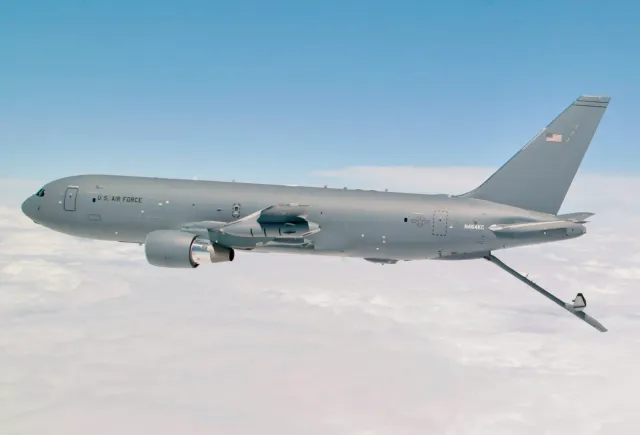
Transport & tanker
KC-46 Pegasus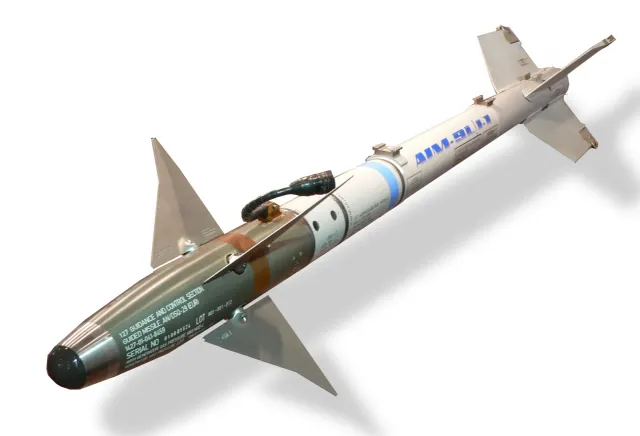
Missile
AIM-9X Sidewinder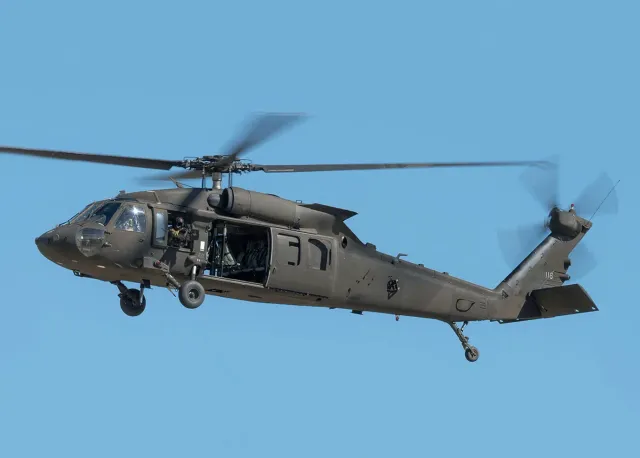
Helicopter
UH-60M Black Hawk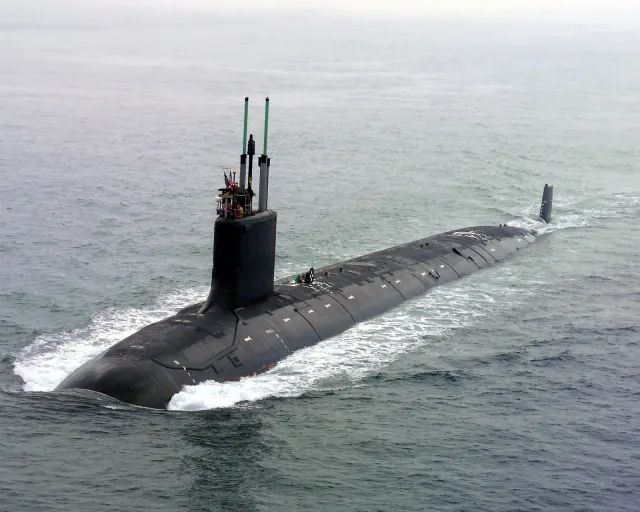
Submarine
Virginia-class Submarine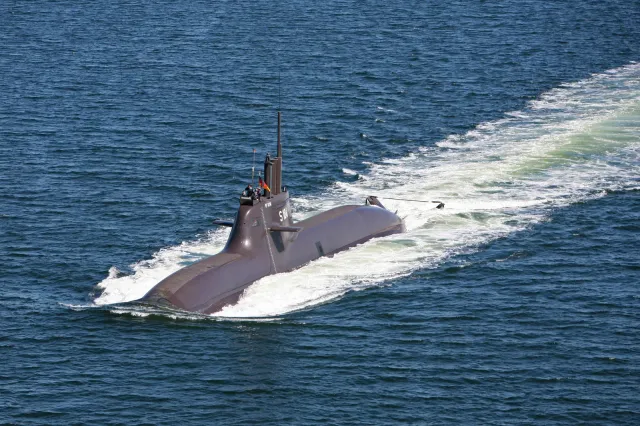
Missile
Storm ShadowFrequently asked questions
What was the single biggest development this week? +
Depends on lens: Henderson's naming as Australia's roughly A$33 billion AUKUS submarine hub is the largest dollar figure and longest-term commitment, but the trilateral Germany-Norway-Canada 212CD planning and the UK's Storm Shadow declassification both show something newer, allies building shared industrial capacity with each other, not just buying from Washington.
Why did three of this week's biggest conflict stories rest on claims that couldn't be fully verified? +
North Korea's missile figures, Ukraine's Vityazevo airfield claim, and the Houthis' Amzan tanker strike claim all came from a party with a direct interest in how the story is framed, and in each case the specific number or detail that made the headline, a nuclear-weapon count, a full target list, an accuracy claim, is exactly what no independent source has confirmed.
Did the Southern Spear strike pause really end, or was Aug. 23 a one-off? +
It ended for real. A second strike followed just two days later, Aug. 25 in the Caribbean, killing four and marking SOUTHCOM's 68th strike of the campaign, replacing nine weeks of silence with two strikes in three days.
More news


