Three Missile Programs, One Disclosed Price
Three U.S. programs now promise thousands of low-cost cruise missiles, but only one of three FAMM vendors has published what a single round costs.

Via Wikimedia Commons, Barracuda-M 500 cruise missile, CC BY 1.0
Three U.S. programs are now promising thousands of low-cost cruise missiles apiece, and of the three vendors racing to build them, only one has told anyone what a single missile costs. Zone 5 Technologies’ Rusty Dagger, entered under the Air Force’s “Family of Affordable Mass Missiles” (FAMM) framework, carries a published unit cost of $246,000, already about 13% above the service’s own $218,000 price target. Anduril’s Barracuda-500 and CoAspire’s RAACM, the two designs built from scratch specifically to hit that target, have disclosed nothing. That gap matters right now because the government is simultaneously running three overlapping unit-count promises that use almost the same vocabulary to describe programs that are not the same program, and a reader skimming headlines has every reason to add numbers that were never meant to be added.
What happened at White Sands on August 19
On August 19, 2026, the Department of War’s Office of the Deputy Assistant Secretary of War for Prototyping and Experimentation put Anduril’s Surface-Launched Barracuda-500M (SLB-500M) through a ground launch at White Sands Missile Range, New Mexico, as part of a joint experimentation event called J-REX 26.3. The missile fired from a standard 20-foot ISO shipping container, the same box that already moves by ship, rail, or flatbed anywhere in the world, and a single container can hold up to 16 rounds. That container-launch concept is the entire pitch: no dedicated launcher, no fixed site, a missile battery that looks like ordinary freight until it isn’t.
The test missile reached beyond 500 nautical miles, or roughly 926 km, carrying a payload of about 45 kg. Four contractors are competing for what the Department calls the “Low-Cost Containerized Missile” (LCCM) program: Anduril, CoAspire, Leidos, and Zone 5 Technologies. The stated goal is roughly 10,000 lower-cost cruise missiles procured from fiscal year 2027 through 2029. None of that is small, and none of it is the only number in play.
Three unit-count promises that should not be added together
Start with the one the Army signed on its own. In May 2026, the Army struck a framework deal with Anduril alone for at least 3,000 Barracuda-500M missiles, with a minimum of 1,000 delivered per year for three years beginning in 2027, plus roughly 60 containerized launchers arriving that same year. That is a bilateral Army-Anduril commitment, not a program total.
Layer on the broader LCCM effort, the one the White Sands test actually validated, which spans all four contractors and targets about 10,000 missiles across FY2027-2029. Here is the part public reporting does not resolve: it is not clear whether the Army’s 3,000-unit Anduril order counts toward that 10,000-missile LCCM total or sits on top of it as a separate line. Neither Army Recognition’s coverage of the Anduril deal nor the reporting on the LCCM program total specifies which. That is a genuine gap in the public record, not a detail this column is choosing to skip, and treating the two figures as additive would be a guess dressed up as arithmetic.
Then there is a third, larger number that belongs to a different service entirely. The Air Force’s FAMM framework, signed July 15, 2026 with Anduril, CoAspire, and Zone 5 (notably not Leidos), targets roughly 27,000 to 28,000 total missiles by FY2031, backed by more than $12 billion in anticipated spending under multiyear firm-fixed-price agreements running up to seven years, each carrying a minimum-quantity floor. FAMM covers air-launched missiles: a palletized “FAMM-P” variant dropped from cargo aircraft and a “lugged” FAMM-L version carried under fighters and bombers. That is a different launch mode, a different customer, and a different office than LCCM’s ground- and container-launched effort.
The reason this is easy to conflate is that two of these three programs are, in a real sense, the same missile sold to two different buyers. Anduril’s Barracuda family supplies both the Army’s ground-launched LCCM entrant and the Air Force’s air-launched FAMM entrant, under names close enough (Barracuda-500M for the Army, Barracuda-500 for the Air Force) that a casual reader could mistake one announcement for an update on the other. Zone 5’s Rusty Dagger, meanwhile, traces its lineage to the older Air Force “Extended Range Attack Munition” program, a fourth naming layer sitting underneath FAMM. Three programs, two services, overlapping contractors, and headline figures of 3,000, roughly 10,000, and roughly 27,000 that describe three different scopes rather than one number building on the next.
The price nobody outside Zone 5 has confirmed
Set the counting problem aside and ask the more basic procurement question: what does one of these missiles actually cost? The Air Force has stated a target of about $218,000 per FAMM round, a figure it explicitly compares to more than $1.3 million for a JASSM. That target is the entire commercial argument for the program, mass affordability instead of exquisite unit cost.
Of the three FAMM vendors, only Zone 5 has published an actual number, and it already runs over the Air Force’s own goal.
The one vendor with a public price is also the one built on an older, already-costed program lineage inherited from ERAM. The two newer designs engineered specifically to hit the Air Force's mass-production target haven't shown a price at all.
The published figures, alongside two legacy cruise missiles that FAMM and LCCM are explicitly meant to undercut, look like this:
| System | Program | Range | Warhead | Unit cost |
|---|---|---|---|---|
| Barracuda-500M (Anduril) | Army LCCM / FAMM (air-launched variant) | 926 km | 45 kg | Not disclosed |
| RAACM (CoAspire) | LCCM / FAMM | Not disclosed | Not disclosed | Not disclosed |
| Rusty Dagger (Zone 5 Technologies) | FAMM (ERAM-derived) | 926 km | 45.4 kg | $246,000 |
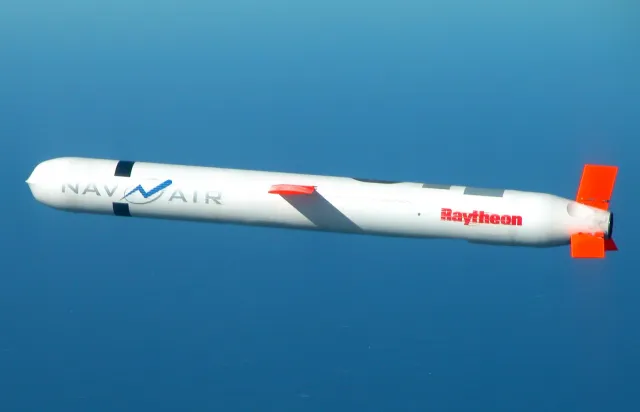
| Tomahawk Block V (Raytheon) | Legacy baseline, not part of FAMM/LCCM | 1,600 km | 450 kg | $2,000,000 |
| JASSM-ER (Lockheed Martin) | Legacy baseline, not part of FAMM/LCCM | 925 km | 450 kg | $1,400,000 |
Do the arithmetic on Rusty Dagger yourself: $246,000 against a $218,000 target works out to roughly 13% over, before the program has even reached the production volumes that are supposed to drive cost down further. CoAspire’s RAACM is the starkest case in the table. WeaponSpecs’ own database entry for it carries no range, no payload, and no cost figure at all, the thinnest public specification of any system on this list, competing for a contract explicitly premised on affordability.
There is one more figure worth putting on the table, with a caveat attached to it directly. For fiscal year 2027, the Air Force requested $300 million in reconciliation funding to buy 1,000 FAMM rounds. Divide those two disclosed budget figures and the implied first-year cost comes out to $300,000 per missile, higher than even Rusty Dagger’s already-over-target price. To be clear about what that number is: it is this column’s own division of two figures the Air Force has published, a budget request divided by a stated quantity, not an official unit price the service has ever stated itself. First-year production costs on any new missile line typically run high before manufacturing scales, so treat it as illustrative math, not a confirmed number, the same way an implied ceiling from a Patriot budget line was flagged here previously.
Mass is the entire rationale, which is exactly why the price has to be checkable
None of this is happening by accident. The Air Force’s own leadership has been explicit that quantity, not per-unit sophistication, is the point of the whole approach.
“What we’ve learned from seeing these, not only in the Middle East, but also from what’s happening in Europe, is we can see the value of mass and the ability to produce at a much higher rate that gives you that mass. When you have a lot of them, [adversaries] will end up using their exquisite defenses to shoot those weapons down, and eventually we’re going to get some through,” said Gen. Kenneth Wilsbach, Air Force Chief of Staff (DefenseScoop, June 10, 2026).
That logic only works at scale, and scale only works if the missiles are actually cheap enough to buy in the quantities Wilsbach is describing. Quantity is the value proposition, not a side benefit of it. Which means the unit cost is not a secondary spec buried in a table, it is the number the entire strategic argument for FAMM and LCCM rests on. If that number cannot be independently checked for two of the three vendors building toward it, the rationale for the program cannot be independently checked either. A buyer, or a taxpayer, is left trusting a target instead of verifying a price.
What would actually let someone check the “low-cost” claim
A target price is a goal. A budget-request-divided-by-quantity figure is informed arithmetic on incomplete data. Neither is a substitute for a real, disclosed per-unit cost at the same committed volumes the Army and Air Force are already promising, the 3,000 Barracuda-500Ms, the roughly 10,000 LCCM rounds, the roughly 27,000 FAMM rounds. Legacy systems like Tomahawk Block V and JASSM-ER publish exactly that kind of figure, which is the only reason this comparison is possible at all. Until Anduril and CoAspire publish theirs, “low-cost” remains something the Air Force asserts about its own program rather than something an outside analyst can verify against it.
This fits a pattern this column has tracked before: Anduril’s company-wide reluctance to publish pricing showed up across its entire catalog in our earlier census of Anduril’s price disclosure, and this is a different finding layered on top of that one, a government price target now visibly exceeded by the single vendor willing to be transparent, plus a count-conflation risk spanning three separate programs that the earlier piece never touched. It also sits in useful contrast to the volume side of this story, covered in our look at Raytheon’s Tomahawk production-scale claims: building more of a missile and pricing it honestly are two different disciplines, and FAMM and LCCM have so far only committed publicly to the first one. Anyone tracking where the next decade of American cruise missile procurement is headed should watch for the disclosure, not the announcement.
Sources
- U.S. Tests Containerized Missile to Expand Low-Cost Land and Maritime Precision Strike Capacity
- U.S. Army Orders 3,000 Anduril Barracuda-500M Cruise Missiles for Indo-Pacific Long-Range Warfare
- Pentagon Signs Multiyear FAMM Framework Deals with Anduril, CoAspire and Zone 5
- One big FAMMily: Air Force eyes huge boost for low-cost cruise missile
- USAF Plans To Buy 28,000 Low-Cost Cruise Missiles In Five Years Advance With New Deals
- Wilsbach: FAMM low-cost cruise missile to begin production this fall
- US Air Force turns to cheaper cruise missiles it can buy by the thousands
Systems in this comparison
Every system covered above, with its photo and, where available, a video. Tap a card to open the full spec sheet.
Compare these side by side →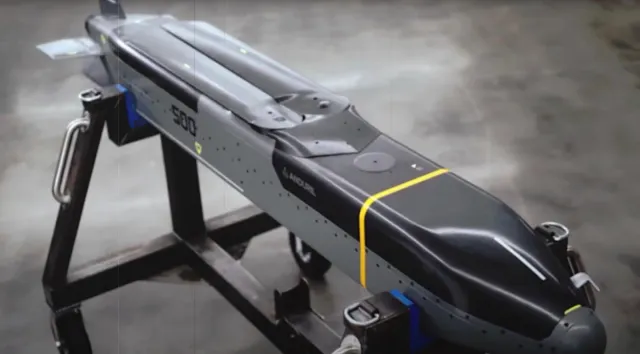
Missile
Barracuda-500M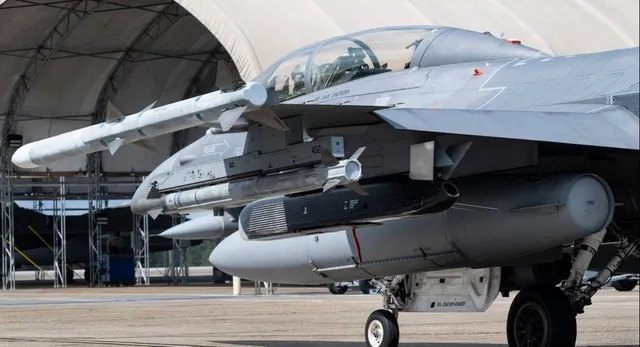
Missile
AGM-188 Rusty Dagger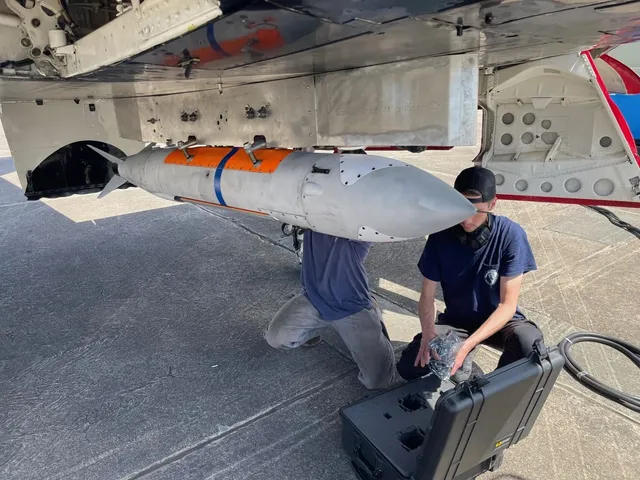
Missile
Tomahawk Block V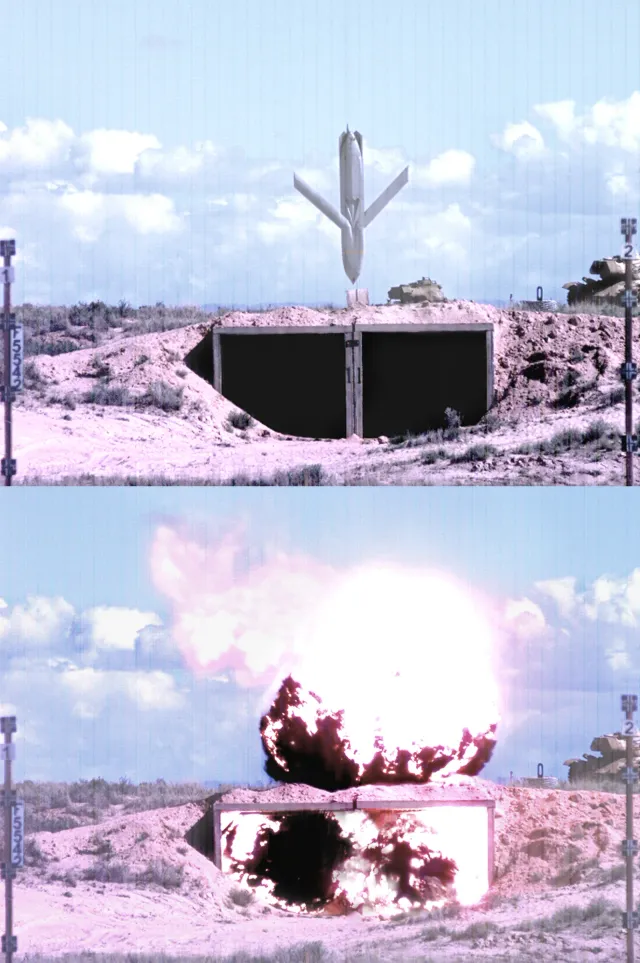
Missile
AGM-158B JASSM-ERRelated reading


