Hellfire, JAGM, and the Army's 8,000-Missile Ask
The Army wants 8,000 new short-range missiles a year. WeaponSpecs data shows that exact range band already spans $22,000 to $319,000, a 14x cost gap.

Via Wikipedia, AGM-114 Hellfire (shown for identification)
On Aug. 26, 2026, the U.S. Army published a Sources Sought notice asking industry for up to 8,000 new short-range guided missiles a year, with proposals due Sept. 15 and up to 8,000 rounds deliverable within the first two years of any award. The notice specifies a missile that mirrors the AGM-114 Hellfire’s own reach: a 500-meter floor out to 8,000 meters and beyond. That range band is not a slot the Army needs to invent from scratch. WeaponSpecs’ own database already tracks five fielded, laser- and radar-guided systems sitting inside it, and their disclosed unit costs span $22,000 to $319,000, a 14x gap between the cheapest and the most expensive round chasing the same envelope.
| System | Type | Engagement range | Unit cost | Guidance |
|---|---|---|---|---|
| APKWS | Laser-guidance kit / rocket | 5 km | $22K | Semi-active laser, infrared |
| Cirit | Laser-guided rocket | 8 km | Not published | Semi-active laser |
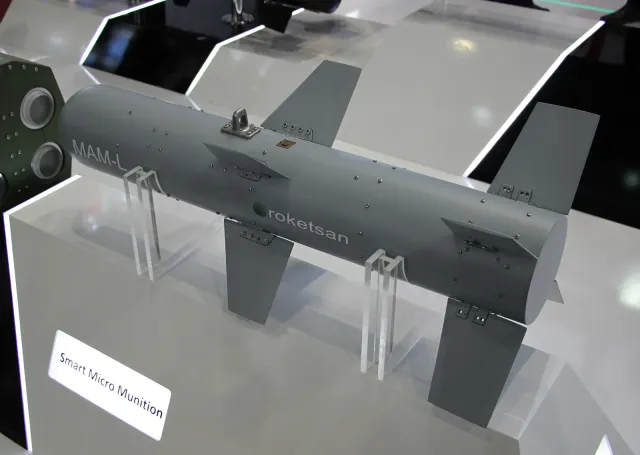
| MAM-L | Laser-guided micromunition | 15 km | Not published | Semi-active laser |
| AGM-114 Hellfire | Guided missile | 8 km | $150K | Semi-active laser; millimeter-wave radar (Longbow variant) |
| AGM-179 JAGM | Guided missile | 16 km | $319K | Dual-mode: semi-active laser + millimeter-wave radar |
The Army’s own range floor already has five occupants
Line the five up by range alone and they refuse to sort into a clean hierarchy. APKWS reaches 5 km, Cirit and Hellfire both publish 8 km, MAM-L claims 15 km, and JAGM tops the group at 16 km. That is exactly the span the Aug. 26 notice describes: a 500-meter floor and an 8,000-meter-plus ceiling, with Hellfire’s own published range sitting right at that ceiling rather than beyond it. That is presumably not a coincidence. The notice explicitly asks for a missile that mirrors Hellfire’s specifications, so the Army is effectively describing a system that would slot into a range band its own inventory already fills five times over. Range was never going to be the variable that separates a winning proposal from a losing one here. All five systems already clear the bar. What separates them is everything the range column can’t show.
A 14x cost gap separates APKWS from JAGM
JAGM costs about 14 times APKWS and roughly twice Hellfire, a price curve steeper than the range curve between the same three systems.
Raw engagement range does not track with unit cost in this data, and the mismatch is stark. JAGM costs roughly 2.1x what Hellfire costs and about 14.5x what APKWS costs, but its range advantage over those same two systems is only 2x and roughly 3x, respectively. Something other than distance is setting the price, and it is worth being honest about how soft even the $150,000 Hellfire figure is before treating any of these as a fixed number. U.S. procurement lots have priced the Hellfire II all-up round anywhere from about $31,000 to $213,000 depending on the budget year and funding stream, with recent lots running $130,000 to $160,000, according to DoD budget documents and defense trade press analysis. The $150,000 in the table above is a representative point inside that spread, not a locked contract price. JAGM’s own disclosed figure is more specific: $319,000 per round in FY2023, across a program of 26,319 planned rounds, per publicly available Army data. Even accounting for the Hellfire spread’s wide bottom end, JAGM sits well above every year of Hellfire pricing on record, and the gap to APKWS is wider still.
Guidance architecture, not range, explains the price
APKWS, Cirit, and MAM-L are all laser-only designs: cheap to build, but blind the moment smoke, dust, fog, or a jammed and obscured laser designator breaks the lock between shooter and target. Hellfire and JAGM each add a different answer to that failure mode. Hellfire’s Longbow variant carries millimeter-wave radar for a fire-and-forget lock against armor that does not depend on a clean laser line. JAGM goes further, folding laser and millimeter-wave radar into the same seeker so the missile can fall back on radar if the laser picture degrades mid-flight.
“Once you have the missile off the rail and encounter smoke or dust or fog, a regular laser missile could lose that target … With JAGM, I have a pretty good guarantee that I am going to kill that target with a single missile instead of multiple missile shots,” said Al Maes, Aviation Weapons Technical Adviser at Training and Doctrine Command’s Capability Manager Recon Attack (via Task & Purpose).
That quote dates to JAGM’s original fielding push rather than the new Aug. 2026 notice specifically, but the guidance-architecture tradeoff it describes is the same one separating the cheap tier from the Hellfire and JAGM tier today. It also lines up with what the notice itself asks for: a missile that can “operate amid jamming and GPS denial” and engage “heavy/light armor track vehicles, command and control nodes, air defense artillery radars, Counter-Unmanned Aircraft Systems, [and] small fast attack maritime targets.” That is a target list a laser-only, thin-warhead kit like APKWS was never built to carry.
Lockheed Martin currently builds both Hellfire and JAGM, and the company’s own language around its most recent production award frames the relationship as an established one rather than a competition.
“This contract is a significant milestone in our ongoing partnership with the U.S. Army, U.S. Navy and our international allies,” said Casey Walsh, program management director of Multi-Domain Missile Systems at Lockheed Martin (via Lockheed Martin).
That single-source posture is part of why the new notice is a Sources Sought filing rather than a straightforward order against the existing line. It is open to new entrants, which points to a production-base question sitting alongside the price question, not underneath it.
Where the published record goes quiet
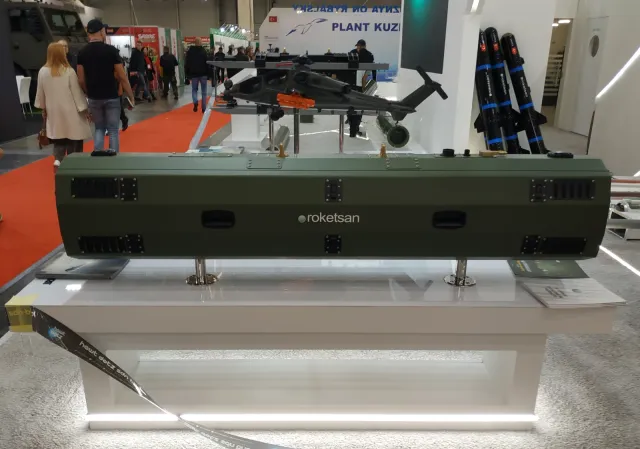
Cirit and MAM-L are both real, fielded, laser-guided systems sitting inside the exact range band this notice targets, and neither publishes a unit cost in any public source WeaponSpecs has found. That is its own finding rather than a gap in this research: transparency on price in this class of munition is genuinely uneven, a pattern our own reporting on the price-transparency gap has documented across the wider database. Roketsan’s Cirit and MAM-L sit at one end of that pattern; BAE’s APKWS and Lockheed’s Hellfire and JAGM sit at the other, with U.S. budget documents forcing a level of disclosure most munition programs never get.
The procurement math the notice implies is straightforward once the tiers are laid out. At Hellfire-tier pricing, 8,000 missiles a year runs roughly $1.2 billion in annual procurement. At JAGM-tier pricing, that climbs to roughly $2.55 billion a year. At APKWS-tier pricing it would fall to about $176 million, a fraction of either, but the notice’s own requirements, resistance to jamming and GPS denial, and a target list running from armor to radar to small maritime craft, describe the guidance architecture the cheap tier simply does not carry. The “8,000 missiles” headline number matters less than which of these cost tiers those missiles end up landing in, and the notice’s own stated requirements point toward Hellfire or JAGM-class pricing, not APKWS-class pricing, regardless of how the Army eventually solves the production-capacity problem behind the solicitation.
Sources
Systems in this comparison
Every system covered above, with its photo and, where available, a video. Tap a card to open the full spec sheet.
Compare these side by side →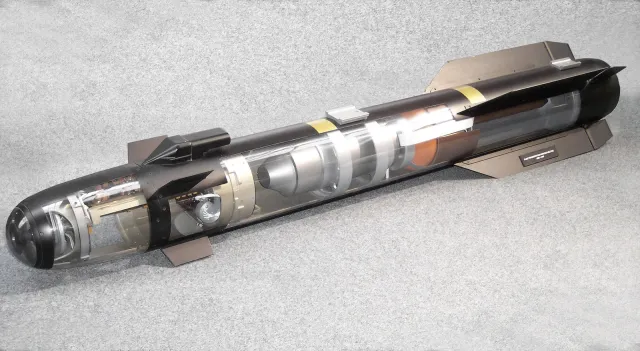
Missile
AGM-114 Hellfire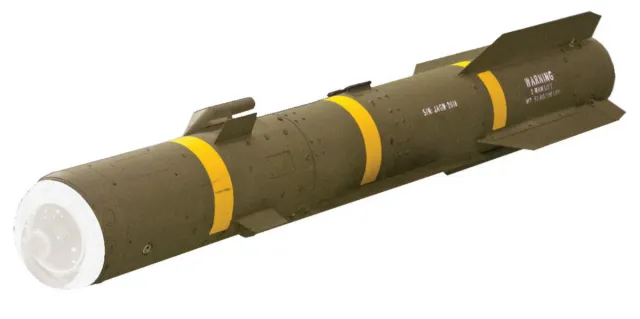
Missile
AGM-179 JAGM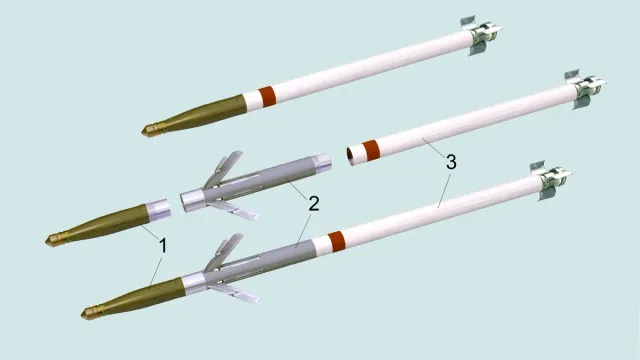
Frequently asked questions
What's the difference between the AGM-114 Hellfire and the AGM-179 JAGM? +
JAGM adds a millimeter-wave radar seeker alongside the same semi-active laser guidance Hellfire already uses, and it shares Hellfire's warhead, motor, and flight-control lineage rather than starting from a clean sheet. That extra sensor mode, giving the missile a fire-and-forget option when laser designation is blocked, is roughly what separates a $150,000 round from a $319,000 one.
Why is APKWS so much cheaper than Hellfire or JAGM? +
APKWS is a laser-guidance kit bolted onto the already-cheap unguided Hydra 70 rocket, not a purpose-built guided missile built around its own airframe and warhead. It carries laser-only guidance with no radar seeker, and its warhead is far lighter than Hellfire's roughly 9-kilogram shaped charge, which caps what kind of target it can be trusted against.
What is the Army's new short-range missile solicitation actually asking for? +
It is a Sources Sought notice, published Aug. 26, 2026 with industry proposals due Sept. 15, seeking up to 8,000 missiles within two years of any award and up to 8,000 a year after that. The Army wants a missile matching Hellfire's 500-meter to 8,000-plus-meter engagement envelope that keeps working through jamming and GPS denial, can be fired from manned and unmanned air, ground, and sea platforms using an M299-type launcher, and has a manufacturing and supplier base established by late 2028.
Related reading


