What 113,479 Inspected M18s Didn't Settle About the P320
The Air Force found zero failure signs across 113,479 M18s, but most civilian P320s lack the external safety hardware that review actually covered.

U.S. Air Force photo by Vicki Stein, Tech. Sgt. Brady Craddock fires an M18 handgun during Air Force Security Forces fielding, public domain, via Wikimedia Commons
In August 2026 the Department of War and the Department of the Air Force declared the M17/M18, the U.S. military’s SIG-made service pistol, “safe and reliable” after inspecting 113,479 M18s and finding zero conditions that could produce an uncommanded discharge. That finding is real and significant, but it does not settle whether the SIG Sauer P320, the civilian and police-issued version of the same core design, is safe. The two pistols share a name and a marketing frame, not always the hardware the review was built to check, and the review itself was not the kind of test that already found a real failure mode in that hardware family.
The Review, in the Actual Numbers
The Army supplied volume: over 1.5 million rounds fired through 200-plus pistols in pre-fielding-style reliability, durability, drop-safety, and environmental testing. The Air Force supplied breadth: 113,479 M18s formally inspected across its own fleet, no condition found in any of them that could allow an uncommanded discharge. Army officials stated that “all investigated incidents of alleged ‘uncommanded discharges’ have been traced back to the trigger being pulled, and not due to an issue with the firearm,” and that there has never been a mechanically caused accidental discharge involving the service weapon, citing firearms mishaps at under 0.006% of pistols issued, an Army figure rather than an independently audited one. SIG SAUER vice president Phil Strader called it “an unprecedented level of inspection, extensive for both the volume of firearms analyzed and for the level of evaluation on each product.”
One correction is worth making, since the review exists partly because of it. Airman Brayden Lovan, 21, of the 90th Security Forces Squadron, was killed by an M18 discharge at F.E. Warren Air Force Base in July 2025. The investigation found that three fellow airmen had lied about what happened; the actual account was that the weapon was pointed at Lovan “in a joking manner” immediately before it fired, and all three were later charged with false statements and pleaded guilty. That is a trigger-pulled discharge under a false account, not a genuine no-trigger-pull uncommanded discharge, though it is still accurately the incident that triggered the broader review and a temporary service pause.
Air Force Global Strike Command paused M18 use across 7,970 weapons after Lovan’s death; inspection pulled 191 of them, about 2.4%, over issues with the safety lever, striker assembly, or sear, and service resumed August 25, 2025 with enhanced protocols. That figure and the 2026 zero-failure figure aren’t contradictory: they answered different questions on different batches at different times, one a post-pause sweep of a single unit’s fleet, the other a much larger, more current inspection. The newer review is the more authoritative figure today, though the earlier sweep found real issues worth acknowledging, and a Washington State Criminal Justice Training Commission report from February 2026 separately documented six uncommanded-discharge incidents at military bases since 2021.
One Part the Two Pistols Don’t Share
Here is the mechanical reason the two “safety verdicts” aren’t about the same object. The M17/M18 carries an ambidextrous external manual thumb safety that, when engaged, mechanically blocks the trigger bar from reaching the sear, an independent physical barrier between an unintended trigger event and a fired round. Most civilian and law-enforcement-issued SIG Sauer P320 pistols lack this feature: SIG sells the civilian gun with or without an external manual safety, and most units historically shipped without one. The Army also says the M17/M18 includes a trigger enhancement that “further prevents it from firing unintentionally if dropped,” part of a hardware split between the military and civilian variants that goes beyond a rollmark.
This debate isn’t about whether SIG builds a bad pistol, it’s about which pistol SIG built for whom. A department carrying a P320 without the external safety carries genuinely different hardware than the one 113,479 inspections just cleared, even though both trace back to the same pistol category and design lineage.
The FBI Already Ran a Different Test
In 2024, the FBI’s Ballistic Research Facility examined an M18-pattern pistol issued by the Michigan State Police, a state agency using the same core hardware family, after an alleged uncommanded-discharge incident. The BRF found a striker safety lock spring not fully seated on its post and prone to dislodging, plus notable wear and chipped edges on the sear and its notches, and showed it was possible to partially press the trigger while manipulating the slide in a way that caused the striker to fall. In testing built around movements common to on-duty law enforcement handling, the striker fired on 9 of roughly 50 manipulations.
The BRF’s findings, as reported by The War Zone, stated that “testing did indicate with movements representing those common to a law enforcement officer it is possible to render the Striker Safety Lock inoperable,” and that “the disabling of the striker safety lock through movement and friction creates a condition which merits further exploration.” The Army’s response was no design changes; it restated the trigger enhancement and manual safety as differentiators, but per TWZ’s reporting did not directly address whether the sear-engagement vulnerability the FBI found could also affect DoD-configured units.
That is why the two findings don’t settle the same question. The FBI’s test was dynamic: a physical reproduction of duty movement and friction on an actual pistol, built to try to trigger the failure. The available reporting on the 2026 review describes an inspection of a large batch of pistols for signs consistent with the alleged failure mode, not a described re-run of the FBI’s protocol at scale. That does not mean no such test occurred, only that public reporting doesn’t establish one did, a meaningfully different claim from “the military re-tested this and it held up.”
The Civilian Court Record Isn’t Settled Either Way
The legal record is genuinely mixed. As of a February 2026 count, plaintiffs allege more than 150 uncommanded discharges and have filed more than 120 federal lawsuits against SIG. Two 2024 jury verdicts stand in some form: a Georgia jury awarded $2.35 million in June 2024, and a Philadelphia jury awarded $1 million compensatory plus $10 million punitive in November 2024. The punitive portion was later vacated on appeal, but the compensatory award and defective-design finding still stand.
New Jersey became the first state to sue SIG over the P320, when Attorney General Matthew Platkin filed suit on October 16, 2025, alleging violations of the state’s Firearms Industry Public Safety Law and Consumer Fraud Act. The complaint alleges the civilian P320 lacks the external safety the Army required for the M17/M18, and that SIG markets it as “Chosen by the U.S. Military” without disclosing that difference. It cites Detective Lieutenant Walter Imbert, an Army veteran and range master for the Orange, New Jersey police department, fatally shot by his own holstered P320 in April 2023 while cleaning it; scene evidence indicated his finger was not on the trigger.
“Gun manufacturers have a moral duty to ensure brave officers are not put in harm’s way because of defective weapons,” said New Jersey Attorney General Matthew Platkin (New Jersey Office of the Attorney General, October 2025).
Washington State’s Criminal Justice Training Commission permanently banned the P320 from academy training after an October incident where a recruit’s holstered pistol apparently discharged without a trigger pull; SIG sued the state in June 2026 to overturn that ban. In Missouri, a federal judge certified a statewide class action, Glasscock v. Sig Sauer, on July 28, 2025, but the Eighth Circuit unanimously vacated it and dismissed the case on July 16, 2026 on standing grounds, not the merits: the named plaintiff had admitted his own P320 never malfunctioned, and the court held a plaintiff must show a defect actually manifested in the unit he personally owns, not that one might someday. A procedural win for SIG, not a ruling the P320 has no defect.
Most recently, on August 17, 2026, a nine-person federal jury in Maine unanimously ruled against David Alan Cole, a Somerset County sheriff’s detective who alleged his holstered P320 discharged and struck his thigh and calf during a search-warrant execution with his hands off the gun, finding no defect and no negligence by SIG. Counsel Kristen Dennison called it “an important outcome because it further validates the engineering and design of the P320 and the extensive independent testing behind it.” Add it up: two jury losses in 2024 whose defect findings still stand on the compensatory portion, one jury win in August 2026, and one procedural appellate win in July 2026 that never reached the merits. An ongoing, mixed record, not proof of a defect and not proof of a clean bill.
What a Department Still Carrying the P320 Should Actually Check
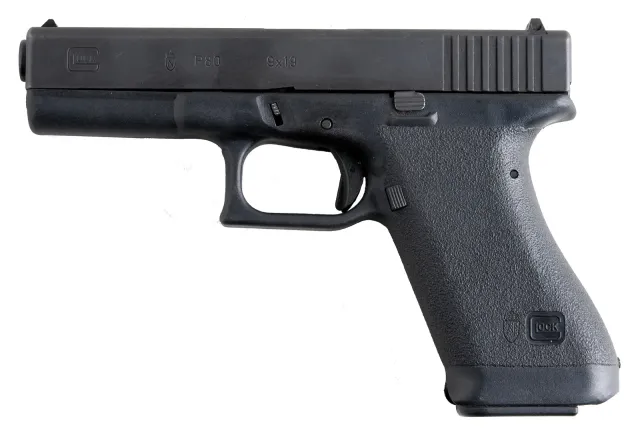
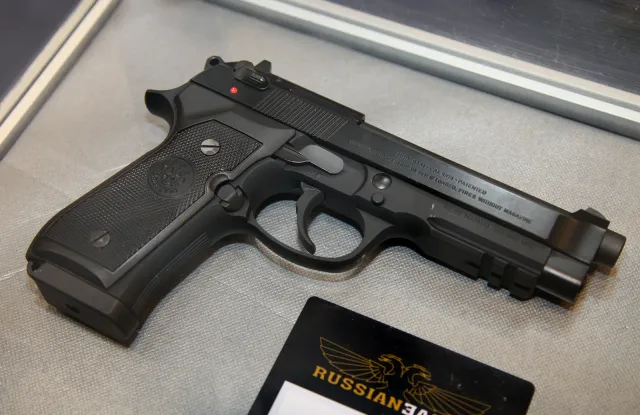
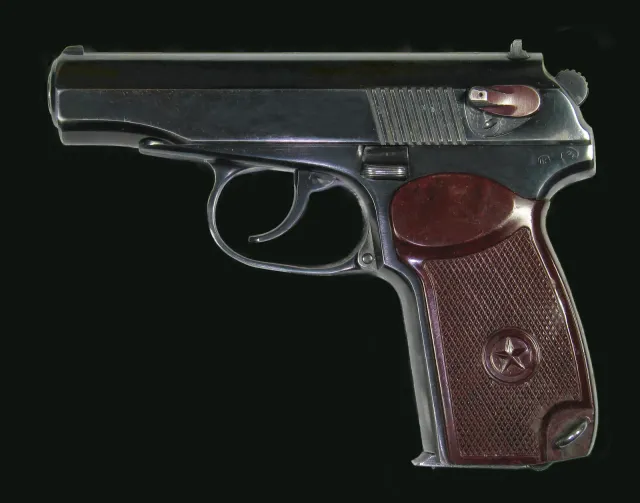
Reading the incident-rate claims requires one more piece of context: scale. WeaponSpecs’ own tracked production total for the P320-derived M17/M18 sits at the bottom of the major service pistols in our database.
| Pistol | Units Built | Unit Cost | Operator Countries |
|---|---|---|---|
| Glock 17 | 20,000,000 | $550 | 100 |
| Beretta 92 | 5,000,000 | $600 | 30 |
| Makarov PM | 5,000,000 | $150 | 40 |
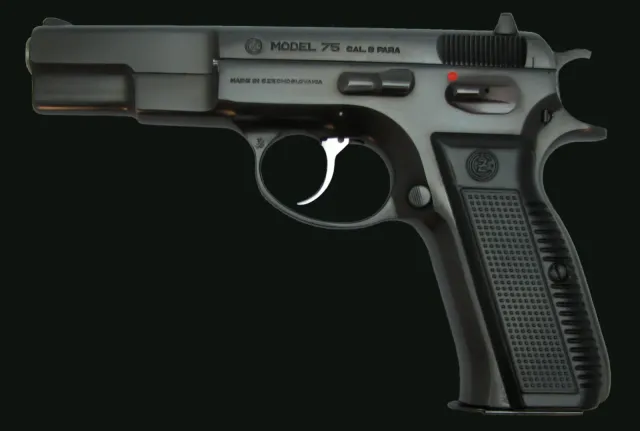
| CZ-75 | 1,500,000 | $650 | 20 |
| SIG P320-M17/M18 | 500,000 | $580 | 10 |
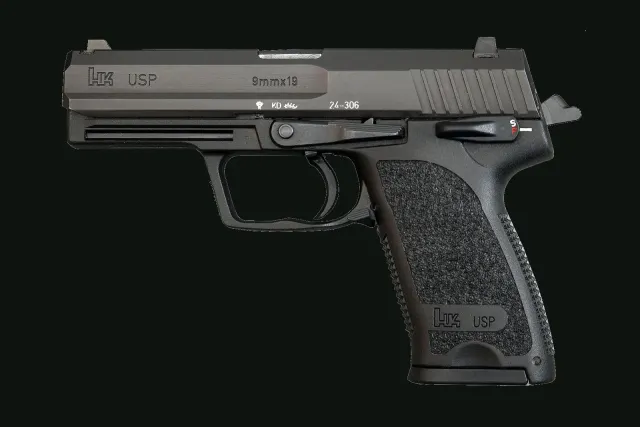
| HK USP | 500,000 | $850 | 25 |
Despite being the current U.S. military-issue sidearm, the M17/M18 sits at roughly a fortieth the production volume of the Glock 17 and a tenth of the Beretta 92 or Makarov PM it gets compared against in this debate. Its real-world record spans a fraction of the rounds fired and years those older, larger-fielded designs have banked. That is not an explanation for any specific discharge; it is context: a young, smaller-fielded program reads differently in incident-rate terms than a 40-plus-year-old design with tens of millions built, independent of design quality. Our own look at how polymer frames changed pistol rounds per kilogram is worth a read for anyone evaluating this generation of duty pistols on weight and capacity rather than safety architecture.
Military Times reports over 400,000 M17/M18 pistols currently in service across the Army, Air Force, Marine Corps, and Navy, a separate, larger figure than WeaponSpecs’ own tracked production total above: one is an in-service count, the other a rounder production total, and the two shouldn’t be conflated.
The 113,479 figure is an Air Force-only inspection, one branch's fleet among the four that carry this pistol, so however large the number sounds in isolation, the review's zero-failure finding does not by itself speak for the whole in-service population across all services.
None of this means a department carrying the P320 should panic, and none of it means the pistol should be presumed cleared because an older military relative just passed a big inspection. The real procurement question is narrower than either headline suggests: which variant is this, and does the specific unit carry the external manual thumb safety the Army required for its own service pistol. That hardware fact, not the press release or the lawsuit count, is what separates “the military cleared it” from “is the P320 safe.” The M17/M18’s full spec sheet, unit cost, and operator list are tracked on its WeaponSpecs system page; check whether the unit under evaluation matches that configuration before checking anything else.
Sources
- Pentagon dubs M18 handgun 'safe and reliable' after review
- Department of War Confirms Modular Handgun System (MHS) is Safe and Reliable
- Military Clears SIG M17 and M18, but P320 Safety Questions Remain
- Army Making No Changes to Its Sig P320-Derived Pistols After Concerning FBI Report
- Sig Sauer pushes back on criticisms over safety of M17 and M18 pistols
- AG Platkin, SAFE Office, and Division of Consumer Affairs Sue Sig Sauer Over Defective P320 Handgun
- Jury Finds No Gun Defect, Sides With Sig Sauer in Unintended Discharge Case
- Federal Court of Appeals Orders Dismissal of P320 Class Action Lawsuit in Unanimous Decision
- SIG Sauer M17
Systems in this comparison
Every system covered above, with its photo and, where available, a video. Tap a card to open the full spec sheet.
Compare these side by side →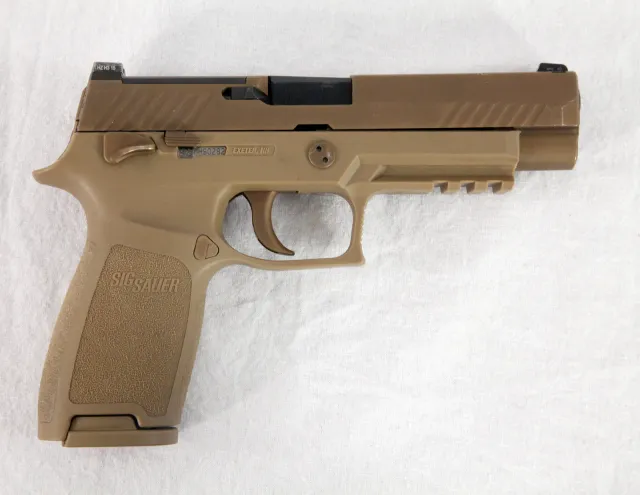
Related reading


