Troops Per Ton: Why the V-22 Osprey Ranks Near Last
Troops-per-ton spans a 2.93x range across 16 helicopters; the $72M V-22 Osprey and $87M CH-53K rank 15th and 14th, behind an $8M Indian utility helicopter.

Via Wikipedia, Sikorsky UH-60 Black Hawk (shown for identification)
China’s Z-9 tops WeaponSpecs’ helicopter troops-per-ton ranking at 2.439, roughly 2.93 times the UK’s Wildcat AH1 at the bottom (0.833). The two most expensive, most technologically advanced platforms in the comparison, the $72,000,000 V-22 Osprey and the $87,000,000 CH-53K King Stallion, rank 15th and 14th of 16, worse than India’s $8,000,000 HAL Dhruv and worse than China’s Z-9, which discloses no unit cost at all. This is not a story about the Osprey or the King Stallion being poorly designed. It is a story about where a helicopter’s weight budget actually goes.
Key takeaways:
- Troops-per-ton spans a 2.93x range across the 16 helicopters in WeaponSpecs’ database that publish both a troop capacity and a combat weight figure, from China’s Z-9 (2.439) to the UK’s Wildcat AH1 (0.833).
- The V-22 Osprey ($72,000,000, 24 troops, 27.443 tonnes) ranks 15th at 0.875 troops per ton, and the CH-53K King Stallion ($87,000,000, 30 troops, 33.3 tonnes) ranks 14th at 0.901, both behind India’s $8,000,000 HAL Dhruv (12 troops, 5.5 tonnes, 2.182 troops per ton).
- Russia’s Mi-26 Halo, the world’s largest helicopter, carries 82 troops, the highest raw troop count in the sample, but its 56-tonne combat weight puts it only 9th of 16 at 1.464 troops per ton.
- Of 47 helicopters tagged as that system type in the WeaponSpecs database, 17 publish a troop capacity figure and 16 of those also publish a combat weight, letting the ratio be computed directly.
- The UK’s Wildcat AH1 posts the lowest ratio (0.833) but is a reconnaissance and light-attack variant, not a dedicated troop transport, a role artifact rather than a design failure.
What does troops-per-ton of combat weight actually reveal?
A helicopter’s combat weight pays for several things at once: the rotor system and transmission, engines, fuel, avionics and mission systems, armor where fitted, and, last, cabin space for troops. Troops-per-ton is a rough way to see how much of that weight budget a given design spent on seats versus everything else. It says nothing on its own about a helicopter’s speed, range, survivability, or combat record, a low ratio can mean “built for heavy cargo lift” or “built for speed” just as easily as it can mean “inefficient.”
Of the 47 systems tagged systemType: helicopter in WeaponSpecs’ database, 17 publish a troop capacity figure, and 16 of those also publish a combat weight figure, letting the ratio be computed directly rather than estimated. One additional system, the H160M Guépard, discloses a troop capacity of 12 but no combat weight, so it is excluded from this comparison rather than guessed at.
Which helicopters pack the most troops per ton of weight?
The top of the ranking is simple utility and multirole helicopters, none costing more than $15,000,000 where a cost is even disclosed. The bottom is dominated by the two most expensive, most technologically advanced platforms in the sample, the tiltrotor V-22 and the heavy-lift CH-53K, whose weight buys speed, range, or cargo capacity rather than passenger density.
Why does the V-22 Osprey rank near the bottom despite its reputation as a premier troop transport?
The V-22 Osprey carries 24 troops at a combat weight of 27.443 tonnes, for a ratio of 0.875 troops per ton, good for 15th of 16. That is counter-intuitive for a platform routinely described as the premier fast, long-range troop transport in Western inventories, but the reason is straightforward once the weight budget is broken down. A tiltrotor aircraft carries two full rotor-and-engine nacelles that rotate between vertical and horizontal flight, a wing structurally reinforced to support that rotation, and a conversion mechanism linking the two engines so either can power both rotors if one fails. None of that hardware carries a passenger. A Congressional Research Service report on the V-22 program documents this tradeoff directly: the Osprey trades helicopter-style vertical lift for fixed-wing-style cruise speed and range, paid for in structural weight rather than passenger seats. GlobalSecurity.org’s payload breakdown shows the same pattern: internal cargo and troop capacity is respectable but not exceptional for the airframe’s size, because so much of that size is nacelle, wing, and conversion mechanism rather than cabin.
The V-22’s real advantage over the UH-60M Black Hawk, the workhorse baseline in this sample at 11 troops and 9.979 tonnes (1.102 troops per ton), is not troop density. It is the ability to self-deploy over ocean distances at fixed-wing cruise speeds no conventional helicopter can match, a metric troops-per-ton was never built to capture.
Why doesn’t the CH-53K King Stallion, the most expensive helicopter in the sample, top the ranking either?
The CH-53K King Stallion is the most expensive helicopter in this comparison at $87,000,000 a unit, yet it ranks 14th of 16 at 0.901 troops per ton, carrying 30 troops at a combat weight of 33.3 tonnes. Naval Technology’s project profile describes an aircraft engineered around external and internal heavy-cargo lift, armored vehicles, artillery pieces, palletized supplies, not around maximizing dismount seat count. The National Interest’s coverage of the program frames its defining number as external lift capacity, more than double its predecessor’s, rather than troop capacity. A helicopter built to sling-load a 27,000-pound armored vehicle needs a stronger airframe, a more powerful drivetrain, and a reinforced cargo floor, weight that competes directly with passenger seats for the same tonnage budget.
Why doesn’t the Mi-26 Halo, the world’s largest helicopter, lead the ranking?
Russia’s Mi-26 Halo is the largest helicopter ever put into series production, and in this sample it carries 82 troops, the highest raw troop count of any helicopter in the WeaponSpecs database by a wide margin. But at a combat weight of 56 tonnes, that works out to only 1.464 troops per ton, 9th of 16, squarely mid-pack. The Mi-26 buys an enormous absolute troop count and a matching cargo capacity, but size alone does not buy efficiency: a helicopter roughly a third its weight, like Turkey’s Gökbey at 2.000 troops per ton, puts a larger share of its own, much smaller, weight budget directly into cabin space. Bigger is not automatically a better ratio, it is a different design brief, built around raw lift capacity rather than weight-efficient troop density. Russian manufacturer figures for the Mi-26, like most of Russia’s helicopter fleet in this comparison, also carry the standard state-claim caveat: published figures, not independently audited results.
Is the Wildcat AH1’s low ratio a design failure?
No. The UK’s Wildcat AH1 posts the lowest ratio in the comparison at 0.833 troops per ton, but ranking it alongside dedicated troop carriers measures the wrong thing. The AH1 variant is fundamentally a naval and battlefield reconnaissance and light-attack helicopter, fitted with sensors and weapons stations rather than sized around a dismount squad. Its published 5-seat figure is jump-seat capacity for a small team riding alongside the mission crew, not an assault-lift role, the same pattern WeaponSpecs flagged when the UK’s Ajax reconnaissance vehicle landed last in a prior comparison of IFV troop capacity per ton. A low ratio here reflects a role choice, not an inefficient cabin design.
Cheaper, simpler utility helicopters at the top of this ranking, the Z-9, AW139M, HAL Dhruv, Z-8, and Gökbey among them, share a common trait: none pay a structural weight tax for a tiltrotor conversion mechanism or an oversized external-lift cargo floor. Their weight budgets go more directly into cabin and seats because their mission briefs are simpler.
Full ranking: troops per ton of combat weight across 16 helicopters
| System | Country | Weight (t) | Troops | Troops/ton |
|---|---|---|---|---|
| Z-9 | China | 4.1 | 10 | 2.439 |
| AW139M | Italy | 6.8 | 15 | 2.206 |
| HAL Dhruv | India | 5.5 | 12 | 2.182 |
| Z-8 | China | 13 | 27 | 2.077 |
| Gökbey | Turkey | 6 | 12 | 2.000 |
| AW101 Merlin | Italy/UK | 15.6 | 30 | 1.923 |
| NH90 Caiman | France | 10.6 | 20 | 1.887 |
| Mi-8 Hip | Russia | 13 | 24 | 1.846 |
| Mi-26 Halo | Russia | 56 | 82 | 1.464 |
| CH-47F Chinook | United States | 22.68 | 33 | 1.455 |
| Ka-29 | Russia | 11.5 | 16 | 1.391 |
| UH-60M Black Hawk | United States | 9.979 | 11 | 1.102 |
| Z-20 | China | 10 | 11 | 1.100 |
| CH-53K King Stallion | United States | 33.3 | 30 | 0.901 |
| V-22 Osprey | United States | 27.443 | 24 | 0.875 |
| Wildcat AH1 | United Kingdom | 6 | 5 | 0.833* |
*Wildcat AH1’s low ratio reflects its naval/battlefield reconnaissance and light-attack role rather than a dedicated troop-carrying design; see the FAQ above. Where a system’s country of origin is Russia or China, the published combat weight and troop capacity figures are manufacturer or state figures and have not been independently verified against a large operational fleet the way the U.S. and NATO systems in this comparison have.
So what should this ratio actually drive?
Not much on its own. Troops-per-ton is a weight-budget diagnostic, a way to see where a helicopter’s tonnage goes, not a procurement rule. A buyer choosing between the V-22, the CH-47F Chinook, and a simpler utility helicopter still needs to weigh range, survivability, sortie generation rate, and doctrine fit far above this number. The HAL Dhruv posting the third-best ratio in this comparison at a fraction of the V-22’s cost does not make it a substitute for a self-deployable, long-range tiltrotor, and the Mi-26 Halo’s mid-pack ratio does not make it a poor heavy-lift choice, its 82-troop capacity remains the highest in the sample by a wide margin. What the ratio does reliably show is that sticker price and technological sophistication track poorly with troop-carrying weight efficiency, and that a reader evaluating any helicopter’s capacity claim should ask what that airframe’s weight budget was actually built to buy before assuming a bigger number means a better troop transport.
Browse the full helicopter category for the underlying system pages this analysis draws from, or run your own mission profile against these platforms in the Advisor tool.
Sources
- V-22 Osprey Aircraft: Background and Issues for Congress, Congressional Research Service (via EveryCRSReport.com)
- CH-53K King Stallion Heavy Lift Transport Helicopter, Naval Technology
- CH-53K King Stallion: Meet the Marine Corps' New Heavy-Lift Helicopter, The National Interest
- V-22 Osprey Payload, GlobalSecurity.org
Systems in this comparison
Every system covered above, with its photo and, where available, a video. Tap a card to open the full spec sheet.
Compare these side by side →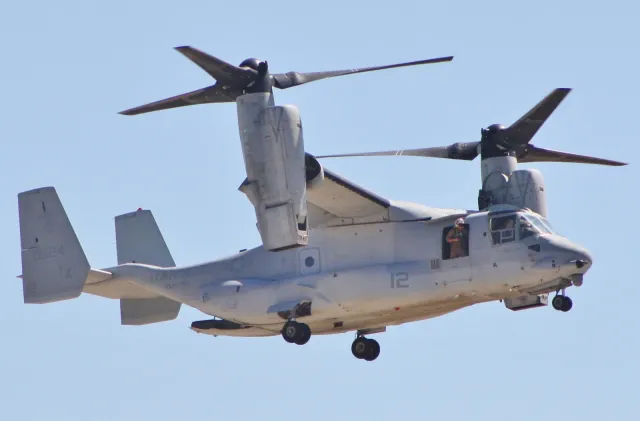
Helicopter
V-22 Osprey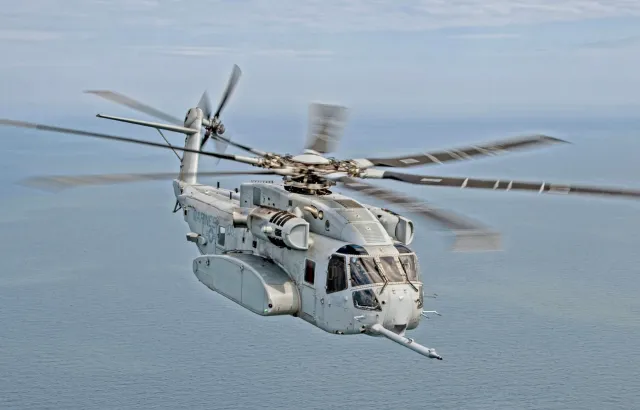
Helicopter
CH-53K King Stallion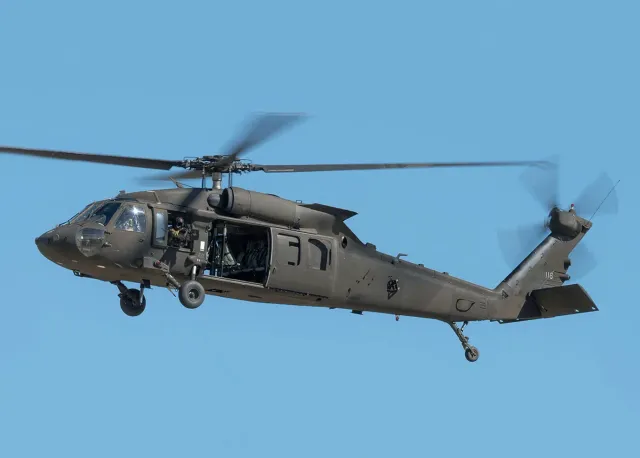
Helicopter
UH-60M Black Hawk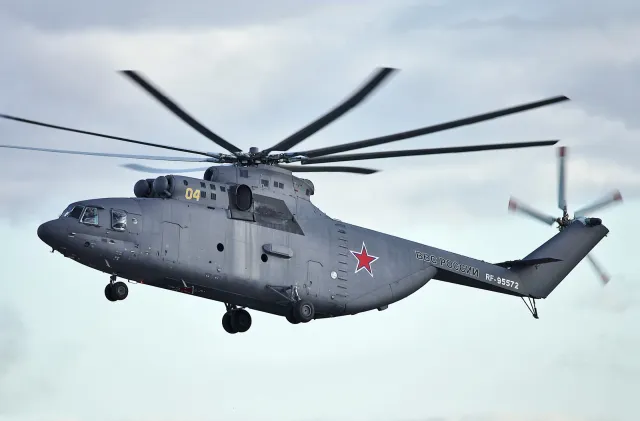
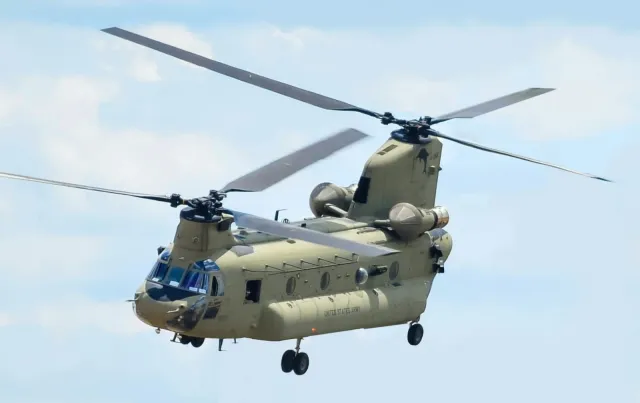
Helicopter
CH-47F Chinook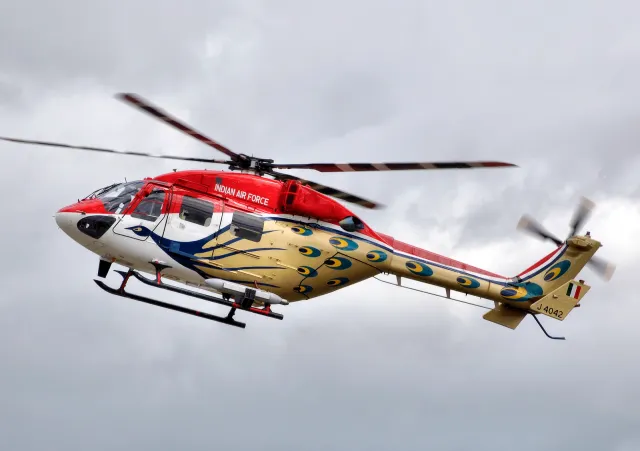
Frequently asked questions
What does troops-per-ton of combat weight actually measure? +
It is a helicopter's published troop capacity divided by its combat weight in tonnes. It is not a performance or quality score. A high ratio means a larger share of the airframe's weight budget goes directly into cabin space and seats. A low ratio means the weight is going somewhere else instead, a tiltrotor conversion mechanism, a heavy-lift cargo structure, armor, or a sensor and weapons suite, none of which are design failures.
Why does the V-22 Osprey rank near the bottom despite its reputation as a premier troop transport? +
The Osprey ranks 15th of 16 at 0.875 troops per ton because its 27.443-tonne combat weight pays for a tiltrotor conversion mechanism, two rotating nacelles, and a wing built to support them, hardware that buys speed and range no conventional helicopter can match, not additional passenger seats. A Congressional Research Service report on the V-22 documents this speed-and-range tradeoff as the program's defining design choice.
Why doesn't the Mi-26 Halo, the world's largest helicopter, top the ranking? +
The Mi-26 carries 82 troops, the highest raw troop count of any helicopter in the WeaponSpecs database, but at a 56-tonne combat weight that works out to only 1.464 troops per ton, good for 9th of 16. Its size buys raw seat count, not efficiency; several helicopters a fraction of its weight put a larger share of their weight budget directly into cabin space.
Is the Wildcat AH1's last-place ratio a sign of bad design? +
No. The Wildcat AH1 is fundamentally a naval and battlefield reconnaissance and light-attack variant, not a troop transport. Its published 5-seat figure is jump-seat capacity for a small team riding alongside sensor operators and weapons stations, not an assault-lift role. Ranking it against dedicated troop carriers on this metric measures two different design briefs against the same yardstick.
Should troops-per-ton drive an actual helicopter procurement decision? +
No. Range, survivability, doctrine fit, and sortie generation rate all matter more to a real buying decision than this ratio. Troops-per-ton is a weight-budget diagnostic, a way to see where a platform's tonnage actually goes, not a buying rule a procurement office should apply on its own.
Related reading


