Deadly Pacific Boat Strike Ends Southern Spear's Two-Month Pause
A Sunday strike killing two off the Pacific coast resumed a campaign that had gone silent since June, with no explanation and mounting legal pushback.

PO1 Amber Gibson, U.S. Navy, DVIDS, public domain
U.S. forces struck a suspected drug-smuggling boat in the Eastern Pacific on Sunday, killing two people. It was the first strike in Operation Southern Spear since June 21, a roughly nine-week gap that officials have not explained. The resumption lands in the middle of the sharpest legal and congressional scrutiny the campaign has faced since it began.
SOUTHCOM Commander Gen. Francis L. Donovan issued the standard justification language the command has used for prior strikes, describing the vessel as a known drug-trafficking route target. He offered no account of why the campaign went quiet for two months or why it resumed now.
July shows no bar at all. June's strikes stopped on the 21st, none followed for the rest of that month or all of July, and August did not restart until the 23rd, two days before this piece published. That five-week stretch with zero recorded strikes is longer than any other gap in the campaign's year-long run.
Two months of silence, no explanation offered
Operation Southern Spear launched under SOUTHCOM in early September 2025, framed by the administration as an armed campaign against cartels the U.S. designated foreign terrorist organizations in January 2025. Strikes ran at a steady clip through the fall and into a heavy December, then dropped sharply in January, the same month U.S. forces captured Venezuelan leader Nicolas Maduro in Caracas. Strikes continued at a reduced, uneven pace through the spring, tapered to two in the first three weeks of June, and then stopped completely. Nothing followed for the rest of June, all of July, and the first three weeks of August. Sunday’s strike is the first since that stretch began, and SOUTHCOM has not said what changed.
The legal fight that peaked while the campaign went quiet
The pause lines up almost exactly with the period when congressional and legal scrutiny of the campaign reached its highest point. Sen. Tim Kaine, a member of the Senate Armed Services Committee, reviewed classified briefing material on the strikes and concluded the campaign has likely killed people with no connection to narcotrafficking.
“Illegal, costly and ineffective,” said Sen. Tim Kaine (D-VA), describing the operation in an Aug. 3, 2026 letter urging President Trump to halt it after reviewing classified strike information (CNN, Aug. 3, 2026).
The campaign operates under a classified Justice Department legal finding that permits strikes without judicial review, a foundation Kaine says the strikes have exceeded. Sen. Rand Paul has separately pressed the Pentagon for evidence tying individual targets to designated cartels. A Pentagon Inspector General review announced in May will check whether strikes followed proper targeting procedures, but its scope explicitly excludes the underlying legal-authority question Kaine has raised, meaning the one review currently underway cannot settle the dispute that triggered it.
What SOUTHCOM claims, and what critics dispute
SOUTHCOM has not published evidence that any specific struck vessel was carrying drugs, relying instead on standard justification language repeated after each strike. Kaine and human rights groups dispute that the campaign’s targets have consistently been trafficking vessels rather than, in some cases, ordinary fishing boats. Neither side has produced public evidence that resolves the dispute, and Sunday’s strike was described in the same general terms as its predecessors, with no additional detail offered about how this particular target was identified.

Strikes have been carried out by MQ-9A Reaper drones armed with AGM-114 Hellfire missiles, flying maritime surveillance and strike missions from Rafael Hernandez Airport in Aguadilla, Puerto Rico, since the campaign’s opening month. Missile-fragment forensics on at least one Venezuela-area strike have confirmed the Hellfire’s use. Arleigh Burke-class destroyers, including USS Gridley, USS Bainbridge and USS Mahan, and the Gerald R. Ford Carrier Strike Group have operated in the Caribbean in support.
Sunday’s strike does not answer the question the pause raised, why a campaign that had run for a year with only brief lulls suddenly stopped for two months at the exact moment its legal footing came under the most scrutiny it has faced. The silence ended with a strike that looked exactly like the ones before it, with the same unexplained gap in the record now sitting between them.
Sources
- US military says strike on alleged drug-smuggling boat kills two — Al Jazeera, Aug 24, 2026
- US launches deadly strike on alleged drug boat, believed to be the first in two months — CNN via KESQ, Aug 24, 2026
- 'They are murder victims': Senator suggests US strikes have killed people who weren't involved in drug trafficking — CNN, Aug 3, 2026
- 'Total Whitewash': New Pentagon Report Claims U.S. Killed No Civilians in Boat Strikes — The Intercept, Aug 11, 2026
- United States strikes on alleged drug traffickers during Operation Southern Spear — Wikipedia
- A list of US military strikes against alleged drug-carrying vessels — Military Times, Nov 6, 2025
Systems mentioned
Every system named in this story, with its photo and, where available, a video. Tap a card to open the full spec sheet.
Compare these side by side →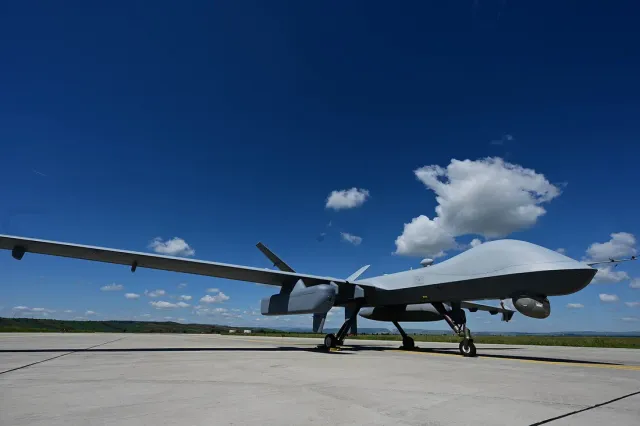
UAV / drone
MQ-9A Reaper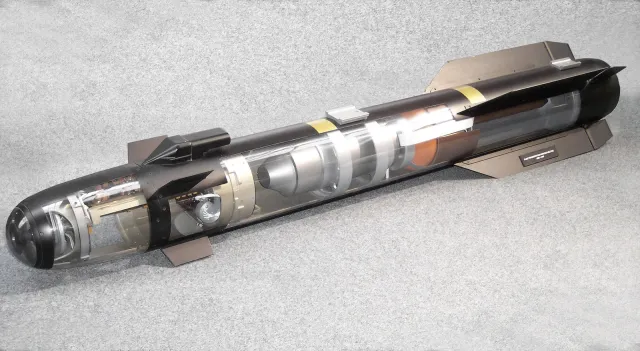
Missile
AGM-114 HellfireFrequently asked questions
How many people has Operation Southern Spear killed in total? +
Two independently compiled tallies disagree slightly. One, sourced from Pentagon strike announcements through June 21, counts 221 killed across 66 strikes, including people missing and presumed dead. A separate count through June 22 puts it at 'at least 196.' Sunday's strike adds a 67th strike and roughly two more deaths on top of either total.
Why did the strikes pause for two months? +
U.S. officials have not publicly explained the gap between the June 21 and August 23 strikes.
Is the campaign legal? +
It runs on a classified Justice Department finding that permits strikes without judicial review. Sen. Tim Kaine says classified briefings show the strikes have likely killed people with no connection to drug trafficking, and a Pentagon Inspector General review announced in May will check whether targeting procedures were followed correctly, but it will not examine whether the underlying legal authority is valid.
What happened to Maduro, and is he connected to this campaign? +
U.S. forces captured Venezuelan President Nicolas Maduro on January 3, 2026, in a separate but related operation under the same Southern Spear umbrella; he was later arraigned in U.S. federal court on narco-terrorism charges. Strike frequency dropped sharply in the months that followed.
More news


