B-1 Bombers Strike Iran From UK as Navy Tomahawk Stocks Thin
A B-1B flew Iran's first UK-launched strike sortie since the war resumed, as the US Navy's Tomahawk inventory, down roughly a third, pushes strikes toward land-based bombers.

U.S. Air Force photo, DVIDS, public domain
A US Air Force B-1B Lancer flew a strike sortie against Iran overnight July 22 after departing RAF Fairford in Gloucestershire, England, the first bomber mission launched from UK soil since the Iran war resumed, according to flight-tracking data and multiple outlets citing sources familiar with the operation. CENTCOM has not named the B-1B in its own strike statements and declined to comment when asked directly, so this remains an open-source-documented development, not an on-record Pentagon confirmation. The reported driver behind the shift: the US Navy’s Tomahawk cruise missile inventory, drawn down by more than 1,000 missiles fired since the war restarted, is thinning faster than it can be restocked.
Two bombers, one air spare, and a UK airfield doing double duty
According to flight-tracker-based reporting from ITA MilRadar, two B-1Bs took off from RAF Fairford overnight: the primary strike aircraft, tail number 86-0108 nicknamed “Aliens with Attitude,” and a second bomber flying as an airborne spare that returned to the UK roughly six hours later without continuing toward the CENTCOM area of responsibility. A third B-1B remained at Fairford as a ground spare and never departed. Two KC-135 refueling tankers that had forward-deployed from Romania supported the mission, the same long-range refueling architecture the US has relied on throughout its bomber operations against Iran since Operation Epic Fury began. Later reporting citing the open-source account DefenceGeek suggested the primary aircraft may have suffered a technical malfunction after its first refueling and turned back before reaching Iranian airspace, meaning it remains genuinely unconfirmed, as of this writing, whether either bomber actually completed a strike inside Iran that night. RAF Fairford has functioned as the US Air Force’s primary forward operating location for strategic bomber missions into the Middle East throughout the campaign, and this sortie, confirmed or not in its outcome, reinforces that the base’s role has not diminished.
The B-1B Lancer is a supersonic, variable-sweep-wing bomber that carries the largest conventional payload of any aircraft in the Air Force’s bomber fleet, more than 34,000 kilograms across six external and internal weapons stations, and has been conventional-only since its nuclear mission was formally retired in 2011. Unlike a Navy destroyer’s vertical launch cells, which hold a fixed number of Tomahawks that cannot be reloaded at sea, a B-1B’s weapons load is limited only by what a ground crew can put on it before the next sortie, giving planners a strike option that does not compete for the same depleting missile pool.
Why the Navy’s deepest magazine is running low
The scale of Tomahawk expenditure in this war is without precedent. US warships fired roughly 400 Tomahawks in the first 71 hours of Operation Epic Fury alone, and by the end of the first month the total had passed 850, already exceeding the combined totals of Operation Desert Fox and the opening days of Desert Storm. Fresh reporting from CBS News puts the cumulative total at more than 850 confirmed and likely over 1,000 as of late July, roughly nine times the number of Tomahawks the Pentagon procures in an average year. That comparison matters because it is the actual bottleneck: the Center for Strategic and International Studies estimates the US military’s real annual Tomahawk procurement rate at only about 90 missiles, far below the theoretical maximum production capacity of roughly 2,330 a year that Raytheon’s and BAE’s combined contracts could technically support if fully funded and staffed. The Navy requested just 57 new Tomahawks for fiscal 2026, a peacetime-paced order placed before this expenditure rate became clear.
“It’s been recognized that we don’t have enough long-range strike capability, so we’ve been trying to build up these stockpiles, but we keep depleting them,” said Kelly Grieco, senior fellow at the Stimson Center (CBS News, July 25, 2026).

Grieco’s “we keep depleting them” line captures a pattern that predates this war: the US has repeatedly recognized a long-range strike shortfall, tried to rebuild the stockpile, and then drawn it down again in the next crisis before the rebuild finished. Raytheon has now announced a framework agreement with the Defense Department to scale Tomahawk production toward 1,000 missiles a year over several years, roughly eleven times the current actual output, though that ramp-up is a multi-year industrial undertaking, not a switch the Pentagon can flip mid-campaign. Every destroyer, cruiser, and attack submarine that empties its Tomahawk cells today has to sail back to a properly equipped port to reload, a logistics reality that does not bend to wartime urgency. That structural limit, not merely a numbers count, is the deeper reason a bomber flying from an English airfield fits into the campaign at all: it draws on a completely separate industrial and logistics chain, JASSM-ER cruise missiles and precision-guided bombs from Air Force stocks, rather than competing with the Navy’s own dwindling magazine.
An electronic-warfare buildup and an unverified Iranian threat
The bomber sortie was not the only sign of RAF Fairford’s expanding role this week. Two EA-37B Compass Call electronic-warfare aircraft, Gulfstream G550 jets equipped to jam enemy radar and communications, arrived at the base July 23, hours before an Iranian threat surfaced. The Air Force operates only five EA-37Bs in total, so committing two of them to a single forward base is a meaningful allocation of a genuinely scarce electronic-warfare asset, not a routine rotation, and suggests planners expect a sustained rather than one-off need for jamming support over Iran.

An outlet linked to Iran’s Islamic Revolutionary Guard Corps subsequently claimed on Telegram that “any base that is used to invade Iran’s territory is our legitimate target,” naming RAF Fairford directly. This is a state-linked threat, not an independently verified capability, and should be read as such: Iranian officials have not specified how they would strike a base roughly 2,400 miles from Iranian territory, and a March attempt to hit the comparably distant Diego Garcia base reportedly involved two missiles, one intercepted at sea and the other failing in flight. UK officials responded that the country’s layered air and missile defenses, backed by a newly announced £790 million investment, remain ready to defend British territory and overseas bases.
Sources
- B-1 'Lancer' bombers return to Middle East: Did they strike Iran's nuclear sites? — The Week (India), Jul 23, 2026
- US B-1B Lancer Bomber Flies Strike Mission Against Iran After Departing RAF Fairford — ITA MilRadar, Jul 22, 2026
- US deploys B-1 bomber to strike Iran for first time since war resumed — The Jerusalem Post, Jul 23, 2026
- EA-37Bs Arrive At RAF Fairford As Iran Threatens To Attack The UK Air Base — The War Zone, Jul 23, 2026
- The US Military Just Emptied a Third of Its Deepest Missile Magazine Into Iran — 19FortyFive, Jul 17, 2026
- U.S. Tomahawks are being used in Iran war faster than stockpile is being refilled — CBS News, Jul 25, 2026
Systems mentioned
Every system named in this story, with its photo and, where available, a video. Tap a card to open the full spec sheet.
Compare these side by side →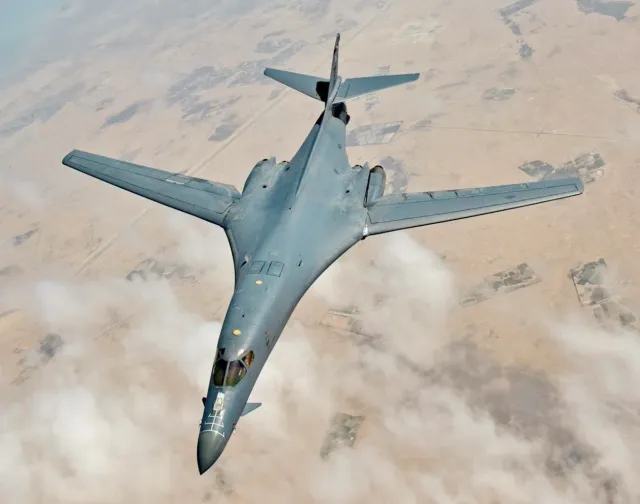
Bomber
B-1B Lancer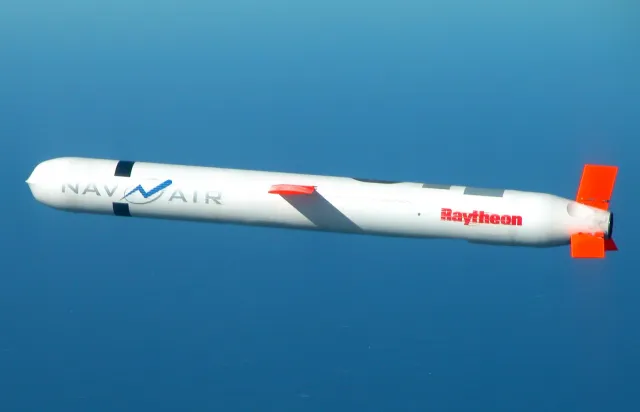
Missile
Tomahawk Block VFrequently asked questions
Why is the US flying B-1 bombers from a UK base instead of continuing ship-launched Tomahawk strikes? +
Multiple reports point to Navy Tomahawk stockpiles running low after more than 1,000 missiles fired since the Iran war resumed. The B-1B carries a large, land-attack-capable payload of its own, including cruise missiles and precision bombs, and flying from RAF Fairford does not draw down the same shipboard magazine that has been depleted fastest.
Has the Pentagon officially confirmed the B-1 struck Iran from RAF Fairford? +
No. CENTCOM has not named the B-1B in its strike statements and declined to comment when asked directly. This story is based on open-source flight-tracking data and reporting attributed to sources rather than an on-record Pentagon confirmation, and is presented with that uncertainty made explicit.
What is the EA-37B Compass Call and why does its arrival matter? +
The EA-37B is a Gulfstream G550-based electronic-warfare aircraft that jams enemy radar and communications, replacing the retired EC-130H fleet. The US Air Force operates only five, so deploying two of them to RAF Fairford signals a sustained, not one-off, air campaign requiring dedicated electronic protection.
Is Iran's threat against RAF Fairford credible? +
This is an unverified state threat, not a confirmed capability. An IRGC-linked media outlet called Fairford a legitimate target, but Iran has not specified how it would strike a base roughly 2,400 miles from its territory, and a comparable-distance missile attempt against Diego Garcia in March reportedly failed to hit its target.
More news


