North Korea's KN-30: A Payload Claim, Not a Combat Record
North Korea's new KN-30 missile claims a 2,500 kg warhead that matches South Korea's own bunker-buster almost exactly, before it has ever flown in combat.

Via Wikipedia, 9K720 Iskander (shown for identification)
On August 20, 2026, Ukraine’s Main Directorate of Intelligence (HUR) confirmed that Russia has received its first-ever shipment of North Korea’s KN-30 (Hwasong-11C) short-range ballistic missile, a larger addition to the KN-23/KN-24 family Russia has fired at Ukraine since 2024. North Korea claims the KN-30 carries a 2,500 kg warhead, a figure that lines up almost to the kilogram with South Korea’s own Hyunmoo-4 bunker-buster, at a range North Korea has never had to prove by actually hitting anything.
What did Ukraine confirm about North Korea’s newest missile on August 20?
HUR said Russia has stood up six transporter-erector-launchers carrying the KN-30 in Voronezh Oblast, in western Russia, operated by the 112th Guards Missile Brigade under the 1st Guards Tank Army (Moscow Military District), with roughly 90 North Korean personnel present alongside the Russian crews. Ukrainian intelligence assessed that the deployment lets Russia hold infrastructure across seven Ukrainian regions, Sumy, Kharkiv, Chernihiv, Poltava, Kyiv, Dnipropetrovsk, and Zaporizhzhia oblasts, at risk from that one site.
The missile itself is an enlarged Hwasong-11A variant: roughly 10.1 to 10.2 meters long, 1.26 meters in diameter, solid-fuel and road-mobile like the rest of the family. Even the range isn’t settled among open sources. Army Recognition reports 600 to 900 km, while Wikipedia’s own Hwasong-11 entry says the figure is “assumed to be about 600 km,” based on a first test in March 2021. Both sources land on the same warhead number, 2,500 kg, but Militarnyi’s own reporting flags it plainly as a North Korean state claim that is “not independently confirmed.”
Ukrainian intelligence also put a number on the wider shipment: roughly 50 North Korean ballistic missiles, KN-23, KN-24, and now KN-30 combined, delivered to Russia as of the confirmation. That’s a different figure from the 120-missile allocation Army Recognition ties specifically to the Voronezh deployment’s planned capacity. One counts what has arrived so far; the other describes a supply pipeline. They shouldn’t be added together or treated as the same measurement.
How does the KN-30’s claimed payload compare to missiles WeaponSpecs actually tracks?
WeaponSpecs tracks five short-range ballistic missiles with sourced range and warhead figures, enough to see exactly where the KN-30’s claim lands next to systems with an actual paper trail. The sixth row below, the KN-30 itself, carries no link to our own database, because it isn’t in it: North Korea’s own numbers are the only numbers available, and open sources can’t even agree on the range, let alone verify the payload.
| System | Country | Claimed range | Warhead | Status |
|---|---|---|---|---|
| ATACMS | United States | 300 km | 227 kg | Combat-used in Ukraine, publicly documented |
| 9K720 Iskander-M | Russia | 500 km | 480 kg | Russia’s primary precision-strike system since 2022; state-origin figures |
| Fateh-110 | Iran | 300 km | 450 kg | Iranian state claim, unverified |
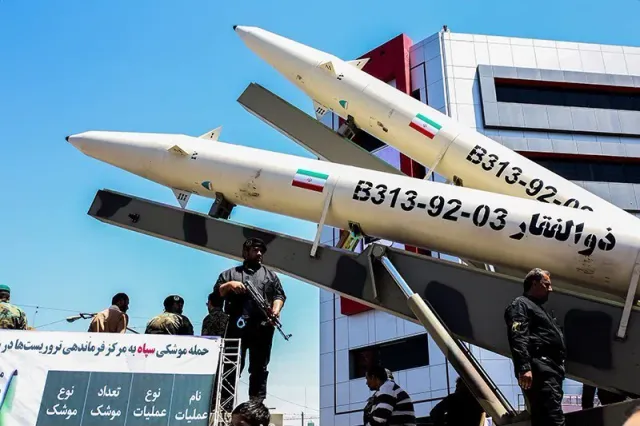
| Zolfaghar | Iran | 700 km | 550 kg | Iranian state claim, unverified |
| Hyunmoo-4 | South Korea | 800 km | 2,500 kg | Manufacturer claim; fielded bunker-buster role |
| KN-30 / Hwasong-11C | North Korea | 600-900 km (sources disagree) | 2,500 kg (claimed) | Not tracked in WeaponSpecs; zero combat history as of publish |
Hyunmoo-4 and the KN-30 claim sit at nearly the same warhead weight, 2,500 kg each, but one is a fielded system from a country with a transparent defense-export relationship and the other is a number North Korea has never had to prove.
What does North Korea’s actual combat record say about trusting these numbers?
The KN-30 has never been fired at anything. The KN-23, the missile family it grows out of, has been fired at Ukraine more than 50 times since early in the war, and that record is the best available guide to how much a North Korean missile claim is worth before it’s used. Early strikes were wildly inaccurate, missing by roughly 1 to 3 km, and tied to 24 deaths and 115 injuries in Ukraine per the same reporting. Ukraine’s Prosecutor General’s Office told Reuters that of 50 KN-23 missiles launched by May 2024, Ukrainian researchers could only recover and study remnants of 21, meaning more than half either failed, exploded early, or otherwise left nothing confirmable at the target.
Then, starting around December 2024, KN-23 accuracy suddenly tightened to a claimed 50 to 100 meters, which Reuters called an order of magnitude less deviation, with more than 20 missiles landing at that tighter accuracy in the weeks before the February 2025 report. Ukrainian analysts recovered conventional automotive bearings, SNR, NTN, and NSK brands, inside downed KN-23 steering shafts, some jammed or rusted: evidence of an actual design change, not just a batch of better-assembled parts.
The leading theory for that jump, not a confirmed mechanism, is that North Korea is getting real feedback from watching its own missiles perform in a live war.
“As they are making missiles and getting feedback from the customers, the Russian army, then they have more experience making more reliable missiles,” said Yang Uk, weapons expert at Seoul’s Asan Institute for Policy Studies (via Militarnyi, citing Reuters, February 2025).
That’s the pattern worth holding onto when reading the KN-30’s brand-new numbers. This missile family’s claims have historically needed a live war to become credible, and the KN-30 hasn’t had one yet.
Why is a live war the best missile laboratory North Korea has ever had?
North Korea’s missile program is sanctioned, isolated, and mostly limited to static test launches inside its own borders, the kind of environment that can confirm a rocket motor ignites and a warhead separates but can’t confirm whether the missile reliably lands where it’s aimed against a real target under real countermeasures. Selling missiles to Russia for use against Ukraine changes that math. Every KN-23 or KN-30 fired into Ukrainian territory returns data on guidance performance and component failure that North Korea has never had a way to generate on its own, short of an actual war.
The raw spec numbers in the KN-30 shipment remain unverified and inconsistent even among open sources reporting on the same missile, so treat them as provisional. What actually changed is access: a sanctioned, isolated missile program has just gained something it never had before, a live adversary shooting back, and a customer willing to report what worked.
That dynamic matters beyond this one war. Any other prospective buyer of a North Korean missile, or any analyst trying to judge Pyongyang’s real technical progress, is watching the same thing WeaponSpecs’ own combat-tracked data shows for the KN-23: state-claimed numbers only start looking believable once they’ve survived actual use against a target that shoots back. Our own coverage of unverified state missile-range claims makes the same point about North Korea’s ICBM program: a range figure with no independent flight test behind it is a claim, not a capability. The KN-30’s payload figure currently sits in exactly that category, and the only thing that will move it out is the same thing that moved the KN-23’s accuracy claims: more launches, tracked and studied by the country on the receiving end.
See where the KN-30’s claimed numbers would rank against every missile WeaponSpecs actually tracks in the missile systems category, or build a direct comparison against ATACMS, Iskander-M, or Hyunmoo-4 to see the payload-to-range tradeoffs those numbers imply.
Sources
- Russia Receives North Korean KN-30 Ballistic Missiles
- Russia received KN-30 ballistic missiles from North Korea, Defence Intelligence of Ukraine says
- Reuters: North Korean ballistic missiles have become more precise
- North Korea's increasingly accurate missiles raise concerns
- Half of North Korean KN-23 missiles exploded mid-flight in Ukraine, per Reuters
- 9K720 Iskander - Wikipedia
- Hwasong-11 - Wikipedia
Systems in this comparison
Every system covered above, with its photo and, where available, a video. Tap a card to open the full spec sheet.
Compare these side by side →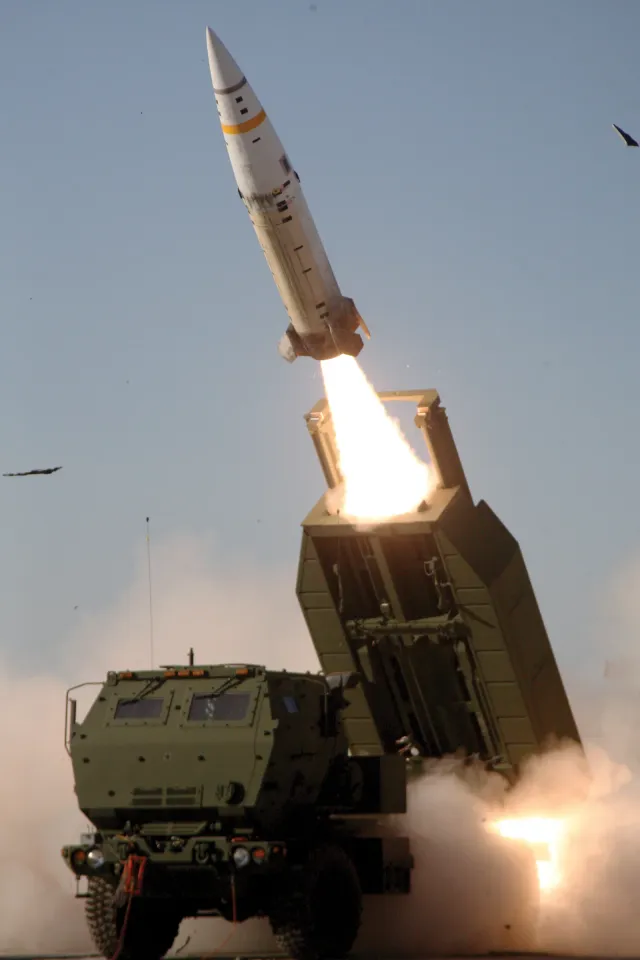
Missile
MGM-140 ATACMS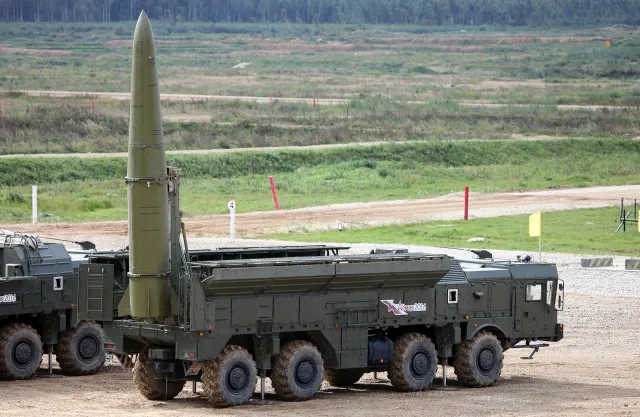
Missile
9K720 Iskander-M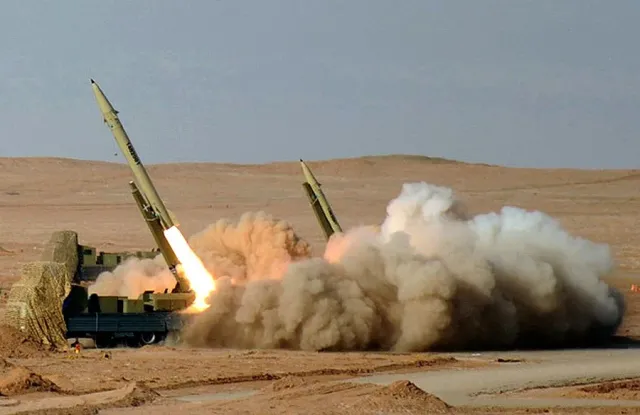
Frequently asked questions
What is the KN-30 missile, and how does it differ from North Korea's KN-23 and KN-24? +
The KN-30 (Hwasong-11C) is an enlarged variant of the Hwasong-11A family that already includes the KN-23 and KN-24 short-range ballistic missiles Russia has fired at Ukraine since 2024. At roughly 10.1 to 10.2 meters long and 1.26 meters in diameter, it is a bigger, road-mobile, solid-fuel missile than its predecessors, and North Korea claims it carries a far heavier 2,500 kg warhead. The shipment confirmed on August 20, 2026 is the first reported transfer of the KN-30 specifically; earlier deliveries to Russia involved only the smaller KN-23 and KN-24 variants.
Has North Korea's claimed range and warhead weight for the KN-30 been independently verified? +
No. Open-source outlets do not even agree with each other on the range: Army Recognition reports 600 to 900 km, while Wikipedia's own entry describes the figure as assumed to be about 600 km, based on a March 2021 test. Both sources cite the same 2,500 kg warhead figure, but that number comes from North Korean state claims and, per Militarnyi's own reporting, is not independently confirmed.
Why isn't North Korea's KN-23/KN-24/KN-30 missile family in the WeaponSpecs database? +
WeaponSpecs' spec database tracks systems with sourced, cross-checkable performance figures from manufacturers, governments, or reputable open-source reporting. North Korea's KN-series missiles publish state-claimed numbers that multiple outlets can't even agree on, and independent verification of range or payload doesn't exist. That data-quality gap, not the missile's relevance, is why this piece treats the KN-30 as a labeled state claim sitting alongside five systems the database does track.
How accurate have North Korea's KN-23 missiles actually been in combat against Ukraine? +
Early in the war, KN-23 strikes landed roughly 1 to 3 km off target, and Ukraine's Prosecutor General's Office found that of 50 KN-23 missiles launched by May 2024, researchers could recover and study remnants of only 21, meaning more than half left nothing confirmable near their aim point. Starting around December 2024, accuracy suddenly tightened to a claimed 50 to 100 meters, which Reuters described as an order of magnitude improvement, a shift a South Korean weapons expert attributes to North Korea getting real feedback from Russian combat use.
What does South Korea's Hyunmoo-4 have to do with North Korea's KN-30 claim? +
South Korea's Hyunmoo-4, a fielded bunker-buster missile with an 800 km range, carries a 2,500 kg warhead, the same figure North Korea claims for the KN-30. The two numbers sit almost on top of each other on a payload chart, but one belongs to a system South Korea has built and fielded under a transparent defense-export relationship, and the other is a North Korean state claim for a missile that has never been used in combat.
Related reading


