The Army Picked a Howitzer That Doesn't Exist Yet
The Army picked Hanwha's wheeled K9 over two combat-exported wheeled howitzers already fielded across NATO. Here is what the specs actually show.

Via Wikipedia, K9 Thunder (shown for identification)
On August 18, 2026, the US Army awarded Hanwha Defense USA a Mobile Tactical Cannon prototype agreement covering six base systems, with an option for twelve more, eighteen total, and handed the win to a howitzer configuration that has never been built, fielded, or fully specified anywhere in the world. In doing so, the Army passed over CAESAR and Archer, two wheeled 155mm howitzers already in service and already exported to a combined thirteen operators, in favor of a wheeled derivative of Hanwha’s tracked K9 Thunder, the world’s best-selling self-propelled howitzer on tracks but an unproven quantity on wheels.
The comparison at a glance
| System | Mobility | Max firing range | Combat weight | Crew | Rate of fire | Units built | Export operators | Unit cost |
|---|---|---|---|---|---|---|---|---|
| K9 Thunder | Tracked | 54 km | 47 t | 5 | 6 rpm | 1,900 | 11 | $3M |
| M109A7 Paladin | Tracked | 30 km | 40.6 t | 4 | 4 rpm | 600 | 1 | $6M |
| CAESAR | Wheeled | 42 km | 17.7 t | 5 | 6 rpm | 350 | 10 | not publicly disclosed |
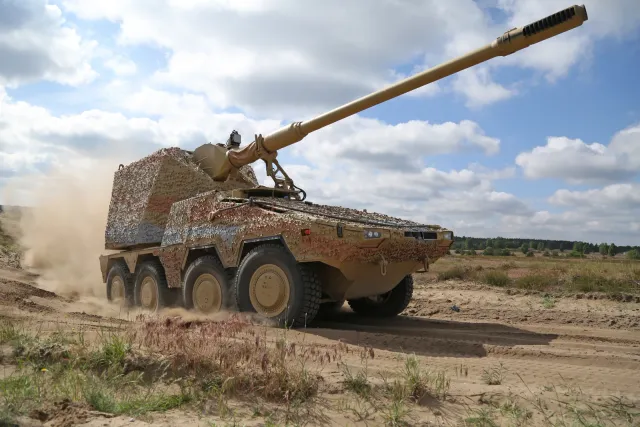
| RCH 155 | Wheeled | 40 km | 42 t | 2 | 5 rpm | not yet disclosed | 1 | not publicly disclosed |
| Archer | Wheeled | 60 km | 30 t | 4 | 8 rpm | 60 | 3 | not publicly disclosed |
| M777 (towed) | Towed | 40 km | 4.2 t | 8 | 5 rpm | 1,500 | 8 | $3.7M |
Rate of fire is the column buyers most often misread as a single-number verdict; our own explainer on what rate of fire means on an artillery spec sheet covers why a published rpm figure rarely holds for a sustained fire mission. The RCH 155’s low crew count is a design choice, not a weakness: its automated, remote-operated turret removes the loader from the vehicle entirely.
The Army just bought six prototypes of a howitzer that doesn’t exist yet
Mobile Tactical Cannon exists to solve one specific gap: Stryker Brigade Combat Teams currently field no organic self-propelled artillery at all, only the towed M777. The Army issued its MTC request for information in September 2025, closing out an eleven-month competition that began after the Army canceled its internal Extended Range Cannon Artillery program, known as ERCA or XM1299, in 2024. ERCA was itself the latest in a line of self-propelled howitzer replacement efforts that never reached fielding, following the earlier cancellations of Crusader and NLOS Cannon. After three consecutive in-house development programs failed to produce a fielded system, the Army pivoted to buying an existing design outright rather than building a new one from scratch.
Hanwha’s winning bid is not, strictly, an existing design. The tracked K9 Thunder is real, combat-tested in export markets, and the best-selling self-propelled howitzer in the world by units built. The wheeled MTC variant Hanwha will deliver is new: the first of six base prototypes is targeted for early fall 2026, with the remaining five due within a year of the award. Soldiers will then run the prototypes through operational experiments assessing performance, reliability, and supportability before any production decision follows. Also in the running was SIGMA, a clean-sheet design from an Elbit America, Anduril, and Oshkosh Defense team pairing a 155mm/52-caliber Elbit cannon with an Oshkosh 10x10 wheeled chassis and Anduril’s Lattice software for autonomy, built in Charleston, South Carolina, and pitched by its team as a fully domestic supply chain. The Army passed on that purpose-built option too, in favor of adapting an existing tracked platform to wheels.
“What we’re also not going to do is sit back and wait for the Army to figure it all out. We’re going to anticipate their needs. Our investment is going to reflect that, and we’re going to be well positioned to execute our localization or our onshoring activities on or ahead of the Army’s desired schedule,” said Todd Mueller, Executive Director of Fires Capture Programs at Hanwha Defense USA (Breaking Defense, August 2026).
Archer already outranges every wheeled rival, and the new K9’s range is still a guess
Among the self-propelled systems in this comparison, published firing range does not favor the design the Army just picked.
M777 is excluded here because it is towed, not self-propelled, and its firing range is not comparable on mobility grounds. Note that the K9 Thunder's 54 km figure belongs to the tracked K9 firing extended-range ammunition, not to the wheeled MTC prototype the Army just funded, which has no published range of its own because it has not been built.
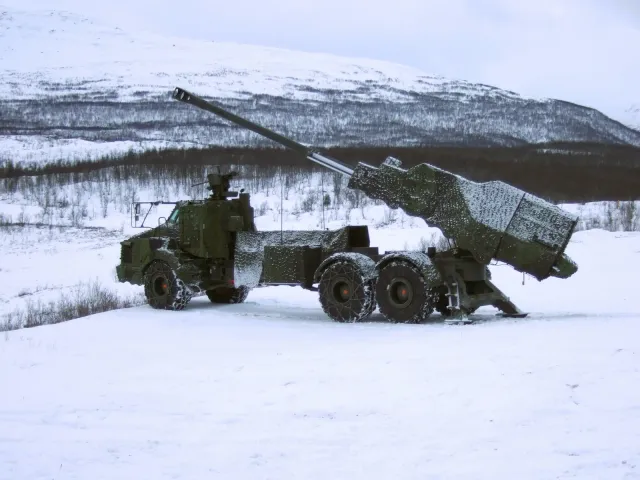
Archer leads the field at 60 km, eight kilometers past the tracked K9’s own extended-range figure, and the Archer artillery system pairs that range with the highest rate of fire in this comparison. CAESAR and RCH 155 both sit below the K9 as well. What the chart cannot show is what actually decided this competition: a range figure for the wheeled MTC prototype itself, because that number does not exist yet.
The K9’s tracked weight is the open question for a wheeled Stryker companion
The heavier open question is mobility, not range, and it lands close to home for the M109A7 Paladin, the tracked howitzer MTC is not meant to replace but sits next to in the Army’s broader fires mix. The tracked K9 Thunder weighs 47.0 tonnes in combat trim. CAESAR, the lightest wheeled rival in this field, weighs 17.7 tonnes, less than half the K9’s mass, because it is a truck-mounted gun rather than a fully armored chassis. Archer sits in between at 30.0 tonnes. If Hanwha’s wheeled MTC derivative inherits anything close to the tracked K9’s weight class, it would land dramatically heavier than both wheeled competitors the Army just passed over, a real question for units built around the comparatively light Stryker vehicle family that the word “wheeled” alone does not resolve. Nothing in the public record yet states what the wheeled MTC prototype will actually weigh, and that number, like its firing range, won’t exist until Hanwha builds the thing.
The public record can’t agree on what the contract is actually worth
Even the headline dollar figure for this award has two different published answers. Breaking Defense’s coverage of the announcement states the deal “could reach $233 million.” Hanwha’s own regulatory filing, reported by South Korean outlet SBS, discloses a base contract value of $100,302,961 and a cumulative ceiling value of $262,903,274 for the identical six-base, eighteen-total-option structure. That leaves roughly a $30 million gap, about 13 percent, between the two published “total” figures for the same DoD announcement. Neither outlet appears to be wrong; this reads like a difference in reporting basis, an early press estimate against a foreign publicly-traded company’s own precise regulatory disclosure, rather than a factual conflict worth forcing into a single number.
What actually happens next
Nothing about this award is a verdict yet. It is a bet, on Hanwha’s industrial track record, its production scale, and its new Opelika, Alabama manufacturing facility, over two wheeled howitzers that are already built, already fielded, and already exported to double-digit operator counts. Readers tracking this program should watch the announced early fall 2026 delivery date for the first prototype, not the contract announcement itself, since that is the point where the wheeled K9’s actual weight, range, and reliability numbers start to become real rather than assumed. Browse the artillery category for the full field, or see our own ranking of the best self-propelled howitzers for how these systems stack up outside this one competition.
Sources
- Army picks Hanwha's wheeled K9 for self-propelled howitzer prototypes
- Anduril teams with Elbit America for Army's self-propelled howitzer competition
- Army seeks to award self-propelled howitzer contract by July, prototype request coming soon
- U.S. Army Selects Mobile Tactical Cannon Prototype for Modernization
- Hanwha breaks into U.S. Army market with K9 howitzer: contract value revealed
Systems in this comparison
Every system covered above, with its photo and, where available, a video. Tap a card to open the full spec sheet.
Compare these side by side →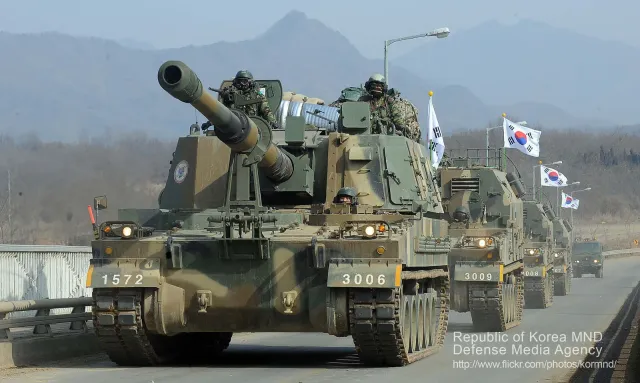
Artillery & MLRS
K9 Thunder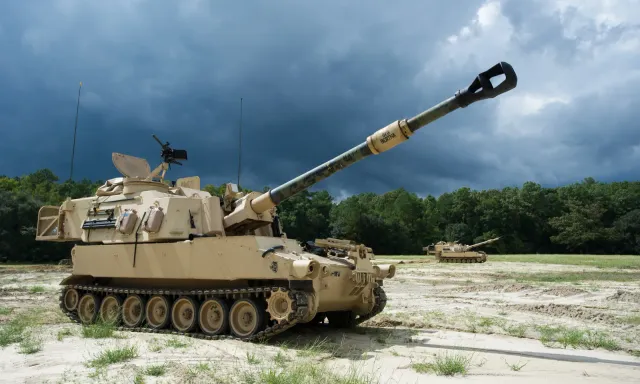
Artillery & MLRS
M109A7 Paladin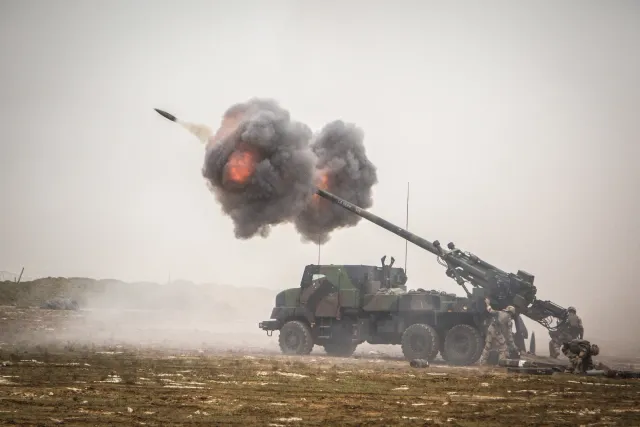
Artillery & MLRS
Archer Artillery System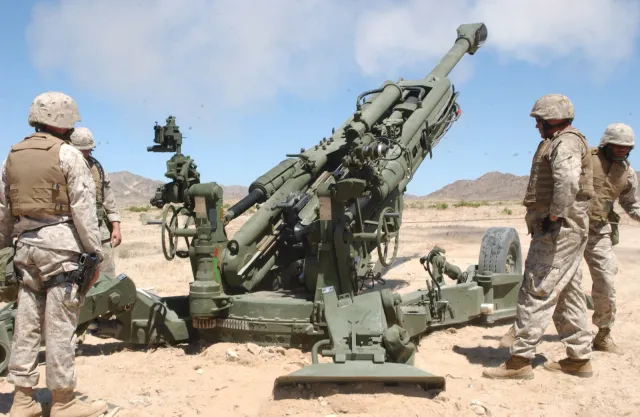
Artillery & MLRS
M777 HowitzerFrequently asked questions
What is the Mobile Tactical Cannon program? +
Mobile Tactical Cannon (MTC) is the US Army's effort to give Stryker Brigade Combat Teams a self-propelled 155mm howitzer for the first time. Stryker units currently have no organic self-propelled artillery, only the towed M777. On August 18, 2026 the Army awarded Hanwha Defense USA a prototype agreement covering six base systems with an option for twelve more, eighteen total, for a wheeled derivative of Hanwha's tracked K9 Thunder. The program follows the 2024 cancellation of the Army's internal Extended Range Cannon Artillery (ERCA/XM1299) effort, itself the latest in a line of failed self-propelled howitzer replacements going back through Crusader and NLOS Cannon.
Why did the Army pick an unbuilt wheeled K9 over CAESAR and Archer? +
The public record does not give an official stated reason. Reporting on the award covers the contract structure, the timeline, and Hanwha's own statements about onshoring production, but no Army official has published a rationale for choosing an unbuilt wheeled configuration over CAESAR and Archer, both already fielded and combat-exported wheeled 155mm howitzers. Until the Army explains its selection criteria or the prototypes themselves are tested, the reasoning behind this specific choice remains an open question rather than a documented fact.
Does MTC replace the M109A7 Paladin? +
No. MTC and the Paladin are separate, parallel tracks. BAE Systems continues producing M109A7 Paladins for Armored Brigade Combat Teams under a five-year framework agreement, including a January 2026 order for 40 units worth roughly $473 million and a further order worth roughly $535 million after that. MTC is aimed specifically at Stryker Brigade Combat Teams, which the Paladin was never intended to equip, so ongoing Paladin production is unaffected by the MTC award.
Related reading


