Poland Signs $2.2B Deal to Arm Four NATO Nations With Piorun
Poland's Mesko will build combat-tested Piorun missiles for Poland, Lithuania, Latvia and Norway under an 8 billion zloty, EU-financed framework deal.

U.S. Army photo by Paolo Bovo, DVIDS, public domain (U.S. government work)
Poland signed an 8 billion zloty framework contract on August 24 to build Piorun anti-aircraft missiles for four NATO countries at once, the largest single order in the history of a missile that Ukraine has been firing at Russian aircraft since 2022. The deal, worth roughly €1.86 billion, or about $2.2 billion, was signed at manufacturer Mesko S.A.’s plant in Skarżysko-Kamienna and covers missiles and launchers for Poland, Lithuania, Latvia and Norway, financed through the European Union’s SAFE joint-procurement program. More than 80% of the missiles will go to Poland’s own armed forces, with the remainder split among the three other buyers.
A four-nation order, not four separate ones
The contract was signed on behalf of a consortium of buyers, not negotiated as four separate national purchases, and Polish officials have made that structural point the center of their messaging. Władysław Kosiniak-Kamysz, Poland’s deputy prime minister and defense minister, spoke at the signing about what Mesko’s expanded output has made possible.
“Mesko’s current production capacity has increased 2.5 times compared to when the government took office,” said Władysław Kosiniak-Kamysz, Deputy Prime Minister and Minister of National Defence of Poland (c4defence, August 24, 2026).
That capacity growth is the mechanism behind the deal’s scale. A four-country order of this size only works if the factory building the missiles can actually keep pace with combined demand from Warsaw, Vilnius, Riga and Oslo without any one buyer waiting years behind the others. Poland’s own defense ministry has framed the consortium format as a template it wants the EU’s SAFE program to replicate: a group of allied governments pooling one contract with one manufacturer, rather than each country separately queuing up its own national procurement and competing for the same production line.
Deliveries under the framework run through 2030, and the package bundles in simulators, training and logistics support alongside the missiles and launchers themselves, the kind of sustainment package that determines whether a weapon is actually usable by frontline troops on day one rather than sitting in a warehouse waiting for crews to be trained on it.
Why a shoulder-fired missile is drawing a $2.2 billion order
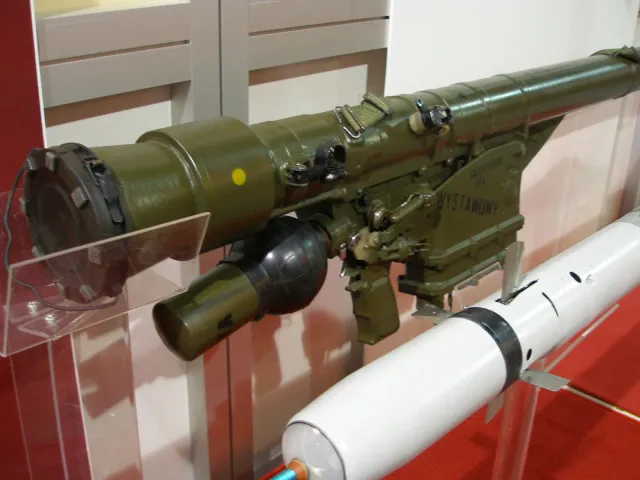
Piorun is a man-portable air-defense system, a shoulder-fired missile a single soldier can carry and fire at low-flying aircraft, helicopters, cruise missiles and drones. It is not a exquisite, expensive system: Piorun is built to be cheap enough to distribute in large numbers to infantry units, the same category of weapon as the U.S. Stinger. What has changed the calculus for European buyers is that Piorun is no longer a paper design. Ukraine’s armed forces have used it in combat since 2022, and Ukrainian and Polish officials credit it with shooting down Russian aircraft, helicopters and cruise missiles. Those kill claims come from Ukrainian and Polish sources, not from Moscow, so they are not the kind of adversary state claim that requires a hostile-propaganda caveat, but they also have not been confirmed through independent battle-damage assessment, so specific totals should be read as credited claims rather than an audited count.
That combat record is what officials say drove interest across the rest of the EU. Magdalena Sobkowiak-Czarnecka, state secretary at Poland’s Ministry of National Defence, described the negotiating dynamic behind the SAFE-financed deal: during talks over the mechanism, she said, there was no EU country that did not ask about Piorun’s availability, a detail that captures how a battlefield-proven missile has become the default reference point for European MANPADS buyers, ahead of legacy Western designs untested at this scale in decades.

What Piorun actually is
Piorun, Polish for “thunderbolt,” is a deep modernization of the earlier Grom system that Poland fielded between roughly 2010 and 2015. Its manufacturer, Mesko, brought Piorun into service in 2019, and by early 2025 an estimated 3,000 units had been built, with the system in service with Poland, the United States, Norway, Estonia, Latvia, Ukraine and Moldova. The missile weighs 16.5 kilograms fully assembled, uses an infrared homing seeker to track its target’s heat signature, and carries a 1.82-kilogram blast-fragmentation warhead on a solid-fuel rocket motor. Its engagement envelope runs from 400 meters out to 6.5 kilometers, against targets up to 4 kilometers in altitude, at speeds Polish and independent sources put at roughly Mach 2 to Mach 2.6. More background on the system’s full specification set and its lineage from Grom is available on WeaponSpecs’ Piorun system page and the Grom system page.
Poland’s own manufacturer and government officials describe Piorun as outperforming the U.S. Stinger, the missile it is most often compared against in NATO inventories, but that claim originates with Mesko and the Polish defense ministry, not an independent test authority, so it belongs in the category of an industry claim rather than a settled fact.
The scale, in context
Poland’s last comparable Piorun order came in 2016, for 420 launchers and 1,300 missiles delivered between 2017 and 2020. Warsaw has not published a specific missile-and-launcher count for this new framework, so a precise unit-for-unit comparison isn’t possible from the public record. What the contract value shows is the scale: an 8 billion zloty framework spread across four governments, financed through an EU mechanism rather than four separate national defense budgets, is a jump from a single-country restocking order into a multinational industrial commitment running through the end of the decade.
That shift matters beyond the missile count. Officials describe this as the first SAFE contract structured as a state-consortium purchase rather than a company-to-company deal, meaning the mechanism itself, not just this order, is what the EU and Poland are testing. If it works, other SAFE-financed contracts could follow the same format, with Poland positioning Mesko as the manufacturing hub other NATO members buy into rather than compete against.
Sources
- Poland Signs Record 8 Billion Zloty Deal for Piorun Air Defence Missiles — c4defence, Aug 24, 2026
- Historic Order for Ukraine-Tested Piorun MANPADS: Poland Signs €1.86 Billion Contract for Itself and Three NATO Allies — Defence Express, Aug 24, 2026
- Mesko with the Contract for the Delivery of Piorun MANPADS for Polish Armed Forces — Mesko S.A., Aug 24, 2026
- Piorun (missile) — Wikipedia, Aug 24, 2026
Systems mentioned
Every system named in this story, with its photo and, where available, a video. Tap a card to open the full spec sheet.
Compare these side by side →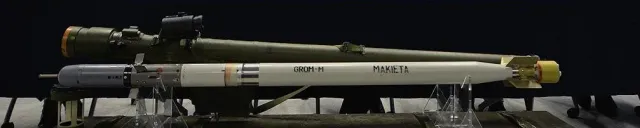
Frequently asked questions
Who is buying Piorun missiles under this deal, and how much are they paying? +
Poland, Lithuania, Latvia and Norway are jointly funding an 8 billion zloty (roughly $2.2 billion) framework contract with Polish manufacturer Mesko S.A., signed August 24, 2026, with more than 80% of the missiles going to Poland's own armed forces.
What is the SAFE program, and why does it matter here? +
SAFE, Security Action for Europe, is an EU joint-procurement financing instrument. Polish officials describe this as the first SAFE-backed contract structured as a multi-state consortium purchase rather than a single company-to-company deal.
Has Piorun actually been used in combat? +
Yes. Ukraine's armed forces have used Piorun since 2022, and Ukrainian and Polish officials credit it with shooting down Russian aircraft, helicopters and cruise missiles. Specific kill totals have not been independently verified through battle-damage assessment, so those figures should be read as credited claims, not confirmed counts.
How does Piorun compare to the U.S. Stinger missile? +
Polish officials and Mesko itself frequently describe Piorun as outperforming Stinger on range and warhead effectiveness, but that comparison comes from the manufacturer and the Polish government, not an independent test body, so it should be treated as an industry claim rather than a settled fact.
More news


