The B-52's $603M Radar Upgrade Is Two Decades Late
The Air Force just paid $603M for a B-52 radar type the Navy has flown since 2007. Our database shows 75% of US fighters/bombers already had one.

Via Wikipedia, Boeing B-52 Stratofortress (shown for identification)
Every B-52H that takes off from Minot or Barksdale still finds its target with a dish that physically rotates. The airframe itself was delivered starting in 1,961, and the Air Force intends to fly it into the 2050s, a service life that will eventually run past ninety years. The nose radar was never going to make that trip unchanged: the AN/APQ-166 is an analog, mechanically-scanned set from the bomber’s original build era, with more moving parts to fail, an easier signal to jam, and poor resolution for imaging ground targets on a modern deep-strike sortie. Acquisition officials have known this for years. The decision in front of them was never “replace it or don’t,” it was how much of the replacement they could afford, and how long they could stall before the radar itself, not the airframe, grounded the fleet.
This week that decision produced a number. On August 25 and 26, the Air Force awarded Raytheon a $603 million indefinite-delivery/indefinite-quantity contract, sole-source, to produce and sustain the new radar, with work split across Forrest, Mississippi; El Segundo, California; McKinney, Texas; and Warner Robins, Georgia, and an expected completion date of August 20, 2031. A companion contract sent Boeing $163 million to build bomb rack modernization kits for the same program, work centered in San Antonio and running through December 2028. Together the two awards total $766 million committed in a single week to one bomber’s sensor and weapons-carriage upgrade.
What $603 million actually buys
The new radar is the AN/APQ-188, an Active Electronically Scanned Array set derived from the AN/APG-79, the AESA radar that has flown on the Navy’s F/A-18E/F Super Hornet and EA-18G Growler since roughly 2007, adapted here with a larger antenna for the B-52’s nose. An AESA radar has no rotating parts. Its beam steers electronically across thousands of small transmit/receive elements, which makes it harder to jam, faster to switch between simultaneous tracks, and sharper at ground-mapping than the mechanically-scanned set it replaces. For a bomber flying long deep-strike sorties over contested airspace, that combination is the difference between holding a target set and losing it to jamming or a failed servo mid-mission. A test B-52H carrying the new radar completed a ferry flight to Edwards Air Force Base for evaluation in December 2025, months ahead of this week’s production contracts.
“The ferry flight of this upgraded B-52 marks an important moment in our efforts to modernize the bomber force,” said Troy Meink, Secretary of the Air Force (The War Zone, December 2025).
What makes the timing notable is not the contract value, it is what WeaponSpecs’ own systems database shows about how late this upgrade actually is. Of 45 active fighter and bomber types in the database that disclose a radar type, 27 (60%) already fly an AESA set, 15 (33%) still fly a mechanical or legacy pulse-Doppler radar exactly like the one the B-52 is only now retiring, and 3 (7%, all Russian) fly an intermediate passive electronically scanned array (PESA) design.
Sixty percent of the world's active fighter and bomber fleet already carries the array type the B-52 is only now receiving.
Narrow that to just the United States and the gap gets sharper. Of 12 active US fighter and bomber types with disclosed radars, 9 (75%) already carry AESA. Only three do not: the F-16C Block 52, which entered service in 1,991 and still flies its original AN/APG-68(V) mechanically-scanned set; the B-1B Lancer, which entered service in 1,986 carrying the AN/APQ-164; and the B-52H Stratofortress itself, the system this week’s contracts finally replace. Two of the three US holdouts are exactly the Air Force’s two oldest bombers. American fighters made this transition roughly twenty years ago. The bomber fleet is only starting now.
How the rest of the world compares
| Country | AESA | PESA | Mechanical/legacy | Active types w/ disclosed radar |
|---|---|---|---|---|
| United States | 9 | 0 | 3 | 12 |
| China | 5 | 0 | 2 | 7 |
| France | 3 | 0 | 3 | 6 |
| Russia | 2 | 3 | 3 | 8 |
| Japan | 1 | 0 | 1 | 2 |
| Sweden | 1 | 0 | 1 | 2 |
| South Korea | 1 | 0 | 1 | 2 |
| India | 2 | 0 | 0 | 2 |
| Pakistan | 2 | 0 | 0 | 2 |
| Multi-national (Eurofighter) | 1 | 0 | 0 | 1 |
| Taiwan | 0 | 0 | 1 | 1 |
A few of those entries need qualification before anyone reads too much into them. Russia’s only active AESA-radar fighter in the database is the Su-57 with its N036 Byelka set, a jet still in limited production; that designation is a Russian Ministry of Defense and Sukhoi characterization, not confirmed by independent teardown or third-party assessment, and should be read as a state claim rather than a fact. Russia’s actual frontline mainstay is the PESA-equipped MiG-31 (Zaslon/Zaslon-M), Su-30SM (N011M Bars) and Su-35S (Irbis-E), alongside mechanically-scanned MiG-29, Su-27 and Su-34 fleets. China’s AESA figures across the J-10C, J-15, J-16, J-20 and J-35 carry the same caveat: they come from Chinese state and manufacturer sources plus open-source analyst estimates, not independent verification.
Even the AESA count for US and allied types is more generous than it looks. A handful of entries list AESA only for upgraded aircraft while the baseline jet still flies the earlier mechanical set: the F-15C Eagle’s original AN/APG-63(V)1 is mechanical, and only re-manufactured airframes carry the AN/APG-63(V)3 AESA. The F-15E Strike Eagle splits the same way between its AN/APQ-70 mechanical baseline and the AN/APG-82(V)1 AESA on upgraded jets, as does the Eurofighter Typhoon between the mechanical Captor-M and the AESA Captor-E carried only on ECRS Mk1/Mk2 aircraft. The 60% global and 75% US figures count a type as “AESA” if any disclosed variant carries one, so the true fleet-wide share, counted by tail number rather than type, sits below both.
The upgrade already blew its own budget once
None of this made the B-52 Radar Modernization Program an easy build, and the program had already blown through its own cost baseline once before this week’s contracts were signed. The original estimate was $2.3 billion; the revised figure came in at $2.6 billion, roughly a 17% overrun that triggered a Nunn-McCurdy “significant” cost breach, the law’s lower threshold at 15%, not the 25% “critical” threshold that would have forced a Pentagon secretarial certification to keep the program alive. The Air Force’s response was to narrow the requirements to core capability rather than absorb the full original scope at the higher cost. So this week’s $603 million and $163 million are not the start of the fix, they are the production phase of a program that already had to shrink its own ambitions to stay funded, which is not the clean modernization story a contract announcement makes it sound like.
The pattern worth carrying forward
The specific dollar figures here matter less than the pattern they confirm. Fielding date is not a footnote to a radar’s capability, it is close to the whole story: an AESA set from 2007 and an AESA set announced this week both get counted the same way in a simple yes/no census, but only one of them has spent nearly two decades absorbing combat use, software maturation, and jamming countermeasures the other hasn’t faced yet. Anyone evaluating a foreign air force’s radar generation, or judging how modern a fleet actually is, should treat “when was this fielded” as carrying as much weight as “what does the spec sheet claim it can do.” On that measure, the US bomber fleet was the actual laggard in this story, not the fighter fleet, and the B-52H and B-1B were the last pieces of American airpower still running Cold War-era array technology into a decade where nearly everything flying beside them, in the fighter and bomber categories alike, had already moved on.
Sources
- USAF Gives Raytheon, Boeing $766M for B-52 Radar Upgrades
- Raytheon Awarded $603 Million For New Radar For B-52
- US Air Force spend $603m on B-52 radar upgrade
- US' B-52 fleet to receive fighter-grade radar system upgrade
- This Is What The B-52's New Radar Looks Like
- New B-52 Radar Program Has Nunn-McCurdy Cost Breach, May Be Reduced in Scope
Systems in this comparison
Every system covered above, with its photo and, where available, a video. Tap a card to open the full spec sheet.
Compare these side by side →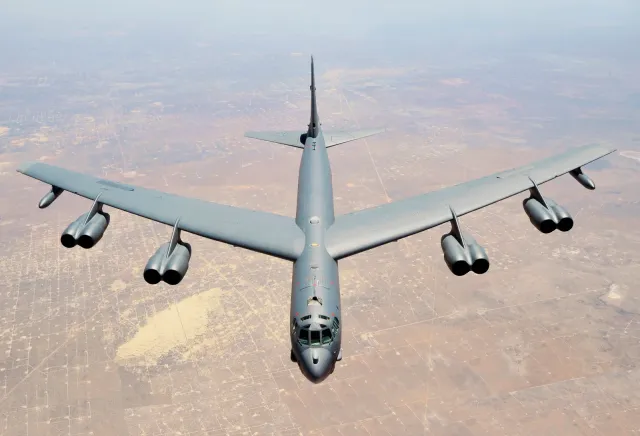
Bomber
B-52H Stratofortress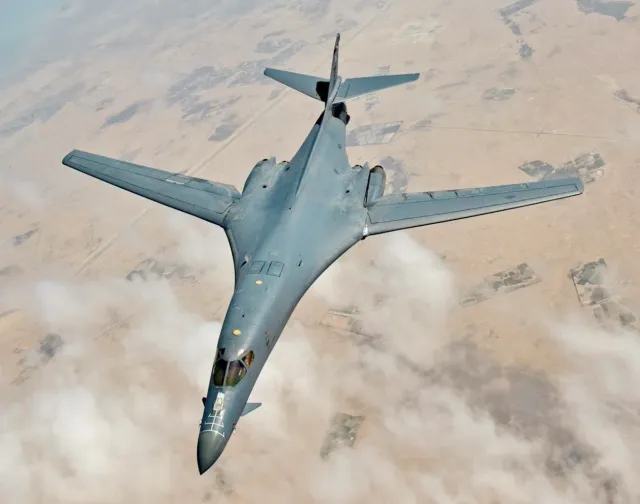
Bomber
B-1B Lancer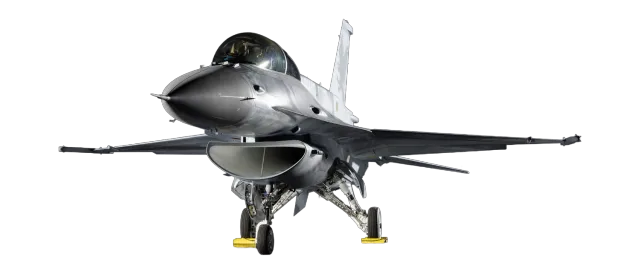
Fighter aircraft
F-16C Block 52 Fighting Falcon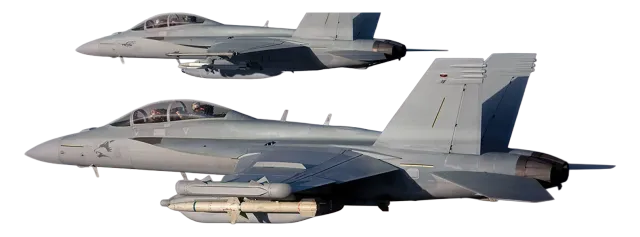
Fighter aircraft
F/A-18E/F Super Hornet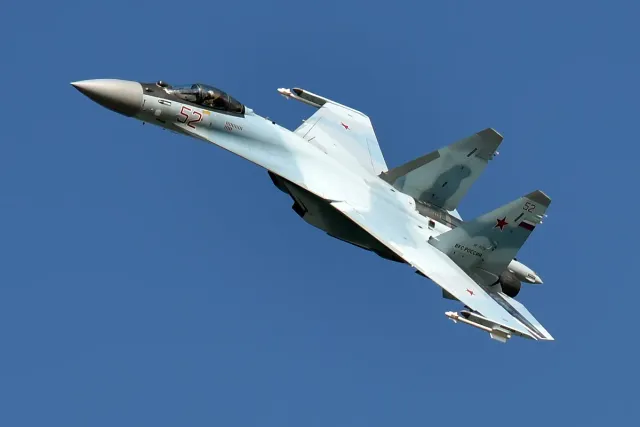
Related reading


