UGVs Over 9 Tonnes: One Is Fielded, and It Failed
WeaponSpecs tracks 47 UGVs; 21 disclose weight. Of the 7 above 9 tonnes, only Russia's Uran-9 is fielded, and its own combat trial found it failed.

Photo by Vitaly V. Kuzmin (vitalykuzmin.net), CC BY-SA 4.0, via Wikimedia Commons
WeaponSpecs tracks 47 unmanned ground vehicles, and only 21 of them disclose an actual combat weight, a gap worth pausing on before any ranking starts. Among the 21 that do publish a number, weight runs from 10 kg, General Robotics’ pocket-sized Dogo, up to a tie at 15,000 kg between Estonia’s Milrem HAVOC and Turkey’s Otokar ALPAR: a 1,500-fold range hiding inside one catalog label. Split those 21 into tiers and the picture sharpens. Four are light, under 1,000 kg. Ten sit in a medium band. Seven are heavy, 9,000 kg and up, the class built to fight alongside or replace light armor. Of those seven heavy machines, exactly one carries an active, fielded status. Its own government’s research institute has already gone on record saying it failed the one real test it was given.
The Three Weight Tiers Among 21 UGVs With Disclosed Weight
The heavy tier is nearly a third of every UGV that discloses its weight, yet as the table below shows, six of those seven remain demonstrators, and the seventh is the one that failed its only real test.
The Heavy Tier, Ranked by Weight
| System | Country | Locomotion | Weight | Top Speed | Status | Real-world outcome |
|---|---|---|---|---|---|---|
| Milrem HAVOC | Estonia | Wheeled | 15,000 kg | 110 km/h | Announced | Not yet delivered (2028 target) |
| Otokar ALPAR | Turkey | Tracked | 15,000 kg | 70 km/h | Announced | No confirmed contract |
| FNSS Shadow Rider | Turkey | Tracked | 13,500 kg | 50 km/h | Announced | Demonstrator only; no autonomous-fire capability |
| Milrem Type-X RCV | Estonia | Tracked | 12,000 kg | 80 km/h | Announced | Superseded by newer Milrem models |
| Kalashnikov Uran-9 | Russia | Tracked | 10,000 kg | 35 km/h | Active | Only fielded example; failed 2018 combat trial |
| Textron Ripsaw M5 | United States | Tracked | 9,525 kg | 40 km/h | Announced | 4 delivered for evaluation, no production order |
| GDLS TRX | United States | Tracked | 9,072 kg | 72 km/h | Announced | Competed, program’s winner itself canceled |
1. Milrem HAVOC (Estonia). Co-developed with UAE’s EDGE Group, HAVOC is a wheeled demonstrator rated for 110 km/h on road, well ahead of any tracked platform on this list. Milrem targeted prototype completion for the end of 2025, with a first delivery to the UAE not expected until 2028. No armed force operates one today.
2. Otokar ALPAR (Turkey). Otokar unveiled this 15-tonne, series-hybrid electric demonstrator in July 2023, shown in several armament fits including a 25mm or 30mm cannon paired with Roketsan UMTAS anti-tank missiles. Three years later, Turkey has disclosed no confirmed army contract for it.
3. FNSS Shadow Rider (Turkey). FNSS showed this tracked prototype at IDEF 2021 carrying a 25mm remote turret, but the company itself states the vehicle cannot fire autonomously; a human stays in the loop on the trigger at all times. It remains a trade-show demonstrator, not a program of record.
4. Milrem Type-X RCV (Estonia). Milrem’s original heavy robotic combat vehicle rolled out publicly in 2020 and 2021, years before HAVOC existed. It has since been superseded in Milrem’s own lineup by HAVOC and a separate model called VECTOR, effectively shelved by its own maker rather than rejected by a customer.
5. Kalashnikov Uran-9 (Russia). This is the only heavy-tier system carrying an active, in-service status in WeaponSpecs’ data, and Russia has fielded at least two batches of roughly 20 units. It is also the only one with a real combat record, from a 2018 deployment to Syria, and that record does not support the active label. Andrei Anisimov, a senior research officer at the Russian Ministry of Defence’s own 3rd Central Research Institute, presented the trial’s findings directly:
“The Uran-9 was not capable of performing the assigned tasks,” said Andrei Anisimov, senior research officer at Russia’s 3rd Central Research Institute of the Ministry of Defence (Defence Blog, October 13, 2025).
The technical detail behind that verdict: in urban terrain, effective operator control range fell to just 300 to 500 meters, far short of what the vehicle was fielded to do, and testers logged 17 short losses of control (up to a minute each) plus 2 long losses (up to 90 minutes). That kind of control-link fragility is not unique to Uran-9; our earlier look at UGV control-range claims found the same pattern across the wider category. Russia’s Ministry of Defence has nonetheless kept claiming a new production version and has pitched it for export to Saudi Arabia, India, the UAE, and Serbia, a manufacturer and state claim, not independently verified; Myanmar’s military evaluated it in person and declined to buy. Despite years of claimed serial production, Uran-9 has never been observed in Russia’s own war in Ukraine, where Russian forces have instead leaned on improvised, volunteer-built ground robots rather than the vehicle their own ministry keeps offering abroad. A state’s own research arm reaching this conclusion carries more weight than an adversary’s assessment would, and the honest tension is that WeaponSpecs’ own record for the system still shows it as active despite this history.
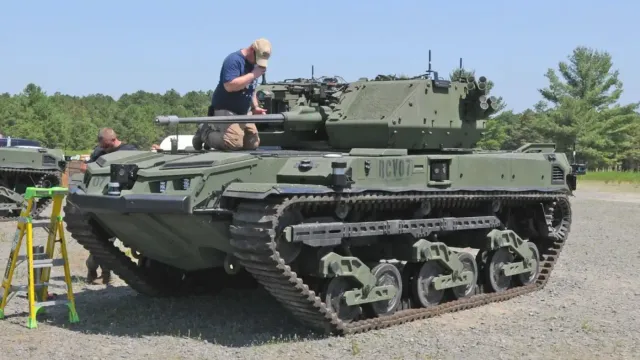
6. Textron Ripsaw M5 (United States). Four Ripsaw M5 units reached the US Army’s Robotic Combat Vehicle-Medium program in June 2021 for evaluation. No production order has followed in the years since.
7. GDLS TRX (United States). TRX competed in the Army’s separate Robotic Combat Vehicle-Light Phase I effort. It was not even the winning bid: Textron’s own lighter Ripsaw design was selected in March 2025. That distinction stopped mattering two months later. Maj. Gen. Glenn Dean, the Army’s Program Executive Officer for Ground Combat Systems, wrote internally that “RCV will stop development. The future of the robotic software program is unknown,” and an Army source cited reluctance to “downselect just to one vendor and pay almost $3 million per copy” as the rationale for reopening the competition instead (Breaking Defense, May 2025). So the RCV-L competition that TRX lost ended with no production winner at all.
Step outside the 9,000 kg tier and the market looks like a different industry entirely. The only UGV in WeaponSpecs’ full 47-system database that discloses an actual unit cost is QinetiQ TALON SWORDS, a 45 kg armed teleoperated robot priced at $230,000, though some reporting cites mass-production runs as low as $150,000 to $180,000 depending on configuration. TALON SWORDS deployed to Iraq starting in 2007, nearly two decades of actual combat use behind it. That is the honest shape of this market right now: the mature, cost-transparent, combat-proven end sits at the small and cheap edge of the catalog, while the “robotic tank” end that draws the attention remains almost entirely unproven. A buyer evaluating that heavy tier cannot even price-compare the options, because not one maker of a UGV over 9 tonnes has published what one actually costs.
Sources
Systems in this comparison
Every system covered above, with its photo and, where available, a video. Tap a card to open the full spec sheet.
Compare these side by side →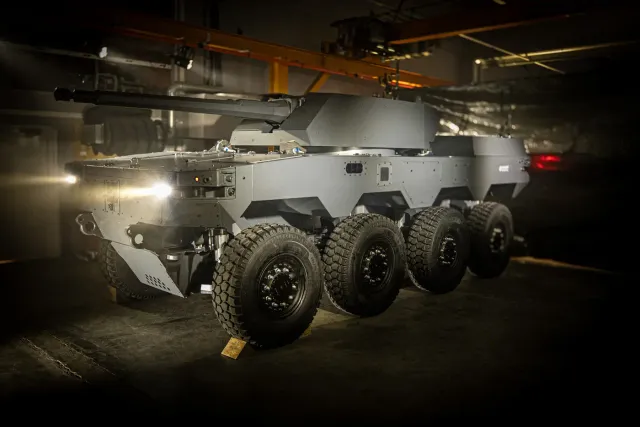
UGV / combat robot
Milrem HAVOCUGV / combat robot
Otokar ALPAR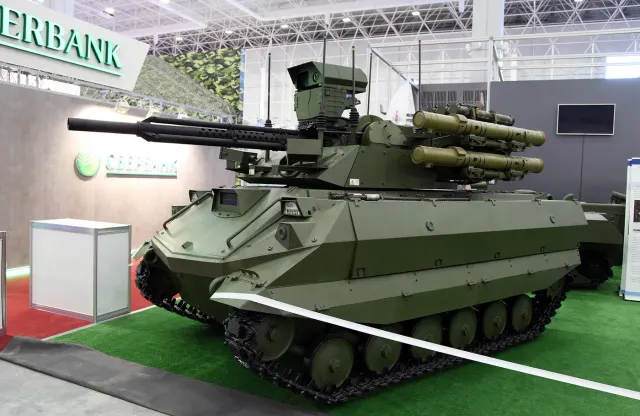
UGV / combat robot
Textron Ripsaw M5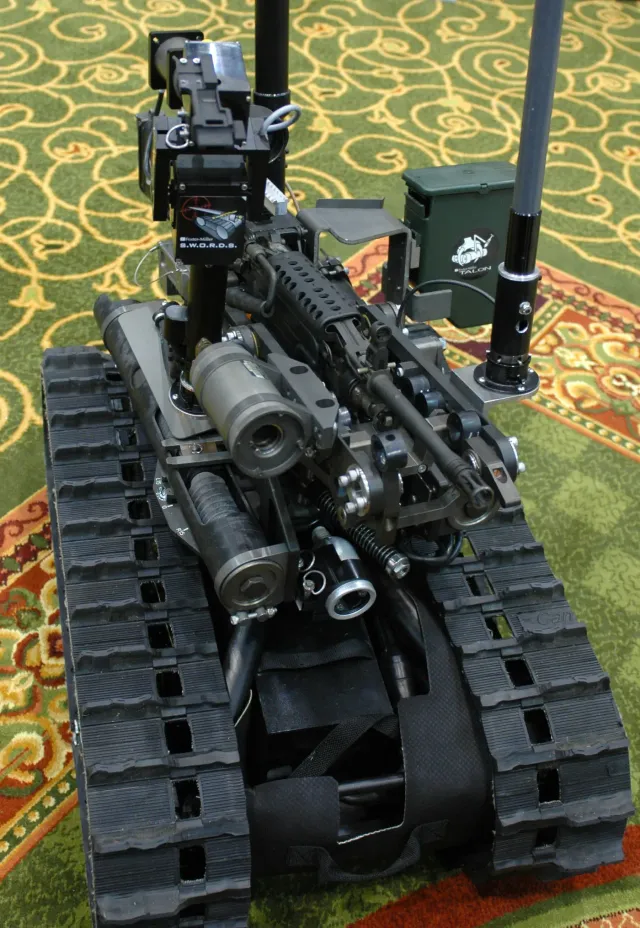
UGV / combat robot
QinetiQ TALON SWORDSRelated reading


