India Signs Deal for 60 Javelin Missiles After 16-Year Wait
India's army signed a Letter of Offer and Acceptance for about 60 FGM-148 Javelin missiles on Aug. 28, converting 16 years of talks into a contract.

Photo by Rodney Jackson, U.S. Army, via DVIDS, public domain
India’s Ministry of Defence signed a Letter of Offer and Acceptance with the United States on Aug. 28 for roughly 60 FGM-148 Javelin anti-tank guided missiles, a deal ANI News puts at Rs 292 crore and The Print at Rs 294 crore, both landing near $45.7 million against the underlying US State Department-approved Foreign Military Sale case. The package covers fewer launchers than India originally scoped in earlier talks. The Indian Army signed under its Emergency Procurement (EP-6) authority, powers granted to the armed forces to build up capability after last year’s Operation Sindoor flare-up with Pakistan, according to defence sources cited by ANI. That authority caps purchases at Rs 300 crore per piece of equipment, which is itself most of the explanation for why this order landed at roughly 60 missiles rather than the larger package India had floated earlier: it is sized to fit under the emergency-procurement ceiling, not to fully re-equip a unit.
Alongside the missiles and launchers, the package includes training equipment, simulation rounds, a battery coolant unit, technical manuals, and lifecycle and spares support, with deliveries expected by the end of India’s 2026-27 fiscal year. ANI reported that several vendors involved in India’s broader emergency-procurement pipeline have sought delivery extensions because of disruptions tied to the conflict in West Asia, a caveat worth carrying into any expectation of exactly when this specific order lands.
“New opportunities for our defense industries to work together,” said Sergio Gor, US Ambassador to India, describing what the deal creates (The Print, Aug. 28, 2026).
The signing closes out a genuinely long negotiation. India first test-fired a Javelin on its own soil in October 2009, during the bilateral Exercise Yudh Abhyas at Babina, and pursuit of an actual purchase has run on and off for roughly 16 years since, through detours that included evaluating Israel’s Spike missile and pushing domestic alternatives still under development. This week’s signature is the first time any of that talk has turned into an actual contract rather than another round of trials or a stalled negotiation.

The 60-missile purchase is explicitly framed by both sides as the near-term piece of a larger plan, not the end state. Bharat Dynamics Limited, India’s state-owned missile manufacturer, signed an exploratory framework agreement with the Javelin Joint Venture, the RTX and Lockheed Martin partnership that builds the missile, in February 2025, aimed at eventual joint manufacturing inside India. This purchase runs in parallel with that effort rather than in place of it: an emergency buy to get missiles into Indian Army hands quickly, while the slower co-production track is worked out separately.
What the $45.7 million figure obscures on its own is how much of this deal is not missiles. WeaponSpecs’ own database lists a bare Javelin round at $178,000 to $198,000 in recent US Army production lots, with the reusable Command Launch Unit priced separately at roughly $126,000, or about $350,000 for the newer Lightweight CLU procured from fiscal year 2024 onward. Dividing this deal’s $45.7 million by 60 missiles works out to an effective cost of roughly $762,000 per missile, well above even the higher end of the bare round price alone. That gap is the launchers, training equipment, simulation rounds, the battery coolant unit, manuals, and lifecycle and spares support folded into the same contract, a reminder that a per-missile headline number in a bundled arms deal rarely means the missile itself cost that much.
India’s reliance on Russian-origin anti-tank missiles, chiefly the Konkurs-M and Invar, has shaped its armor-defense posture for decades, and the government separately approved DRDO technology transfer for domestic production of those same Russian-designed systems in August 2026, a parallel push toward self-reliant production running alongside this US purchase rather than instead of it. Both threads point at the same underlying problem from different directions: an army that has depended heavily on one supplier relationship now diversifying its anti-tank missile inventory on two fronts at once, buying a proven Western system in the near term while trying to build both Russian-legacy and eventually American-designed systems at home.
None of the reporting on this deal claims it resolves India’s broader anti-tank missile shortfall. Sixty missiles is a limited order by the standards of a modern army’s ammunition needs, and the emergency-procurement ceiling that shaped its size all but guarantees a larger follow-on order or the BDL co-production track will matter more to India’s actual war-fighting capacity than this contract does on its own. What is worth watching next is whether the co-production framework signed in February 2025 produces an actual manufacturing agreement, and whether India’s parallel DRDO-approved production of Konkurs-M and Invar ends up complementing this Western purchase or competing with it for the same modernization budget.
Sources
- India, US sign Rs 292 crore deal for buying Javelin missiles (ANI News, Aug 28, 2026)
- India and US sign deal for Javelin missiles, the plan eventually is co-production (The Print, Aug 28, 2026)
- India signs deal with US to buy Javelin anti-tank missile systems (Business Recorder, Aug 28, 2026)
Systems mentioned
Every system named in this story, with its photo and, where available, a video. Tap a card to open the full spec sheet.
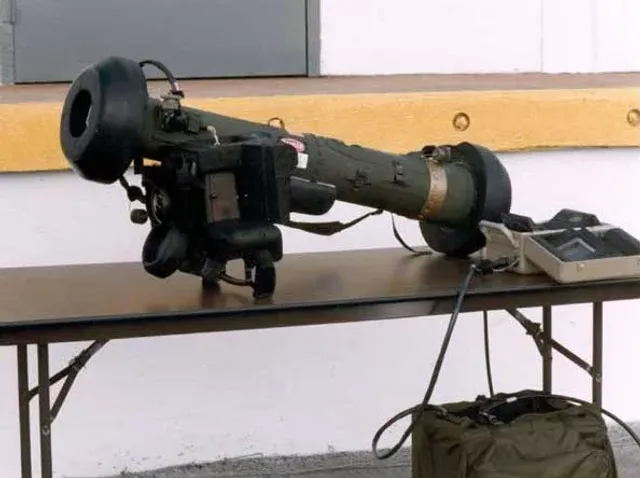
Missile
FGM-148 JavelinMore news


