Russia Strikes Kyiv-Area Depot, Ukraine Turns Probe on Itself
A Russian drone strike on a depot near Kyiv killed at least 37 people on Aug. 28, and Ukraine opened a criminal probe into why munitions sat by homes.

Main Directorate of Intelligence of the Ministry of Defence of Ukraine, via Wikimedia Commons, CC BY 4.0
Russia has spent the past several months of its war against Ukraine increasingly targeting logistics and defense-industrial nodes rather than only front-line positions, a shift that reflects how much of this war, in its fifth year, now runs on each side’s ability to sustain and resupply rather than territory changing hands. Ukraine’s own answer to that pressure has been to build weapons at home rather than rely solely on Western shipments, most visibly in Fire Point’s FP-5 Flamingo, an indigenous cruise missile with a stated range beyond 3,000 kilometers and a 1,150-kilogram warhead, roughly three times the payload of Russia’s Kh-101. Flamingo has already struck targets more than 1,200 kilometers inside Russia, including a July 24 hit on the Avitek ejection-seat plant in Kirov. That domestic production effort, real and growing but still concentrated in a small number of Ukrainian companies, has made ammunition and component depots around Kyiv a genuine target set, and a genuine vulnerability, at the same time.
That vulnerability was not abstract even before Aug. 28. On July 6, an Iskander ballistic missile struck a warehouse belonging to a Ukroboronprom-linked defense company in Vyshneve, a town on Kyiv’s western edge, killing 7 people and injuring 29 after secondary detonations tore through nearby housing. Zelensky ordered a criminal case, and the company’s chief executive and deputy chief executive were detained on suspicion of negligence over how the depot had been sited. That case is still open. It is the direct precedent for what happened seven weeks later in Myla, another Kyiv-area town roughly 5 kilometers west of the capital along the Kyiv-Chop highway, and for why Ukraine’s own government, not just Moscow, is now the subject of scrutiny.
What happened at Myla
A Russian drone struck a warehouse and storage facility in Myla at approximately 8:10 p.m. local time on Aug. 28, triggering secondary detonations among stored munitions that Kyiv Independent and the Associated Press both reported drove much of the resulting destruction. As of the most recent figures reported by both outlets on the morning of Aug. 29, at least 37 people have been confirmed killed and 42 injured, including 4 children, with more than 50 residential buildings damaged, a care facility for elderly and disabled residents among them, and 381 people evacuated, including 59 children. Kyiv Oblast Governor Tymur Tkachenko said the toll could still increase and declared Aug. 30 a day of mourning across the region. Earlier reporting on Aug. 29 cited a toll of at least 27 killed; that lower figure and the 37 now being reported describe the same strike at different points in the same day’s search-and-recovery effort, not a separate or contradictory event. Taras Didych, head of the Dmytrivka community that includes Myla, was among those killed while responding to the strike as a first responder.
Russia’s Ministry of Defense said it had struck a warehouse in Myla storing components and launch boosters for long-range drones, and separately said it targeted logistics and warehouse facilities storing parts for Ukraine’s Flamingo cruise missile program in the Kyiv region. That is a Russian government claim, not an independently verified account of what the facility actually held, and neither Kyiv Independent nor CBS News reported any Ukrainian confirmation of it as of this writing. Whether or not the specific claim about Flamingo components holds up, it sits inside a real, ongoing pattern: Russia has struck Fire Point-linked and other Ukrainian defense-industrial sites repeatedly since Flamingo’s deep-strike campaign became public, and has an obvious incentive to claim credit for disrupting it regardless of what any individual warehouse actually contained.

Ukraine turns the investigation on itself
What separates Myla from a routine wire story about another Russian strike is what Ukraine’s own government did in its immediate aftermath. Zelensky and Koretskyi both said publicly, within hours of the strike, that storing ordnance this close to housing violated Ukraine’s own regulations, and both framed the deaths as at least partly a domestic failure rather than only an act of war.
“There are regulations: ammunition cannot be stored near houses or other residential buildings,” said Volodymyr Zelensky, President of Ukraine. “Those who allowed this to happen must be held accountable for their decisions” (CBS News, Aug. 29, 2026).
Prime Minister Serhii Koretskyi was more pointed still, tying Myla explicitly to the Vyshneve case seven weeks earlier: “On the fifth year of the full-scale invasion, making the same mistakes is criminal negligence.” Ukraine’s prosecutor general’s office, working with the SBU and National Police, has opened a criminal negligence investigation examining whether the company that controlled the Myla site held the necessary permits to store explosives that close to residential buildings, the same question that produced two arrests after Vyshneve. Interfax-Ukraine reported Zelensky framing the demand directly around not repeating that earlier case.
That is the real story here beyond casualty figures: Ukraine has now had two mass-casualty ammunition-storage failures in under two months, both compounding a Russian strike’s toll through secondary detonations that officials say should never have been possible under the country’s own storage rules, and both have triggered criminal proceedings rather than being absorbed as simply the cost of war. Whether that produces an actual change in how and where Ukraine’s defense industry stores munitions near populated areas, or another prosecution that closes without changing underlying practice, is not yet answered by anything reported so far.
What to watch next
Two threads run forward from here. The first is the casualty count itself: Tkachenko’s own statement that the toll could still rise means the 37 killed and 42 injured figures reported as of Aug. 29 are not final, and search-and-recovery work is ongoing. The second, and the one that will matter longer after this week’s headlines fade, is whether the Myla investigation produces the same kind of concrete accountability, detained executives, a named responsible company, an actual change in storage practice, that followed Vyshneve, or whether a second near-identical disaster in seven weeks is a sign that the July case’s consequences did not reach far enough to prevent a repeat.
Sources
- Russian strike near Kyiv causes ammunition detonations, killing at least 37 (Kyiv Independent, Aug 29, 2026)
- A Russian attack hits Ukraine's Kyiv region, killing at least 37 (KSAT (AP), Aug 29, 2026)
- Zelenskyy on Myla blasts: no repeat of Vyshneve 'crime' can be allowed (Interfax-Ukraine, Aug 29, 2026)
- Russia's strike on Kyiv-area warehouse triggers investigation into ammunition storage (CBS News, Aug 29, 2026)
- 'They must face the most severe punishment': how Vyshneve's ammunition depot multiplied the toll of a Russian strike (Kyiv Independent, Jul 16, 2026)
Systems mentioned
Every system named in this story, with its photo and, where available, a video. Tap a card to open the full spec sheet.
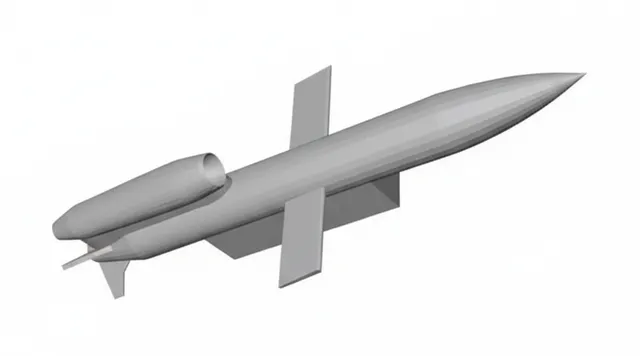
Missile
FP-5 FlamingoFrequently asked questions
What did Russia claim was stored at the Myla facility? +
Russia's Ministry of Defense said it struck a warehouse in Myla storing components and launch boosters for long-range drones, and separately said it hit logistics and warehouse facilities storing parts for Ukraine's Flamingo cruise missile in the Kyiv region. This is a Russian government claim, not independently verified, and Ukrainian officials have not confirmed what the facility actually held.
Why did Ukraine open a criminal investigation into its own strike? +
Ukraine's prosecutor general's office, working with the SBU and National Police, is examining whether the company that controlled the Myla site had the legal permits to store explosives that close to housing. Under Ukrainian regulations, ammunition cannot be stored near residential buildings; President Zelensky and Prime Minister Serhii Koretskyi both said the deaths reflect a violation of that rule, not just enemy action.
How large was this strike compared to recent Russian attacks on Ukraine? +
At least 37 people were confirmed killed and 42 injured, including 4 children, with more than 50 residential buildings damaged and 381 people evacuated, as of the most recent count from Kyiv Oblast officials, who say the toll could still rise. That places it among the deadliest single Russian strikes on the Kyiv region since the full-scale invasion began, driven in large part by the secondary detonations from the ammunition itself rather than the drone strike alone.
More news


