Battle-Management Software: AI Tools Are 15 Years Newer
WeaponSpecs data: the 15 backbone C2/combat-management systems in our database average a 2006 release year. The AI layer plugging into them averages 2021.

U.S. Navy photo by Seaman Joseph Sitter, public domain, via Wikimedia Commons
A program office at a combatant command is two weeks from signing off on a Palantir Maven pilot. The demo went well: a target nomination that used to take an analyst an afternoon now takes minutes. The question on the table is which AI vendor to pick. The question nobody in the room is asking, the one that actually determines whether this pilot survives contact with the fleet, is what the tool plugs into once the demo ends and the real tactical picture has to flow through it.
That second question is the one WeaponSpecs’ own database can actually answer, because it turns out to be a data problem before it’s a vendor problem. We pulled every “software” system type in our catalog, 21 records in all, battle-management and combat-management platforms used by militaries to route the tactical picture, coordinate fires, and (increasingly) recommend targets. Nineteen of those 21 carry a published release year. Sort them by what the software actually does and a clean split falls out: 15 systems are the backbone, the C2 and combat-management platforms that move the tactical picture and do fire control, and 4 are AI-branded platforms built and marketed around autonomy and decision support as the product itself.
The backbone group averages a 2006 release year. The AI-branded group averages 2021. That’s a 15-year gap, and it’s the finding that should be on the table next to the vendor comparison, because a Maven or an AIP pilot isn’t replacing the software that fires the weapons. It’s asking a system built, on average, two decades ago to accept data from a system built last year.
Two groups, one clean split
The backbone group is the software still doing the job: routing radar tracks, cueing weapons, holding the joint operating picture together. It spans Saab’s 9LV combat-management system (1980) through Rafael’s Fire Weaver sensor-to-shooter network (2019), and it includes the systems that actually carry NATO’s shared tactical picture, like Link 16, and the systems that carry a single service’s, like the U.S. Air Force’s FAAD C2 and the joint command-and-control backbone GCCS-J. None of these are legacy in the sense of retired. They are legacy in the sense of foundational, still fielded, still doing the actual work, and old enough that most of them predate the smartphone.
The AI-branded group is four platforms built around a different pitch: autonomy and AI-driven decision support as the core product, not an add-on bolted onto an existing C2 stack. Anduril’s Lattice and Shield AI’s Hivemind both shipped in 2018. Palantir’s AIP followed in 2023, and its Maven Smart System, the specific tool a lot of procurement conversations are circling right now, in 2024.
Here is the release-year table for all 19 systems with a confirmed date, plus the two systems our database excludes from this analysis: Lockheed’s Aegis Combat System and Palantir’s Gotham, neither of which has a confirmed release year in our records. We’re not guessing at dates for either one; they’re listed with “not published” rather than an invented figure.
| System | Country | Release year |
|---|---|---|
| 9LV Combat Management System | Sweden | 1,980 |
| Link 16 / MIDS Tactical Data Link | United States | 1,983 |
| FAAD C2 | United States | 1,993 |
| GCCS-J | United States | 1,996 |
| ATCIS | South Korea | 2,005 |
| NORCCIS | Norway | 2,005 |
| INSYTE CMS | United Kingdom | 2,007 |
| SitaWare Headquarters | Denmark | 2,010 |
| MERKEZ Naval CMS | Turkey | 2,011 |
| ZTNS Joint C2 System | China | 2,015 |
| ADVENT BMS | Turkey | 2,015 |
| ATHENA CMS | Italy | 2,015 |
| TORCH-X | Israel | 2,016 |
| SYNAPS | France | 2,018 |
| Lattice | United States | 2,018 |
| Hivemind | United States | 2,018 |
| Fire Weaver | Israel | 2,019 |
| AIP | United States | 2,023 |
| Maven Smart System | United States | 2,024 |
| Aegis Combat System | United States | not published |
| Gotham | United States | not published |
Read down that list and the “so what” for each cluster is different. The 1980s-through-1990s entries, Saab 9LV, Link 16, FAAD C2, GCCS-J, are the systems that still underpin how NATO forces actually share a tactical picture and cue weapons today; a buyer evaluating any new AI layer has to assume it’s landing on top of software this old somewhere in the chain. The 2005-2011 cluster, ATCIS, NORCCIS, INSYTE, SitaWare, MERKEZ, is where most modern naval and army combat-management systems actually sit, meaning the “backbone” mostly runs 15 to 20 years old rather than uniformly ancient, itself an integration-maturity signal rather than a red flag. And the 2018-2024 cluster is where the AI-branded tools cluster almost entirely, which is the visual point of the chart below: a tight, recent cluster sitting well to the right of everything else. The full category, all 21 systems, is browsable in our software systems catalog, and any two of them can be stacked head to head in Compare.
The gap, visualized
The dashed lines mark each group's average release year: 2006 for the 15 backbone systems, 2021 for the four AI-branded platforms, a 15-year gap. Two systems, Lockheed's Aegis Combat System and Palantir's Gotham, are excluded from this chart because our database has no confirmed release year for either.
Note the CETC entry in the table above, the ZTNS Joint C2 System fielded by China’s state electronics conglomerate. The 2015 release year is a routine catalog field, not a marketing claim, so it needs no caveat on its own. But our database also notes that ZTNS’s tactical data network claims are claims-based, meaning the network’s stated capabilities come from PLA-linked sourcing that hasn’t been independently verified. Where we cite performance claims about that network elsewhere, we flag them; the release year itself isn’t one of those claims.
Why the gap is the actual procurement risk
The Pentagon’s own Combined Joint All-Domain Command and Control effort exists precisely because plugging a new sensor, shooter, or software layer into the existing joint force is harder than building the new layer itself. That’s not a Cole Merrick opinion, it’s a documented problem, and it’s been said plainly by the people running the program.
“The lack of specificity and congruence around a well-defined mission thread that we are all trying to solve … is somewhat problematic when it comes to actually being able to articulate how [the systems and platforms] we are putting together are going to match up,” said Brig. Gen. Luke Cropsey, then-Integrating Program Executive Officer for Command, Control, Communications, and Battle Management at the U.S. Air Force (Janes, July 20, 2023).
That’s the crux of the 15-year gap in database terms. The AI-branded tools themselves are not unproven; Maven, for one, is already scaling across combatant commands. The harder question is not whether the demo works but how the pieces are put together, and the answer depends entirely on what sits on the other end of the integration: an average-2006 backbone built under different data standards, different security accreditation regimes, and, in several cases, different NATO or allied specifications than the tool trying to plug into it. A buyer signing a Maven or AIP contract is not buying a replacement for GCCS-J or FAAD C2, they are buying a layer that has to talk to them.
Anduril’s Lattice made a different bet on the same problem
There’s a useful contrast inside the AI-branded group itself. Anduril’s Lattice, also from 2018, didn’t try to integrate with the legacy tactical data links at all. It runs on a proprietary mesh network instead of joining Link 16, the tactical data link still carrying much of NATO’s shared picture today, a choice we’ve covered in more detail in Which Military C2 Systems Actually Speak Link 16?. That’s a different answer to the same underlying question this post is about: how does new software actually plug into everything else. Lattice’s answer was to skip the integration problem by building its own network layer; Maven and AIP’s approach is to sit on top of the existing joint architecture and interoperate with it. Neither is inherently the right call, but they’re not the same bet, and a buyer comparing AI platforms should know which one they’re actually being sold.
What this means for the next signature
Back to that program office two weeks from a decision. The AI vendor comparison they’re running, latency, target-recognition accuracy, user interface, is a real evaluation, but it’s evaluating the newer, smaller half of the problem. The harder, larger half is the 15-year-old average sitting underneath it: the combat-management and C2 systems that are still doing the actual routing and firing, built under standards and architectures that predate the AI layer by a full console generation. That gap doesn’t mean the pilot should be rejected. It means the integration plan, not the demo, is the part of the contract worth the most scrutiny before anyone signs.
Sources
Systems in this comparison
Every system covered above, with its photo and, where available, a video. Tap a card to open the full spec sheet.
Compare these side by side →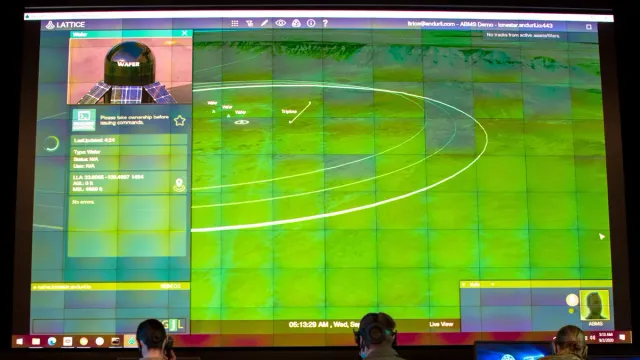
Software & C2
Maven Smart System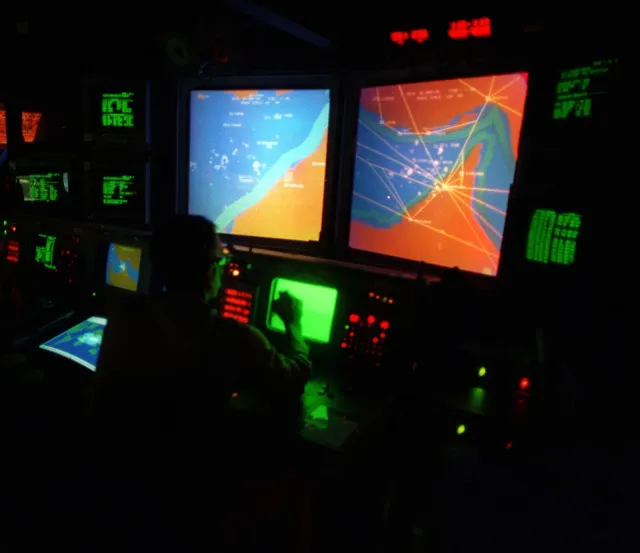
Software & C2
Aegis Combat SystemSoftware & C2
Link 16 / MIDS Tactical Data Link
Software & C2
Global Command and Control System - Joint (GCCS-J)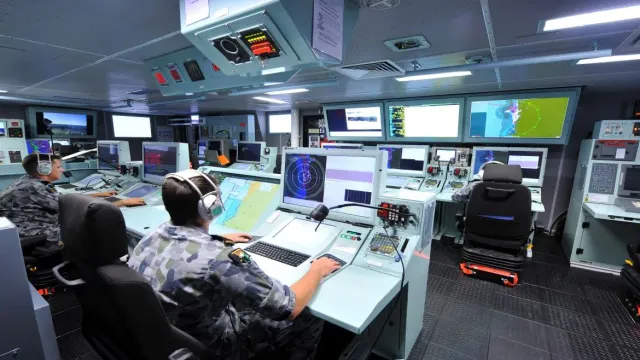
Software & C2
9LV Combat Management SystemRelated reading


