Lockheed Sweetens Peru's F-16 Deal With $1.8B Industrial Package
Lockheed Martin announced a $1.8 billion industrial-collaboration package for Peru's 12-jet F-16 Block 70 buy, four months after the deal cost two cabinet ministers their jobs.

Photo by Staff Sgt. Lauren Diaz, U.S. Air Force, DVIDS, public domain
Lockheed Martin announced on August 26 a $1.8 billion industrial-collaboration package tied to Peru’s planned purchase of 12 F-16 Block 70 fighters, ten single-seat C models and two twin-seat D models. That figure is larger than the roughly $1.54 billion contract price of the jets themselves, and the announcement is worth reading for what it signals as much as for what it contains: a contractor publicly sweetening a deal months after it was signed, while the government that would have to confirm it has yet to say whether it will.
What the package actually includes
The offer runs well beyond the standard sustainment package that typically accompanies a fighter sale. Lockheed’s newsroom describes local assembly of unmanned aerial vehicles intended for the broader Latin American market, a joint UAS Technical Institute, fighter-maintenance and engineering training for Peruvian personnel, expanded in-country maintenance, repair and overhaul capability, and a space-education curriculum component. Reported by defence-industry.eu, the scale of the offer, industrial capacity that would outlast the aircraft delivery schedule itself, points to a company trying to make the case that this purchase pays dividends for Peru’s economy and workforce, not just its air force.
“Lockheed Martin is committed to building a long-term partnership that benefits Peru and its people, while strengthening its defense capabilities,” said Tara Lause, Vice President of Business Development, Integrated Fighter Group at Lockheed Martin (Aug. 26, 2026).
The numbers, laid out in order
Four dollar figures anchor this story, and they mean different things. Peru paid Lockheed a first installment of $462 million in April 2026, the initial commitment against the jets themselves. The 12-aircraft contract itself carries a price of roughly $1.54 billion. That contract sits inside a larger $3.42 billion Foreign Military Sale package that the US State Department cleared in 2025, a ceiling that covers munitions, support equipment, training and logistics alongside the aircraft rather than the jets alone. And now, layered on top of all of that, comes the $1.8 billion industrial-offset package Lockheed announced this week, a sum larger than the jets’ own contract price. Reading those four numbers in sequence, a fraction of a much larger authorized ceiling, followed by an offset commitment that exceeds the hardware cost, gives a clearer picture of the deal’s actual shape than any single figure does on its own.

Why the offer is landing now, not at signing
The timing is the part of this story that turns a routine offset announcement into something worth reading closely. Peru’s selection of the F-16 Block 70 in April 2026 was not a clean procurement win for the government that made it. The Aviationist’s reporting on the decision described it as landing amid a genuine political crisis, and the fallout was immediate and specific: both Peru’s Defense Minister and Foreign Minister resigned that same month, in the wake of the deal being signed. A new president, Keiko Fujimori, has been in office since late July 2026, and she has not publicly stated whether her government will confirm the purchase as agreed, renegotiate its terms, or cancel it outright.
That is the context this offer has to be read against. Lockheed is not sweetening a deal that Peru’s government has already locked in. It is sweetening a deal whose own signing cost two cabinet officials their jobs, under a president who inherited the commitment rather than made it and has said nothing public about her intentions. An industrial package this large, promising local manufacturing capacity, an entire training institute, and workforce development well beyond what a standard sustainment offer would include, functions as a case being made directly to a government that has not yet said yes on its own terms. That is an unusual position for a contractor to be arguing from this far into a Foreign Military Sale process, and it is a genuinely live question rather than routine offset boilerplate.
What happens next
Nothing about this announcement moves Peru’s F-16 purchase from planned to confirmed. The $3.42 billion FMS ceiling remains what the State Department cleared, not what Peru has committed to spend, and the April down payment demonstrates only that the previous government began executing the deal before its own cabinet came apart over it. What actually determines whether the F-16 Block 70 buy proceeds as announced, gets renegotiated, or stalls entirely is a decision that sits with President Fujimori’s administration, and neither the U.S. Embassy in Lima nor Lockheed’s own newsroom has reported that decision being made. The industrial package is Lockheed’s opening argument for why she should say yes. Whether it works is the story still to be written.
Sources
- Lockheed Martin Announces Robust Industrial Collaboration Opportunities for Peru F-16 Block 70 Program (Lockheed Martin, Aug 26, 2026)
- Peru Selects Lockheed Martin F-16 Block 70, Strengthening Sovereignty and U.S. Partnership (Lockheed Martin, Apr 23, 2026)
- Ambassador Navarro on Peru's Purchase of F-16 Block 70 Fighter Jets (U.S. Embassy Peru)
- Peru selects F-16 Block 70 fighters amid political crisis (The Aviationist, Apr 28, 2026)
- Lockheed Martin says Peru F-16 Block 70 proposal includes $1.8 billion industrial package, local drone assembly and training (defence-industry.eu)
Systems mentioned
Every system named in this story, with its photo and, where available, a video. Tap a card to open the full spec sheet.
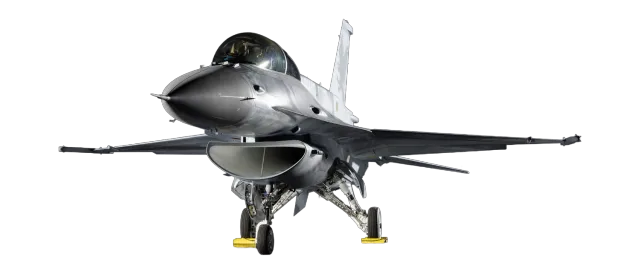
Fighter aircraft
F-16C Block 70/72 Fighting FalconMore news


