Brazil clears $330M buy of 100 FIM-92K Stinger missiles
The U.S. approved a $330M sale of 100 FIM-92K Stinger missiles to Brazil, signaling a shift toward a U.S.-built, low-altitude air-defense layer.

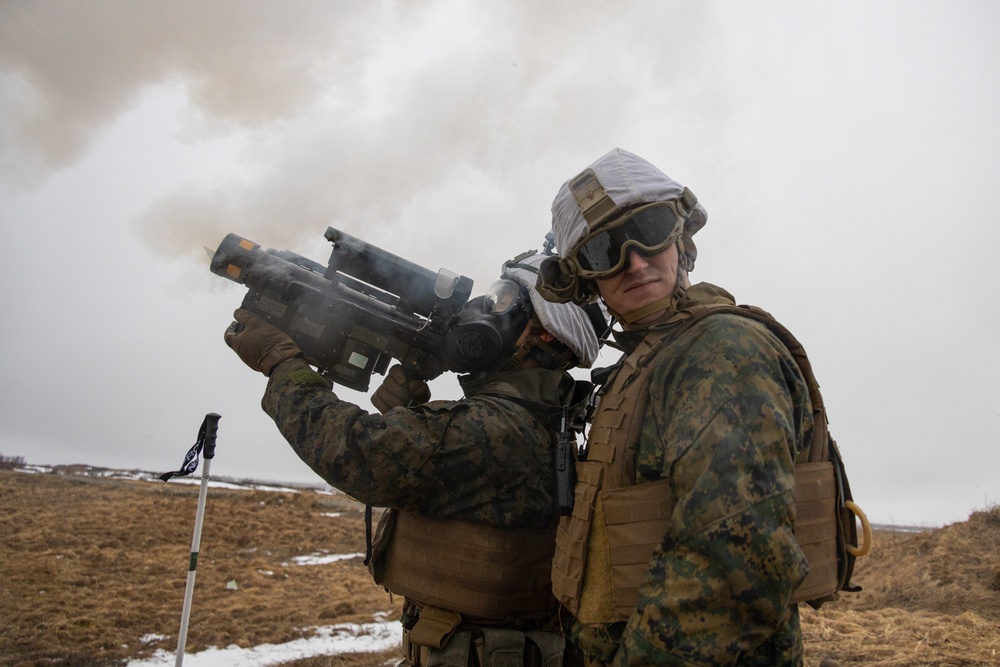
U.S. Marine Corps photo, DVIDS, public domain
The U.S. State Department has cleared a possible $330 million sale of 100 FIM-92K Stinger Block I missiles to Brazil, and the formal congressional notification behind that approval was published in the Federal Register on July 22, the paperwork step that turns a June decision into a live procurement clock. It is a modest line item next to Brazil’s roughly $20 billion annual defense budget, but it marks a concrete pivot: Brazil is starting to rebuild its short-range, low-altitude air-defense layer around U.S. hardware rather than the Russian-made missiles it has leaned on for over a decade.
The Defense Security Cooperation Agency, which administers Foreign Military Sales on the State Department’s behalf, approved the possible sale on June 11. The package covers 100 Stinger Block I missiles plus gripstocks and the engineering, integration and logistics support needed to field them, with RTX Corporation and Lockheed Martin named as principal contractors. Approval does not mean a signed deal. Brazil and Washington still need to negotiate and sign a Letter of Offer and Acceptance, and DSCA notifications regularly get renegotiated in scope or timing before a contract is finalized, so the missiles are not yet on order in a binding sense.
What the missiles are actually for
DSCA’s own language on why the sale matters is specific. The State Department has framed it as helping Brazil “do more for its own defense” by improving its ability to secure South American airspace from illicit trafficking, and to counter narco-terrorist operations within its borders and region. That is a deliberately narrow mission set: this is not about deterring a peer air force, it is about giving Brazilian ground forces a shoulder-fired weapon that can reach light aircraft, helicopters and drones flying low and slow, the kind of platforms traffickers and armed groups actually use to move people and product across Brazil’s borders and through the Amazon basin.
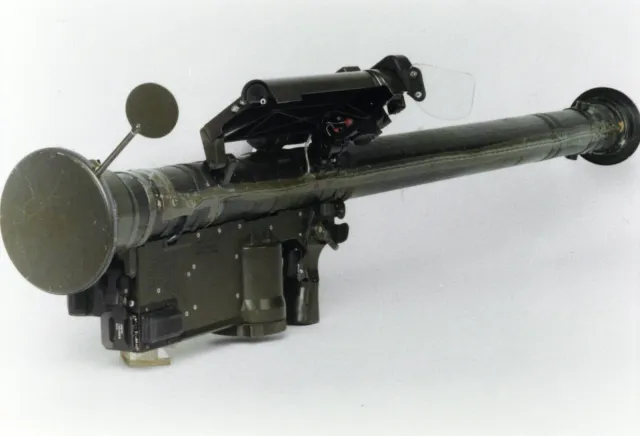
The FIM-92K Stinger Block I is built for exactly that envelope. It is an infrared-guided, shoulder-fired missile with an effective range of roughly 4.8 km, a top speed near Mach 2.2, and a 3 kg blast-fragmentation warhead, cheap enough per round and light enough per soldier to be distributed widely across a border security or counter-narcotics force rather than concentrated at a handful of fixed sites. It has also become one of the most combat-proven MANPADS in the world after large-scale deliveries to Ukraine, which has generated real operational data on its performance against low-flying rotary-wing and drone threats, exactly the target set Brazil says it wants to cover.
A supplier switch years in the making
Brazil’s move toward Stinger is not happening in a vacuum. According to reporting from The Defense Post, Brazil has fielded the Russian-made Igla-S MANPADS since 2014, and supply difficulties following Russia’s full-scale invasion of Ukraine in 2022 pushed Brazil to look for alternatives, the same sanctions-and-supply-chain pressure that has forced several other Igla operators worldwide to diversify their MANPADS inventories. The Stinger buy would sit alongside Brazil’s existing Swedish-made RBS 70 NG short-range air-defense system rather than replace it outright, adding a second, lighter-weight man-portable option to a layer that currently leans on a system whose long-term resupply is no longer guaranteed.
Why the timing matters
The reason this is news today rather than back in June is procedural, not substantive: DSCA’s original approval only becomes a matter of binding record once the congressional notification clears its statutory review window, and the Federal Register posting on July 22 is the marker for that clock. Congress has 15 to 30 days (depending on the recipient country and sale type) to object before DSCA and the contractor can proceed to a signed agreement, and Brazil is not on the shortlist of countries where that review tends to draw political controversy, so the sale is more likely than not to proceed largely as approved.
What is worth watching next is less the missile count than the pattern it fits into. A $330 million, 100-missile Stinger buy will not by itself close Brazil’s low-altitude air-defense gap over a country the size of a continent, and it will not replace the Igla-S inventory Brazil already has in the field. But paired with the RBS 70 NG already in service, it points toward a Brazilian air-defense posture assembled from Western suppliers rather than a single-source Russian pipeline, a shift with implications well beyond this one contract for how Brazil sources everything from spare parts to training pipelines over the next decade.
Sources
- Brazil - FIM-92K Stinger Missiles — U.S. Department of State, Jun 11, 2026
- US clears potential $330m FIM-92K Stinger missiles sale to Brazil — Army Technology, Jun 12, 2026
- US Stinger Missiles for Brazil — The Defense Post, Jun 15, 2026
Systems mentioned
Every system named in this story, with its photo and, where available, a video. Tap a card to open the full spec sheet.
Missile
FIM-92 StingerFrequently asked questions
Why is Brazil buying Stinger now? +
Brazil's Defense Ministry wants a stronger low-altitude shield against drones, light aircraft and helicopters used in narco-trafficking and other illicit operations along its borders and over the Amazon, and the State Department has framed the sale explicitly around securing South American airspace from illicit trafficking. Brazil's existing Russian-made Igla-S MANPADS, in service since 2014, has also become harder to resupply since Russia's invasion of Ukraine, according to The Defense Post, pushing Brazil toward a U.S.-sourced alternative.
What exactly did the U.S. approve? +
A possible $330 million Foreign Military Sale of 100 FIM-92K Stinger Block I missiles, gripstocks, and associated engineering, integration and logistics support. The State Department's June 11 release and the Federal Register's July 22 congressional notification only clear the sale for negotiation; Brazil and the U.S. still need to sign a Letter of Offer and Acceptance before it becomes a binding contract.
What is the FIM-92K Stinger Block I? +
A shoulder-fired, infrared-guided man-portable air-defense system (MANPADS) built to shoot down low-flying aircraft, helicopters and drones at short range. It has a roughly 4.8 km range, flies at up to Mach 2.2, and carries a 3 kg blast-fragmentation warhead.
Who builds it? +
RTX Corporation, based in Arlington, Virginia, and Lockheed Martin, based in Syracuse, New York, are named as the principal contractors on the proposed sale.
More news


