RTX Wins $745M Deal to Extend SM-3 Block IIA Line
A US-Japan contract worth up to $745.4 million keeps Raytheon's priciest interceptor, the SM-3 Block IIA, in production through February 2031.

U.S. Navy photo, public domain
RTX has won a noncompetitive contract worth up to $745.4 million to keep building SM-3 Block IIA missile interceptors for the United States and Japan, with work running through February 28, 2031. The award, announced August 7, 2026 in the Department of War’s daily contracts list, obligates $553.2 million at signing, split almost evenly between $275.6 million in US procurement funds and $277.7 million in Japanese Foreign Military Sales funds.
What the contract covers
The award is an undefinitized contract action, meaning RTX (formerly Raytheon, headquartered in Tucson, Arizona) can begin work immediately while the final price and terms are still being negotiated within the stated ceiling. It covers manufacturing and assembly of SM-3 Block IIA “All-Up Round” interceptors, the fully assembled missile ready for loading into a launch cell, for both the US government and Japan’s Ministry of Defense under a Foreign Military Sales case. Work will be performed in Tucson and in Huntsville, Alabama, with an estimated completion date of February 28, 2031, meaning this single contract action locks in production planning for roughly the next four and a half years.
That multi-year horizon is the part of the story that matters most beyond the dollar figure. RTX is the sole manufacturer of the SM-3 Block IIA, so there is no competing production line that could absorb a gap if this one slowed. Committing funding and factory capacity out to 2031, rather than contracting in smaller, more frequent increments, is a deliberate hedge to keep that single line running at a steady pace. It is the same industrial-base logic behind Norway’s expanded M795 artillery shell buy covered by this desk earlier this month, where the goal was likewise to keep a scarce, single-source production line fed years ahead of any acute shortage rather than scrambling to restart it under pressure.
A genuinely joint program, not a one-off sale
The near-even funding split between the US and Japan is not a coincidence of this particular deal, it reflects how SM-3 Block IIA came to exist in the first place. The United States and Japan have co-developed the missile since a bilateral agreement signed in 2006, with RTX building the airframe and propulsion and Japan’s Mitsubishi Heavy Industries contributing major components, most notably the nosecone and second-stage rocket motor. Japan is not simply buying a finished American product off the shelf the way a typical Foreign Military Sales customer would; it helped design and build the missile, and this contract’s roughly 50/50 cost split between US FY2026 procurement funds and Japanese FMS funds is the financial expression of that shared ownership.
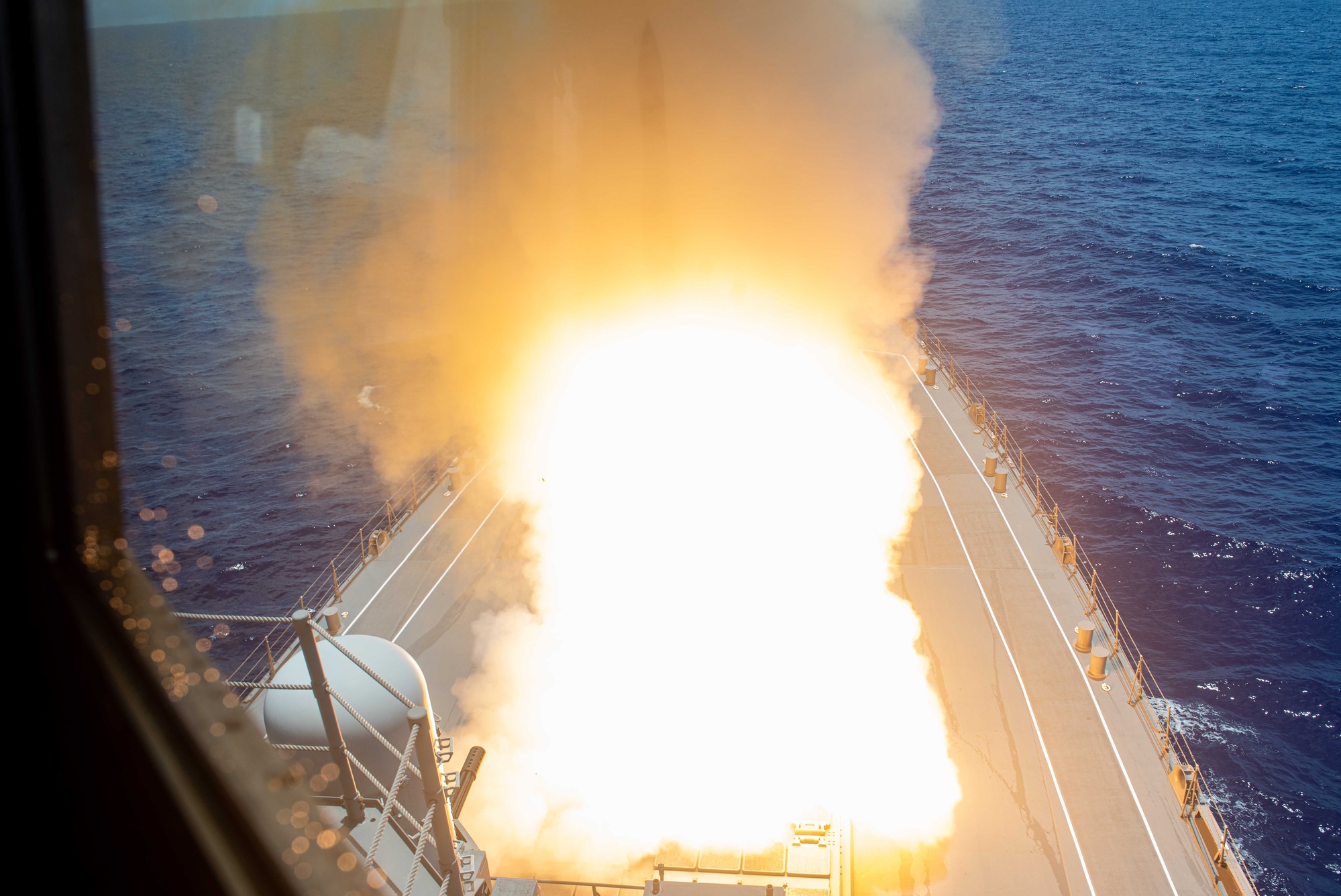
That co-development structure is why Japan operates SM-3 Block IIA at all. The missile is fired from Mk 41 vertical launch cells aboard Aegis Ballistic Missile Defense-equipped destroyers, including the US Arleigh Burke class and Japan’s own Maya-class ships pictured above, as well as land-based Aegis Ashore sites such as those in Poland and Romania and the test range at Kauai, Hawaii. The SM-3 Block IIA is an exo-atmospheric hit-to-kill interceptor, meaning it destroys a target missile in space through the kinetic force of a direct collision rather than an explosive warhead, using an infrared homing seeker to find its target above the atmosphere. WeaponSpecs’ database lists a published range near 2,500 kilometers and a top speed around Mach 13.5, figures consistent with a missile designed to intercept medium- and intermediate-range ballistic threats well outside the atmosphere, far beyond the reach of shorter-range point-defense systems.
The most expensive interceptor in its own family
WeaponSpecs’ database estimates a per-unit cost near $28 million for SM-3 Block IIA, sourced to 2025 reporting derived from Missile Defense Agency procurement data. That figure carries an internal flag marking it as a sourced estimate rather than an official confirmed program number, since the Missile Defense Agency does not publish a single audited per-round price the way it does for some other programs. Even treated as an estimate, the scale is informative: $28 million per interceptor is roughly double the $10 million to $15 million typically cited for the earlier SM-3 Block IB variant, making Block IIA the most expensive missile in its own family by a wide margin. That premium buys greater range, a larger kinetic warhead, and the ability to engage more advanced ballistic threats, but it also means this contract’s $745.4 million ceiling, at that per-unit estimate, reaches only on the order of two dozen complete rounds, a useful anchor for how far a contract at this scale goes for a weapon this specialized.
SM-3 Block IIA has reportedly seen at least one real-world combat use: multiple reports describe it being used operationally since April 2024, during Israel’s defense against a large Iranian missile barrage. That reporting has not been independently re-verified for this story and should be read as an established prior account rather than a newly confirmed fact, but it underscores that this is not a purely theoretical interceptor. It is a fielded system with at least one documented engagement against real ballistic missiles, which is part of why both Washington and Tokyo are treating its production line as worth protecting years in advance.
Not a Patriot or THAAD replenishment
It is worth being precise about what this contract is not. SM-3 Block IIA is a Navy program built around Aegis-equipped warships and shore sites, organizationally and functionally separate from the Army’s Patriot and THAAD interceptor families, both of which this desk has covered extensively in recent weeks amid their own production surges. The three systems address different threat sets and operate under different services; this contract replenishes and extends naval ballistic-missile-defense capacity specifically, and should not be read as part of the broader Patriot or THAAD supply story even though all three share the general theme of interceptor demand outpacing legacy production rates.
Sources
- Contracts for Aug. 7, 2026 — GlobalSecurity.org (mirroring the Department of War's daily contracts announcement), Aug 7, 2026
- RTX Wins up to $745.4 Million Deal for SM-3 Block IIA Interceptors, Extending Ballistic Missile Interceptor Production Through 2031 — Defence Industry Europe, Aug 7, 2026
- US, Japan Fund $745 Million Deal for SM-3 Missile Interceptors — Defence Blog, Aug 7, 2026
Systems mentioned
Every system named in this story, with its photo and, where available, a video. Tap a card to open the full spec sheet.
Compare these side by side →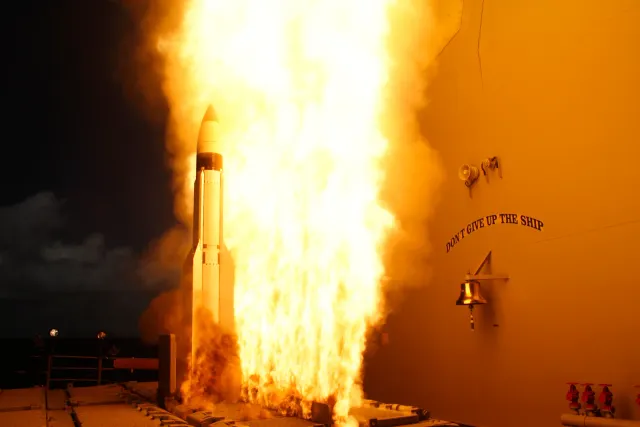
Missile
SM-3 Block IIA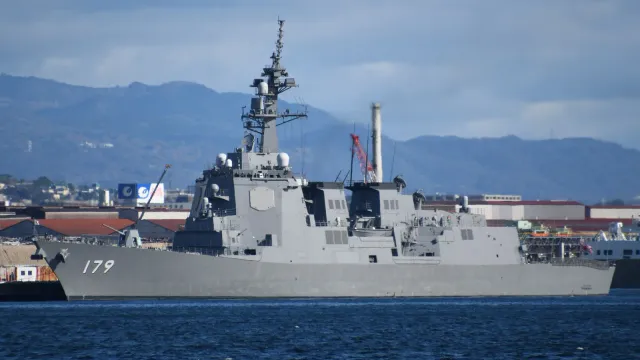
Warship
Maya-classFrequently asked questions
What does this $745 million contract actually buy? +
RTX will keep building SM-3 Block IIA All-Up Round interceptors for the US Missile Defense Agency and Japan's Ministry of Defense through February 2031, under a contract with a $745.4 million ceiling and $553.2 million obligated at signing.
How is the cost split between the US and Japan? +
Almost evenly: $275.6 million in US fiscal year 2026 procurement funds against $277.7 million in Japanese Foreign Military Sales funds, reflecting Japan's role as SM-3 Block IIA's co-developer alongside Mitsubishi Heavy Industries since 2006.
How expensive is a single SM-3 Block IIA interceptor? +
Around $28 million each based on 2025 Missile Defense Agency procurement-data-derived reporting, the most expensive missile in the SM-3 family and well above the $10 to 15 million Block IB variant.
Why does a multi-year contract extension matter? +
SM-3 Block IIA has a single production source; committing funding and capacity out to 2031 keeps that sole line running well ahead of near-term demand, the same industrial-base logic behind other 2026 missile-production extensions this desk has covered.
More news


