Stealth Fighters: Why No One Publishes an RCS Number
Not one of 1,124 systems in our database publishes a radar cross-section figure, including all 15 fighter jets currently marketed as stealth aircraft.

Lockheed Martin, official product image, background removed
WeaponSpecs tracks 1,124 defense systems. Not one of them publishes a radar cross-section, the single figure that would actually let a buyer compare stealth aircraft the way range or payload lets them compare anything else. Only 20 systems, 1.8 percent of the database, even carry a qualitative stealth or low-observable text description, and all 20 stop at marketing language: very low observable, reduced radar cross-section, never a measured square-meter figure. The numbers that do circulate in press coverage, the F-22 the size of a marble, the F-35 the size of a golf ball, trace back to a single 2001 book and old magazine-analyst compilations, not to Lockheed, Sukhoi, AVIC, or any government release.
How many stealth aircraft actually publish a radar cross-section?
None. Across every fighter, bomber, UAV, and warship in the database, the count of systems with a numeric RCS field is zero, because the field itself has never had anything to hold. What does exist is a much smaller, qualitative signal: 20 of 1,124 systems, 1.8 percent, carry a stealthFeatures text description in their protection profile. That 20 breaks down unevenly by category: 15 of 65 fighters (23.1 percent) describe some form of low-observable design, 2 of 9 bombers (22.2 percent), 2 of 74 warships (2.7 percent), and just 1 of 93 UAVs (1.1 percent). The gap between fighters and UAVs matters for a buyer because it tells you where stealth is actually a design pillar versus an afterthought: fighter and bomber programs build the whole airframe around signature reduction, while most UAV programs still compete on endurance and payload, not detectability.
Three of every four systems marketed as stealth in the database are fighters, which is where the RCS silence bites hardest: a fighter buyer has more low-observable choices to weigh than in any other category, and no verified number to weigh them against.
What does radar cross-section actually measure, and why does it matter?
RCS is a measure of how large a target looks to a given radar, expressed in square meters, and it has almost nothing to do with an aircraft’s physical size. A large but well-shaped airframe can present a smaller radar signature than a small but poorly shaped one, which is exactly why the figure is useful and exactly why its absence is a real gap, not a cosmetic one. The number translates directly into detection range and, from there, into warning time, which is the part that actually matters to someone standing behind the radar.
Take the US AWACS system, built to detect a 7 square-meter target at 370 km. A conventional, non-stealthy cruise missile is typically picked up around 227 km out; at a representative cruise speed of 805 km/h, that gives a defender about 17 minutes of warning before impact. A stealthy cruise missile presenting an RCS around 0.1 square meters or smaller is not reliably detected until roughly 108 km, which cuts that warning window to about 8 minutes, in some cases too short to complete an intercept even after the target is finally seen. This is why RCS is not an abstract engineering vanity metric: the difference between a published 7 square-meter figure and an unpublished 0.1 square-meter one is the difference between having enough time to act and not.
The figures that do circulate for specific aircraft are not from any manufacturer, government release, or the WeaponSpecs database itself, which has zero RCS fields anywhere in its schema because no system has ever had one to enter. They are open-source order-of-magnitude estimates, compiled by GlobalSecurity.org and citing Aviation Week & Space Technology (14 November 2005) and Doug Richardson’s 2001 book Stealth Warplanes.
None of these six values come from the WeaponSpecs database, a manufacturer, or a government release. They are open-source press and analyst compilations from GlobalSecurity.org, shown on a log scale because the range, 6 square meters down to 0.0005 square meters, spans more than four orders of magnitude on one chart.
If even a retired, declassified jet has no real number, what does that tell you?
The F-117 Nighthawk is the strongest test case available, because it is the one aircraft on this list with nothing left to hide: retired from US service in 2008, substantially declassified, and the subject of decades of open study. It should be the one jet with a settled, sourced RCS figure. It is not. Wikipedia’s F-117 page states approximately 0.001 square meters, footnoted to Richardson’s 2001 book. GlobalSecurity.org’s compiled table separately lists “0.025 or less,” tracing to the same underlying literature. Neither source resolves the other, and the gap between them is a factor of 25, not a rounding difference.
That is the point worth sitting with. If a retired, non-classified 1980s airframe still cannot produce one authoritative public number two decades after the fact, there is no reason to expect that RCS secrecy around active programs, the F-22, F-35, B-21, Su-57, J-20, or the still-unfielded F-47, resolves itself just by waiting. The F-117 case is not an outlier to be patched with better research. It is the ceiling: the best-case outcome for public RCS disclosure on a declassified jet is still a 25x disagreement between two secondary sources, neither of them the US government.
Who builds the 20 systems marketed as stealth, and what do they actually disclose?
Every system below carries WeaponSpecs’ stealthFeatures text field. None publishes a number.
| System | Country | Type | Status | RCS published? |
|---|---|---|---|---|
| B-2 Spirit | United States | Bomber | Active | No |
| B-21 Raider | United States | Bomber | Active | No |
| Chengdu J-36 | China | Fighter | Announced | No |
| F-22A Raptor | United States | Fighter | Active | No |
| F-35A Lightning II | United States | Fighter | Active | No |
| F-35B Lightning II | United States | Fighter | Active | No |
| F-35C Lightning II | United States | Fighter | Active | No |
| Boeing F-47 | United States | Fighter | Announced | No |
| GCAP Tempest | Multi-national | Fighter | Announced | No |
| GJ-11 | China | UAV | Active | No |
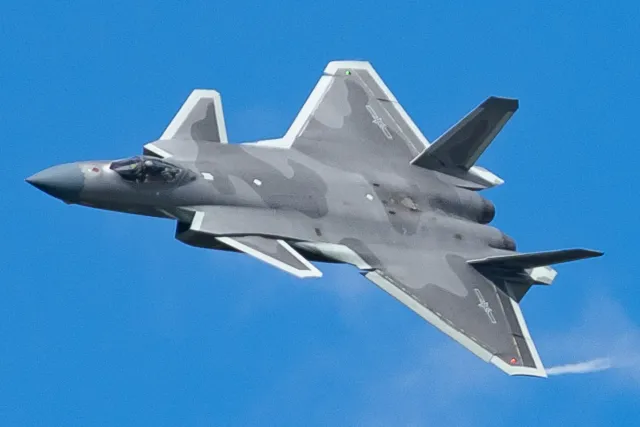
| J-20 | China | Fighter | Active | No |
| J-35 | China | Fighter | Active | No |
| KF-21 Boramae | South Korea | Fighter | Active | No |
| La Fayette class | France | Warship | Active | No |
| Rafale C | France | Fighter | Active | No |
| Rafale F4 | France | Fighter | Active | No |
| Rafale M | France | Fighter | Active | No |
| Shenyang J-50 | China | Fighter | Announced | No |
| Su-57 | Russia | Fighter | Active | No |
| Zumwalt-class Destroyer | United States | Warship | Active | No |
The United States accounts for 8 of the 20 (40 percent), China for 5 (25 percent), France for 4 (20 percent), and Russia, South Korea, and the multinational GCAP program one each (5 percent apiece). Four of the 20, Chengdu J-36, Boeing F-47, GCAP Tempest, and Shenyang J-50, carry an “announced” status rather than “active,” meaning none has entered service; our look at systems still announced, not fielded covers that broader gap between reveal and deployment. KF-21 Boramae is not in that group. Despite still reading like a newer program, it is active and fielded in the WeaponSpecs database as of 2026, which is worth flagging precisely because its “fighter jet from South Korea” profile makes it easy to lump in with the announced-only sixth-generation programs by instinct alone.
None of this disclosure gap is accidental or unique to secretive states. What manufacturers will discuss, on the record, is shaping logic rather than a resulting number:
“There’s no intersections. Every time you have an intersection, you have a chance for an RCS reflector,” said Darold Cummings, a former Northrop YF-23 design engineer, on the airframe-shaping logic behind low-observable design (The War Zone, July 9, 2026).
Cummings helped design the YF-23, the losing bid in the competition that produced the F-22. His comment is about the F-47, but it describes a design principle common to every fighter on the table above: edge alignment, faceting, and intersection avoidance are all things a manufacturer will explain in public, because the geometry is visible in any photograph anyway. The RCS number that geometry produces is a different kind of information entirely, and it stays behind the line even when the shape does not. We flagged this same gap for three specific jets in our earlier claimed-vs-verified comparison of the Su-57, F-35, and J-20 as a side note; this piece is the full audit, across all 1,124 systems in the database, of how consistent that silence actually is.
So what can you actually compare?
Not RCS, not credibly, not for any of the 20 systems above. What is actually comparable and verifiable is combat and export record, design lineage and shaping logic of the kind Cummings describes, and materials or maintenance commentary from actual operators, none of which requires trusting a 2001 paperback or a state press release. Build your own side-by-side across the full fighter-aircraft field in WeaponSpecs’ compare tool rather than ranking stealth jets on a number nobody, anywhere, actually publishes, or run a threat profile through the Advisor to see which disclosed specs actually move the comparison.
Sources
- GlobalSecurity.org, Radar Cross Section (RCS) reference compilation
- The War Zone, Why Does The F-47's Design Look So Different Than What Many Expected?
- Air & Space Forces Magazine, F-35 stealth design coverage
- Wikipedia, Lockheed F-117 Nighthawk (RCS figure and Richardson citation)
- Federation of American Scientists, F-117 Military Analysis Network
Systems in this comparison
Every system covered above, with its photo and, where available, a video. Tap a card to open the full spec sheet.
Compare these side by side →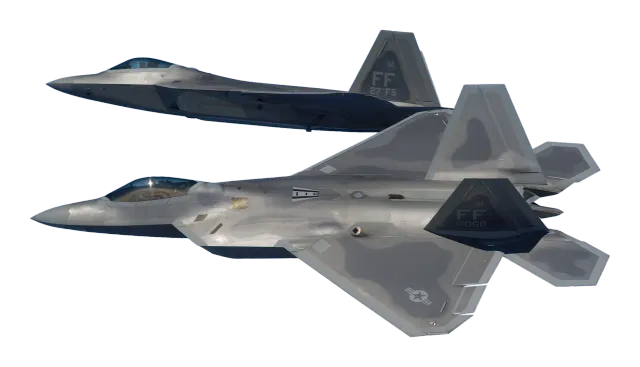
Fighter aircraft
F-22A Raptor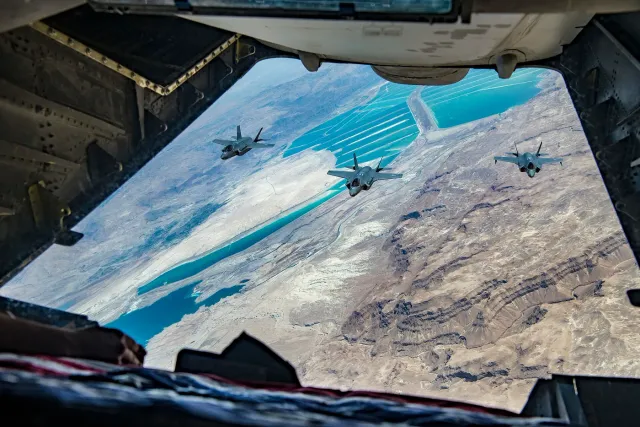
Fighter aircraft
F-35A Lightning II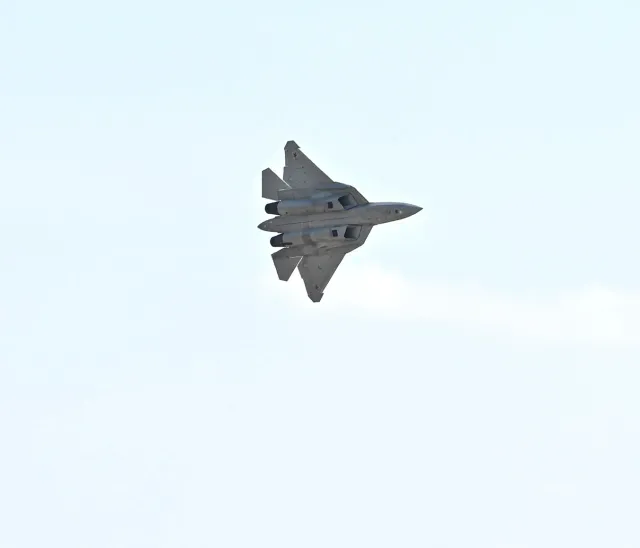
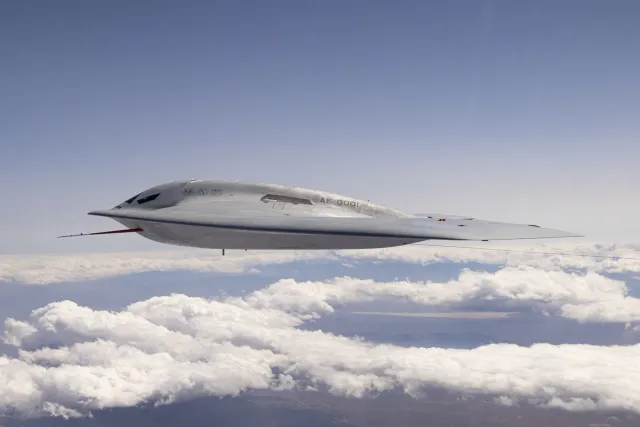
Bomber
B-21 Raider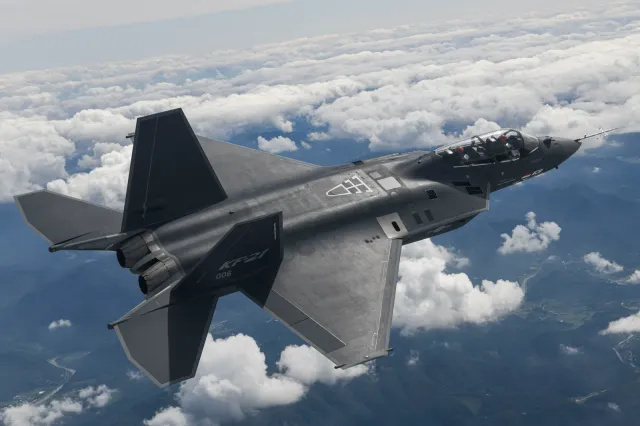
Fighter aircraft
KF-21 BoramaeFrequently asked questions
Does any stealth fighter publish an official radar cross-section number? +
No. Across all 1,124 systems in the WeaponSpecs database, including every fighter, bomber, UAV, and warship marketed with stealth or low-observable design, not one publishes a measured square-meter RCS figure. Only 20 systems, 1.8 percent of the database, carry any stealth-related text description at all, and every one of those 20 stops at qualitative language like very low observable rather than a number.
What does radar cross-section actually measure, and why does it matter? +
RCS measures how large a target appears to a specific radar, in square meters, independent of the aircraft's actual physical size. It matters because it sets detection range: a US AWACS radar built to detect a 7 square-meter target at 370 km would only pick up a 0.1 square-meter stealthy target around 108 km out, cutting a defender's warning time from roughly 17 minutes to roughly 8.
Why is even the F-117's RCS figure disputed? +
Wikipedia's F-117 page cites approximately 0.001 square meters, footnoted to Doug Richardson's 2001 book Stealth Warplanes. GlobalSecurity.org's compiled table separately lists 0.025 square meters or less, tracing to the same underlying literature. That is a 25x gap on an airframe retired since 2008 and substantially declassified, with no government figure resolving it either way.
Which countries build the 20 systems marketed as stealth? +
The United States builds 8 of the 20, 40 percent: the F-22A Raptor, all three F-35 variants, the B-2 Spirit, the B-21 Raider, the Boeing F-47, and the Zumwalt-class destroyer. China builds 5, 25 percent, France builds 4, 20 percent, and Russia, South Korea, and the multinational GCAP Tempest program each contribute one.
If RCS numbers are not public, how can a buyer compare stealth aircraft at all? +
Not on RCS itself. The comparable, verifiable signals are combat and export record, airframe design lineage and shaping logic, and materials and maintenance commentary from operators, all covered on WeaponSpecs' system pages and comparison tools rather than resting on a single unverifiable number.
Related reading


