Almost No Drone in Our Database Is DoD 'Group 4'
Sorting 93 tracked drones by the Pentagon's own weight-and-altitude rules leaves DoD's UAS Group 4 with just 1 system, against 29 in Group 5.

U.S. Air Force photo by Staff Sgt. Brian Ferguson, public domain, via Wikimedia Commons
WeaponSpecs tracks 113 UAV systems, and 93 of them publish a usable weight figure. Sort those 93 by the U.S. military’s own DoD UAS Group 1 through 5 classification and the split is lopsided: 25 systems in Group 1, 14 in Group 2, 19 in Group 3, 29 in Group 5, and exactly one in Group 4. Group 4 is supposed to be a real, meaningful tier, heavy drones that fly below 18,000 feet, but in this database it is almost empty. Once a tracked drone gets heavy enough to leave the tactical tiers, it is almost always also built to fly above that altitude line.
What Do the Pentagon’s Five Drone Groups Actually Measure?
The DoD UAS Group system is not a marketing category. It is a real classification the U.S. military uses to scale everything from operator certification to airspace clearance, and it is public, laid out in the FAA’s own Aeronautical Information Manual. Weight is the primary determinant across all five groups. Speed and altitude become relevant mostly at the boundaries:
- Group 1: up to 20 lb (9.07 kg), normally below 1,200 ft AGL, under 100 kt.
- Group 2: 21-55 lb (9.07-24.9 kg), normally below 3,500 ft AGL, under 250 kt.
- Group 3: up to 1,320 lb (599 kg), normally below 18,000 ft MSL, under 250 kt.
- Group 4: over 1,320 lb (599 kg), normally below 18,000 ft MSL, any speed.
- Group 5: over 1,320 lb (599 kg), normally above 18,000 ft MSL, any speed.
Groups 1 through 3 track a small, medium, and tactical-scale drone respectively, each one a step up in weight. Groups 4 and 5 share an identical weight floor. The only thing that splits them is whether the aircraft normally operates below or above 18,000 feet, the altitude where controlled and international airspace integration becomes a real design and operational constraint rather than a formality.
Where Does Every Tracked Drone Actually Fall?
Group 5 alone outnumbers Groups 1 and 2 combined, and it is nearly thirty times the size of the group sitting right next to it on the weight scale.
| DoD Group | Weight Threshold | Altitude / Speed | Example in Our Database | Systems Matching |
|---|---|---|---|---|
| Group 1 | Up to 20 lb (9.07 kg) | Below 1,200 ft AGL, under 100 kt | 0 kg - Black Hornet 4 | 25 |
| Group 2 | 21-55 lb (9.07-24.9 kg) | Below 3,500 ft AGL, under 250 kt | 22 kg - ScanEagle | 14 |
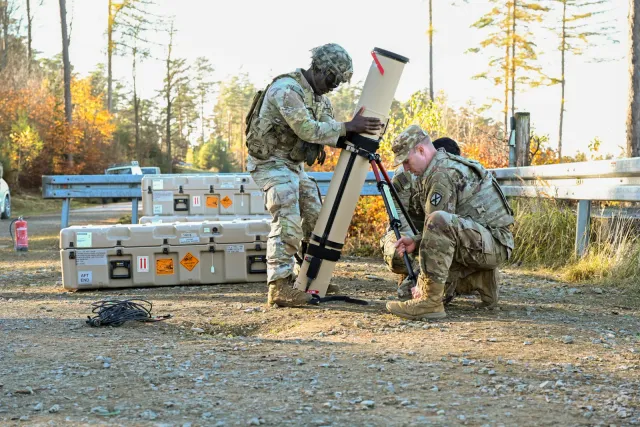
| Group 3 | Up to 1,320 lb (599 kg) | Below 18,000 ft MSL, under 250 kt | 27 kg - Switchblade 600 | 19 |
| Group 4 | Over 1,320 lb (599 kg) | Below 18,000 ft MSL, any speed | 1,200 kg - Wing Loong I (the only match) | 1 |
| Group 5 | Over 1,320 lb (599 kg) | Above 18,000 ft MSL, any speed | 4,760 kg - MQ-9A Reaper | 29 |
The database’s highest published ceiling belongs to the RQ-4 Global Hawk, at 18,288 m, about 60,000 feet, more than three times the altitude line that separates Group 3 from the heavy tiers.
A methodology note before the interpretation: of the 93 systems classified here, 89 use a dedicated combat weight field and the rest fall back to an empty weight or general weight figure where that was the only number published. Minor, but worth flagging rather than burying.
Why Is Group 4 Almost Empty?
Once a drone in this database gets heavy enough to leave Group 3, it is almost always also built to fly above 18,000 feet, into the kind of controlled and international airspace that Group 5 exists to describe. A drone program that invests in a heavier airframe tends to invest in altitude at the same time, because the whole point of building something in the Predator-Reaper weight class is usually persistence and range, and both of those come from flying high. A heavy drone that stays low gets almost none of the payoff that justified building it heavy in the first place.
The boundary between “medium tactical” and “heavy” sits right on top of two real, named systems in the database. The Hermes 450 weighs 550 kg and lands in Group 3. The Mohajer-6 weighs 600 kg, exactly 1 kg over the 599 kg (1,320 lb) cutoff, and lands in Group 5. A single kilogram of published combat weight is the entire difference between a medium tactical UAV and a platform that, in the DoD’s own scheme, needs Major Defense Acquisition Program-style oversight and full high-altitude airspace integration. The threshold isn’t a design cliff the industry actually engineers toward, it’s an administrative line that happens to fall between two aircraft that are otherwise close cousins.
Where Does the Classification Get Fuzzy?
ScanEagle is the cleanest example of how messy a “primary determinant” framework gets at the edges. It weighs 22 kg, comfortably a Group 2 system by weight. But its published service ceiling is 5,950 m, about 19,520 feet, which sits above the 18,000 ft (5,486 m) line that separates Group 3 from Groups 4 and 5 for heavy systems. Under the DoD’s own convention, any single attribute that falls into a higher group is supposed to bump the whole aircraft up. In practice, nobody classifies ScanEagle as a heavy drone. A manufacturer’s claimed maximum ceiling is a theoretical envelope, not where the aircraft actually spends its flight time, and weight, not an ambitious altitude line on a spec sheet, is what actually drives how a light tactical drone gets treated.
Five more systems in the database weigh well over the 599 kg heavy-tier threshold but have no published service ceiling at all, so Group 4 versus Group 5 can’t be determined for them: Arash (600 kg), Crossbow (750 kg), Jeniah (4,000 kg), Mojave STOL (3,175 kg), and Boeing’s own MQ-28 Ghost Bat (5,443 kg). The Ghost Bat gap is the more notable one. It is a major manufacturer’s flagship loyal-wingman program, and even that program’s own public spec sheet doesn’t carry a ceiling figure a reader can classify against. Only 64 of the 113 UAVs WeaponSpecs tracks, 56.6 percent, publish both a weight and a service ceiling, the pair needed to fully classify a system with confidence. A further 82.3 percent publish at least a weight, enough to sort Groups 1 through 3, but not enough on its own to split the heaviest tier into 4 or 5.
Why Does Any of This Matter for Procurement?
Group assignment isn’t a filing exercise. It scales acquisition oversight, operator certification, and airspace integration burden together, and a heavier, higher-flying drone pulls a program into a different category of paperwork and clearance than a tactical one ever sees. That is the same logic sitting behind the Air Force’s $500K counter-air missile solicitation aimed at drone threats across multiple size classes: building a defense architecture “by drone group” only works if you can actually put a given aircraft in a group, and this database, with over 1,270 tracked systems overall, still can’t fully classify half its own UAV catalog by the government’s own scheme. That gap sits next to a related one WeaponSpecs has already documented in its UAV price-transparency census: most drones in this database don’t publish a unit cost either. Weight, ceiling, and price all thin out the deeper you go into any one system’s public spec sheet, and each gap makes the next procurement decision a little more of a guess.
Pull up any two of these platforms side by side and compare weight, ceiling, and published price at a glance in WeaponSpecs’ own systems comparison tool.
Sources
Systems in this comparison
Every system covered above, with its photo and, where available, a video. Tap a card to open the full spec sheet.
Compare these side by side →UAV / drone
Black Hornet 4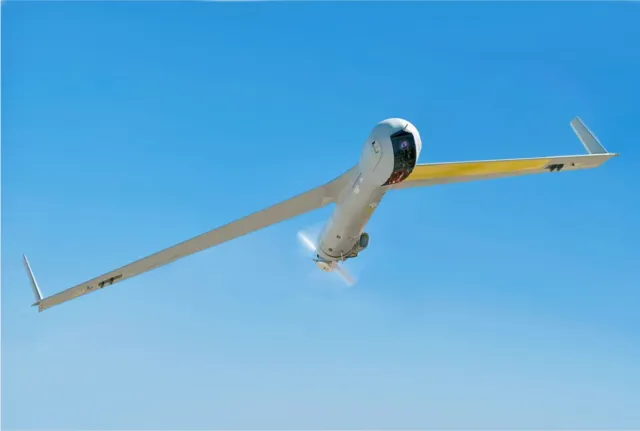
UAV / drone
Switchblade 600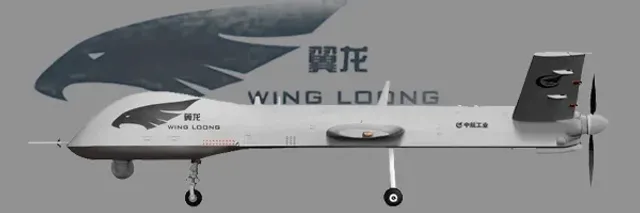
UAV / drone
Wing Loong I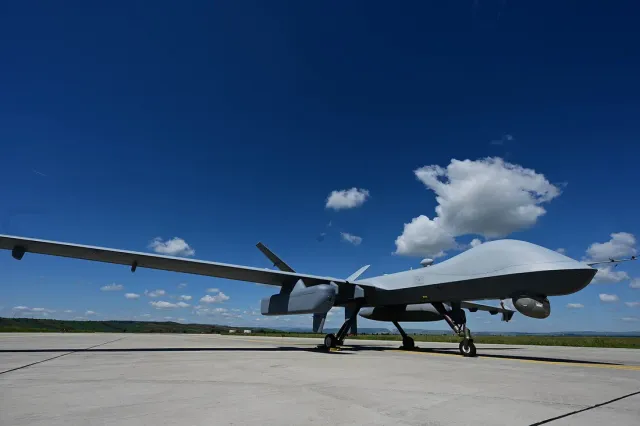
UAV / drone
MQ-9A Reaper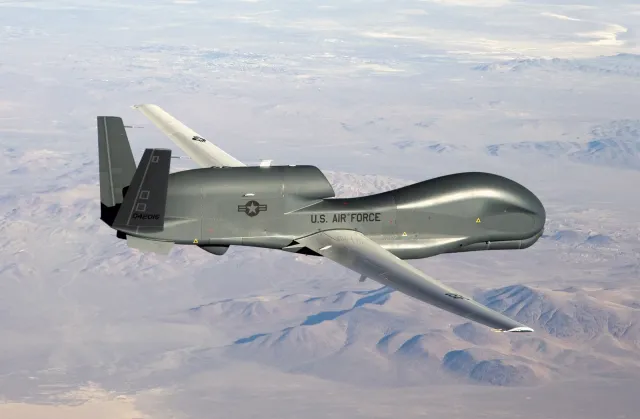
UAV / drone
RQ-4 Global HawkFrequently asked questions
What are the U.S. military's UAS Group 1 through 5 classifications? +
The U.S. military sorts drones into five groups, primarily by weight, with the two heaviest tiers split by how high they normally fly. Group 1 covers small hand-launched drones under 20 pounds. Groups 2 and 3 cover progressively heavier tactical drones up to 1,320 pounds. Groups 4 and 5 both cover drones heavier than 1,320 pounds, separated only by whether they normally operate below or above 18,000 feet. The framework is a Department of Defense convention, and it is laid out publicly in the FAA's own Aeronautical Information Manual.
Why does a drone's DoD Group matter beyond paperwork? +
A drone's group shapes how much acquisition oversight its program faces, what certification its operators need, and how much airspace integration work has to happen before it can fly. A Group 1 drone can often launch with minimal coordination. A Group 4 or 5 system flying near controlled or international airspace needs the kind of air traffic deconfliction and program-level oversight normally associated with a full aircraft acquisition, not a spec-sheet accessory.
What's the actual difference between DoD Group 4 and Group 5? +
Groups 4 and 5 share the identical weight threshold: both cover drones heavier than 1,320 pounds, or 599 kilograms. The only thing that separates them is altitude. A Group 4 drone normally operates below 18,000 feet. A Group 5 drone normally operates above that line. Two aircraft of the same weight can land in different groups purely because of how high one is built to fly compared to the other.
Which drone in WeaponSpecs' database is the only Group 4 system? +
The Wing Loong I, a Chinese-made medium-altitude drone, is the only system in WeaponSpecs' tracked database that lands in Group 4. It weighs 1,200 kilograms and has a published service ceiling of roughly 16,400 feet, heavy enough to leave the tactical tiers behind but not high-flying enough to join the far more crowded Group 5 tier where most heavy drones in the database end up.
Can a light drone ever technically qualify for a higher group? +
In principle, yes. Under the DoD's own convention, if any single attribute (weight, speed, or altitude) falls into a higher group's range, the whole aircraft is supposed to be treated as that higher group. ScanEagle is a real example: it weighs only 22 kilograms, comfortably a light Group 2 system by weight, but its published maximum service ceiling of roughly 19,500 feet sits above the 18,000-foot line that separates Group 3 from Groups 4 and 5. In practice a 22-kilogram drone still gets treated as a light tactical system, because a manufacturer's claimed maximum ceiling is not the same thing as the altitude it actually flies at day to day.
Related reading


