How Old Is Each Country's Active Arsenal? The US Ranks 8th
Across 706 actively-fielded systems from 14 countries, WeaponSpecs' own database shows Russia averaging a 1999 design year. The US ranks 8th, not 1st.

Via Wikipedia, Tupolev Tu-95 (shown for identification)
Ask which country’s active arsenal is, on average, the newest, and the intuitive answer is the United States: biggest defense budget, most R&D spending, presumably the shortest replacement cycle. Our own database says otherwise. Averaging the release year of every actively-fielded system in the WeaponSpecs catalog, grouped by country of origin, across the 14 countries with at least 15 such systems each (706 systems total, out of 1,270 in the database), Russia’s active catalog averages a 1999 design year, 26.5 years old as of 2026, the oldest of the fourteen. The United States ranks eighth, at an average design year of 2007.9, 18.1 years old, only 8.4 years newer than Russia and older than China, Iran, India, Turkey, South Korea and Ukraine. Ukraine’s catalog is the youngest, averaging 2017.1, 8.9 years old, roughly 18 years newer than Russia’s. Budget size does not predict where a country lands on this list.
The Full Ranking: 706 Systems, 14 Countries
The method is simple: take every system in the database marked status: "active" with a published release year, group by country of origin, and average the release year. Restricting the sample to countries with at least 15 qualifying systems leaves 14 countries and 706 systems, out of 1,270 systems in the database overall. Sorted from the oldest average design year to the newest:
| Country | N (active, dated) | Avg. release year | Avg. age (as of 2026) |
|---|---|---|---|
| Russia | 111 | 1999.5 | 26.5 years |
| Germany | 42 | 2003.8 | 22.2 years |
| Italy | 24 | 2004.4 | 21.6 years |
| Japan | 18 | 2005.1 | 20.9 years |
| France | 42 | 2007.2 | 18.8 years |
| United Kingdom | 27 | 2007.2 | 18.8 years |
| Israel | 57 | 2007.6 | 18.4 years |
| United States | 157 | 2007.9 | 18.1 years |
| South Korea | 31 | 2011.4 | 14.6 years |
| China | 74 | 2013.1 | 12.9 years |
| Iran | 37 | 2014.2 | 11.8 years |
| India | 23 | 2016.0 | 10.0 years |
| Turkey | 42 | 2016.2 | 9.8 years |
| Ukraine | 21 | 2017.1 | 8.9 years |
Two patterns explain nearly the entire spread: how much genuine Cold War-era hardware a country still fields, and how old that country’s own weapons-design industry actually is.
Long Service Life Is a Program, Not Neglect
Russia and the United States anchor opposite ends of most spec comparisons, but on design vintage they sit closer together than the headline number suggests, and both carry the same underlying reason: genuine Cold War-era platforms that were deliberately kept in service through expensive life-extension programs, not simply left in the inventory until someone got around to retiring them.
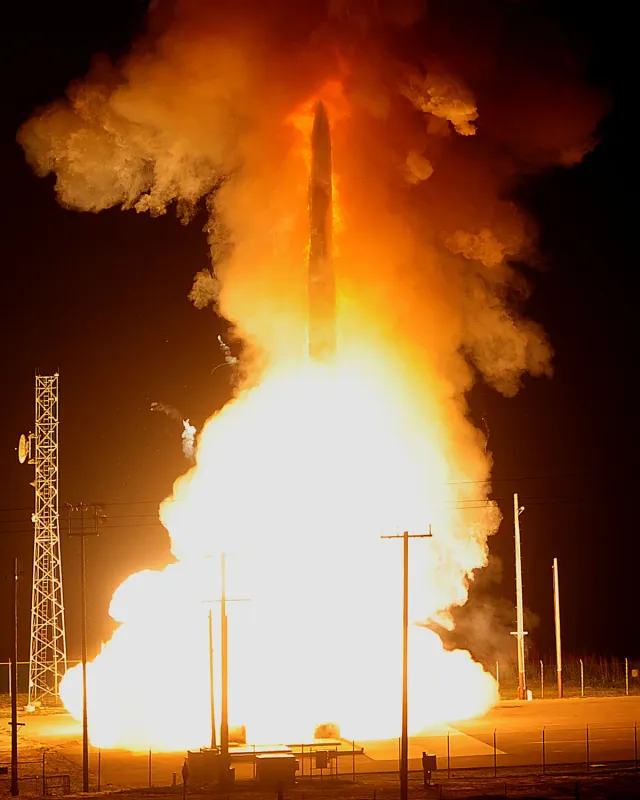
The US Air Force still flies the B-52H Stratofortress, a 1,961 design, and the entire US land-based nuclear deterrent still runs on the LGM-30G Minuteman III, dated to 1,970. The Army’s long-standing anti-armor missile, the BGM-71 TOW, also dates to 1,970 and remains in active service. None of the three is a museum piece. All three have gone through repeated engine, guidance, or avionics upgrades that keep the original airframe or missile body flying decades past its design date.
Russia’s active catalog carries a heavier version of the same pattern. The Tu-95MS Bear, a 1,956 design, still flies long-range strategic patrol and standoff-missile missions. The BM-21 Grad multiple rocket launcher and the SVD Dragunov marksman rifle, dated to 1,963 and 1,963 respectively, remain frontline issue. Grad sits inside a larger story about how far the Soviet-era artillery stockpile still outproduces and outnumbers NATO’s equivalent inventory, decades after most of it was built.
WeaponSpecs has made this exact argument before, in more depth: design age describes the shape of the platform, not the currency of what’s inside it. A 1961 airframe with a rebuilt engine, a modern radar, and a new weapons interface is a different machine than its release year implies. That argument holds here too, and it is worth restating, because the 26.5-year Russian average and the 18.1-year US average in the table above are both, in large part, an artifact of service-life extension rather than a sign either country stopped replacing equipment.
A Bigger Budget Doesn’t Buy a Newer Catalog Average
The United States spends more on defense research and procurement than any other country in this ranking, by a wide margin, and still lands eighth of fourteen on average design vintage: older than China, Iran, India, Turkey, South Korea and Ukraine, and only 8.4 years newer than Russia. That is not the sweeping technological gap a budget comparison alone would suggest.
Part of the answer is the life-extension pattern above: a country with a large, expensive Cold War-era inheritance and the money to keep extending it will show an older average than a country building from a smaller or newer base, even when the newer country’s individual programs are less mature. Comparing the two countries’ full catalogs directly makes the shape of that difference easier to see than the two averages alone do.
Russia and the United States sit closer together than either does to the youngest-vintage countries at the bottom of the ranking, evidence that budget size predicts spending, not necessarily catalog age.
None of this means the US or Russian defense-industrial base is stagnant. It means a country’s own active-systems average is driven as much by how much legacy hardware it still has reason to field as by how fast it develops new systems.
Younger Averages Often Mean Younger Defense Industries, Not Sharper Ones
The six countries with the youngest catalog averages, South Korea, China, Iran, India, Turkey and Ukraine, share something more structural than a faster upgrade cycle: most of them never built a comparable Cold War-era legacy fleet of their own design to begin with. Turkey’s, India’s, Iran’s and Ukraine’s domestic defense industries matured, in the sense of exporting and fielding complete systems under their own name, mostly after the Cold War ended. There is very little home-grown 1960s or 1970s stock for any of those countries to average into a catalog the way Russia’s or the United States’ can, so an active, own-designed catalog for each of them skews recent almost by definition. That is a structural and historical artifact as much as a technology story, not proof that these six countries are simply more advanced.
Ukraine is the sharpest example. Nearly all of its 21 qualifying systems date from after 2009, and several are explicit wartime designs fielded only since Russia’s 2022 invasion: the Vampire multirotor bomber, dated to 2,023; the FP-1 loitering munition, dated to 2,024; the STING interceptor drone, also dated to 2,024; and the Magura V7 uncrewed surface vessel, dated to 2,025. That cluster reflects a real, well-documented wartime surge in domestic drone and uncrewed-vessel design, not a general claim that Ukraine’s overall defense-industrial base out-innovates the rest of this list.
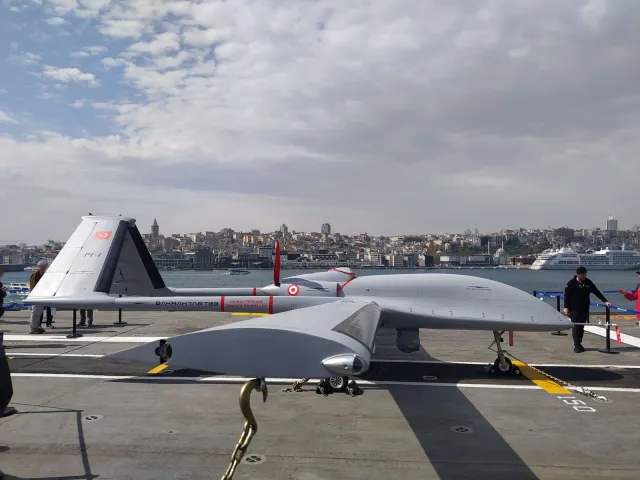
Turkey and China both show a milder version of the same pattern, layered on top of genuine recent investment. Turkey’s Bayraktar TB3, dated to 2,023, and China’s DF-61, dated to 2,025, both anchor young catalog averages that also reflect real, well-funded modernization programs, not just an accident of industry age. China’s People’s Liberation Army modernization in particular has been extensively documented by outside trackers, not only by Beijing’s own releases.
Russia’s own average shouldn’t be read as proof it has stopped designing new systems either. The T-90M obr. 2022, dated to 2,022, is a current-production Russian tank. Russia’s 1999.5 average is a mix of that kind of program and the long Cold War tail described above, weighted more heavily toward the tail than most of the other 13 countries in this list, not evidence that Russian weapons design has stalled.
What a Catalog Average Can and Can’t Tell You
Every number in this piece comes from what WeaponSpecs has catalogued as active, with a listed country of origin and a published release year, not from a verified national order of battle. That distinction matters. The standard independent resource for that kind of accounting is the SIPRI Arms Transfers Database, which tracks documented arms transfers and inventories at a level of rigor a single spec catalog does not attempt to match. This piece is a catalog average, not a fleet census, and the two should not be treated as interchangeable.
If anything, that gap likely understates the spread here rather than overstating it. A country’s oldest, least internationally publicized legacy equipment is often the hardest hardware to document in English-language open sources, while its newest, most heavily marketed systems tend to get covered everywhere. A fuller accounting of any of the six youngest-average countries’ actual fleets, including whatever older stock they still operate that has never made it into an English-language spec database, could push some of those averages older, not younger. That is a limit of what this instrument can see, not a reason to doubt the pattern it shows.
The Question a Vintage Number Should Actually Raise
A buyer or coalition partner reading a headline like “Country X’s arsenal averages year Y” should not treat that figure as a stand-in for capability or readiness. A deliberately life-extended 1970 design with a rebuilt guidance package and modern avionics can outperform a nominally newer system that only received a light refresh, and a young catalog average can just as easily mean a country’s defense industry itself is twenty years old as that it out-innovates everyone else on this list. The number in this piece is a starting point for a real capability question, not an answer to one: what was actually upgraded, when, and by how much, for the specific system a buyer is actually evaluating.
Sources
Systems in this comparison
Every system covered above, with its photo and, where available, a video. Tap a card to open the full spec sheet.
Compare these side by side →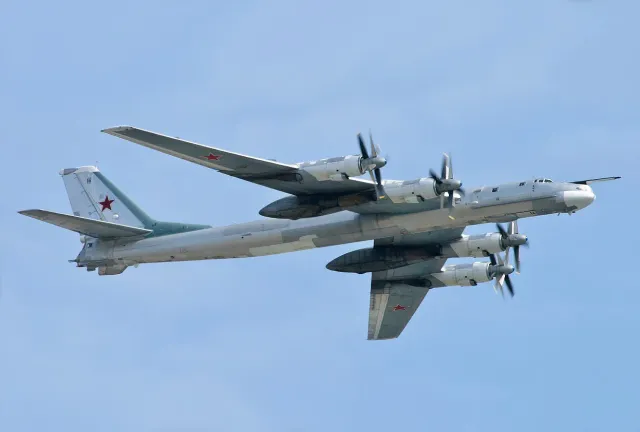
Strategic missiles
LGM-30G Minuteman III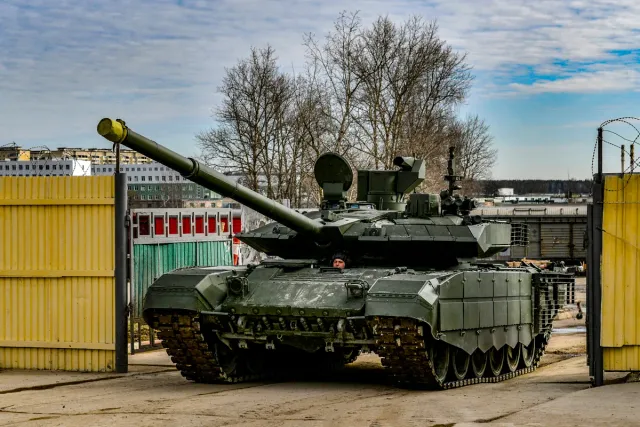
Main battle tank
T-90M obr. 2022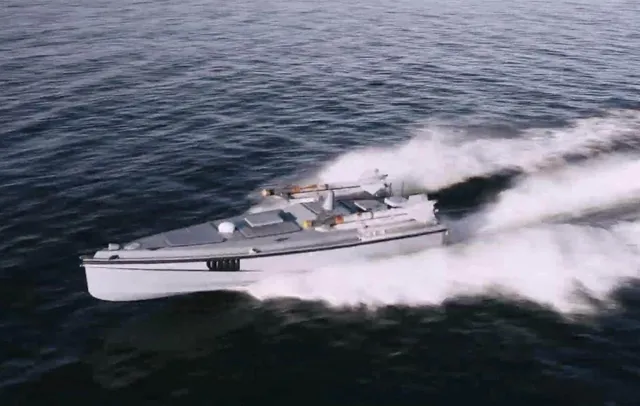
UAV / drone
Bayraktar TB3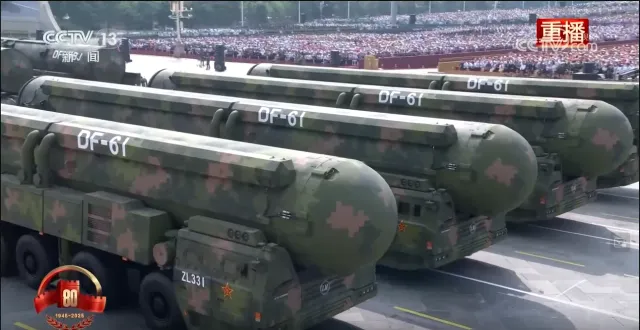
Related reading


