How Old Are the Weapons Still in Frontline Service?
Across 796 dated systems in the WeaponSpecs database, the average bomber design is 40 years old, roughly four times the average UAV design's age.

Via Wikipedia, Boeing B-52 Stratofortress (shown for identification)
In September 2021, Boeing and Rolls-Royce announced a program to re-engine the entire B-52H fleet, swapping the bomber’s 1960s-era Pratt & Whitney TF33 engines for new F130 turbofans, part of a broader avionics and radar overhaul aimed at keeping the aircraft flying into the 2050s (Aerotech News & Review; Air & Space Forces Magazine). The B-52H’s basic design dates to 1961. If the re-engining program holds, a single airframe type will have flown combat and deterrence missions for roughly 90 years, a service life with no real precedent among combat aircraft.
That is not an outlier data point. It is the extreme end of a pattern that runs across the entire WeaponSpecs database. Of 1,038 systems currently cataloged, 796, or 76.7 percent, disclose a release year. Averaging that figure by system category shows bombers and pistols tied as the oldest-design categories in the database, averaging a design year around 1986, about 40 years old in 2026, while UAVs and electronic-warfare systems average around 2015.5, roughly 10 to 11 years old. That is close to a 4x gap in average design age between the oldest and youngest categories still in front-line service.
Which weapon category has the oldest average design in the database?
Bombers and pistols top the list, and the reasons behind each are different. Bombers are few, expensive, and hard to replace on any fast timeline, so a handful of Cold War-lineage airframes keep flying while successor programs mature. Pistols are secondary weapons that armies simply do not prioritize for replacement, and the basic mechanism, a striker or hammer firing a metallic cartridge, has not needed reinvention in a century.
Bombers and pistols average nearly four times the design age of UAVs, the youngest category in the database.
| Category | Systems (n) | Avg. design year | Avg. age in 2026 |
|---|---|---|---|
| Bomber | 9 | 1986.4 | 39.6 years |
| Pistol | 21 | 1986.5 | 39.5 years |
| Rifle | 75 | 1995.6 | 30.4 years |
| Artillery | 45 | 2000.0 | 26.0 years |
| IFV | 60 | 2001.3 | 24.7 years |
| Fighter | 59 | 2003.0 | 23.0 years |
| Helicopter | 46 | 2003.4 | 22.6 years |
| Trainer | 16 | 2004.3 | 21.8 years |
| Tank | 53 | 2005.1 | 20.9 years |
| Submarine | 32 | 2005.6 | 20.4 years |
| Software | 16 | 2006.6 | 19.4 years |
| Missile | 136 | 2007.1 | 18.9 years |
| Transport | 16 | 2007.3 | 18.8 years |
| Strategic Missile | 10 | 2009.8 | 16.2 years |
| Air Defense | 58 | 2010.2 | 15.8 years |
| Warship | 70 | 2011.3 | 14.7 years |
| UAV | 59 | 2015.5 | 10.5 years |
Three smaller categories sit outside the ranked table above because their sample sizes are too thin to rank with confidence, but they point the same direction. Electronic-warfare systems (n=6) average 2015.5, tied with UAVs as the youngest cataloged category. CBRN-defense systems (n=5) average 2001.8, about 24.2 years. The catch-all “other” category (n=4) is excluded entirely as too heterogeneous to interpret as a group. None of the three change the overall pattern: newer mission sets skew young, legacy platform types skew old.
The same skew shows up in cost data. WeaponSpecs’ own price transparency analysis found only 22 percent of the database discloses a unit cost at all, and the categories that disclose least, munitions and missiles, overlap with categories in the middle of this design-age ranking. Disclosure and design age look like separate transparency problems, but they tend to travel together: mature program lines have had more decades to accumulate public reporting on both cost and origin. For the bomber category specifically, WeaponSpecs has also ranked strategic bombers by range, which surfaces the same Cold War-lineage airframes discussed below.
What’s the single oldest weapon design still listed as active?
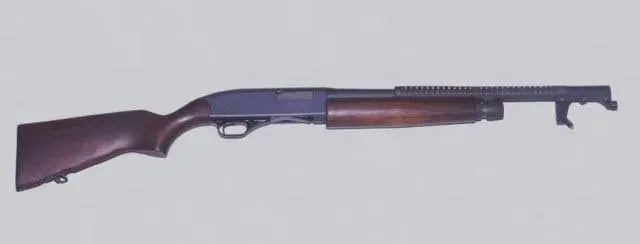
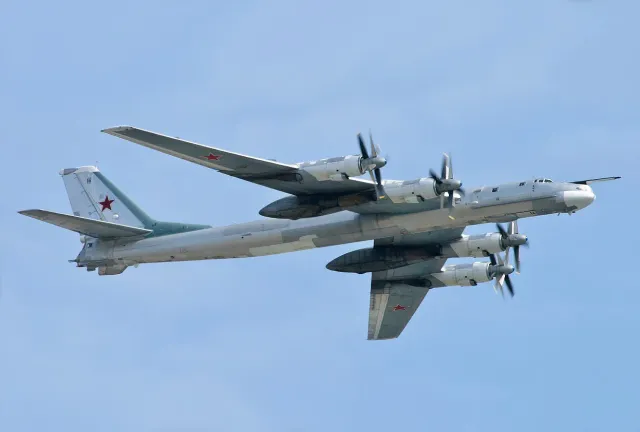
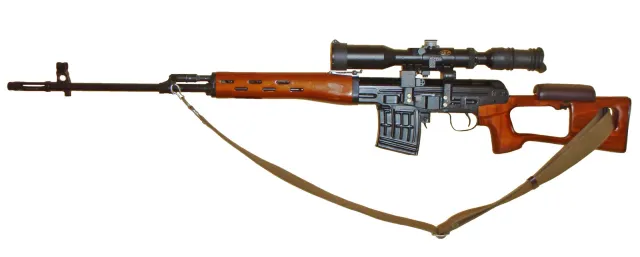
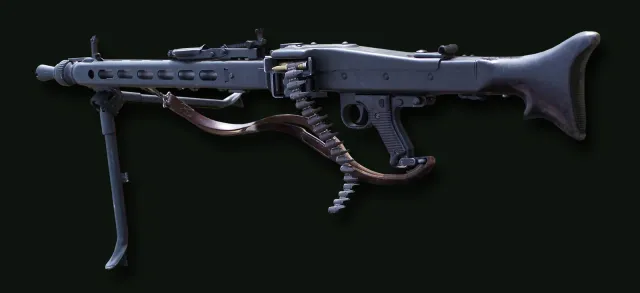
The Remington 870 pump shotgun tops the list at a 1950 release year, still carried with “active” status in the database. Behind it: the Tu-95MS Bear, a 1956 bomber design still flying strategic patrol and standoff-missile missions for Russia. Then the B-52H Stratofortress at 1961, discussed above. The BM-21 Grad rocket launcher (1963) and the SVD Dragunov marksman rifle (1963) both remain in front-line inventories worldwide, and the MG3 machine gun rounds out the list at 1968. All of them are still fielded, not museum pieces.
What connects a 1950 shotgun, a 1956 bomber, and a 1963 rocket launcher is not neglect. Each occupies a role where the underlying mechanism has not moved enough to justify wholesale replacement, or where replacement is simply too expensive to rush. A pump shotgun does the same job in 2026 that it did in 1950. A rifle firing through a gas or recoil-operated action works on the same principle it did 60 years ago. A strategic bomber is a multi-billion-dollar procurement decision no air force makes lightly or often.
How is the database’s system population spread across design decades?
Looking at all 796 dated systems by decade tells a more optimistic story than the “oldest active” list above might suggest. The single largest band is the 2010s, accounting for just under a third of the dated database.
30.7 percent of the dated database, 244 systems, predates the 1990s entirely, a real legacy tail sitting behind the 2010s-heavy majority.
| Band | Count | Share |
|---|---|---|
| Pre-1980 | 71 | 8.9% |
| 1980s | 78 | 9.8% |
| 1990s | 95 | 11.9% |
| 2000s | 157 | 19.7% |
| 2010s | 261 | 32.8% |
| 2020s | 134 | 16.8% |
Just under a third of the database’s dated systems, 261 of 796, are 2010s-designed, the single largest band by a comfortable margin. But a real minority, 244 systems or 30.7 percent, predates the 1990s entirely: the pre-1980 and 1980s bands combined. That is a meaningful legacy tail, hardware and platform types still cataloged as active, legacy, or announced that were conceived before the Berlin Wall came down. The UAV type page sits almost entirely inside the 2010s-2020s bands, the visible edge of the same pattern the category table above already showed.
Why does a 1960s bomber design still fly combat missions in 2026?
The B-52 answers this question directly. The airframe’s basic aerodynamic design is 65 years old, but almost nothing that actually matters for a 2026 mission, its engines, radar, and avionics, has stayed frozen at 1961 standards. The Air Force and Boeing’s re-engining program replaces the TF33 engines with new Rolls-Royce F130 turbofans, alongside a modernized AESA radar and an avionics overhaul, specifically to keep the aircraft flying and relevant into the 2050s (Aerotech News & Review; Air & Space Forces Magazine). A 90-year potential service life is not something any other combat aircraft has attempted, and it only works because the Air Force keeps replacing everything inside the airframe except the airframe.
Russia has run a similar playbook on its own Cold War bomber. The Tu-95MS Bear, a 1956 turboprop design, remains in front-line service today not because it was left untouched but because it has cycled through repeated avionics and weapons-system upgrades over its service life, most recently to carry modern standoff cruise missiles rather than the gravity bombs it was originally built around. WeaponSpecs’ strategic bomber range comparison covers the Tu-95MS’s disclosed range figures in more detail. The pattern across both airframes is the same: design age describes the shape of the platform, not the currency of what is inside it.
What does “release year” actually measure, and where can it mislead?
Release year in this database marks when a system’s design or type was introduced, generally when the type or its first production variant entered service. It is a lineage marker, not a hardware-freshness gauge, and the distinction matters most for weapons that get continuously modernized without ever changing name or basic form.
Small arms make the clearest case. The SVD Dragunov (1963), the MG3 (1968), and the PKM machine gun (1969) are all still issued in front-line inventories across dozens of countries today, more than half a century after their design dates. That is not evidence of stalled procurement. It is evidence that the core mechanism, gas-operated automatic fire from a rifle-caliber or intermediate cartridge, reached a mature, “good enough” design decades ago, and militaries have kept manufacturing and issuing variants of that mature design rather than reinventing it. A rifle’s release year tells you when its operating system was invented. It does not tell you whether the specific example on a soldier’s shoulder was built last year or thirty years ago, or how many small refinements, optics rails, furniture, ammunition, have layered on top since.
Read release year for what it is: a starting point for asking how a category evolves, not a verdict on whether any individual system in front-line service today is behind the times.
If you are building out a threat or capability profile and design-age assumptions like these are shaping your comparisons, run your own numbers in the Advisor rather than eyeballing a spec sheet. It pulls from the same underlying database this analysis does, so the same caveats about disclosure gaps and state claims apply, but it lets you filter and compare against the categories and systems that actually matter for your use case.
Systems in this comparison
Every system covered above, with its photo and, where available, a video. Tap a card to open the full spec sheet.
Compare these side by side →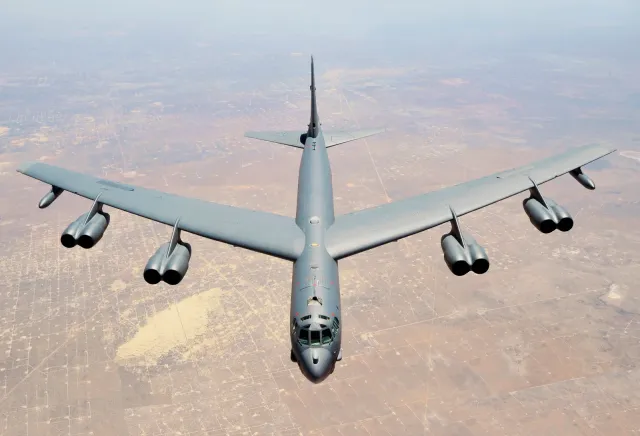
Frequently asked questions
What does "release year" mean in the WeaponSpecs database, and is it the same as when a weapon entered service? +
It is the design or type-introduction year cataloged from each system's source, generally the year the type or its first production variant entered service, not the year of a first prototype flight. It does not capture mid-life remanufacturing. The B-52H entered service in 1961, but individual airframes have since been through multiple avionics, radar, and now engine overhauls. Treat release year as a marker of design lineage, not the literal age of the hardware sitting on the ramp today.
Why are bombers and pistols tied as the oldest-average-design categories? +
Bombers have only 9 entries in the database, and strategic bombers are enormously expensive and slow to replace, so a handful of Cold War-lineage airframes, the B-52, the Tu-95 and Tu-160 family, China's H-6, still carry the mission while successor programs like the B-21 Raider are still ramping up. Pistols are a different story: sidearms are a secondary weapon that militaries replace far less aggressively than rifles or missiles, and the core mechanism, a hammer or striker firing a metallic cartridge, has not fundamentally changed since early 20th-century designs. Both samples are small, 9 bombers and 21 pistols, so this describes what is cataloged in the database, not a claim about every bomber or pistol on earth.
Is a 1950s- or 1960s-designed weapon automatically obsolete? +
No, and the B-52 is the clearest counterexample. Continuous avionics, radar, and now engine upgrades keep the aircraft's mission-relevant systems current even though the airframe's basic design is over 60 years old. Design age measures when a type was introduced, not how current its actual hardware and software are today.
Why is the UAV category the youngest on average, and does that make it the best-designed category? +
UAVs as a mass-fielded weapon barely existed before the 2000s through 2020s, spanning the war-on-terror era and the Ukraine war, so the whole category's population skews recent almost by definition. It is a young category, not evidence that younger designs are inherently better. Design age measures when a type was introduced, not combat effectiveness on any given metric.
Does this dataset cover every weapon system in service worldwide? +
No. The WeaponSpecs database currently catalogs 1,038 systems, of which 796, or 76.7 percent, have a disclosed release year. The remaining 242 do not and are excluded from this analysis. It is a curated open-source dataset built from public specification data, not an exhaustive global order of battle, and it skews toward systems with public documentation available.
Related reading


