Germany orders 14 AeroVironment Puma drones for naval forces
A $30.9 million NSPA contract equips Germany's naval special operations forces with 14 laser-designating Puma reconnaissance drones by late 2026.
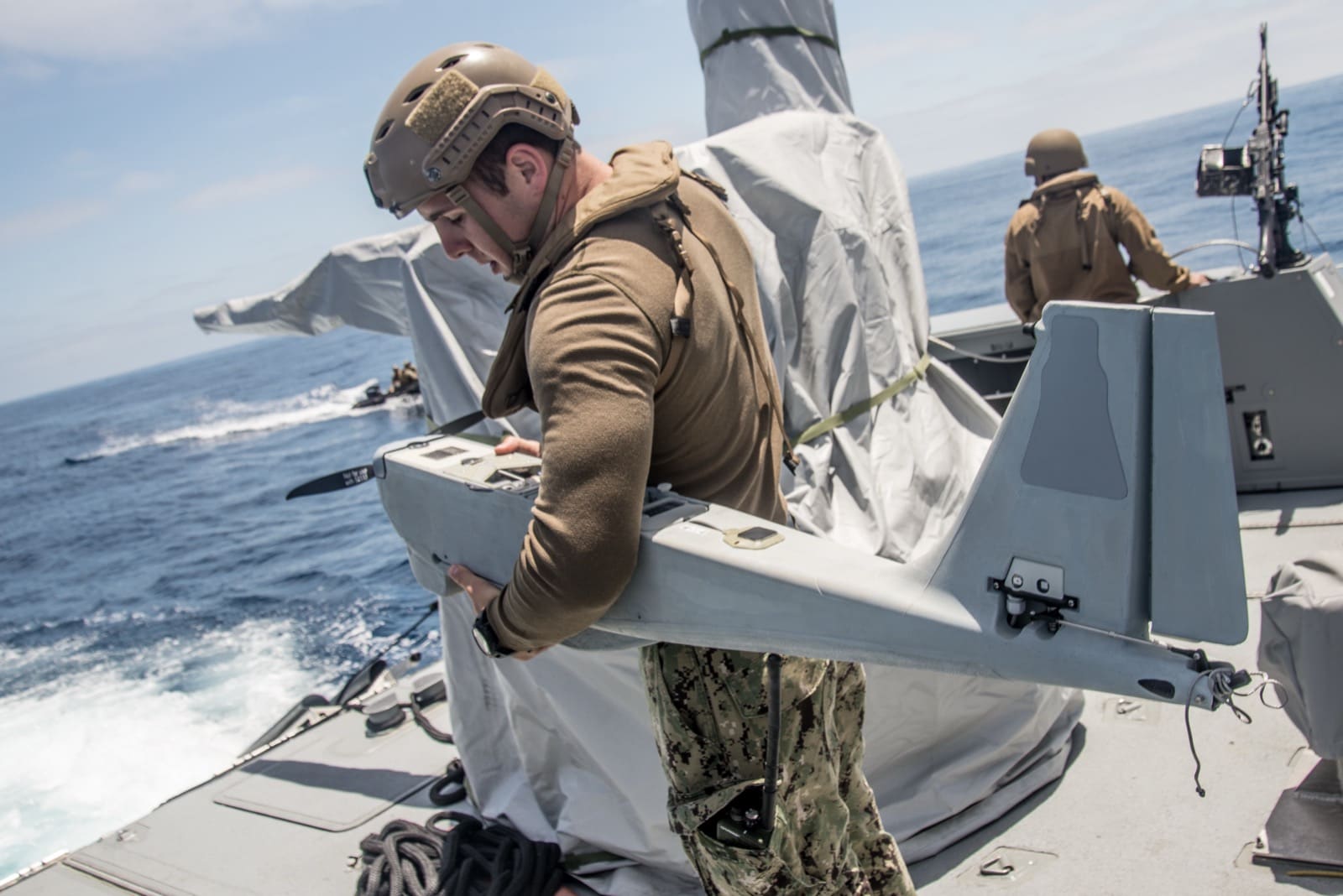
U.S. Navy photo, via Wikimedia Commons, public domain
AeroVironment has been awarded a $30.9 million purchase order, placed through the NATO Support and Procurement Agency, to supply Germany’s Bundeswehr with 14 Puma unmanned aircraft systems for its LARUS maritime reconnaissance program, according to AeroVironment’s own announcement, corroborated by Army Recognition and UAS Weekly. Deliveries are due no later than late 2026, and Army Recognition reports the systems are intended specifically for Germany’s naval special operations forces, strengthening maritime reconnaissance, small-unit targeting and networked operations rather than a general-purpose army reconnaissance role.
What LARUS actually buys
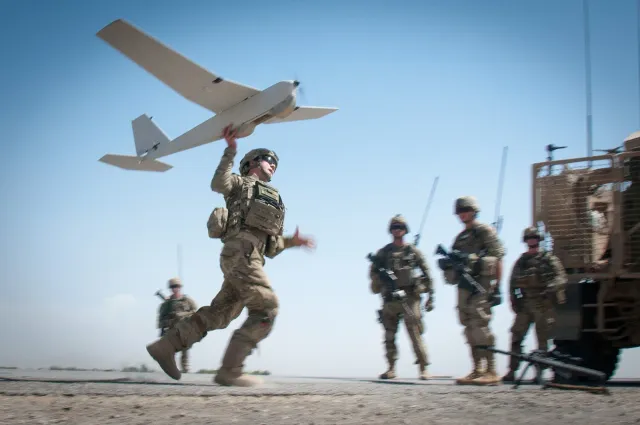
LARUS, short for Luftgestützte Aufklärung mit Unbemannten Systemen (“airborne reconnaissance with unmanned systems”), is managed by Germany’s BAAINBw defense procurement office. The order covers a mix of two Puma variants: the smaller Puma 3 AE, at 2.8 meters wingspan, 1.4 meters long and about 7 kilograms, flies up to 3 hours and carries a 1.8-to-2.9-kilogram payload; the larger Puma LE, at 4.6 meters wingspan and roughly 11 kilograms, extends endurance to 6.5 hours with a 2.5-kilogram payload. Both share the same tiered communications range, 20, 40 or 60 kilometers depending on antenna configuration, and both launch by hand or rail without needing a runway, a meaningful feature for small teams operating from patrol boats or coastal positions rather than fixed airfields.
The $30.9 million figure covers considerably more than airframes. AeroVironment’s release lists the HD59 laser-designating electro-optical/infrared payload, a separate signals-intelligence payload, vertical take-off and landing kits, Tomahawk Kinesis-branded ground control stations, Mobile Ad hoc Network radio relays, Autonomy Retrofit Kits, plus field repair kits, launch systems, batteries and operator training. That bundling makes any back-of-envelope per-unit price, roughly $2.2 million if the full $30.9 million were divided evenly across 14 systems, a poor read of what a single airframe actually costs, since the same total also buys sensors, control stations, spares and instruction that aren’t purchased per-drone.
Why a laser designator matters for a hand-launched drone
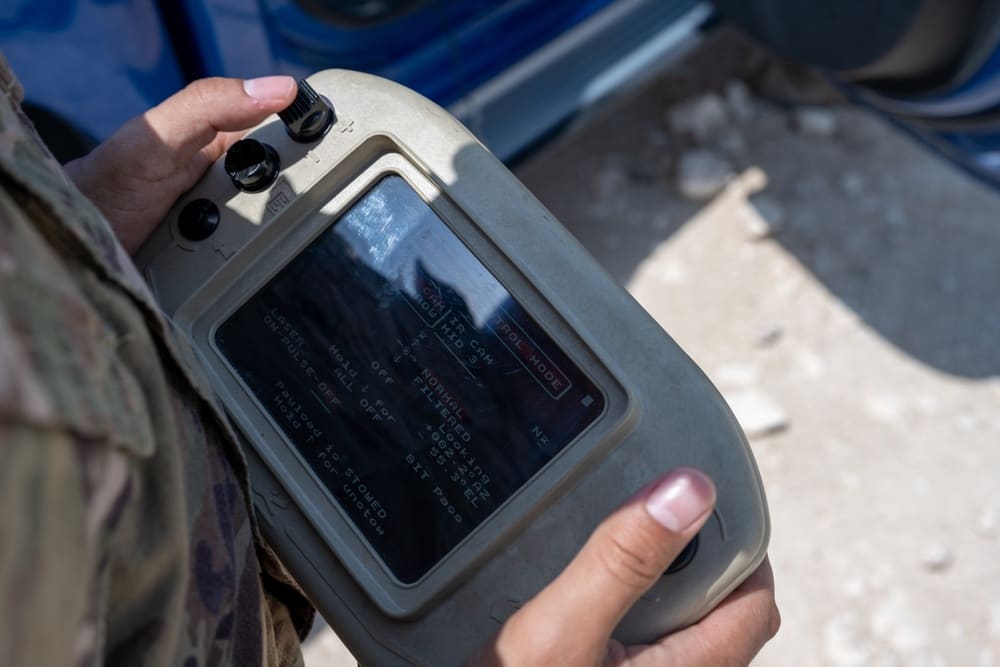
The HD59 payload is a compact, STANAG 3733-compliant laser designator, weighing under 2 kilograms, bolted onto an aircraft that a two-person team can carry in a backpack and launch by hand. That combination is the actual point of this order: it lets a small maritime special-operations element mark a target precisely enough to guide a laser-guided munition, or pass exact coordinates to another unit, without needing a larger crewed aircraft or a dedicated targeting pod overhead. Paired with the MANET relay, which lets multiple Puma units bounce data between each other to extend effective range beyond any single aircraft’s own radio link, the system is built around the specific problem of littoral and coastal reconnaissance: open water offers no terrain to hide a radio signal behind, but distance and time-on-station both remain real constraints for a team working from a small boat or an exposed shoreline position.
AeroVironment chairman and CEO Wahid Nawabi framed the order as continuity rather than a new relationship: “Germany has been a long-standing Puma operator, and this award represents a decisive step into the fully modernized Puma family.” Neither AeroVironment’s release nor the trade coverage reviewed for this story named the specific German naval special-operations unit that will operate the new systems, so this piece does not assert a designation beyond what Army Recognition’s reporting already states.
Part of a broader wave, not an isolated buy
This order lands in the middle of a run of German procurement announcements WeaponSpecs has tracked through July: a second Arrow-3 exo-atmospheric missile-defense battery for Bavaria, and a separate commitment to host U.S. Typhon launchers firing Tomahawk cruise missiles on German soil. Those are strategic and deep-strike investments; the Puma order sits at the opposite end of the spectrum, a comparatively small, tactical ISR buy for a niche naval special-operations requirement. But taken together, they describe the same underlying pattern: Germany filling out capability gaps, from unarmed reconnaissance drones through missile defense to long-range strike, across nearly every rung of its post-2022 rearmament, using the same NATO-brokered procurement mechanism, NSPA, that also handled Poland’s recent Patriot GEM-T interceptor deal.
Figures per AeroVironment's own published specifications for the two variants Germany ordered. The larger Puma LE more than doubles time-on-station over the smaller Puma 3 AE, a tradeoff for its larger airframe and reduced portability.
Sources
- AV Awarded $30 Million Contract to Provide Puma Systems Stack for Germany's LARUS Program — AeroVironment (official press release), Jul 7, 2026
- Germany Buys 14 AeroVironment Puma Drones to Equip Naval Special Forces with Laser Targeting — Army Recognition, Jul 8, 2026
- AeroVironment Awarded $30 Million Contract to Deliver Puma UAS Systems for Germany's LARUS Program — UAS Weekly, Jul 9, 2026
Systems mentioned
Every system named in this story, with its photo and, where available, a video. Tap a card to open the full spec sheet.
UAV / drone
RQ-20 PumaFrequently asked questions
Why only 14 Puma systems? +
The $30.9 million purchase order covers 14 integrated Puma systems (a mix of Puma 3 AE and Puma LE variants) for Germany's LARUS maritime reconnaissance requirement, delivered no later than late 2026. None of the sources reviewed describe this as a final or capped buy, only as the scope of this specific NSPA order; a follow-on order is plausible but unannounced.
What does the HD59 laser designator actually let an operator do? +
HD59 is a STANAG 3733-compliant, roughly 50-milliwatt-class electro-optical/infrared payload under 2 kilograms that lets a Puma operator mark a target with a laser spot precise enough to guide a laser-guided munition, or simply hand off exact coordinates to another unit. For a small special-operations team, that turns a hand-launched surveillance drone into a targeting node without needing a larger, dedicated ISR aircraft overhead.
What does the MANET relay extend, exactly? +
Puma's Mobile Ad hoc Network radio lets multiple aircraft (or ground nodes) relay data to each other, extending the effective control and sensor-feed range beyond what a single Puma's own antenna link would reach on its own. Over open water, where there is no terrain to mask a radio signal but distance itself is still the limiting factor, that relay capability is particularly useful for the kind of coastal and littoral reconnaissance LARUS is built around.
Does this give Germany any new strike or air-defense capability? +
No. Puma is an unarmed intelligence, surveillance and reconnaissance platform; the laser designator can cue a separate weapon system but the drone itself carries none. It sits in a completely different mission set and altitude regime from Germany's other recent procurement moves this year, its Arrow-3 exo-atmospheric interceptor buildout and its Typhon/Tomahawk deep-strike commitment, both covered separately by WeaponSpecs.
More news