What 'Range' Means on an Air-Defense Spec Sheet
Across 68 air-defense systems in our database, published range spans 3 km to 3,000 km, a 1,000x gap that is three missions, not one spec race.
WeaponSpecs tracks 74 air-defense systems, and 68 of them, 92 percent, publish an engagement range figure. Line those 68 numbers up and they span from 3 km to 3,000 km, a gap of exactly 1,000x between the shortest and the longest. That spread is not one spec race with 68 competitors. It is three different missions, point-defense, area-defense, and strategic exo-atmospheric intercept, all filing their numbers into the same database field, and the system sitting at the very top of that ranking, China’s HQ-19 at a claimed 3,000 km, is an unverified state figure that has never intercepted anything in real combat.
How wide is the range gap across the 68 systems that publish one?
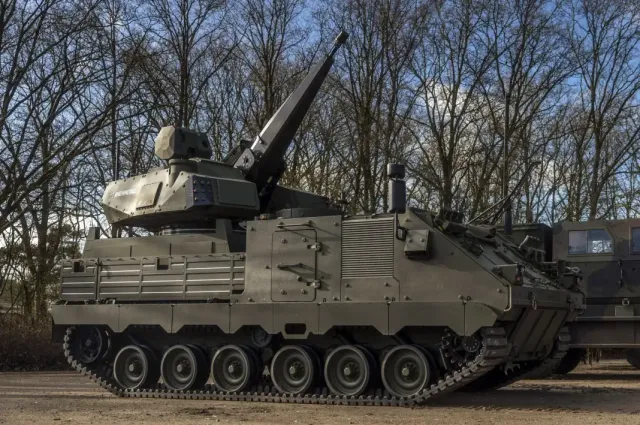
Of WeaponSpecs’ 74 tracked air-defense systems, 68 publish an engagement range figure; six do not: Arrow 4, GURZ, HQ-29, IBCS, Oerlikon Millennium, and Roadrunner-M. Among the 68 that do, the shortest published figure belongs to Germany’s Skyranger 30 at 3 km, a turret-mounted 30 mm counter-drone gun. The longest belongs to China’s HQ-19 at a claimed 3,000 km. Divide one into the other and the ratio is exactly 1,000. No other single spec field in the database produces a gap that size on one ranked list, because no other field is quietly measuring three unrelated jobs at once and calling them by the same name.
Why isn’t this one spec race? Three tiers, three different missions
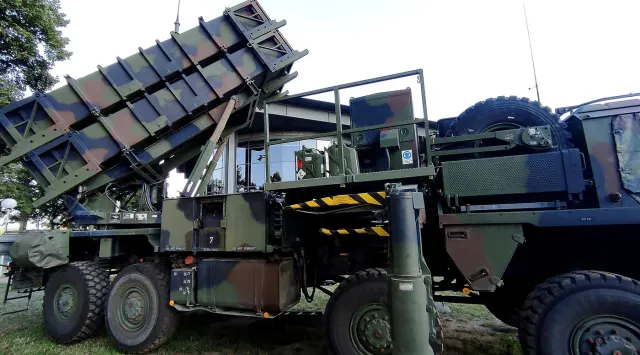
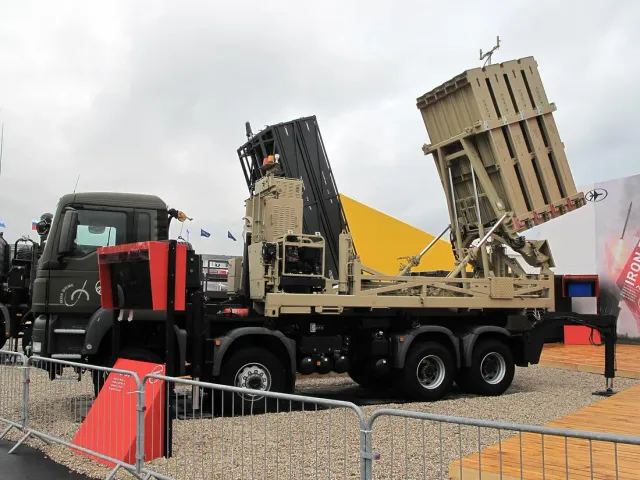
Sort those same 68 systems by mission instead of raw number and the picture reorganizes completely. Six systems, each built to reach an intercept altitude of 50,000 meters or higher, genuine near-space or exo-atmospheric ballistic-missile defense, form a strategic tier: HQ-19, Arrow 3, S-500 Prometheus, THAAD, L-SAM, and Arrow 2. Forty-one systems, spanning roughly 20 km to 400 km at altitudes typically under 35,000 meters, form an area-defense tier, the workhorse layer that includes the Patriot family, S-400 Triumf, SAMP/T, Barak 8, NASAMS, IRIS-T SLM, and Iron Dome. The remaining 21 systems, everything under 20 km, form a point-defense tier: CIWS turrets and short-range air-defense systems like Skyranger 30, Phalanx, Iron Beam, and RBS 70. A short range in that last group is not a shortfall, it is the design brief. A ship-mounted CIWS or a counter-drone gun is built to react in seconds against something already close, not to cover a country’s airspace.
Color alone tells the story here. Strategic-tier systems, in red, do not cluster at the top of a pure range ranking, they scatter from rank 1 (HQ-19) down through rank 9 (Arrow 2), interleaved with area-defense systems that share a comparable or lower intercept altitude. Sorting by range and sorting by mission produce two different lists.
All 68 air-defense systems, ranked by engagement range
The full list makes the interleaving explicit. Strategic, area, and point-defense systems sit side by side once everything is sorted purely by the number, which is exactly the confusion a raw ranking creates if a reader does not also check the tier.
| System | Country | Range (km) | Tier | Status |
|---|---|---|---|---|
| HQ-19 | China | 3,000 | Strategic | Active (claim) |
| Arrow 3 | Israel | 2,400 | Strategic | Active |
| S-500 Prometheus | Russia | 600 | Strategic | Active (claim) |
| S-300V4 | Russia | 400 | Area | Active (claim) |
| S-400 Triumf | Russia | 400 | Area | Active (claim) |
| Bavar-373 | Iran | 300 | Area | Active (claim) |
| David’s Sling | Israel | 300 | Area | Active |
| HQ-9 | China | 200 | Area | Active (claim) |
| Sky Bow III | Taiwan | 200 | Area | Active |
| THAAD | United States | 200 | Strategic | Active |
| S-300PMU2 Favorit | Russia | 195 | Area | Active (claim) |
| Arman | Iran | 180 | Area | Active (claim) |
| Patriot PAC-2 | United States | 160 | Area | Legacy |
| Barak 8 | Israel | 150 | Area | Active |
| Barak LR | Israel | 150 | Area | Active |
| Barak MX | Israel | 150 | Area | Active |
| L-SAM | South Korea | 150 | Strategic | Active |
| Patriot GEM-T | United States | 150 | Area | Active |
| SİPER | Turkey | 150 | Area | Active |
| 15th Khordad | Iran | 120 | Area | Active (claim) |
| S-350 Vityaz | Russia | 120 | Area | Active (claim) |
| SAMP/T (Aster 30) | France | 120 | Area | Active |
| HQ-22 | China | 100 | Area | Active (claim) |
| Arrow 2 | Israel | 90 | Strategic | Active |
| Khordad-3 | Iran | 75 | Area | Active (claim) |
| Akash-NG | India | 70 | Area | Active |
| Buk-M3 | Russia | 70 | Area | Active (claim) |
| Iron Dome | Israel | 70 | Area | Active |
| Patriot PAC-3 | United States | 60 | Area | Active |
| Buk-M2 | Russia | 45 | Area | Active (claim) |
| CAMM-ER | United Kingdom | 45 | Area | Active |
| HQ-16 | China | 40 | Area | Active (claim) |
| IRIS-T SLM | Germany | 40 | Area | Active |
| Cheongung II (KM-SAM Block II) | South Korea | 40 | Area | Active |
| SPYDER | Israel | 35 | Area | Active |
| Akash | India | 30 | Area | Active |
| Pantsir-SM | Russia | 30 | Area | Active (claim) |
| Azarakhsh | Iran | 25 | Area | Active (claim) |
| C-Dome | Israel | 25 | Area | Active |
| Land Ceptor (CAMM) | United Kingdom | 25 | Area | Active |
| HISAR-O | Turkey | 25 | Area | Active |
| NASAMS | Norway | 25 | Area | Active |
| Sky Sabre | United Kingdom | 25 | Area | Active |
| K-SAAM (Haegung) | South Korea | 20 | Area | Active |
| DRACO 76mm turret | Italy | 20 | Area | Active |
| Pantsir-S1 | Russia | 20 | Area | Active (claim) |
| VL MICA | France | 20 | Area | Active |
| Tor-M2 | Russia | 16 | Point | Active (claim) |
| HISAR-A+ | Turkey | 15 | Point | Active |
| HQ-7 | China | 15 | Point | Active (claim) |
| Coyote Block 2 | United States | 15 | Point | Active |
| Levent | Turkey | 15 | Point | Announced |
| IRIS-T SLS | Germany | 12 | Point | Active |
| Crotale NG | France | 11 | Point | Active |
| Iron Beam | Israel | 10 | Point | Active |
| 9K33 Osa | Russia | 10 | Point | Active (claim) |
| Phalanx CIWS (Mk 15) | United States | 9 | Point | Active |
| RBS 70 | Sweden | 8 | Point | Active |
| RapidRanger | United Kingdom | 7 | Point | Active |
| Gepard | Germany | 6 | Point | Legacy |
| 9K35 Strela-10 | Russia | 5 | Point | Active (claim) |
| GOKDENIZ CIWS | Turkey | 4 | Point | Active |
| Korkut | Turkey | 4 | Point | Active |
| Skynex | Germany | 4 | Point | Active |
| RAPIDFire | France | 4 | Point | Active |
| Drone Dome | Israel | 3 | Point | Active |
| K30 Biho | South Korea | 3 | Point | Active |
| Skyranger 30 | Germany | 3 | Point | Active |
What happens when you isolate the six-system strategic tier alone?
Even inside that six-system strategic tier, the gap does not close, it just gets more interesting. Range among the six spans 90 km for Arrow 2 up to 3,000 km for HQ-19, a 33x spread among systems built for a comparable broad mission. It is not simply that the longer-range system also reaches higher: THAAD’s own claimed engagement altitude, 150,000 meters, equals HQ-19’s own claimed engagement altitude, also 150,000 meters, yet THAAD’s declared range is 200 km, fifteen times less than HQ-19’s 3,000 km.
The reason is that “engagement range” is not measured the same way for every exo-atmospheric system. Wikipedia’s own entry on HQ-19, the same source WeaponSpecs cites as this system’s data source, describes it as designed to counter medium-range and intermediate-range ballistic missiles, a threat classification band that runs roughly 1,000 km to 5,500 km. HQ-19’s headline 3,000 km figure tracks the range-class of the incoming missile it is built to intercept, not a defended-radius figure the way THAAD’s 200 km is normally read. This is a claimed figure from a Chinese state-linked program, not an independently verified one, and the same Wikipedia article notes HQ-19’s confirmed public test history amounts to a small number of flight tests, most recently reported in February 2021, that demonstrated a hit at 200 km altitude and roughly Mach 29 closing speed. The one number about HQ-19 that has actually been demonstrated publicly, 200 km, lines up far closer to THAAD’s entire declared range than to HQ-19’s own 3,000 km headline. Beijing has released little further technical detail, and the system was not shown publicly until the 2024 Zhuhai Airshow despite reportedly entering limited service back in 2018.
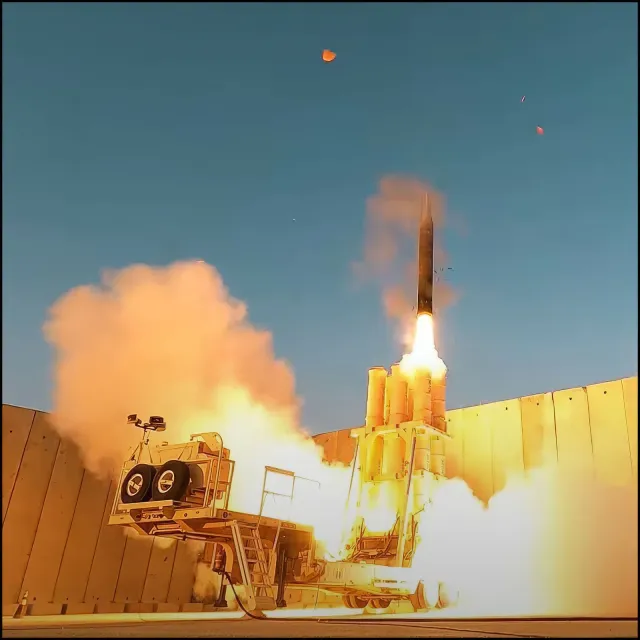
Israel’s own Arrow program makes a version of the same point from the other direction, in its own official language, when it describes the system as covering two distinct physical regimes rather than one range figure:
“The system provides exo-atmospheric and endo-atmospheric interception capabilities against ballistic missile threats, protecting the State of Israel from strategic long-range threats,” said Maj. Gen. (Res.) Amir Baram, Director General of the Israel Ministry of Defense, on an accelerated Arrow production contract (Breaking Defense, 9 July 2025).
That is exactly the tiering distinction a single engagementRangeKm field collapses into one number. Exo-atmospheric intercept and endo-atmospheric intercept are different jobs even inside one country’s own missile family, let alone across six different national programs each reporting a single figure for what is really a multi-part engagement envelope.
Which of these numbers have actually been proven in real combat?
THAAD has a real, if mixed, combat record. Its first-ever intercept came from a UAE-owned battery against a Houthi missile on 17 January 2022; a US battery deployed in Israel first fired in combat on 27 December 2024 against a missile launched from Yemen, and by March 2025 US and allied THAAD batteries had intercepted six Houthi missiles. That record is not unbroken: THAAD failed twice in one week in May 2025, on the 4th and the 9th, against Houthi missiles reportedly diving in at hypersonic terminal speed, one of which struck near Ben Gurion Airport’s main terminal. During Iran’s June to July 2025 missile barrages against Israel, US forces fired roughly 150 THAAD interceptors in a matter of weeks, about a quarter of every THAAD interceptor the United States had ever funded.
Arrow 3 has a comparably real record. It intercepted the large majority of roughly 120 Iranian ballistic missiles fired at Israel on 13 to 14 April 2024, and engaged roughly 180 more Iranian ballistic missiles on 1 October 2024, though at a somewhat lower interception rate, with some missiles reaching Nevatim and Tel Nof air bases.
HQ-19 has neither. It has never intercepted a real inbound missile in an actual conflict. Its 3,000 km figure, its 150,000-meter altitude, and its Mach 29 closing speed are all state claims resting on a handful of publicly reported flight tests, the same standing as any other Russian, Chinese, Iranian, or North Korean figure in this database: worth tracking, not worth treating as settled fact.
How should a procurement officer or analyst actually read this database?
Do not rank engagement range across the full air-defense category and treat the top of the list as the most capable system. Check the tier first, either by mission description or by cross-checking engagement altitude, because a 400 km area-defense figure and a 400 km strategic figure describe entirely different jobs even at an identical number. Then check who is publishing the figure: THAAD and Arrow 3 both carry real combat intercepts behind their numbers; every Russian, Chinese, Iranian, and North Korean figure in this dataset, HQ-19’s 3,000 km included, is a claim until an independent source says otherwise. Range alone was never the whole spec. Build a side-by-side comparison across the full air-defense database in WeaponSpecs’ compare tool, or run a threat profile through the Advisor before assuming a bigger number means a more capable system.
Sources
Systems in this comparison
Every system covered above, with its photo and, where available, a video. Tap a card to open the full spec sheet.
Compare these side by side →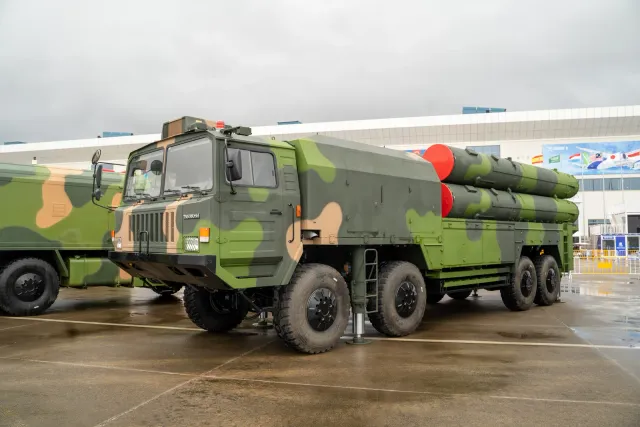

Frequently asked questions
Why does HQ-19 show a 3,000 km engagement range while THAAD shows only 200 km? +
Because the two numbers describe different things. THAAD's 200 km is normally read as a defended-radius figure. HQ-19's claimed 3,000 km, per Wikipedia's entry on the system, tracks the range-class of the medium- and intermediate-range ballistic missiles it is built to intercept, roughly a 1,000 to 5,500 km threat band, not a coverage envelope. The two systems even share the same claimed intercept altitude, 150,000 meters, which is what makes the range gap a measurement-convention issue rather than a fifteen-fold capability gap.
What is the practical difference between point-defense range and strategic missile-defense range? +
Point-defense systems, under 20 km, exist to react in seconds against something already close: a drone, a rocket, an incoming shell. Short range there is the design goal, not a shortfall. Strategic exo-atmospheric systems, defined here by an intercept altitude of 50,000 meters or more, exist to hit a ballistic missile in or near space, hundreds or thousands of kilometers from where it will land. The two numbers are not on the same axis even though they sit in the same database field.
Have Arrow 3 or THAAD actually been used in combat? +
Yes, both have real combat records, unlike HQ-19. THAAD's first-ever combat intercept came from a UAE-owned battery against a Houthi missile on 17 January 2022; a US battery in Israel first fired in combat on 27 December 2024 and had intercepted six Houthi missiles by March 2025, though it also failed twice in one week in May 2025. Arrow 3 intercepted the large majority of roughly 120 Iranian ballistic missiles fired at Israel on 13 to 14 April 2024, and engaged roughly 180 more on 1 October 2024 at a lower interception rate.
Why do point-defense systems like Skyranger 30 only cover 3 km? Is that a weakness? +
No. Skyranger 30 is a 30 mm counter-drone and short-range air-defense turret, not a missile-defense battery, and 3 km is the reaction envelope that job needs. Judging it against a 3,000 km strategic system's range would be like judging a fire extinguisher against a fire department's reach. Different mission, different number, same spec-sheet field.
Is China's HQ-19 range figure independently verified? +
No. It is a Chinese state and manufacturer claim, and the system carries WeaponSpecs' standard state-claim caveat for Russia, China, Iran, and North Korea. HQ-19 has never intercepted anything in real combat, was not shown publicly until the 2024 Zhuhai Airshow despite reportedly entering limited service in 2018, and its confirmed public test history amounts to a small number of flight tests, the most recently reported in February 2021, that demonstrated a hit at 200 km altitude, a figure far closer to THAAD's whole declared range than to HQ-19's own 3,000 km headline.
Related reading


