Documents
 United States
 Colt
M4A1
A gas-operated, magazine-fed carbine derived from the M16 rifle, adopted as the standard individual weapon of the U.S. Army and Marine Corps. The M4A1 variant features a full-auto fire-control group and heavier barrel profile in place of the original three-round-burst M4.
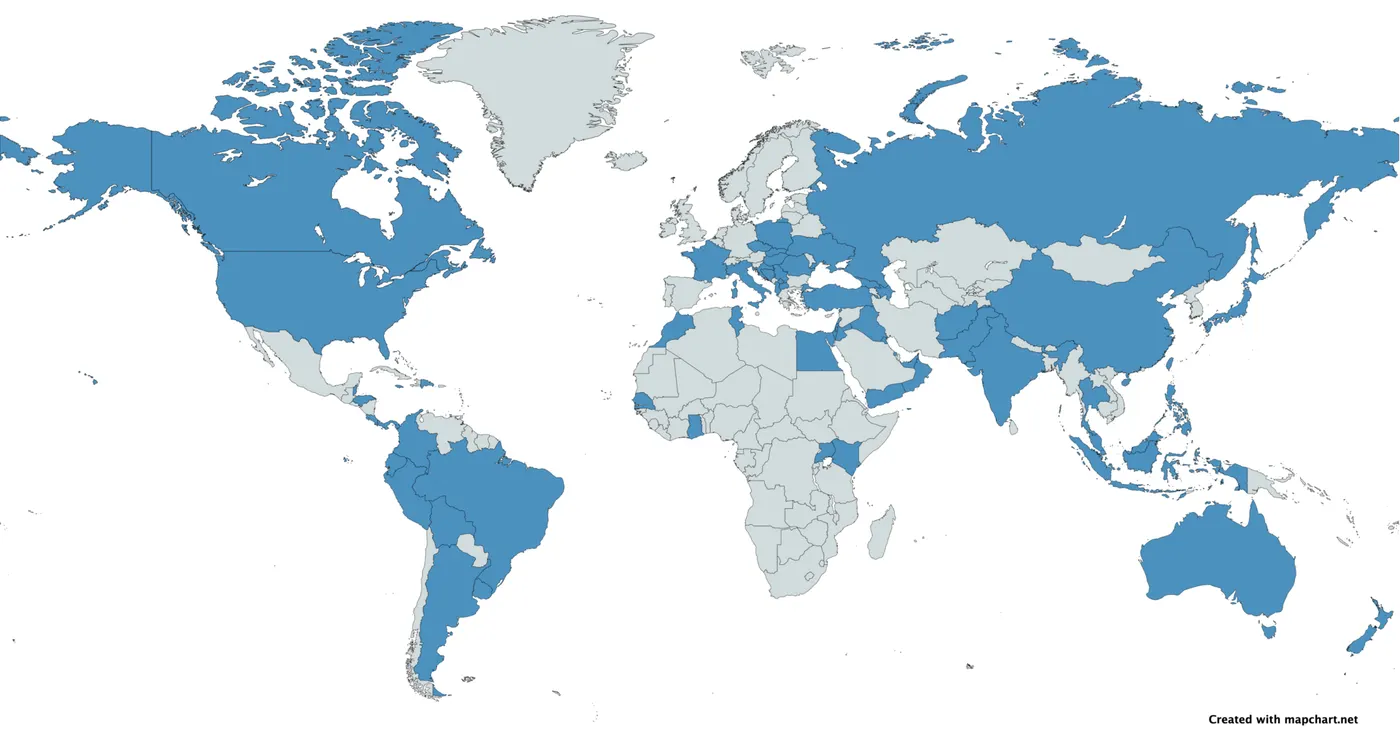
In service since 1994 · 60 operator countries
Compiled from public sources ·primary reference ↗ ·last verified 2026-07-01
500
m range
950
rpm
884
m/s
30
rds
💲 ≈ $1,100, Approximate U.S. military unit procurement cost
Procurement snapshot
Availability & export
US ITAR-controlled
Export needs U.S. State Dept (DDTC) approval; end-use & re-transfer restrictions apply.
Channel: Foreign Military Sales (FMS) or Direct Commercial Sale
Fielded & proven
Widely fielded · 60 operators
In service since 1994. Status: active · ~2,000,000 built.
Lifecycle cost (est.)
Unit cost known; one-shot / small-arms class has no meaningful O&S tail to model.
Interoperability
Derived guidance from public data, export regime by country of origin, lifecycle from the GAO ~30% acquisition rule. Verify eligibility, pricing and offsets with the manufacturer and your acquisition authority.
Overview
The M4A1 carbine is the standard shoulder weapon of much of the US military, a shortened, lighter development of the M16 chambered in 5.56x45mm NATO. Its defining traits are its full-automatic fire control, a free-floating capability in later variants, and above all its modularity: Picatinny rails let users mount optics, lasers, lights and grips, turning a single platform into a configurable weapon system rather than a fixed design.
Produced by Colt and later other manufacturers, the M4A1 equips US conventional and special-operations forces and is used, in one form or another, by many allied militaries. Its compactness suits vehicle crews, urban fighting and close-quarters work, which is why it displaced the longer M16 as the general-issue rifle.
Rather than being tied to a single campaign, the M4A1's significance lies in its ubiquity across two decades of American operations, from Iraq and Afghanistan to ongoing deployments. It now sits alongside the Army's newer 6.8mm Next Generation Squad Weapon, which is intended to gradually supplement it, but the M4 family remains deeply embedded and will stay in wide service for years.
Full specifications
Performance
Speed, range, altitude and engagement capability.
| Effective range Distance at which the weapon reliably hits point targets. Higher extends engagement envelope. | 500 m |
|---|---|
| Rate of fire Rounds per minute (cyclic). Higher increases suppression and hit probability. | 950 rpm |
| Muzzle velocity Projectile speed leaving the barrel. Higher means flatter trajectory and better armor penetration. | 884 m/s |
Firepower
Armament, payload and guidance.
| Main armament Primary weapon: main gun, cannon or missile type. | 5.56×45 mm NATO |
|---|---|
| Caliber Bore diameter of the main gun or rifle. Larger throws heavier projectiles; not simply better, ammunition commonality matters. | 5.6 mm |
| Ammunition Rounds carried (main gun) or standard magazine capacity. | 30 |
Physical
Dimensions, weight and crew.
| Length Overall length including gun/probe where applicable. | 0.84 m |
|---|---|
| Empty weight Weight without fuel, ammunition or crew. | 3 kg |
| Crew Personnel required to operate. Fewer reduces exposure; autoloaders trade a loader for mechanical complexity. | 1 |
| Barrel length Barrel length, longer improves muzzle velocity and accuracy, shorter improves handling. | 370 mm |
Munition
Round type, penetration, velocity and projectile data.
| Caliber Bore diameter the round is fired from. | 6 mm |
|---|
Program
Cost, production scale and operators.
| Unit cost Approximate flyaway/unit cost where public. Defense pricing varies hugely by contract, offsets and configuration. Lower is cheaper. | $1,100 |
|---|---|
| Units built Total production run. Higher means proven manufacturing, mature logistics and spares availability. | 2,000,000 |
| Operator countries Number of countries operating the system. More operators means broader support ecosystem. | 60 |
Specifications compiled from public Colt and reference sources ↗. Published defense figures are approximations, treat comparisons as directional. Last verified 2026-07-01.
Compare with rivals
See how it stacks up
 Tula Arms Plant AEK-971
 Head-to-head comparisons
M4A1 vs
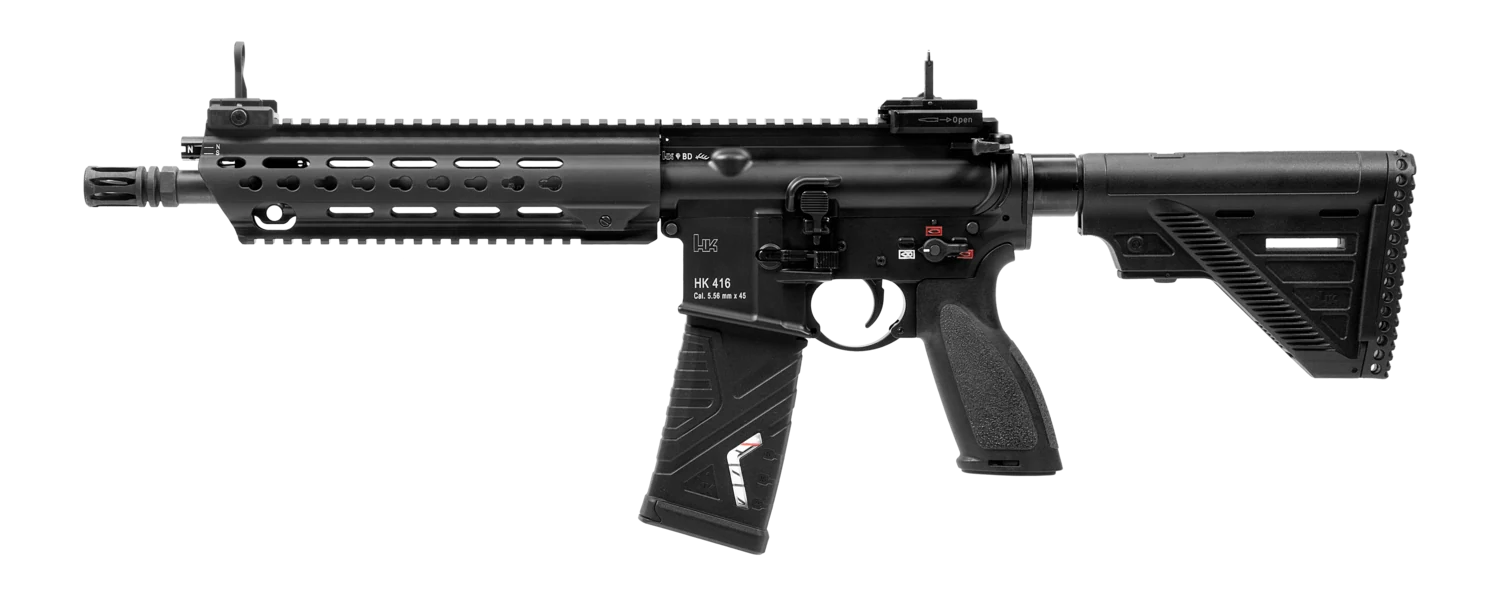
 HK416 A5
  FAL
FAL Frequently asked questions
How many crew does the Colt M4A1 require? +
The Colt M4A1 requires a crew of 1.
What is the main armament of the Colt M4A1? +
The Colt M4A1's primary weapon is the 5.56×45 mm NATO.
What is the Colt M4A1 used for? +
The Colt M4A1 is a rifle & long arms typically used for infantry combat.
How many countries operate the Colt M4A1? +
The Colt M4A1 is operated by 60 countries.
How much does the Colt M4A1 cost? +
The Colt M4A1 has an approximate unit cost of 1,100 USD. Defense pricing varies by contract, offsets and configuration, treat this as directional.
Similar systems
Related coverage
M4A1 in the news
 Article
 comparison · Jul 28, 2026
Rifle Range Has Almost Nothing to Do With Bullet Speed
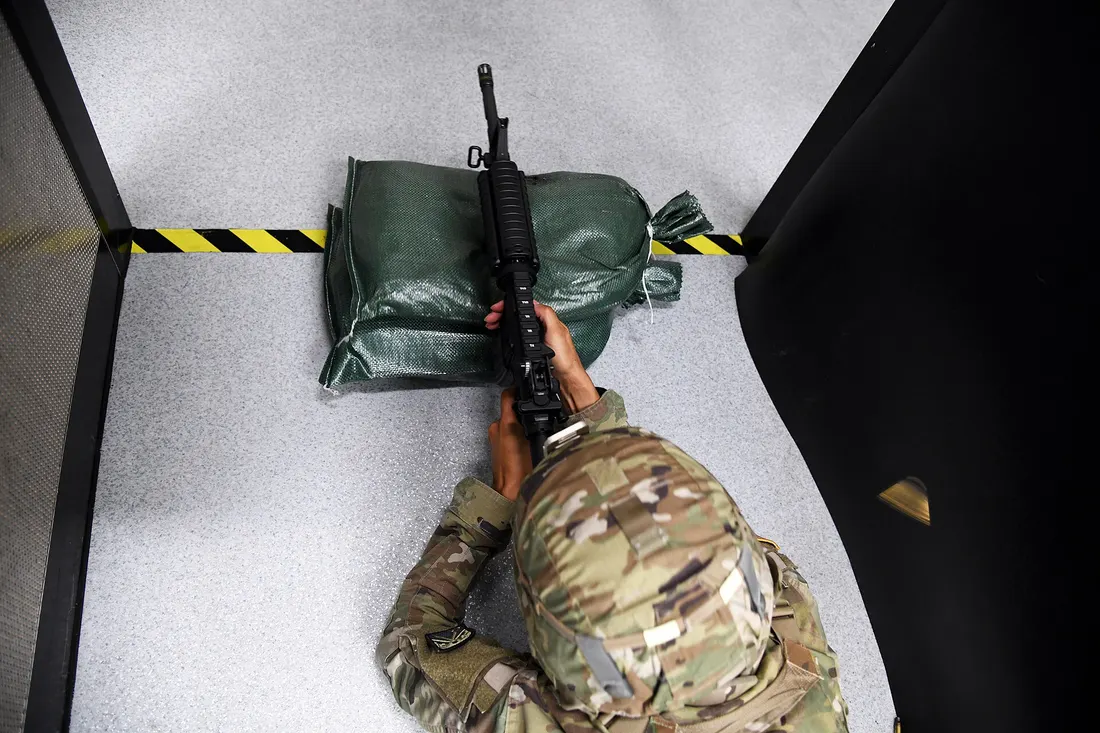
Across 76 database rifles, velocity and range correlate at just r=0.375. The fastest rifle in the sample, the Mini-14, has one of the shortest ranges.
 Article
 guide · Jul 13, 2026
Same 5.56mm NATO Round, Wildly Different Range Claims
26 rifles firing the same 5.56x45mm NATO round publish effective ranges from 400 to 600 meters, and the fastest ones don't claim the longest reach.
 Article
 comparison · Jul 3, 2026
AK-12 vs M4 vs HK416: The Modern Rifle Comparison
AK-12 vs M4 vs HK416 vs SCAR: rugged simplicity vs modular ubiquity vs piston reliability, compared on the data.
 Article
 guide · Jul 3, 2026
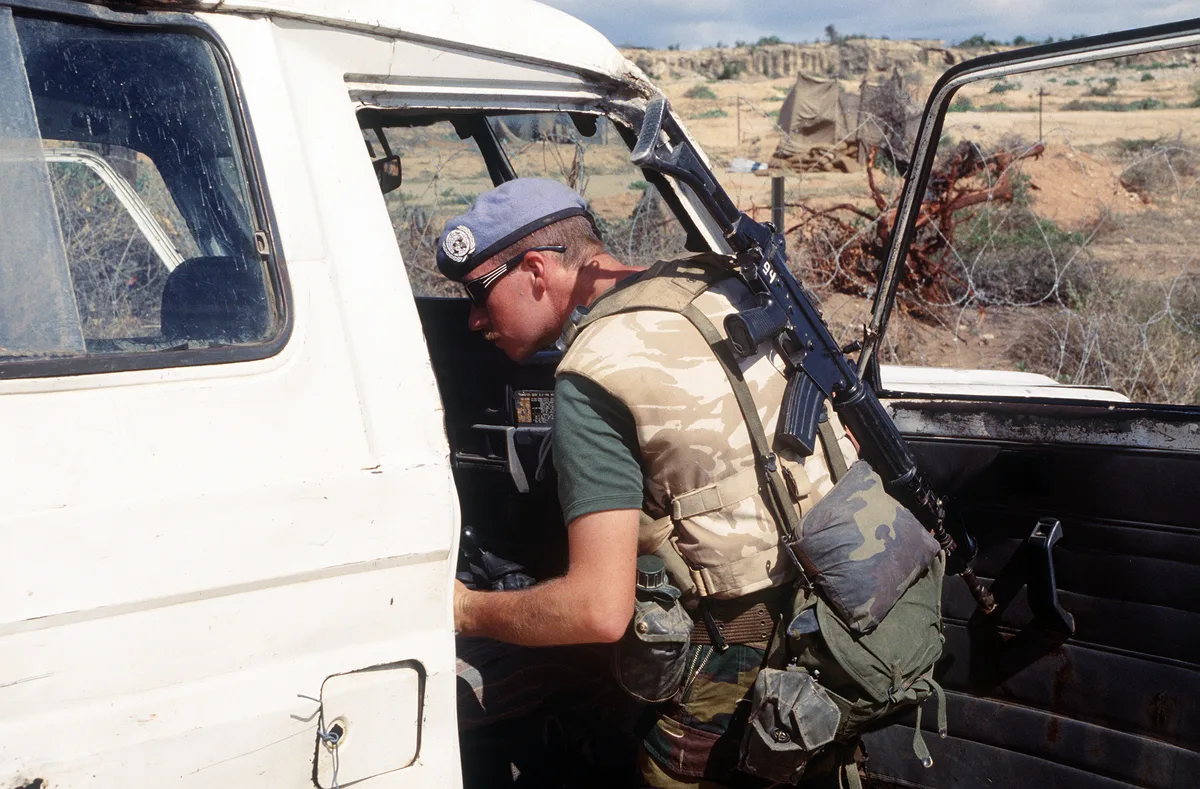
NATO Standardization: Why 5.56, 155mm & Link 16 Matter
How NATO STANAG standardization on ammo, artillery calibers and datalinks quietly drives procurement decisions.