AK-12 vs M4 vs HK416: The Modern Rifle Comparison
AK-12 vs M4 vs HK416 vs SCAR: rugged simplicity vs modular ubiquity vs piston reliability, compared on the data.

U.S. Army photo by Davide Dalla Massara, Public domain
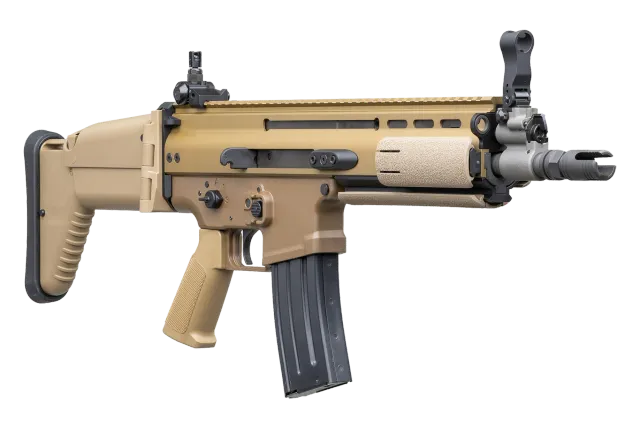
Four service rifles, four bets on what modern infantry combat actually demands. The AK-12 bets that rugged, forgiving simplicity beats precision when the rifle has to survive mud, sand, and minimal maintenance, and Russian state sources market it as the latest link in a lineage that never needed to be pretty to keep working. The M4 bets that modularity and a decades-deep accessory ecosystem, refined across more combat deployments than any rifle on this list, matter more than any single spec sheet number. The HK416 bets that a piston gas system solves the M4’s one real weakness, carbon fouling in the receiver, and that units willing to pay a premium will get a documented reliability margin in return. The SCAR bets on convertibility: one receiver, multiple calibers, adaptable to a mission profile that a fixed-caliber rifle can’t match. None of these bets is wrong. They’re optimized for different buyers, different budgets, and different fights.
Caliber philosophy: 5.56 vs 5.45
The M4, HK416, and SCAR-L all run 5.56x45mm NATO, the cartridge that’s defined Western infantry doctrine since the 1980s. It’s lighter than 7.62mm alternatives, produces less recoil for faster follow-up shots, and its ballistics are flat enough for the engagement ranges most infantry actually fight at. NATO standardization also means magazines, ammunition, and spare parts are broadly interchangeable across allied forces, a logistics advantage that’s easy to undervalue until a supply chain is under stress.
The AK-12, per publicly available Russian defense-industry claims, is chambered in 5.45x39mm, the cartridge the Soviet Union adopted in the 1970s specifically to compete with 5.56mm’s lighter-recoil advantages over the older 7.62x39mm. It’s a capable, combat-proven round, but it sits outside NATO’s standardization ecosystem entirely, a rifle built around a doctrine of self-sufficiency rather than allied interoperability, which tracks with Russia’s broader defense-industrial posture.
Gas systems: direct impingement vs piston
This is the most consequential engineering divide on this list, and it’s worth being precise about the tradeoffs rather than picking a side.
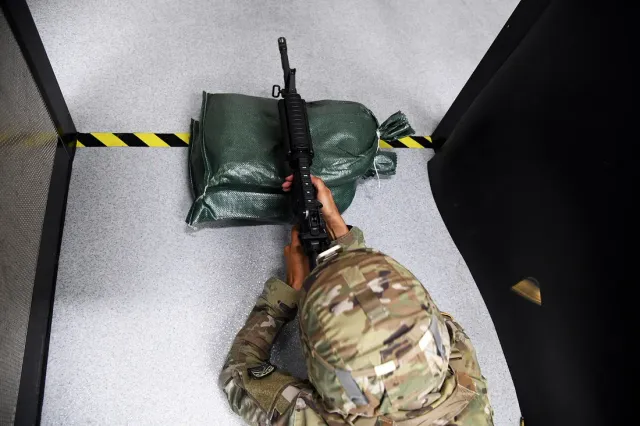
The M4 and its M16 ancestor use direct impingement: gas is vented straight from the barrel back through a tube into the bolt carrier group, cycling the action with no intermediate piston. It’s simpler, lighter, and mechanically direct, and it’s the reason the M4 remains among the more inherently accurate service rifles in wide use, fewer moving parts pushing the barrel around during cycling. The tradeoff, well documented across decades of U.S. military maintenance records, is that it vents hot combustion gas and carbon fouling directly into the action, which raises maintenance demands, particularly in high-round-count or dusty environments.
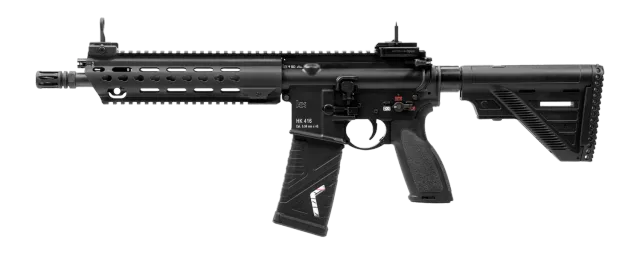
The HK416, AK-12, and SCAR all use short-stroke gas piston systems instead. A piston captures expanding gas and uses it to drive a separate operating rod that cycles the bolt carrier, keeping the worst of the fouling out of the receiver. HK developed the 416’s piston system specifically to fix the fouling problem U.S. special operations units had flagged with M4-pattern rifles in sustained combat use, a piece of history that’s well established rather than speculative. The AK platform has run a piston system since the original AK-47, which is a large part of why “runs when dirty” became the rifle’s defining reputation. The tradeoffs for piston designs are modest: slightly more weight, slightly higher cost, and, for poorly engineered piston guns, though not typically the HK416, a bit more carrier tilt that can affect accuracy at the margins.
Modularity and the accessory ecosystem
The M4 wins this category by a wide margin, and it isn’t close. Decades of adoption across the U.S. military and allied forces built an accessory ecosystem, rails, optics, grips, suppressors, trigger groups, that no other rifle on this list can match in sheer depth or third-party support. That ecosystem is itself a form of capability: a unit can adapt an M4 to a specific mission role faster and cheaper than almost any alternative, because the parts already exist and are already combat-tested.
The HK416 inherits much of that ecosystem, since it shares the AR-15/M4 magazine and general ergonomic layout, while swapping in HK’s proprietary piston system and tighter manufacturing tolerances. That’s a deliberate design choice, compatibility with existing accessories and training, plus a documented reliability upgrade, rather than a from-scratch redesign.
The SCAR takes modularity in a different direction: FN engineered the platform around quick-change barrels and, in the broader SCAR family, interchangeable caliber conversions between 5.56mm and 7.62mm variants. That’s a genuinely different kind of flexibility, not accessory depth, but mission-profile adaptability, letting a unit reconfigure a rifle’s fighting range rather than just its optics.
The AK-12 has modernized considerably from earlier AK variants, adding a proper accessory rail system and adjustable stock that earlier Kalashnikov derivatives lacked, but it’s playing catch-up to an ecosystem the M4 built over 40-plus years, not competing with it on equal footing.
The numbers, side by side
| Rifle | Caliber | Effective range | Rate of fire | Weight | Origin |
|---|---|---|---|---|---|
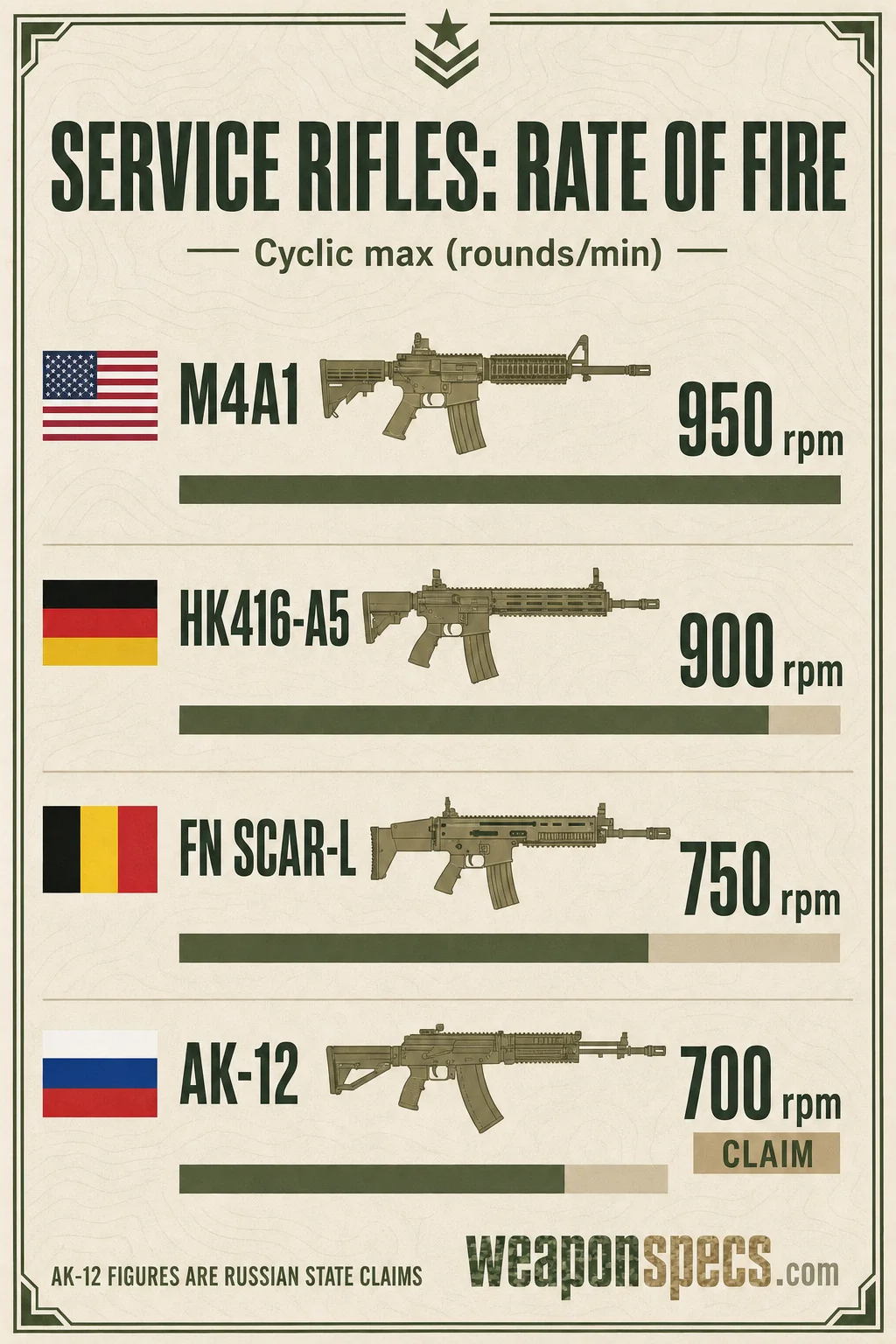
| AK-12 | 5.45x39mm | ~500 m (manufacturer claim) | ~700 rounds/min (cyclic) | ~3.6 kg | Russia |
| M4A1 | 5.56x45mm NATO | ~500-600 m | ~700-950 rounds/min (cyclic) | ~3.0 kg | United States |
| HK416-A5 | 5.56x45mm NATO | ~500-600 m | ~700-900 rounds/min (cyclic) | ~3.5 kg | Germany |
| FN SCAR-L | 5.56x45mm NATO | ~500-600 m | ~600-750 rounds/min (cyclic) | ~3.3 kg | Belgium |
A 250-round spread is the narrowest gap of any spec in this comparison: these rifles differ far more in gas-system design and accessory ecosystem than in raw cyclic rate.
Treat the AK-12’s figures with the same caution you’d apply to any Russian state-sourced spec sheet: they’re the manufacturer’s claims, not independently audited combat data. The Western platforms’ numbers are backed by a deeper trail of NATO procurement documentation and public testing records.
Adoption: what the numbers on the ground actually say
Adoption is where marketing claims meet procurement reality, and the gap between the two is instructive. The M4 remains the primary U.S. service rifle with millions fielded across the U.S. military and law enforcement, plus wide adoption among allied forces, a scale no rifle on this list approaches. The HK416 has been adopted by multiple special operations units globally, including as the U.S. Marine Corps’ M27 Infantry Automatic Rifle, reflecting a premium-tier reputation rather than mass-market reach. The SCAR has found a steady niche in special operations units across NATO and partner nations, valued for its caliber-conversion flexibility more than raw numbers fielded.
The AK-12, per Russian Ministry of Defense statements, has been adopted as a standard-issue rifle for Russian forces, with production and fielding numbers that, consistent with the broader pattern of Russian defense-industrial disclosures, are difficult to verify independently. Treat official adoption timelines and unit-count claims from Russian state sources as directional, not confirmed.
The bottom line
There’s no single winner here because there’s no single mission. The AK-12 is the rifle to bet on when the fighting is dirty, spare parts are scarce, and the doctrine prizes reliability over precision, assuming Russian claims about its performance hold up, which independent verification hasn’t confirmed. The M4 is the rifle to bet on when modularity, accuracy, and four decades of combat-refined logistics matter more than any individual spec. The HK416 is the rifle to bet on when a unit can pay a premium for a documented fix to the M4’s one real weakness. And the SCAR is the rifle to bet on when mission flexibility, swapping calibers and barrel lengths rather than just optics, is the actual requirement. Know which fight you’re buying for before you pick a winner.
Run the numbers yourself with the rifle class breakdown on WeaponSpecs, put the HK416-A5 head-to-head against the M4A1, or let the Advisor tool weigh these tradeoffs against your own mission profile. For more rifle comparisons like this one, browse the WeaponSpecs articles.
Systems in this comparison
Every system covered above, with its photo and, where available, a video. Tap a card to open the full spec sheet.
Compare these side by side →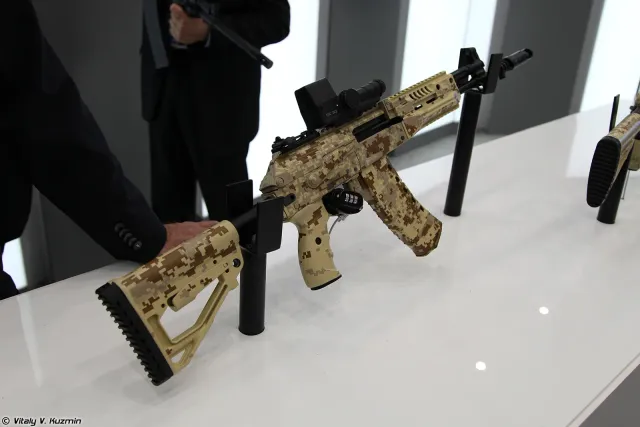
Frequently asked questions
Is the AK-12 better than the M4? +
Neither wins outright, they optimize for different problems. The AK-12 prioritizes low-maintenance reliability in harsh conditions on a tight budget; the M4 prioritizes modularity, accuracy, and a mature ecosystem of optics and accessories backed by NATO-wide logistics and combat data.
What is the difference between direct impingement and piston rifles? +
Direct impingement (M4/M16) vents gas straight into the bolt carrier, giving a lighter, more accurate rifle that runs dirtier and hotter. Piston systems (AK-12, HK416, SCAR) tap gas to drive a rod that pushes the bolt carrier, keeping fouling out of the action at a small weight and cost penalty.
Why do militaries use 5.56mm? +
5.56x45mm NATO gives soldiers lighter ammunition, less recoil, flatter trajectory at typical engagement ranges, and higher ammo-load capacity than 7.62mm alternatives. NATO standardization since the 1980s built an entire logistics and magazine ecosystem around the cartridge.
Is the HK416 worth the extra cost? +
For units that can afford it, generally yes, the piston system reduces carbon fouling in the receiver, extending reliability intervals, and HK's manufacturing tolerances are widely regarded as best-in-class. It's a premium price for a documented reliability margin, not a marketing claim.
What rifle does the US military use? +
The M4A1 carbine remains the primary U.S. service rifle, supplemented by HK416-derived platforms in special operations units (as the M27 IAR in the Marine Corps). Publicly disclosed modernization efforts continue to evaluate next-generation replacements.
Related reading


