Submarine Test Depth: Who Publishes, Who Hides
Of 32 submarines in the WeaponSpecs database, only 21 publish a test depth - and the three deepest figures are all unverified Russian state claims.
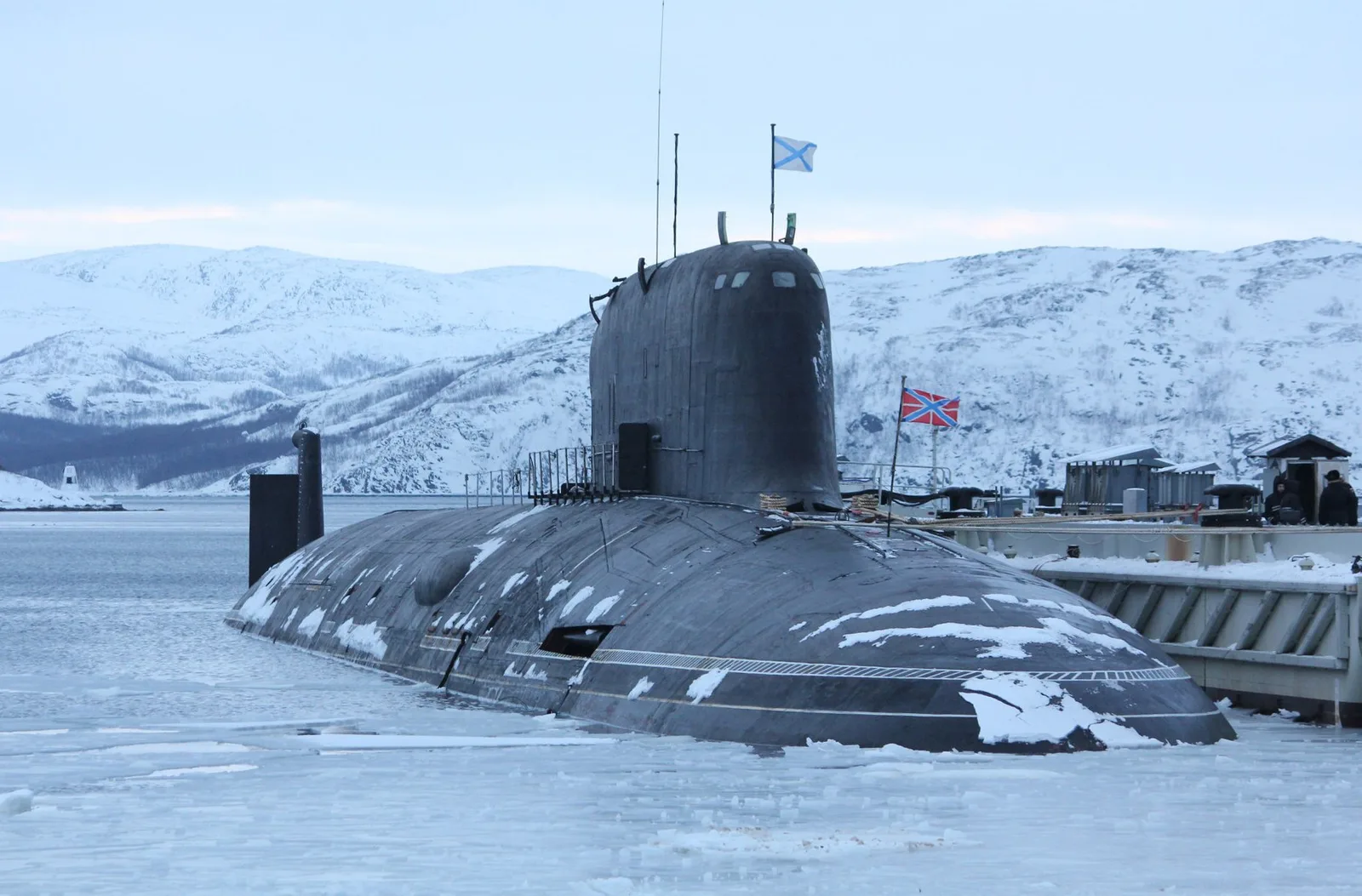
Via Wikipedia, Yasen-class submarine (shown for identification)
Russia says its Yasen-class submarine can dive to 600 meters. It is the deepest test depth in our database of the 32 submarines in the WeaponSpecs database, and one of the least verifiable numbers on the site. Only 21 of those 32 boats, 66 percent, publish a test depth at all. The navies with the most capable modern submarines, the United Kingdom, Japan, and India, publish none.
Which submarines actually publish a test depth?
Twenty one of the 32 submarines in our database carry a published test depth figure, ranging from 200 meters up to the Yasen-class’s claimed 600. The other 11, more than a third of the fleet, publish nothing at all.
Coverage is wildly uneven by country. Russia and China disclose across their entire submarine lineups, 4 of 4 and 3 of 3 respectively. Germany (3 of 3), Sweden (2 of 2), Turkey, Spain, Italy, and the Netherlands (1 of 1 each) all publish. Germany’s Type 214 discloses a straightforward 400 meters, one of the more credible figures on the list precisely because it comes with no caveat attached.
The United States publishes for 3 of its 4 submarine classes, but every figure is a legacy number rather than a current capability disclosure. South Korea publishes for only 1 of 2 classes, France for 1 of 3. The United Kingdom, Japan, and India, three of the more capable modern submarine operators in the database, publish zero test depth figures across 3, 2, and 2 boats respectively.
Why are the deepest published figures the least trustworthy?
Here is the part that should bother anyone comparing these numbers at face value: the three deepest published test depths in the entire database, all belonging to Russia, are also the three that carry a manufacturer-claim caveat.
Russia’s Yasen-class tops the list at 600 meters, a figure that traces back to Russian state and manufacturer sources and has never been independently verified, per the Yasen-class Wikipedia entry. Right behind it sit two more Russian boats at 480 meters, the Akula-class (Project 971) and the Borei-class ballistic-missile submarine, both carrying the same caveat. South Korea’s Chang Bogo-class publishes 500 meters, a widely repeated open-source figure that likely conflates operating depth with test depth rather than reflecting a clean, audited disclosure.
Seven of the 21 published figures in this database, a third of everything that gets disclosed at all, are Russian or Chinese state claims with no independent verification behind them. That is not a footnote. It means a third of the “data” in this comparison is closer to marketing copy than to a certified engineering limit.
What does China’s identical 300-meter figure across three boats tell us?
China publishes 300 meters for three submarines that have almost nothing else in common: the Type 039A/B Yuan, a conventional diesel-electric attack boat; the Type 093 Shang, a nuclear attack submarine; and the Type 094 Jin, a nuclear ballistic-missile submarine built for an entirely different mission profile.
A diesel SSK, a nuclear SSN, and a nuclear SSBN sharing the identical test depth to the meter is not a coincidence, it is a tell. Three different hull designs, propulsion plants, and displacement classes converging on one round number looks less like three separately verified engineering results and more like a single rounded estimate applied across an entire fleet regardless of the boat underneath it. Treat China’s 300-meter figure the same way we treat Russia’s numbers: a state claim, not a disclosed spec. The Type 094 Jin carries the exact same caveat as its diesel and nuclear-attack stablemates for that reason.
Why do the UK, Japan, and India publish nothing at all?
The silence is not evenly distributed, and it is not random. The United Kingdom, Japan, and India, three navies operating some of the most modern submarines in this database, publish zero test depth figures across their combined 7 boats.
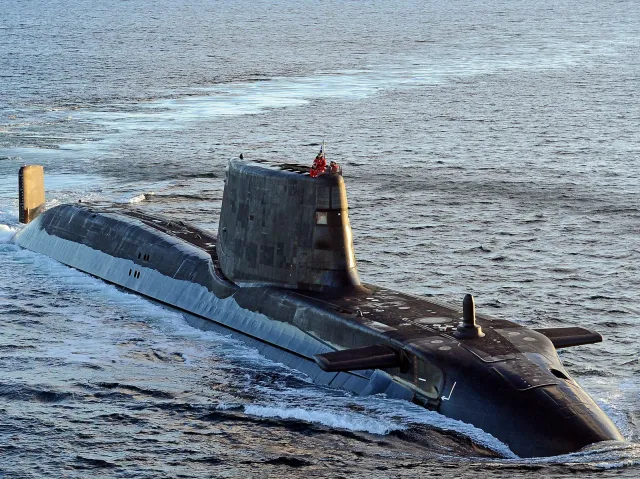
The US Virginia-class and the Ohio-class both circulate a legacy figure around 240 meters, but that number predates the boats currently in service and does not represent a current-fleet disclosure, US diving depths are classified, per the Virginia-class entry. The newer Columbia-class publishes nothing, following the same classification stance described on its own Wikipedia page. The UK’s Astute-class, Vanguard-class, and incoming Dreadnought-class follow the identical pattern: no published figure, full stop.
For US and UK boats this reflects a deliberate classification policy rather than a data gap in our sourcing, the number exists, it simply is not released. That distinction matters. Silence from Washington and London is a security decision. Silence from a country with no classification tradition around the figure would be a different kind of signal. Either way, a buyer comparing published numbers alone will systematically underrate exactly the navies most likely to actually meet a disclosed spec in practice.
Test depth vs crush depth: what is actually being measured?
Test depth and crush depth are not the same number, and conflating them is where a lot of these comparisons go wrong. Test depth is the maximum depth a submarine is certified to operate at safely and repeatedly in normal service. Crush, or collapse, depth is the point at which the pressure hull is expected to fail catastrophically, and it sits considerably deeper than test depth as an engineering margin, per the general definitions on submarine depth ratings.
Almost nobody publishes crush depth, for obvious reasons: it hands an adversary a targeting parameter with no operational upside to disclosing it. Test depth is the figure that leaks into public view because navies and manufacturers use it as a marketing and procurement data point. But that also means every number in the table below is the conservative, certified limit, not the boat’s actual physical breaking point, and the gap between the two is itself classified.
What does test depth really decide for a buyer?
Depth alone has never been the whole story. A deeper test depth lets a boat operate below more thermal layers and complicates an adversary’s sonar geometry, but quieting, sensor suites, weapon range, and crew endurance typically matter more to actual mission performance than an extra 50 or 100 meters of certified depth.
That is precisely why the deepest published numbers deserve the most skepticism, not the least. A buyer or analyst who ranks these 21 submarines by test depth alone is effectively ranking them by whichever government was most willing to round a number up for a press release. The four Russian and Chinese figures at the top of this list carry caveats for a reason: they cannot be checked against an independent test program, and the pattern of round, oddly uniform numbers across dissimilar hulls (China’s identical 300 meters chief among them) suggests estimation rather than disclosure.
Published test depth, deepest first
Of 32 submarines in the WeaponSpecs database, 21 publish a test depth figure. The table below lists every one, sorted deepest first, with the caveat attached wherever the source is a manufacturer or state claim.
| Depth | Submarine | Country | Caveat |
|---|---|---|---|
| 600 m | Yasen-class | Russia | manufacturer/state claim, not independently verified |
| 500 m | Chang Bogo-class | South Korea | widely repeated open-source figure, likely conflates operating/diving depth |
| 480 m | Akula-class (Pr. 971) | Russia | manufacturer/state claim, not independently verified |
| 480 m | Borei-class | Russia | manufacturer/state claim, not independently verified |
| 400 m | Reis-class | Turkey | - |
| 400 m | Type 214 | Germany | - |
| 300 m | Kilo-class (Pr. 636.3) | Russia | manufacturer/state claim, not independently verified |
| 300 m | S-80 Plus | Spain | - |
| 300 m | Scorpene | France | - |
| 300 m | Type 039A/B Yuan | China | manufacturer/state claim, not independently verified |
| 300 m | Type 093 Shang | China | manufacturer/state claim, not independently verified |
| 300 m | Type 094 Jin | China | manufacturer/state claim, not independently verified |
| 300 m | Walrus-class | Netherlands | - |
| 290 m | Los Angeles-class | United States | legacy/declassified figure, not current-fleet capability |
| 250 m | Todaro (U212A) | Italy | - |
| 250 m | Type 209 | Germany | - |
| 250 m | Type 212A | Germany | - |
| 240 m | Ohio-class | United States | legacy/declassified figure, not current-fleet capability |
| 240 m | Virginia-class | United States | legacy/declassified figure, not current-fleet capability |
| 200 m | A26 Blekinge-class | Sweden | - |
| 200 m | Gotland-class | Sweden | - |
The other 11 submarines in the database, Astute-class, Vanguard-class, and Dreadnought-class (UK), Soryu-class and Taigei-class (Japan), Arihant-class and Kalvari-class (India), Suffren-class and Triomphant-class (France), Columbia-class (US), and Dosan Ahn Changho/KSS-III (South Korea), publish no test depth figure at all.
The two red markers sitting furthest right, the deepest claimed figures on the chart, are exactly the ones with no independent verification, while the UK, Japan, and India go unranked entirely because they disclose nothing.
Red markers are Russian or Chinese state and manufacturer claims, not independently verified. Open grey markers mark navies that publish no test depth figure at all. WeaponSpecs analysis of 32 submarines in the database.
Compare the boats yourself
None of this means depth is meaningless, it means depth is the wrong number to compare in isolation, especially when nearly a third of the published figures trace back to a state press release rather than an audited test program. A serious comparison has to weigh test depth against quieting, sensors, weapon range, and endurance together, and has to treat every Russian and Chinese figure as a claim rather than a fact.
Line up any two boats yourself in the WeaponSpecs compare tool, or score a naval matchup using the full spec set rather than one headline number.
Systems in this comparison
Every system covered above, with its photo and, where available, a video. Tap a card to open the full spec sheet.
Compare these side by side →
Submarine
Yasen-class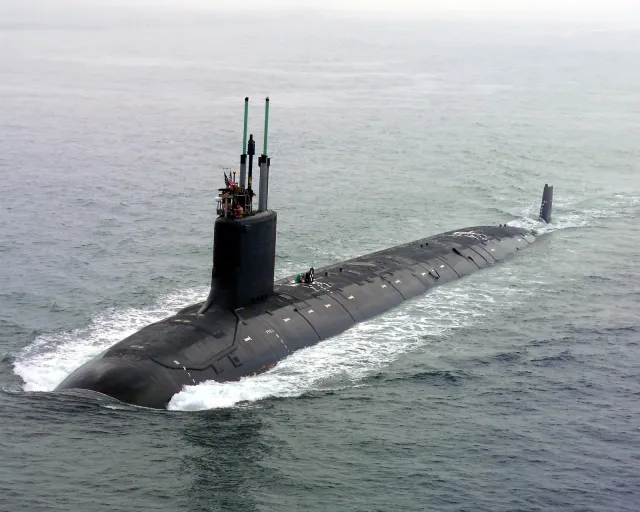
Submarine
Virginia-class Submarine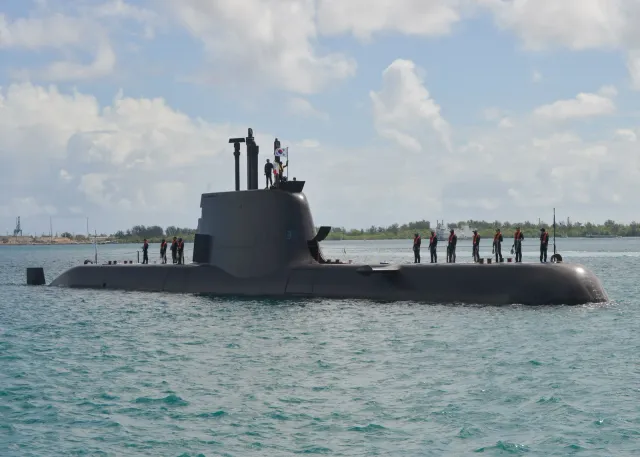
Submarine
Astute class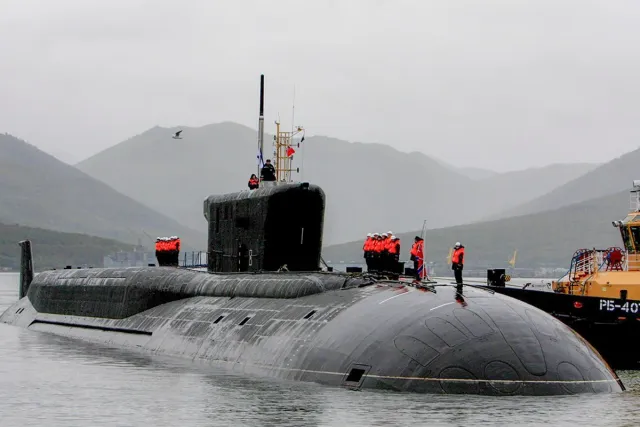
Submarine
Borei-class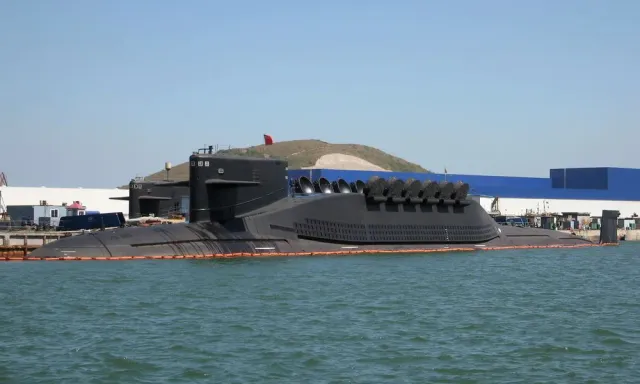
Submarine
Type 094 JinFrequently asked questions
What is a submarine's test depth? +
The maximum depth at which a submarine is certified to operate safely in normal service. It sits below the everyday operating depth and well above the crush (collapse) depth where the hull is expected to fail.
Which submarine has the deepest published test depth? +
In our analysis of 32 submarines, Russia's Yasen-class publishes 600 meters, the deepest figure in the database. It is a Russian state claim we flag as not independently verified.
Why doesn't the US Navy publish submarine test depth? +
US submarine diving depths are classified. Only legacy figures circulate (Los Angeles-class around 290 meters, Ohio and Virginia-class around 240 meters), and the current Columbia-class publishes nothing.
Is test depth the same as crush depth? +
No. Test depth is the certified safe limit. Crush or collapse depth is where the hull is expected to fail, usually estimated far deeper and almost never published.
Do deeper-diving submarines perform better? +
Not necessarily. Depth helps a boat hide beneath thermal layers, but quieting, sensors, and endurance matter more, and the deepest published numbers are the least verifiable.
Related reading