Best Sniper Rifles 2026, Ranked by Combat Record
Ranked by combat record and precision, not range: a 10-to-1 countdown of the best sniper and designated-marksman rifles of 2026.

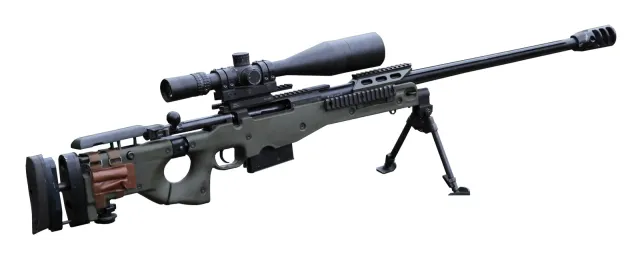
Via Wikipedia, Accuracy International AWM (shown for identification)
The SVD Dragunov has been in continuous frontline service since 1963, the longest combat record of any rifle on this list by four decades, carried through nearly every Soviet and Russian-aligned conflict and countless irregular wars on multiple continents, and it’s in the hands of both sides in Ukraine right now. It is not the best sniper rifle of 2026. Neither is the rifle that reaches farthest. We ranked ten sniper and designated marksman rifles on real combat record and precision, not on which cartridge carries the most energy downrange, and the rifle with the deepest six-decade service history lands squarely in the middle of the pack.
We ranked these ten rifles from 10 down to 1 on four criteria, in this priority order: real combat and operational record (we say plainly when a rifle has thin or no combat history), precision engineering and accuracy pedigree (action type, chassis design, documented accuracy), caliber and range fitness for role (the right cartridge for the job, not the biggest number), and program maturity and adoption (is it actually fielded, by how many forces, with what sustainment). Every Russian figure below is flagged as a manufacturer or state claim, not treated as fact. Photos and full spec sheets for every rifle are in the gallery below the article.
Key takeaways:
- The #1-ranked Accuracy International AWM has a documented 2,475-meter confirmed shot from 2009, yet its own published effective range is only 1,100 meters, shorter than six of the other nine rifles on this list.
- The CheyTac M200 reaches the longest published effective range on the list at 2,000 meters, yet ranks 8th of 10 on a thin combat record.
- The SVD Dragunov has been in continuous frontline service since 1963, the longest combat record here by four decades, yet ranks 5th on modest modern-day precision.
- The ORSIS T-5000’s published 1,500-meter effective range is a Russian manufacturer claim with no independent Western verification.
- The Barrett M82 has been adopted by more than 75 countries since its 1991 Gulf War debut, the widest fielded adoption of any rifle on this list.
How we ranked them
- Real combat and operational record. We say plainly when a rifle has thin, unverified or no combat history.
- Precision engineering and accuracy pedigree. Action type, chassis and bedding design, documented accuracy.
- Caliber and range fitness for role. The right cartridge for the job, not the biggest range figure.
- Program maturity and adoption. Whether it’s actually fielded, by how many forces, with what sustainment.
10. Ruger Precision Rifle 

The honest outlier on this list, and it ranks last on a military sniper-rifle ranking precisely because it isn’t one. Introduced in 2015 in 6.5 Creedmoor and .308 Winchester on a fully adjustable AR-style chassis, the Ruger Precision Rifle’s real proving ground is the Precision Rifle Series competition circuit and the civilian long-range shooting community, not combat. There is no meaningful military-issue sniper role or armed-forces adoption to report.
Advantages: exceptional out-of-the-box accuracy for its price, which genuinely widened access to sub-MOA long-range shooting; a fully adjustable chassis and ergonomics; available in multiple calibers including 6.5 Creedmoor and .308 Winchester.
Disadvantages: no military-issue sniper role or meaningful armed-forces adoption; no combat record; it’s a commercial product, not a fielded weapon system, so there’s no published military effective range or unit cost to compare against the rest of this list.
Its 2015 arrival is widely credited with reshaping the competitive long-range shooting world, putting match-grade precision within reach of ordinary shooters. Its arena is the firing line, not the battlefield.
9. ORSIS T-5000 

Russia’s modern bolt-action entry in .338 Lapua Magnum, introduced in 2011 and adopted in 2017 by the FSB, FSO and Rosgvardiya as their standard precision rifle, with reported spetsnaz and Ukraine-war use. It ranks low not necessarily because the hardware is poor, but because the record around it is thin: beyond that 2017 adoption, there is no independent Western or neutral verification of its performance claims, including the published 1,500-meter effective range.
Advantages: a genuinely modern bolt-action design with a fully adjustable aluminum chassis; chambered in the proven .338 Lapua Magnum class; real documented adoption by Russian state security services since 2017; domestically produced, insulated from sanctions.
Disadvantages: every performance figure, including the 1,500-meter range, is a manufacturer or state claim with no independent confirmation; a thin, poorly documented combat record compared with its Western .338 peers; a limited export footprint.
Its one solidly reported milestone is the 2017 adoption by Russia’s FSB, FSO and Rosgvardiya. Beyond that, independent scrutiny of its performance claims remains thin, worth flagging every time this rifle’s numbers are repeated.
The ORSIS T-5000 and its .338 Lapua Magnum chambering also sit inside a live sanctions-enforcement story, not just a specs debate. “The continuing access to specialized rifle cartridges made in the West, such as the .338 Lapua Magnum, by a sanctioned Russian small arms manufacturer like Orsis maker Promtekhnologiya is egregious,” said Gary Somerville, a research fellow at the Royal United Services Institute (RUSI), a British defense think tank, quoted in Politico via RUSI, 19 June 2023. He added that closing off that ammunition supply “is an easy win for those seeking to constrain Russia’s ability to wage war in Ukraine.”
8. CheyTac M200 Intervention

A purpose-built extreme-long-range rifle in the bespoke .408 CheyTac cartridge, engineered to stay supersonic and hold sub-MOA accuracy past 2,000 meters, the longest published effective range on this entire list. Its fame is disproportionately a media phenomenon, television features and a starring role in the film Shooter, rather than a documented combat record; reported special-forces adoption is weakly sourced. It’s important to be precise here: the world’s longest confirmed sniper shots were not made with a CheyTac. The 2017 record of roughly 3,540 meters belongs to a Canadian special-operations sniper firing a McMillan TAC-50, and the current record, set in 2023, belongs to a Ukrainian rifle. The CheyTac’s extreme-range case is a genuine ballistic and engineering achievement, not a documented battlefield feat.
Advantages: a genuinely extreme-long-range design with documented half-MOA capability; the bespoke .408 CheyTac cartridge resists wind drift and velocity decay better than 7.62mm or .338 rounds past 2,000 meters; an integrated ballistic-computer system approach that was ahead of its time.
Disadvantages: heavy, expensive and burdened by a non-standard cartridge that’s a real logistics liability in the field; a documented combat record that’s thin relative to its reputation; its extreme-range niche has been eroded by cheaper, more versatile multi-caliber rifles.
Its outsized fame comes largely from film and television, yet the headline long-range combat records people associate with the world’s longest sniper shots belong to a different rifle entirely, the McMillan TAC-50, a clean place to correct a common misattribution rather than repeat it.
7. G28 

Germany’s semi-automatic designated marksman rifle, developed from the HK417 and fielded from around 2011, including with KSK special forces during the Afghanistan deployment. A lighter variant of the same design won the US Army’s Compact Semi-Automatic Sniper System contract in 2016 and became the M110A1 Squad Designated Marksman Rifle, with first shipments in April 2020. The same base rifle now serves as both Germany’s G28 and the US Army’s standard squad marksman rifle, a genuinely interesting cross-Atlantic adoption story. It ranks here because it’s the newest of the semi-automatic designated marksman rifles on this list, chambered in 7.62mm with the shortest published effective range of any rifle here at 600 meters.
Advantages: a modern, accurate HK417-derived semi-automatic rifle with a free-floating barrel; dual flagship adoption, the German Bundeswehr’s G28 and the US Army’s M110A1 squad designated marksman rifle; mature Heckler & Koch sustainment and optics integration; fills the squad-marksman gap without slowing rate of fire.
Disadvantages: a 7.62mm semi-automatic ceiling built for squad support, not long-range interdiction; the newest service record of any designated marksman rifle on this list; the shortest published effective range here at 600 meters.
The same rifle serving as both Germany’s G28 and the US Army’s M110A1 is a genuinely interesting cross-Atlantic adoption fact, and one that’s easy to verify rather than take on faith.
6. M110 SASS

The US Army’s Semi-Automatic Sniper System, developed by Knight’s Armament from the SR-25 and winner of the Army’s 2005 XM110 competition, adopted in 2008 and by the Marine Corps in 2010, fielded in large numbers across Iraq and Afghanistan. It’s worth being precise about the lineage: the M110 is not a rebadged SR-25, but the US Army’s own later program winner, developed from Eugene Stoner’s original design, with a heavier rail and flash hider suited to conventional-force issue rather than special-operations use. It ranks just below the SR-25 because it’s the derivative, mass-issued program, not the origin.
Advantages: combat-proven across Iraq and Afghanistan at scale with conventional US forces; rapid, accurate follow-up shots from a suppressor-ready semi-automatic system; deep US Army sustainment and training base; a 20-round magazine for sustained precision fire.
Disadvantages: heavier than the SR-25 it descends from; a 7.62mm precision ceiling well short of the .338 bolt guns above it; being partly succeeded by the lighter, G28-derived M110A1 in the squad designated marksman role.
Getting the lineage right is itself the interesting, checkable point: the M110 is the US Army’s own program winner developed from the SR-25, not a simple rebadge of it.
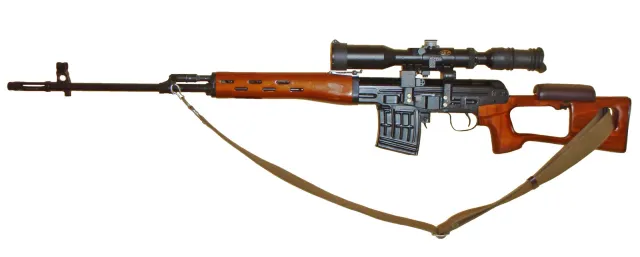
5. SVD Dragunov

The Marder of this list: an old, modest-precision design that ranks mid-pack purely on the strength of a combat record nothing else here can match. In continuous service since 1963, more than 200,000 built and fielded by roughly 50 operators, the SVD has fought in essentially every Soviet or Russian-aligned conflict and countless irregular wars across six decades, and it’s carried by both sides in the Russia-Ukraine war today. It ranks here, not higher, because by modern standards it’s a comparatively coarse rifle, roughly 2 to 2.5 minutes of angle, outclassed on precision by every bolt gun above it on this list.
Advantages: unmatched combat longevity and battlefield ubiquity across six decades and roughly 50 operators; a rugged, reliable semi-automatic action in punishing conditions; light and fast-handling for a marksman rifle; the design that defined the squad designated-marksman concept across the Eastern bloc.
Disadvantages: modest accuracy, roughly 2 to 2.5 minutes of angle, well short of modern precision rifles; dated optics and ergonomics on the base pattern; a 7.62x54mmR cartridge and 800-meter range that reflect a 1960s squad-support brief, not modern long-range precision.
A rifle designed in 1963 is still being carried into combat by regular and irregular forces on multiple continents six decades later, the longest continuous service story on this entire list.
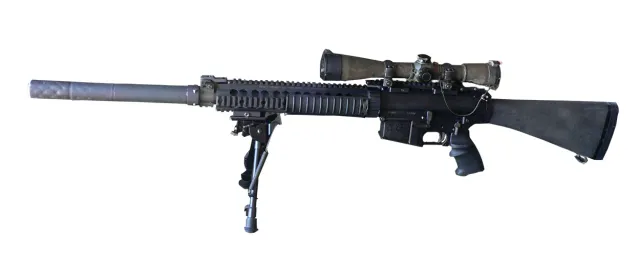
4. Knight’s SR-25

The rifle that founded the entire modern semi-automatic sniper category. Eugene Stoner refined his own AR-10 design at Knight’s Armament in 1990, and US Special Operations Command adopted it as the Mk11 from the mid-1990s for Delta Force and SEAL use, where a version remains in frontline service decades later. It ranks above the SVD, M110 and G28 because it’s the design that spawned all three, with the deepest special-operations combat pedigree on this list, and below the dedicated .338 bolt guns because a 7.62mm semi-automatic tops out below a purpose-built long-range precision rifle.
Advantages: the foundational modern semi-automatic sniper design, with genuine sub-MOA accuracy and rapid follow-up shots; a deep, sustained US special-operations combat record since the 1990s; excellent parts commonality with the wider AR family; still in frontline service decades after its introduction.
Disadvantages: a 7.62mm semi-automatic precision ceiling below the .338 bolt guns above it; early-generation variants heavier and less refined than modern equivalents; overlaps in role with its own descendants, the M110 and M110A1, muddying its distinct identity.
Its origin is the genuinely interesting, checkable fact here: Stoner joined Knight’s Armament in the early 1990s and rebuilt his own 1950s AR-10 into the SR-25, seeding the M110, Mk11 and the entire US semi-automatic sniper lineage that followed.
3. Sako TRG-42 

A dedicated bolt-action .338 Lapua Magnum precision rifle introduced in 2000, the magnum sibling of the 7.62mm TRG-22, fielded by military and designated-marksman units across Europe and prized for its adjustable, cold-hammer-forged-barrel precision. It ranks above every semi-automatic rifle on this list on pure long-range precision, and above the ORSIS on independently scrutinized Western pedigree, but below the Barrett on ubiquity and the AWM on documented combat record in the same caliber class.
Advantages: a dedicated .338 Lapua Magnum bolt-action with sub-MOA accuracy; the highest muzzle velocity of any .338 rifle on this list; rugged, cold-climate-proven Finnish engineering with a fully adjustable chassis; broad, independently scrutinized European military adoption.
Disadvantages: a thinner marquee combat record than the British AWM in the same caliber class; a lower adoption profile than the Barrett or AWM; the usual bolt-action rate-of-fire tradeoff against the designated marksman rifles for squad-support work.
Its story here is a quiet one: consistent adoption across European militaries and a strong reputation among precision-rifle users, without the single headline event that anchors the entries above and below it.
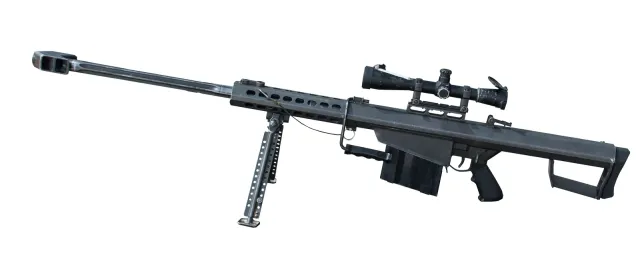
2. Barrett M82

The .50 BMG semi-automatic that pioneered the modern large-caliber rifle category, and the second most combat-proven rifle on this list. The Marine Corps received roughly 100 to 125 M82s weeks before the 1991 Gulf War and used them for both anti-materiel work, disabling radar, light vehicles and equipment from beyond the range of return fire, and long-range anti-personnel engagements. It’s since been adopted by more than 75 countries. It ranks second, not first, because it’s fundamentally an anti-materiel rifle, a different and more specialized tool than a dedicated long-range precision sniper rifle. Worth stating precisely: the famous longest-confirmed-kill records belong to other rifles entirely, not the M82.
Advantages: the deepest and most widely fielded combat record of any rifle on this list, from the 1991 Gulf War onward, across more than 75 operators; .50 BMG reach and energy no other rifle here matches for anti-materiel work; semi-automatic follow-up shots in a large-caliber platform; the rifle that defined the category.
Disadvantages: heavy and punishing to carry and fire; fundamentally an anti-materiel rifle, not optimized for the finest anti-personnel precision; .50 BMG is a specialized logistics burden compared with 7.62mm or .338.
Its 1991 Gulf War debut is the checkable milestone: Marines received the rifles weeks before Desert Storm and used them to disable Iraqi equipment at ranges that outreached everything else in the inventory, which is what drove its adoption across dozens of militaries since.
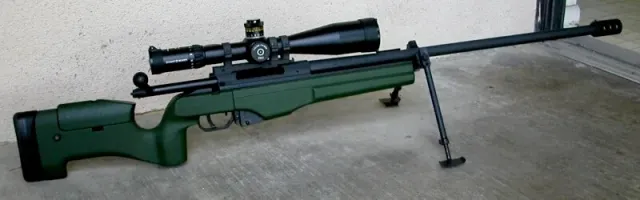
1. Accuracy International AWM 

The NATO gold standard for bolt-action precision, and the rifle with the deepest documented combat-precision record on this list. The .338 Lapua Magnum AWM, in British service as the L115A1 and later the upgraded L115A3, was adopted by the British and Dutch armies from 1996 and now serves with more than 20 militaries. In November 2009, in Helmand Province, a British Army sniper used an L115A3 to hit two Taliban machine gunners consecutively at a confirmed range of 2,475 meters, roughly 900 meters beyond the rifle’s own recommended engagement range, a shot that stood as the world’s longest confirmed sniper kill for years afterward. Frame that record for what it is: a marksmanship and engineering benchmark for the rifle-and-cartridge system, not a body count. It wins this list on the combination of that combat-validated precision and its broad allied adoption, the best actual sniper rifle here, not merely the one that reaches farthest.
Advantages: a combat-validated extreme-precision record, the years-long world record for the longest confirmed sniper shot, set in 2009; sub-0.5-minute-of-angle accuracy from Accuracy International’s chassis and bedding system; broad, independently scrutinized NATO adoption since 1996 across more than 20 operators; a rugged Arctic Warfare pedigree built for the harshest field conditions.
Disadvantages: the usual bolt-action rate-of-fire tradeoff against the semi-automatic designated marksman rifles for squad-support fire; a premium cost; a confusingly overlapping Accuracy International family of near-identical model names that can muddle exactly which variant a given claim applies to.
The 2009 Helmand shot exceeded the rifle’s own recommended engagement range by roughly 900 meters and stood as the world’s longest confirmed sniper shot for years, an outlier that became the benchmark the entire precision-rifle field measured itself against.
The 2026 ranking at a glance
| Rank | Rifle | Origin | Caliber | Action | Effective range | Combat record |
|---|---|---|---|---|---|---|
| 1 | Accuracy International AWM | United Kingdom | 8.6 mm | Bolt-action | 1,100 m | L115A3, 2,475 m shot, 2009 |
| 2 | Barrett M82 | United States | 12.7 mm | Semi-automatic | 1,800 m | Gulf War, 1991 onward |
| 3 | Sako TRG-42 | Finland | 8.6 mm | Bolt-action | 1,200 m | Fielded, no headline incident |
| 4 | Knight’s SR-25 | United States | 7.6 mm | Semi-automatic | 800 m | US SOF (Mk11), 1990s- |
| 5 | SVD Dragunov | Russia/USSR | 7.6 mm | Semi-automatic | 800 m | Continuous since 1963 |
| 6 | M110 SASS | United States | 7.6 mm | Semi-automatic | 800 m | Iraq/Afghanistan, 2008- |
| 7 | G28 | Germany | 7.6 mm | Semi-automatic | 600 m | KSK, Afghanistan (ISAF) |
| 8 | CheyTac M200 | United States | 10.4 mm | Bolt-action | 2,000 m | Thin, reputation outruns record |
| 9 | ORSIS T-5000 | Russia | 8.6 mm | Bolt-action | 1,500 m* | FSB/FSO/Rosgvardiya, 2017 |
| 10 | Ruger Precision Rifle | United States | 6.5 mm | Bolt-action | not published | None (civilian/competition) |
*Russian state figure, not independently verified.
The #1 rifle, the AI AWM, sits mid-pack on range at 1,100 meters, while the two longest-reaching rifles here, the CheyTac at 2,000 meters and the unverified ORSIS at 1,500, rank 8th and 9th. Effective range measures cartridge and barrel, not combat record or precision. The #10 rifle, the Ruger Precision Rifle, isn't on this chart at all: it carries no published military range figure, because it's a competition rifle, not a fielded weapon.
The bottom line
No sniper rifle on this list wins on every axis, and that’s the honest state of the class in 2026: a trade-off between combat record, precision engineering and the right cartridge for the job, not a simple ladder of who reaches farthest. The AI AWM tops this ranking because it pairs a combat-validated precision record with broad NATO adoption, but the Barrett and Sako are close enough behind it that mission, whether anti-materiel standoff or dedicated long-range interdiction, should decide a real choice, not a range figure.
Run any two of these rifles head-to-head in the comparison tool, browse every rifle in the database on the rifle class page, or match a rifle to a role in the advisor. More rankings and breakdowns like this live on the articles page, including our recent countdowns of the best main battle tanks and best IFVs of 2026.
Sources
Systems in this comparison
Every system covered above, with its photo and, where available, a video. Tap a card to open the full spec sheet.
Compare these side by side →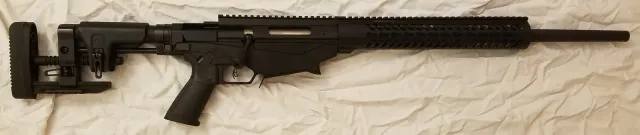
Rifle & long arms
Precision Rifle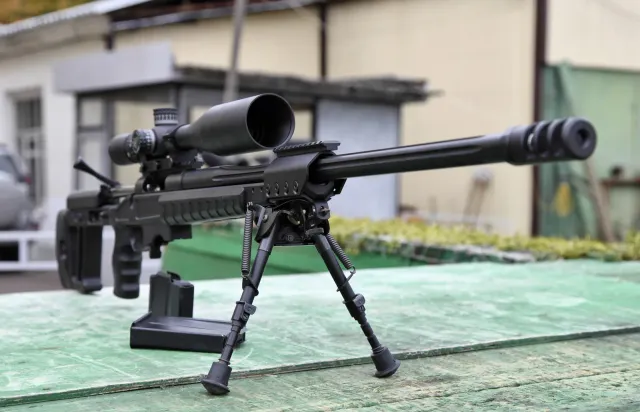
Rifle & long arms
ORSIS T-5000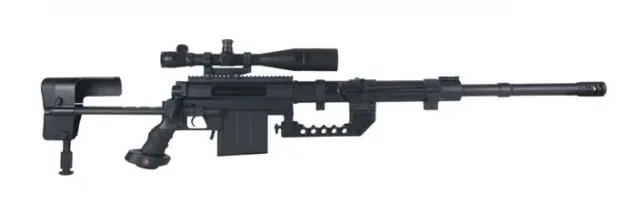
Rifle & long arms
M200 Intervention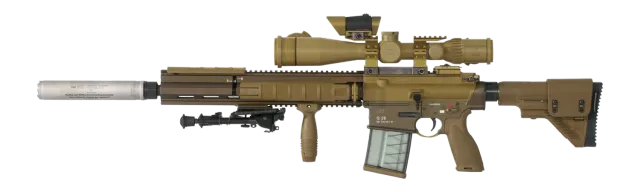
Rifle & long arms
Arctic Warfare Magnum (AWM)Frequently asked questions
What is the best sniper rifle in 2026? +
The Accuracy International AWM, known in British service as the L115A3, on the combination of a combat-proven extreme-precision record and broad NATO adoption since 1996. In November 2009 a British Army sniper used an L115A3 to make a confirmed shot at 2,475 meters in Afghanistan, a range that stood as the world record for years. It wins on record and precision, not on reaching the farthest.
Does the longest-range rifle make the best sniper rifle? +
No. The CheyTac M200 reaches 2,000 meters and the Barrett M82 reaches 1,800 meters, both outranging the AWM's 1,100 meters, yet they rank 8th and 2nd. Effective range measures cartridge energy and barrel length, not the combat-proven precision and adoption that actually decide this ranking.
What is the difference between a sniper rifle and a designated marksman rifle? +
A designated marksman rifle, like the SVD Dragunov, SR-25, M110 or G28, is a semi-automatic rifle that lets one shooter in a squad deliver fast, accurate fire beyond normal rifle range. A dedicated sniper rifle, like the AWM, Sako TRG-42, Barrett M82 or CheyTac, is usually a bolt-action precision system built for a single deliberate long-range shot. They're different jobs, not a quality ladder.
Which sniper rifle has the longest combat history? +
The SVD Dragunov, in continuous frontline service since 1963, six decades across nearly every Soviet or Russian-aligned conflict and countless irregular ones worldwide, and in use on both sides of the Russia-Ukraine war today.
Are Russian sniper rifle specifications reliable? +
Treat them as claims. The ORSIS T-5000's published 1,500-meter range and other performance figures are Russian manufacturer disclosures with no independent Western verification, though its 2017 adoption by the FSB, FSO and Rosgvardiya is documented.
Related reading


