The 10 Best Infantry Fighting Vehicles of 2026, Ranked
A 10-to-1 countdown of the best infantry fighting vehicles of 2026, ranked on real combat record, protection, firepower and program maturity.

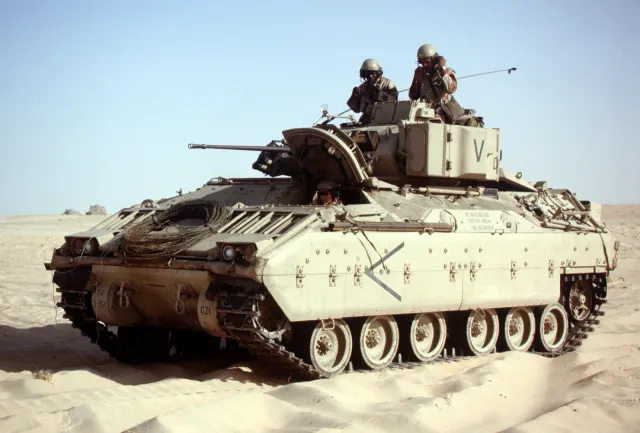
Via Wikipedia, M2 Bradley (shown for identification)
On 11 January 2024, near Stepove north of Avdiivka, two American-built M2 Bradleys of Ukraine’s 47th Mechanized Brigade fought a Russian T-90M Proryv, Russia’s most modern serially produced tank, at close range on drone video. The Bradleys poured 25mm cannon fire into the T-90M’s optics while dodging its 125mm gun, which never landed a hit; the tank’s turret spun out of control into a tree, and a first-person-view drone finished it off. A vehicle the Pentagon spent 17 troubled years developing, mocked so badly during testing that it inspired a satirical film, outfought a modern main battle tank. That’s the thesis of this whole list: combat record decides it, not the spec sheet.
Key takeaways:
- Two Ukrainian M2 Bradleys destroyed a Russian T-90M tank near Avdiivka on 11 January 2024 without taking a hit, an FPV drone finished the kill.
- Bradleys are widely credited with destroying more Iraqi armor than the M1 Abrams in the 1991 Gulf War, losing 20 of their own, only 3 to enemy fire.
- Open-source tracker Oryx has documented at least 677 BMP-3s lost in Ukraine as of early 2025, likely most of Russia’s pre-war fleet.
- All 18 Pumas in a German company dropped to zero operational readiness within days during a December 2022 NATO high-readiness exercise.
- The #2-ranked Namer, at 60 tonnes, weighs more than double the #1-ranked Bradley’s 27.6 tonnes, proof armor mass alone doesn’t decide this ranking.
We ranked ten current infantry fighting vehicles from 10 down to 1 on four criteria, in this priority order: real combat and operational record (we say plainly when a vehicle has never fought), protection and active protection systems (weighted toward a proven survival record over a claimed one), firepower (main gun, ammunition family, anti-tank missile integration), and program maturity and logistics (is it actually fielded, in what numbers, with what allied sustainment). Every Russian figure below is flagged as a manufacturer or state claim, not treated as fact. Photos and full spec sheets for every vehicle are in the gallery below the article.
How we ranked them
- Real combat and operational record. A documented performance beats a better paper spec. We say plainly when a vehicle has never fired a shot.
- Protection and active protection systems. Armor generation, hull mass and APS integration, weighted toward a proven intercept or survival record, not just a claimed one.
- Firepower. Main gun caliber, ammunition family, fire control and anti-tank missile integration. A bigger gun with worse fire control loses to a smaller one that hits first.
- Program maturity and logistics. Whether it’s actually fielded, in what numbers, with what allied sustainment and export base.
10. T-15 Armata 

Russia’s heaviest IFV shares the T-14 Armata tank’s fate: a genuinely novel design that has spent a decade as a parade vehicle rather than a fielded weapon. Built on the Armata chassis with the crew isolated in an armored hull capsule and a remote Bumerang-BM turret carrying a 30mm autocannon and Kornet anti-tank missiles, it looks formidable on paper at a claimed 48 tonnes. More than ten years after its 2015 unveiling, only a handful of prototypes and pre-production vehicles exist. It is not in serial production, and there is no confirmed combat use in Ukraine.
Advantages: a genuinely novel layout, with the crew isolated in an armored capsule and a remote turret that keeps them away from the gun; heavy Armata-chassis protection on paper; designed from the outset around a hard-kill active protection system and modern sensors.
Disadvantages: not fielded, only a handful of prototypes exist a decade after unveiling; zero combat record; every protection, active-protection-system and mobility figure is an unverified Russian state claim.
The T-15 has spent its entire existence as a parade and arms-expo vehicle. Its most-documented public appearances are Victory Day parades on Red Square, never a battlefield, a decade after it was first shown to the world.
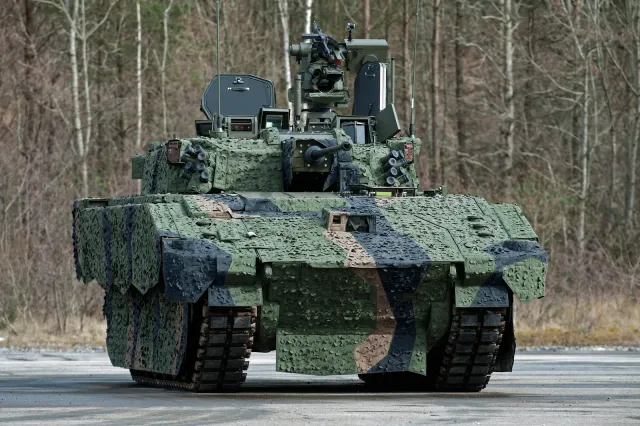
9. Ajax 

Britain’s cautionary tale of this list. A 38-tonne tracked vehicle armed with a genuinely modern 40mm CT40 cased-telescoped cannon, but the base variant carries a crew of three and effectively no dismount squad, making it more a reconnaissance vehicle than a true troop-carrying IFV. The program was originally due in service around 2017. Trials caused real vibration and noise injuries: roughly 310 personnel required hearing assessments and about 17 were treated for hearing loss, and the roughly £5.5 billion program was delayed for years, only clearing a service milestone in late 2025, with further training halts into 2025-26 after additional reported injuries and an urgent Ministry of Defence investigation. There is no combat record.
Advantages: the 40mm CT40 cased-telescoped cannon is a genuinely modern, hard-hitting gun; an advanced sensor and surveillance suite that is the platform’s real purpose; heavily protected for a reconnaissance vehicle.
Disadvantages: more than a decade late and only now entering service after a documented injury scandal; the base variant carries essentially no dismount squad, so it functions more as a recon vehicle than a true IFV; no combat record whatsoever.
The vibration was severe enough that trials were repeatedly suspended and crews were limited in how long they could ride inside. A vehicle program costing more than £6 billion reportedly left its own soldiers with hearing damage before it ever faced an enemy.
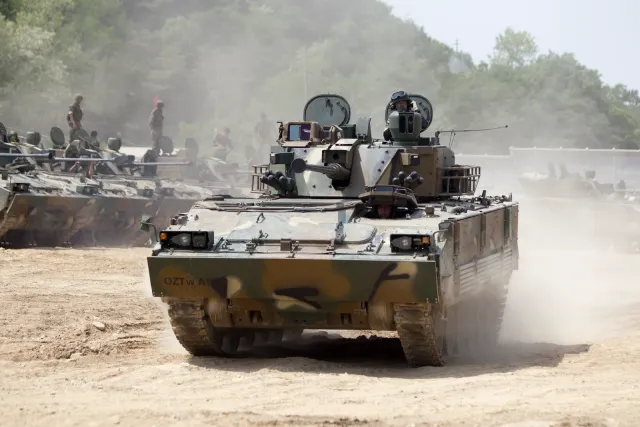
8. K21 

A capable, fielded design let down by no combat record and a real, verified development failure. A light 25.6-tonne hull uses composite and ceramic armor to stay amphibious without add-on flotation kits, armed with a 40mm autocannon and posting the best power-to-weight ratio on this list. It entered service in November 2009. The following month, one K21 sank during a water crossing, and a second sank shortly after, drowning one soldier. A board of inquiry blamed design defects, insufficient buoyancy, a malfunctioning wave plate and a faulty bilge pump, later corrected in a redesign. There is no combat record.
Advantages: excellent power-to-weight ratio and mobility; inherent amphibious capability without add-on kit; a modern 40mm autocannon that outguns most 30mm peers.
Disadvantages: zero combat record; lighter protection than the top-tier Western vehicles on this list; the early amphibious sinkings, though fixed, are a real black mark, and its export and allied logistics base remains thin.
Within weeks of entering service, the K21’s amphibious ambition literally sank it. Two new vehicles went under during water crossings and one soldier drowned, and Korea had to redesign the hull’s buoyancy before troops would trust it in the water again.
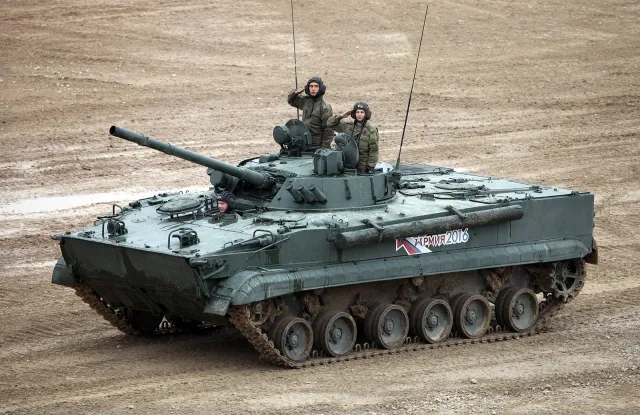
7. BMP-3

The most heavily used vehicle in the bottom half of this list, and the war in Ukraine has been merciless to it. A distinctive low-profile, amphibious 18.7-tonne hull carries genuinely heavy organic firepower for its class: a 100mm 2A70 gun-launcher capable of firing guided missiles, plus a coaxial 30mm autocannon. Open-source loss tracker Oryx had documented, from visually confirmed evidence alone, at least 677 BMP-3s lost as of early 2025, roughly 417 destroyed, 69 abandoned, 24 damaged and 67 captured, likely two-thirds to nearly all of Russia’s pre-war active fleet. Manufacturer Rostec reportedly tripled production to keep pace with the losses.
Advantages: the heaviest organic firepower on this list on paper, a 100mm gun-launcher plus a 30mm autocannon; amphibious with a low silhouette; cheap and mass-produced, genuinely sustainable at scale for Russia.
Disadvantages: the weakest protection on this list, welded aluminum on an 18.7-tonne hull, with a catastrophic documented loss record in Ukraine; the 100mm and 30mm fire-control integration and any modern armor claims are unverified Russian state figures; no public modern unit cost.
Open-source trackers have logged more BMP-3s destroyed or captured than Russia is thought to have fielded before the war, a vehicle now being built faster specifically because it is being lost faster.
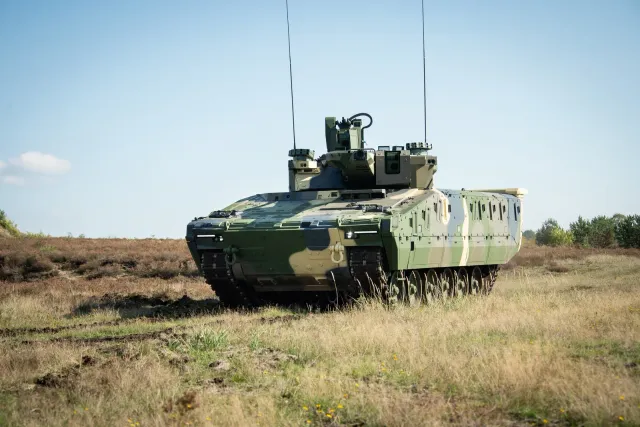
6. Lynx KF41 

The most modern, most future-proofed design on this list, but with no combat and only now entering service. A clean-sheet 44-tonne Rheinmetall vehicle with a 35mm autocannon in the Lance turret and room for eight dismounts, built with a modular architecture so armor, turret and mission kit can swap without a full redesign. Its real story so far is industrial rather than tactical: Hungary became the launch customer in September 2020, ordering 218 Lynx KF41s plus nine support vehicles worth more than 2 billion euros, with the first 46 built in Germany and the rest license-built at Rheinmetall’s new plant in Zalaegerszeg, Hungary, production started in January 2023, with the first Hungarian-built vehicle handed over in July 2024.
Advantages: a clean-sheet, upgrade-friendly modular design, the most future-proofed hull on this list; a real production and export program with local license manufacturing secured; active-protection-ready with a large eight-person dismount squad.
Disadvantages: zero combat record; the newest design here with the least service track record of any fielded vehicle on this list; only one confirmed export customer so far, so a thin fleet and logistics base for now.
Rheinmetall built the Lynx explicitly to win the export contests the Puma kept losing on cost and complexity, and Hungary, not Germany, became the launch customer, standing up a Lynx production line on Hungarian soil.
5. Puma

The clearest reversal on this list. On paper the Puma remains elite: top-tier composite modular armor buildable to a heavier combat configuration, a clear path to a hard-kill active protection system, and a sophisticated 30mm autocannon with strong fire control. It has never seen combat, and it carries a genuinely embarrassing, well-documented reliability failure. During the week of 12 December 2022, at an exercise on the Bergen range, all 18 Pumas of a company committed to NATO’s Very High Readiness Joint Task Force for 2023 dropped to zero operational readiness within days, failures centered on electronics plus a cable fire. The commander of the 10th Armoured Division called it a total failure; the manufacturer countered it was minor damage from improper operation. Germany paused its follow-on Puma purchase in response, and the unit trained on the older Marder instead.
Advantages: among the best-protected IFVs in production, with a mature composite-armor and active-protection integration path; an advanced 30mm airburst-capable autocannon with excellent fire control; fielded in real numbers by the Bundeswehr.
Disadvantages: zero combat record; a documented, high-profile reliability failure, an entire company’s worth of vehicles down before a NATO readiness rotation, that dented confidence and paused procurement; expensive and complex.
Days before it was to anchor NATO’s rapid-reaction force, an entire company of Germany’s most advanced IFV broke down at once. The general on the ground called it a total failure while the manufacturer blamed the crews.
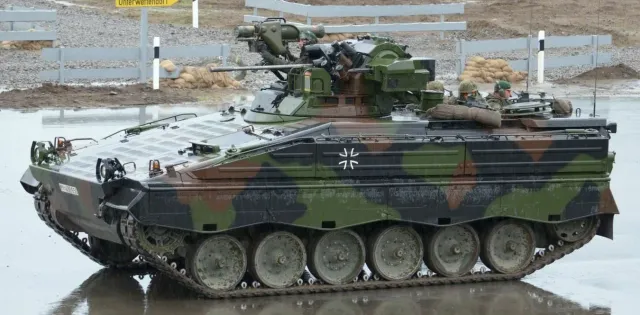
4. Marder

This is the placement that proves the list’s whole thesis: a 1971 design with a 20mm gun ranks above the shinier, combat-untested Puma and Lynx because it has actually fought and brought its crews home. A 33.5-tonne tracked vehicle armed with a 20mm autocannon and Milan anti-tank missiles, Germany donated roughly 100 Marders to Ukraine, first used in August 2023 by the 82nd Air Assault Brigade during the counteroffensive, where it earned a reputation for toughness and effective suppressive fire during minefield breaching. Open-source tracker Oryx had documented, as of May 2025, at least 47 Ukrainian Marders lost, 28 destroyed, 12 damaged or abandoned and 7 captured.
Advantages: a real, current combat record in a peer war, with a reputation for toughness and high crew survivability; a major improvement in protection over the Soviet-era vehicles it replaced in Ukrainian service; simple, mature and easy to sustain.
Disadvantages: a fifty-year-old design with the weakest gun on this list at 20mm and a dated armor generation; no active protection system; being retired from German service, so a shrinking parts base in the long term.
Frontline Ukrainian crews reportedly preferred the half-century-old Marder to newer Soviet-era vehicles precisely because it kept them alive, a 1970s Cold War IFV earning fresh combat respect in the drone-and-mine war of the 2020s.
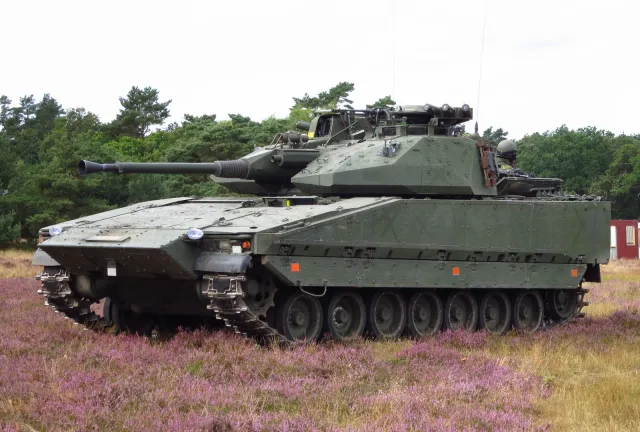
3. CV90 

The cleanest combat record on this list outside the top spot, paired with the deepest Western export base of any IFV here. A 35-tonne hull armed with a 40mm Bofors autocannon, Danish, Norwegian and Swedish CV90s fought in Afghanistan, and Sweden donated roughly 50 CV90s to Ukraine starting in February 2023, where the vehicle saw its first high-intensity combat. Reporting from the 2023 DSEI defense exhibition noted three Ukrainian CV90s suffered battle damage with no crew or embarked infantry killed in the documented cases, an exemplary survivability record for a vehicle actually taking hits.
Advantages: a genuine multi-theater combat record, Afghanistan followed by high-intensity Ukraine, with outstanding documented crew survivability; the widest Western IFV export and user club of any vehicle on this list, giving it a deep and growing logistics base; a hard-hitting 40mm gun on continuously upgraded modular armor.
Disadvantages: an older baseline armor generation than the Namer, Puma or Lynx, even after repeated upgrades; lighter protection than the heaviest vehicles on this list; no fielded hard-kill active protection system on the donated Ukrainian variants.
In Ukraine the CV90 built a quiet reputation as the vehicle crews walked away from: multiple battle-damaged CV90s, zero documented crew fatalities in the reported cases, the kind of record no brochure can manufacture.
2. Namer 

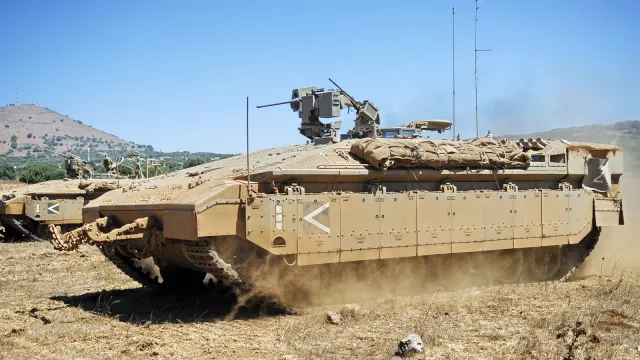
The best-protected troop carrier ever fielded, and combat-proven in one of the hardest urban environments on Earth. Built on the Merkava Mk4 tank chassis at 60 tonnes, with the engine mounted forward as extra frontal shielding, a V-shaped belly against mines, and combat-proven Trophy active protection, the Namer is the world’s heaviest infantry fighting vehicle, developed directly after 2004 Gaza operations exposed how vulnerable lighter M113 carriers were to IEDs and rocket-propelled grenades. It has seen hard urban combat in Gaza in 2014 and again in 2023 and 2024. Note honestly: the base Namer is a heavy armored carrier with a remote weapon station rather than a cannon; the true fighting Namer IFV variant, with a 30mm unmanned turret and Spike anti-tank missiles, is a newer, still-fielding configuration.
Advantages: the best passive protection of any troop carrier in service, on a tank chassis with combat-proven Trophy active protection; a survivability-first design, forward engine, belly shaping, rear evacuation hatch, purpose-built for the IED, anti-tank missile and urban threat; can carry a large dismount group plus casualties.
Disadvantages: modest organic firepower in its base configuration, a remote weapon station rather than a cannon, with the 30mm-turret IFV variant still fielding; the heaviest and least mobile vehicle on this list at 60 tonnes; effectively a single-operator platform, so none of the allied-stockpile logistics advantage that benefits NATO’s IFV fleets.
Israeli crews and commentators have repeatedly credited the Namer with crews surviving blasts and hits in Gaza that would gut a lighter carrier. The vehicle was born directly from the 2004 losses that proved a light armored personnel carrier is a death trap in that kind of fight.
1. M2A3 Bradley 

The Bradley wins this list on balance and record, the same logic that put the Leopard 2A7, F-35A, Virginia-class and Arleigh Burke atop our tanks, fighter jets, submarines and destroyers rankings: the most combat-employed, best-sustained vehicle here, with a record freshly re-validated against peer armor. In the 1991 Gulf War, Bradleys are widely credited with destroying more Iraqi armored vehicles than the M1 Abrams, mostly via TOW missiles against T-55, T-62 and T-72 tanks, losing 20 Bradleys, only 3 to enemy fire and 17 to friendly fire. That figure is well-attested across the vehicle’s service histories rather than independently tallied engagement by engagement, so treat it as well-sourced rather than audited. In Ukraine, more than 100 Bradleys supplied from 2023 fought Russian armor, and in the verified Stepove engagement of 11 January 2024, two Bradleys damaged a T-90M that an FPV drone then finished off. Its TOW launcher gives it anti-armor reach no autocannon-only IFV on this list matches.
“It’s an armored capability that can transport mechanized infantry into battle in support of both offensive and defensive operations, providing a level of firepower and armor that will bring advantages on the battlefield as Ukraine continues to defend their homeland,” said Brig. Gen. Pat Ryder, Pentagon Press Secretary, in Breaking Defense, January 2023.
Advantages: the deepest and freshest combat record on this list, from 1991 through Ukraine in 2023 and 2024, repeatedly validated against modern armor; a TOW anti-tank missile launcher for genuine anti-tank reach alongside a 25mm chain gun; unmatched fleet size, allied sustainment, training and upgrade base; documented high crew survivability in Ukraine.
Disadvantages: an older, lighter hull than the clean-sheet European heavies on this list, with less growth margin; a modest 25mm main gun against 30-40mm peers; the US Army’s own XM30 replacement program is a tacit admission the platform is aging out.
A fitting bookend for this whole list: the Bradley was so ridiculed during its troubled 17-year development, immortalized by the satirical film The Pentagon Wars, that critics called it a death trap. It went on to out-kill the Abrams in 1991 and, three decades later, out-fight a T-90M on drone video near Avdiivka. The spec sheet never predicted either.
The 2026 ranking at a glance
| Rank | IFV | Origin | Main gun | Dismounts | Combat record | Combat weight |
|---|---|---|---|---|---|---|
| 1 | M2A3 Bradley | United States | 25mm + TOW ATGM | 6 | Gulf War 1991, Ukraine 2023- | 27.6 t |
| 2 | Namer | Israel | 30mm or RWS + Spike ATGM | 9 | Gaza, 2014 and 2023-24 | 60 t |
| 3 | CV90 | Sweden | 40mm Bofors | 8 | Afghanistan, Ukraine 2023- | 35 t |
| 4 | Marder | Germany | 20mm + Milan ATGM | 6 | Ukraine, 2023- | 33.5 t |
| 5 | Puma | Germany | 30mm autocannon | 6 | None | 43 t |
| 6 | Lynx KF41 | Germany | 35mm autocannon | 8 | None | 44 t |
| 7 | BMP-3 | Russia | 100mm + 30mm* | 7 | Ukraine, 2022- (heavy losses) | 18.7 t* |
| 8 | K21 | South Korea | 40mm autocannon | 9 | None | 25.6 t |
| 9 | Ajax | United Kingdom | 40mm CT40 | 3 | None | 38 t |
| 10 | T-15 Armata | Russia | 30mm + Kornet ATGM* | 9 | None | 48 t* |
*Russian state figure, not independently verified.
The #1 vehicle, the Bradley at 27.6 tonnes, is one of the three lightest vehicles on this list, while the two heaviest, the Namer at 60 tonnes and the T-15 Armata at 48, sit at opposite ends of the ranking, second and last. Armor mass doesn't decide this list. Combat record does.
The bottom line
No infantry fighting vehicle on this list wins on every axis, and that’s the honest state of the class in 2026: a running trade-off between combat record, protection, firepower and what a logistics chain can actually sustain over a service life measured in decades. The Bradley tops this ranking because it pairs a deep, repeatedly re-proven combat record with the largest fleet and sustainment base of any IFV in service, but the Namer and CV90 are close enough that mission profile and existing fleet commonality should decide a real procurement call, not a spec sheet.
Run the top two head-to-head in the comparison tool, browse every vehicle on the IFV class page, or get a tailored recommendation from the advisor. More rankings and breakdowns like this live on the articles page, including our recent countdowns of the best tanks and best destroyers of 2026.
Sources
- Avdiivka drone video shows Ukraine's M2 Bradleys take out Russian T-90 tank, Newsweek
- M2 Bradley, reference specifications, Wikipedia
- Germany's Second Lot of Puma IFVs Under Questions Following Breakdowns, European Security & Defence
- Namer, reference specifications, Wikipedia
- T-15 Armata, reference specifications, Wikipedia
- Biden OKs sending Bradley Fighting Vehicles to Ukraine, Breaking Defense
Systems in this comparison
Every system covered above, with its photo and, where available, a video. Tap a card to open the full spec sheet.
Compare these side by side →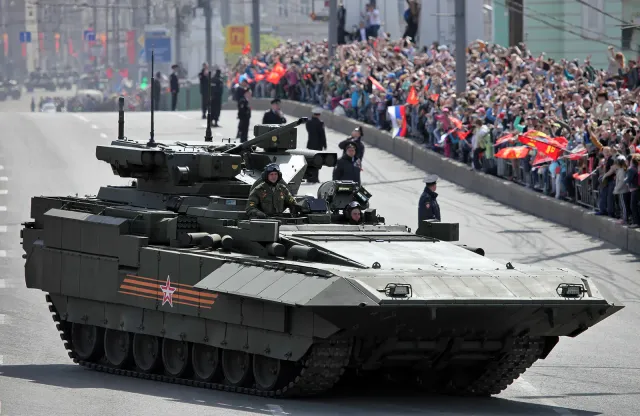
Frequently asked questions
What is the best infantry fighting vehicle in 2026? +
By our weighting of combat record, protection, firepower and program maturity, the M2A3 Bradley ranks first. It has the deepest and most recently re-proven combat record of any IFV, from the 1991 Gulf War, where Bradleys destroyed more Iraqi armor than the Abrams, to Ukraine, where in January 2024 two Bradleys damaged a modern Russian T-90M tank near Avdiivka. Its TOW anti-tank missiles and unmatched allied sustainment base put it ahead of newer designs that have never fought.
What is the difference between an IFV and an APC? +
An APC is built mainly to move troops with only a machine gun for self-defense. An IFV adds a stabilized cannon, often anti-tank missiles, and armor rated to fight alongside tanks so dismounts can assault under direct fire support. The line blurs in practice: the Namer is really a heavy APC with a newer fighting variant, and the Ajax on this list is closer to a reconnaissance vehicle than a true troop-carrying IFV.
Which IFV has the best protection? +
The Namer, built on Israel's Merkava Mk4 tank chassis at 60 tonnes with combat-proven Trophy active protection, is the heaviest and best-protected troop carrier ever fielded. The Puma and Lynx KF41 lead among clean-sheet Western IFVs, but neither has been in combat.
Why does the Puma rank only fifth when it is so advanced? +
Because it has never seen combat and carries a documented reliability failure. In December 2022 all 18 Pumas of a company dropped to zero operational readiness within days of an exercise, just before a NATO high-readiness rotation, and Germany paused its follow-on order. On paper it is elite. The ranking weights a proven record over a brochure.
How reliable are Russian IFV specifications? +
Treat them as claims. The BMP-3's 100mm gun-launcher performance and the T-15 Armata's protection and production figures are Russian state disclosures, not independently verified. The T-15 is not in serial service, and open-source trackers have documented more than 677 BMP-3s lost in Ukraine, likely most of Russia's pre-war fleet.
Related reading


