Middle East Proxy Wars: Timeline & Latest Developments
Since October 2023, Hezbollah in Lebanon, the Houthis in Yemen, and Iran-aligned militias in Iraq have fought parallel campaigns against Israel, the United States, and international shipping, a network of fronts that escalated sharply after the Israel-Iran war opened in February 2026 and remains only unevenly contained by a series of contested ceasefires.
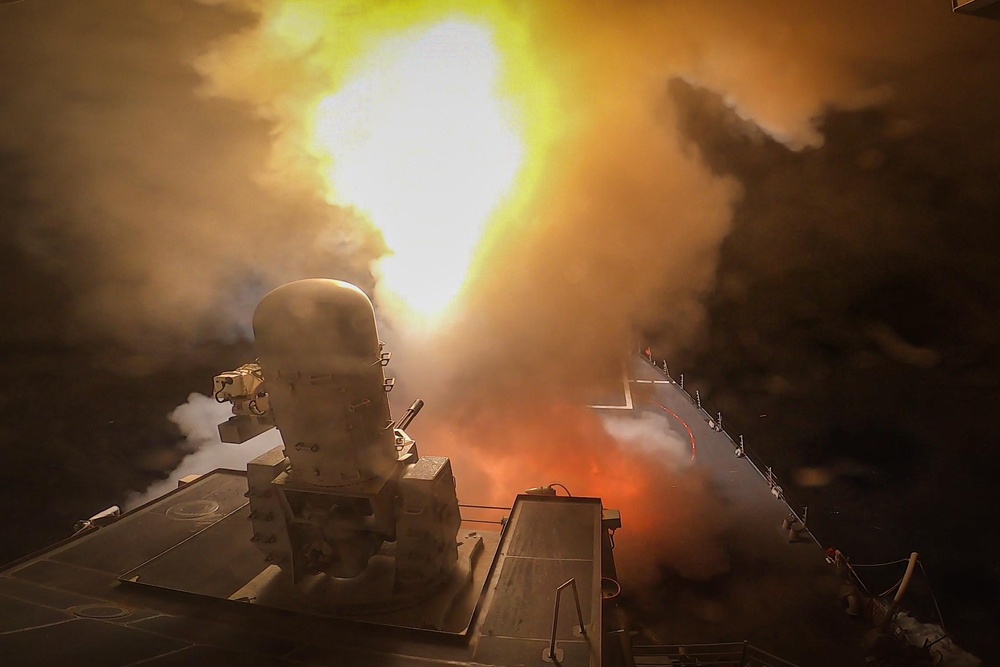
U.S. Navy photo by Mass Communication Specialist 2nd Class Aaron Lau, public domain, via DVIDS.
Three fronts opened within six weeks of each other in the fall of 2023, each announced as a support front for Hamas after the Gaza war began on October 7. Hezbollah started firing across the Israel-Lebanon border on October 8. Iran-aligned Iraqi factions, coordinating under the banner Islamic Resistance in Iraq and led in practice by Kataib Hezbollah, claimed their first attack on a US base near Irbil on October 17. The Houthis in Yemen, who control the country’s northwest including the capital Sanaa, began targeting Israel-linked shipping in the Red Sea in mid-November, seizing the car carrier Galaxy Leader and its 25 crew on November 19. None of these three were fighting Israel or the US before October 2023; all are backed to varying degrees by Iran, and all framed their campaigns as pressure over Gaza. This page tracks that network, distinct from the direct Israel-Iran War that began in February 2026 and the Israel-Palestine War, though all three overlap in cause, timing, and at points in direct combat.
The Red Sea campaign became the most visible front internationally because of its effect on global trade. Houthi missile, drone, and small-boat attacks on commercial vessels, more than 100 documented by Wikipedia’s tracking through late 2025, forced much of Red Sea shipping to reroute around Africa’s Cape of Good Hope. Four ships have been sunk and at least 8 seafarers killed, per Wikipedia’s cumulative tally of incidents from March 2024 through October 2025. The US, UK, and a broader coalition responded with the defensive Operation Prosperity Guardian, then direct strikes under Operation Poseidon Archer in January 2024 and the larger Operation Rough Rider in 2025, described by the US as over 1,000 airstrikes. Houthi-run authorities in Sanaa have reported their own casualties from these strikes, including a disputed claim of 80 killed and 150 wounded in an April 2025 strike on the Ras Isa oil port, a figure not independently verified and treated here as a Houthi claim, not a confirmed count. A US-Houthi shipping ceasefire took effect in May 2025, and the Houthis paused strikes on Israel entirely after an October 2025 Gaza ceasefire, before resuming fire on Israel in March 2026 once the Israel-Iran war began, and declaring a total ban on Israeli shipping that June.
The Lebanon front has produced by far the largest death toll of the three. Fighting escalated sharply in September 2024, when Israel detonated thousands of Hezbollah members’ pagers and walkie-talkies in a covert operation, killed Hezbollah’s longtime leader Hassan Nasrallah in a Beirut airstrike days later, and followed with a ground invasion on October 1. A November 27, 2024, ceasefire briefly paused large-scale fighting, but Lebanon’s health ministry had already recorded more than 4,000 killed since October 2023, and kept documenting Israeli strikes killing dozens more despite the truce. The front reignited on a much larger scale once the Israel-Iran war began: Hezbollah resumed fire on March 2, 2026, Israel launched a second ground invasion on March 16, and on April 8, the same day a separate US-Iran-Israel ceasefire took effect elsewhere, Israel bombed multiple Lebanese cities in a campaign it called Operation Eternal Darkness that Al Jazeera reported killed 357 people. Israeli officials said the Iran ceasefire did not cover Lebanon, a position Lebanon and Hezbollah disputed. A further ceasefire took effect April 16 and has been extended repeatedly, but Lebanese officials have kept reporting strikes killing people since, and as of July 2026 Israel says it will indefinitely occupy roughly 570 to 600 square kilometers of southern Lebanon, displacing more than a fifth of the country’s population. Israel’s own losses here, 172 soldiers and civilians killed across both war phases per Wikipedia, are far smaller than Lebanon’s reported toll, and Israeli estimates of 4,000 to 5,000 Hezbollah fighters killed remain unconfirmed by Hezbollah or independent monitors.
The gap here is not a rounding difference: Lebanon's Ministry of Public Health count of Lebanese deaths is roughly 46 times the 172 Israeli soldiers and civilians reported killed on the same front, while Israel's own estimate that it killed 4,000 to 5,000 Hezbollah fighters remains unconfirmed by Hezbollah or independent monitors and is shown in a separate color for that reason.
The Iraq front has been the smallest of the three by casualty count but carries particular weight as the only one with confirmed US combat deaths. Iran-aligned Iraqi militias struck US forces in Iraq, Syria, and Jordan more than 170 times between October 2023 and early 2024, culminating in the January 28, 2024, drone strike on the Tower 22 outpost in Jordan that killed three US Army Reserve soldiers and wounded 47. The US responded with strikes on 85 targets in Iraq and Syria on February 2, and Kataib Hezbollah then paused attacks through most of 2024 and 2025. Fighting resumed once the Israel-Iran war began in February 2026: Wikipedia’s tracking of the 2026 Iraq front records more than 119 killed and 384 wounded by an April ceasefire there, including 85 Popular Mobilization Forces fighters plus smaller numbers of Iraqi security personnel, Kurdish forces, and civilians. By mid-2026 some factions, including forces aligned with Muqtada al-Sadr, agreed to disarm, while Kataib Hezbollah and Harakat Hezbollah al-Nujaba, the core of the Islamic Resistance in Iraq, refused.
Taken together, the three fronts show how unevenly one regional alignment can translate into combat. The Red Sea campaign has reshaped global shipping while killing relatively few people directly. The Lebanon front has produced the network’s largest death toll by a wide margin. The Iraq front, smallest in scale, is the one where US troops have died. None of the ceasefires covering these fronts, the 2025 US-Houthi shipping deal, the 2024 and 2026 Israel-Lebanon agreements, or the 2024 Iraq de-escalation, have fully stopped the fighting they were meant to end, and all three remain live as of July 2026.
Full Timeline (most recent first)
Israel and Lebanon launch first 'pilot zone' test of reciprocal withdrawal near the Litani
Israel and Lebanon agreed, after talks in Rome, to create a first 'pilot zone' straddling the Litani River covering Western and Eastern Zawtar, Froun, Ghandouriyeh, Qalaouiyeh, Burj Qalaouiyeh and Srifa, under which Israeli troops and Hezbollah fighters would simultaneously withdraw and the Lebanese Army would deploy in their place. A US official said the first withdrawal would begin within days, the first concrete implementation step under the framework agreement signed in Washington in June, though Hezbollah has not formally endorsed the specific plan and Lebanese military representatives were not part of the negotiations.
Iraq sets September disarmament deadline as core Iran-aligned militias keep refusing to disarm
Iraq's government set a September deadline for Iran-aligned militias to surrender their weapons, but Kataib Hezbollah, Harakat Hezbollah al-Nujaba and Kataib Sayyid al-Shuhada, the factions that fought most actively during the 2026 war, again publicly rejected disarmament and reaffirmed their commitment to what they call 'resistance,' according to the conflict monitor ACLED. Asaib Ahl al-Haq and Kataib al-Imam Ali, which agreed in June to leave the Popular Mobilization Forces and surrender weapons, have not yet detailed which capabilities they intend to hand over.
Netanyahu confirms Israel will keep occupying southern Lebanon
Prime Minister Benjamin Netanyahu said Israel would maintain its position in a roughly 570 to 600 square kilometer occupied zone of southern Lebanon, first seized during the March 2026 ground invasion, saying Israeli forces would remain in what he called the security buffer zone for as long as necessary. The occupation has displaced more than 1.2 million Lebanese civilians, over a fifth of the country's population, whom Israel is preventing from returning.
Hezbollah rejects a US disarmament framework
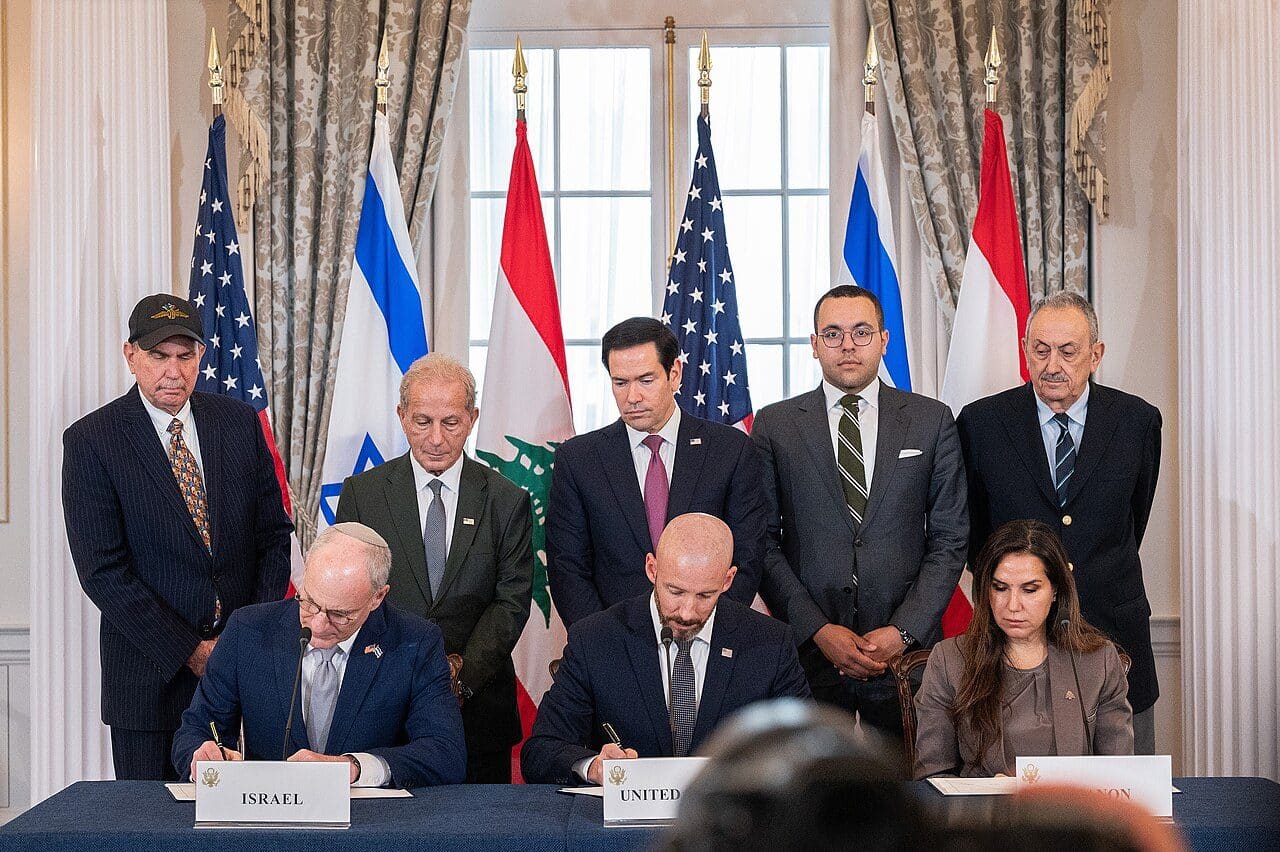
US Secretary of State Marco Rubio announced a framework requiring Hezbollah to end hostilities and withdraw from southern Lebanon in exchange for a comprehensive truce. Hezbollah rejected the deal, demanding a full Israeli withdrawal first rather than accepting disarmament as a precondition.
Israel strikes Lebanon again despite agreeing to a renewed truce
Israeli raids killed dozens more people in Lebanon within days of agreeing to a renewed ceasefire framework, according to Lebanese health ministry figures, prompting Al Jazeera and other outlets to question whether even the pretense of a truce still held. The same week, Israel struck Hezbollah targets near Beirut and Iran fired its first direct missiles at Israel since April, an escalation covered in more depth on the [Israel-Iran War](/wars/israel-iran-war/) page.
Israeli strikes kill 8 in Tyre
Israeli strikes on Tyre in southern Lebanon killed at least 8 people, one of a string of deadly incidents that Lebanese officials said showed the ceasefire remained unenforced in practice even after two extensions.
Houthis declare a total ban on Israeli shipping in the Red Sea
The Houthis fired two missiles at Israel, one intercepted and one that the IDF said fell short, and declared what they called a complete and total ban on Israeli maritime navigation through the Red Sea, an escalation beyond the group's stated position since the 2025 US ceasefire.
Two more Iraqi factions agree to place weapons under state control
Asaib Ahl al-Haq and Kataib al-Imam Ali agreed to place their weapons under Iraqi state authority, a partial step toward disarmament, though Kataib Hezbollah, the dominant Islamic Resistance in Iraq faction, and Harakat Hezbollah al-Nujaba both rejected the move.
Muqtada al-Sadr dissolves his Iraqi militia
Iraqi Shia cleric Muqtada al-Sadr ordered the dissolution of Saraya al-Salam, one of the armed factions that had been active during the 2026 fighting, a step toward de-escalation on the Iraq front even as Kataib Hezbollah and Harakat Hezbollah al-Nujaba continued to reject disarmament.
Lebanon ceasefire extended 45 days as violations persist
The Israel-Lebanon ceasefire was extended for a further 45 days after an earlier 3-week extension on April 23, even as documented Israeli strikes continued to kill people in southern Lebanon through the extension periods.
Ceasefire violations continue; Iraq casualty toll set at 119+ killed
Israeli strikes killed at least 28 more people in Lebanon in a single day despite the April 16 ceasefire, according to Lebanese officials. Separately, tallies of the Iraq front's 2026 fighting through the April ceasefire there put total casualties at more than 119 killed and 384 wounded, including 85 Popular Mobilization Forces fighters, 12 to 13 Iraqi military and police personnel, and 5 civilians.
US brokers a 10-day Israel-Lebanon ceasefire
The US State Department announced a 10-day cessation of hostilities between Israel and Lebanon, extendable by mutual agreement, under which Israel retained a stated right to self-defense while Lebanon committed to preventing Hezbollah and other armed groups from attacking Israel. As with the 2024 truce, Hezbollah was not a formal signatory.
Operation Eternal Darkness: Israel bombs Lebanon as the Iran ceasefire begins
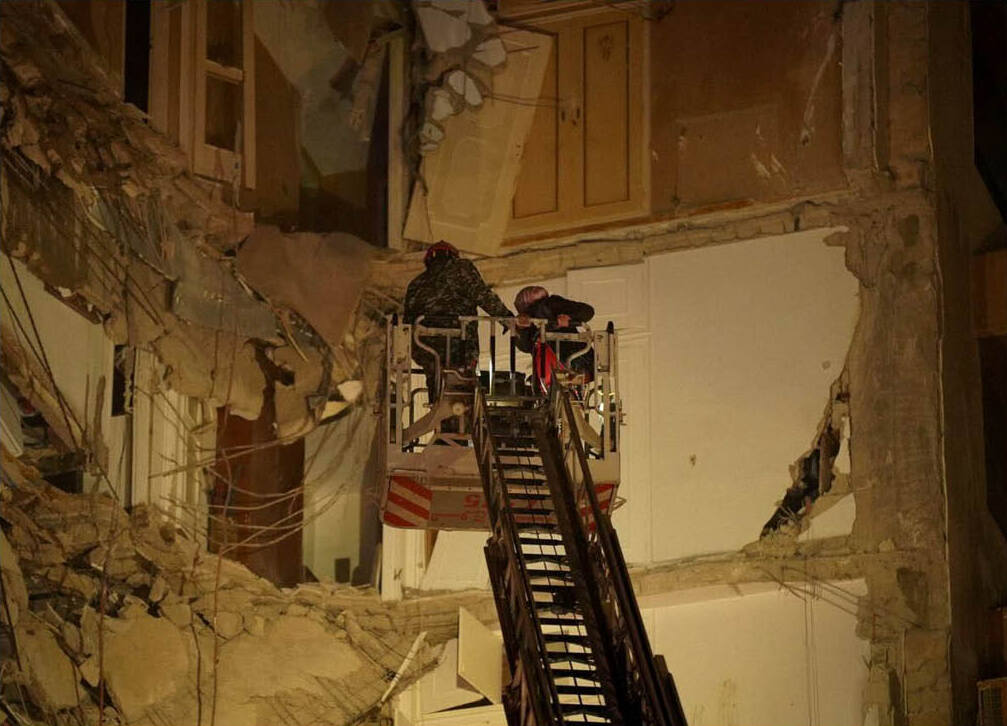
The same day a US-Iran-Israel ceasefire took effect on the war's main front (see the [Israel-Iran War](/wars/israel-iran-war/) page), Israel struck Lebanon with about 50 aircraft and 160 munitions in what it called Operation Eternal Darkness, hitting Beirut, Sidon, the Beqaa Valley, and Tyre. Al Jazeera reported 357 killed and Xinhua reported 1,223 wounded, including more than 80 deaths in Beirut's Hay el Sellom neighborhood alone; the IDF said it killed at least 250 Hezbollah fighters, a figure Hezbollah has not confirmed. Israeli officials said the Iran ceasefire did not extend to Lebanon, a position Lebanon disputed.
Houthis resume attacks on Israel
The Houthis fired a ballistic missile at Beersheba and a cruise missile and drone at Eilat, all intercepted according to the Israeli military, formally resuming strikes on Israel for the first time since the 2025 pause and tying the action explicitly to the Israel-Iran war.
US airstrike kills 15 Iraqi militia fighters near Habbaniyah
A US airstrike on a position near Habbaniyah in Al Anbar province killed at least 15 Popular Mobilization Forces fighters, including a commander, as US strikes on Iran-aligned Iraqi factions continued through late March.
Kataib Hezbollah offers a conditional pause on US Embassy attacks
Kataib Hezbollah's spokesperson announced a five-day pause on attacks against the US Embassy in Baghdad, conditioned on Israel halting strikes in Beirut's southern suburbs and residential areas of Iraq, and on the withdrawal of any US intelligence personnel operating near the embassy. Strikes on Iraqi militia positions elsewhere in the country continued.
Israel begins a second ground invasion of southern Lebanon
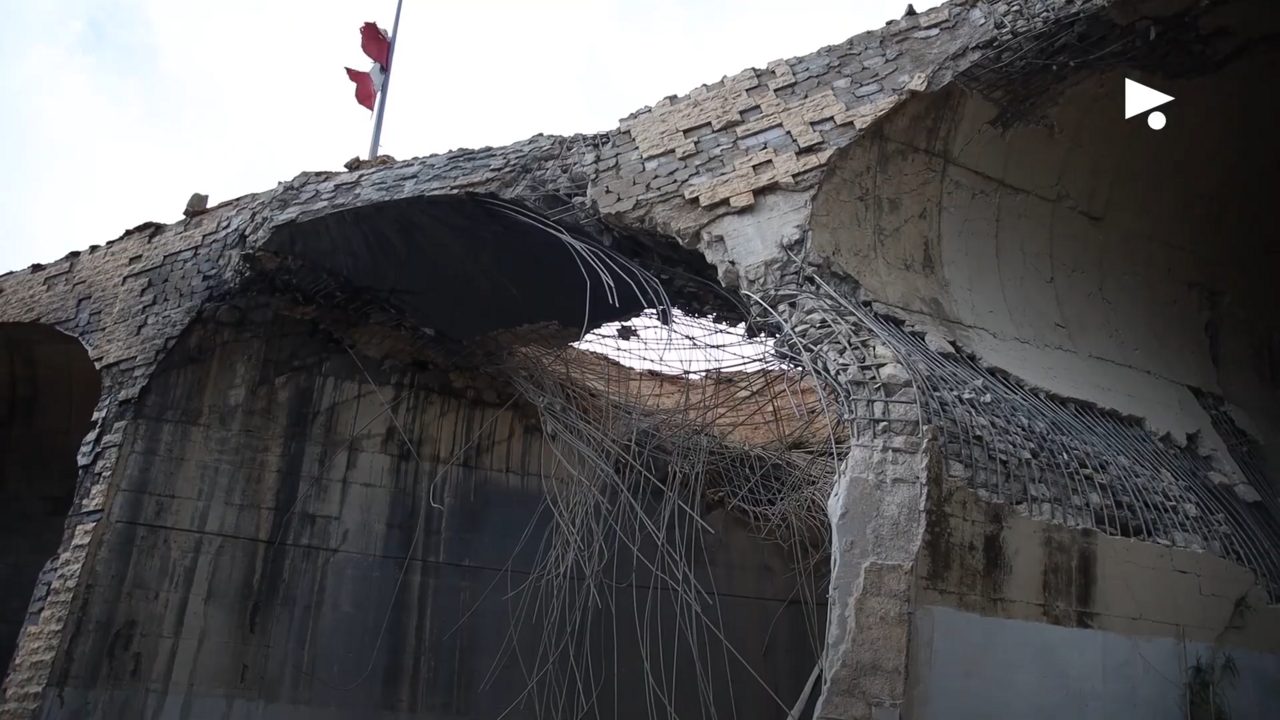
Israel announced the start of ground operations in southern Lebanon, with Defense Minister Israel Katz saying the campaign would resemble the Gaza offensive. Israel destroyed the Qasmiyeh Bridge over the Litani River five days later, cutting a key crossing point.
US strikes kill dozens of Iraqi militia fighters
US airstrikes on positions linked to an Iran-aligned Popular Mobilization Forces brigade in western Iraq's Al-Qa'im district killed at least 35 fighters and wounded around 90 more, according to reporting on the strikes, among the heaviest single US actions in Iraq since the 2024 wave of attacks.
Hezbollah fires into northern Israel, reopening the Lebanon front
Hezbollah launched projectiles into northern Israel days after the Israel-Iran war began and Iran's Supreme Leader was killed, reopening large-scale fighting on the Lebanon front for the first time since the November 2024 ceasefire.
Drones strike US-linked sites at Erbil International Airport
An Iran-aligned faction operating under the Islamic Resistance in Iraq banner struck Erbil International Airport with drones, the first confirmed Iraq-based attack of the new war, followed by a claimed strike on a hotel in Erbil housing US personnel three days later.
Israel and Iraqi militias trade fire as the Israel-Iran war opens
Hours after Israel's opening strikes on Iran, the Islamic Resistance in Iraq claimed 16 drone and rocket operations against US and Israel-linked targets in Iraq, the first move by any of the three fronts covered on this page to join the new war directly.
UN says Israel killed 127 civilians in Lebanon since the ceasefire
The United Nations said Israeli strikes had killed 127 civilians in Lebanon in the year since the November 2024 ceasefire, while Lebanon's health ministry separately put cumulative post-ceasefire deaths at 331 killed and 945 wounded.
Houthis sink the Eternity C, killing 4 crew
A Houthi attack sank the bulk carrier Eternity C in the Red Sea, killing four crew members despite the US-Houthi shipping ceasefire, one of the deadliest single incidents of the whole campaign.
US and Houthis agree an Oman-brokered ceasefire
President Trump announced an Oman-mediated ceasefire under which the Houthis pledged to stop attacking US vessels and shipping in the Red Sea, ending Operation Rough Rider. The Houthis said their attacks on Israel would continue separately.
US launches Operation Rough Rider against the Houthis
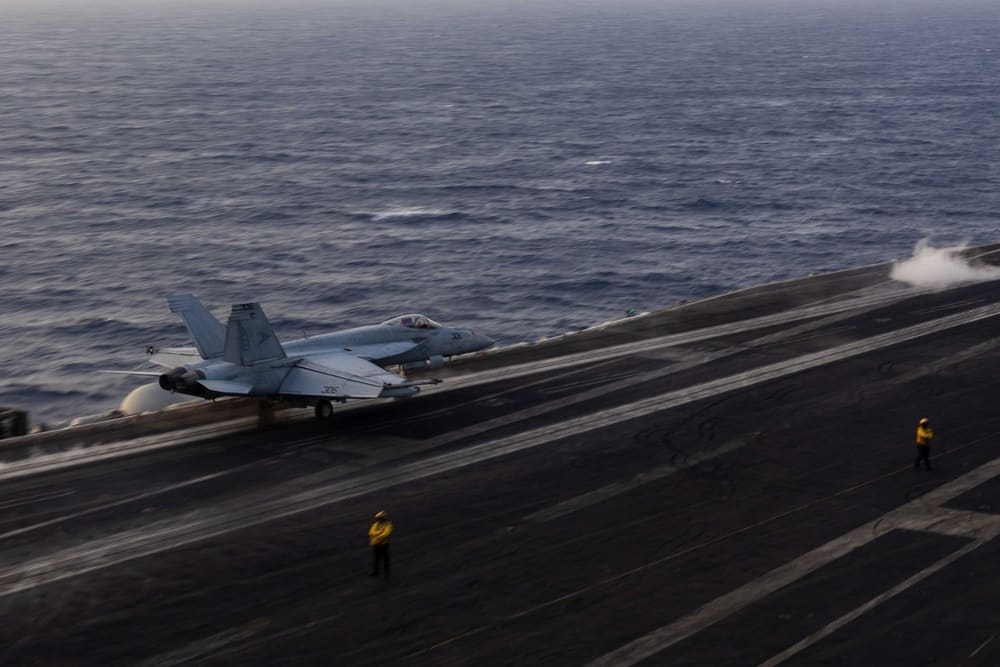
The US began a seven-week bombing campaign against Houthi targets in Yemen, ultimately conducting more than 1,000 airstrikes. Yemen's Houthi-run information ministry said a single April 17 strike on the Ras Isa oil port killed 80 people and wounded 150, a figure that has not been independently verified.
Lebanese ministry reports dozens killed despite the ceasefire
Lebanon's health ministry said Israeli strikes killed at least 83 people in Lebanon in the two months after the November 27 ceasefire took effect, despite the truce nominally being in force.
Houthis release Galaxy Leader crew after 14 months
The Houthis released all 25 crew members of the Galaxy Leader, the ship they seized in November 2023, in an Oman- and Hamas-mediated deal that coincided with the January 2025 Gaza ceasefire.
60-day Israel-Hezbollah ceasefire takes effect
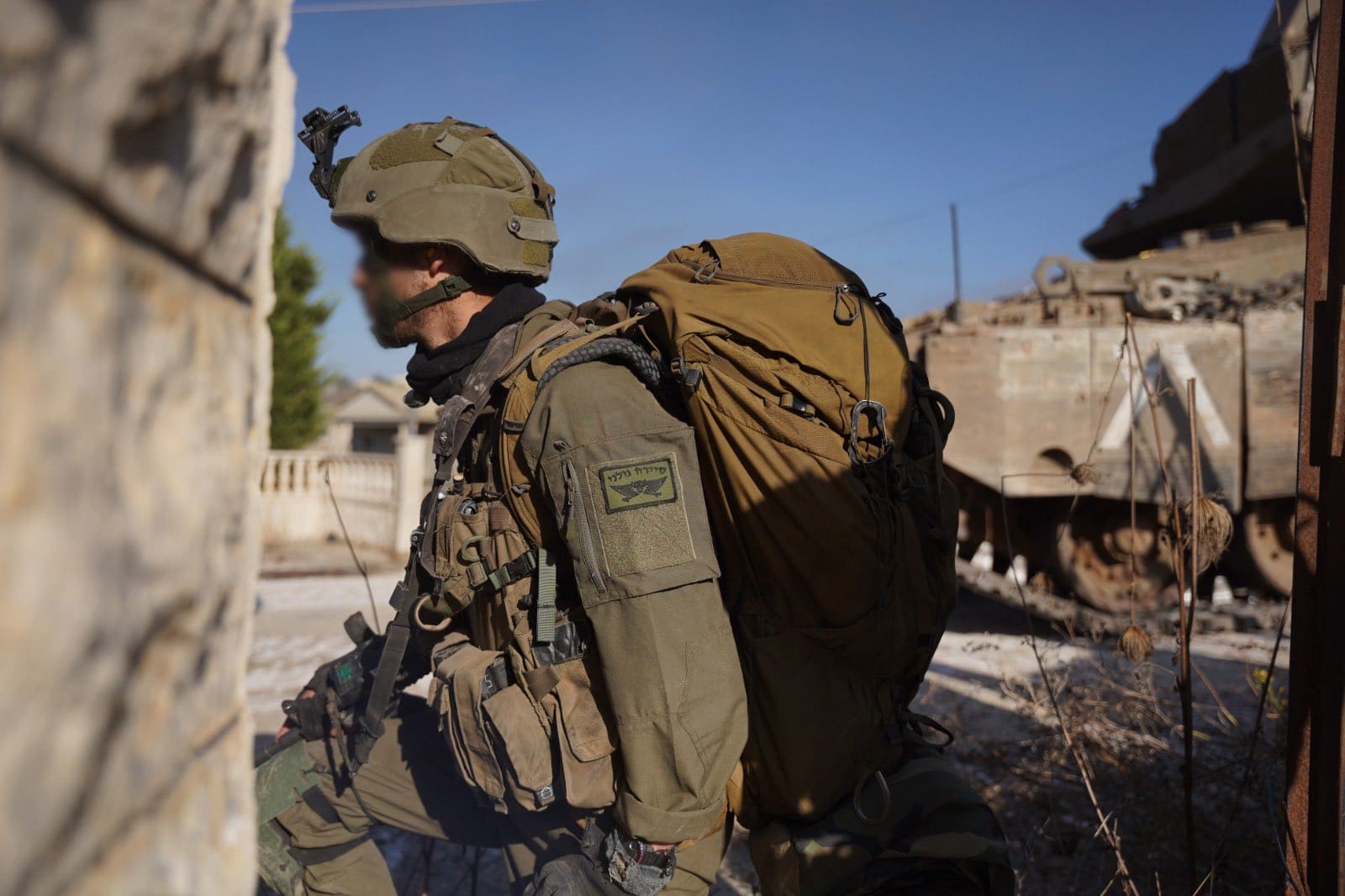
A US-brokered ceasefire took effect requiring Israel to withdraw from southern Lebanon and Hezbollah to relocate its forces north of the Litani River, monitored by roughly 5,000 Lebanese troops and a five-nation oversight panel. Hezbollah was not a formal signatory to the agreement. By that point, Lebanon's health ministry had recorded 4,047 killed and 16,638 wounded since October 2023.
Ground operations continue as toll mounts on both sides
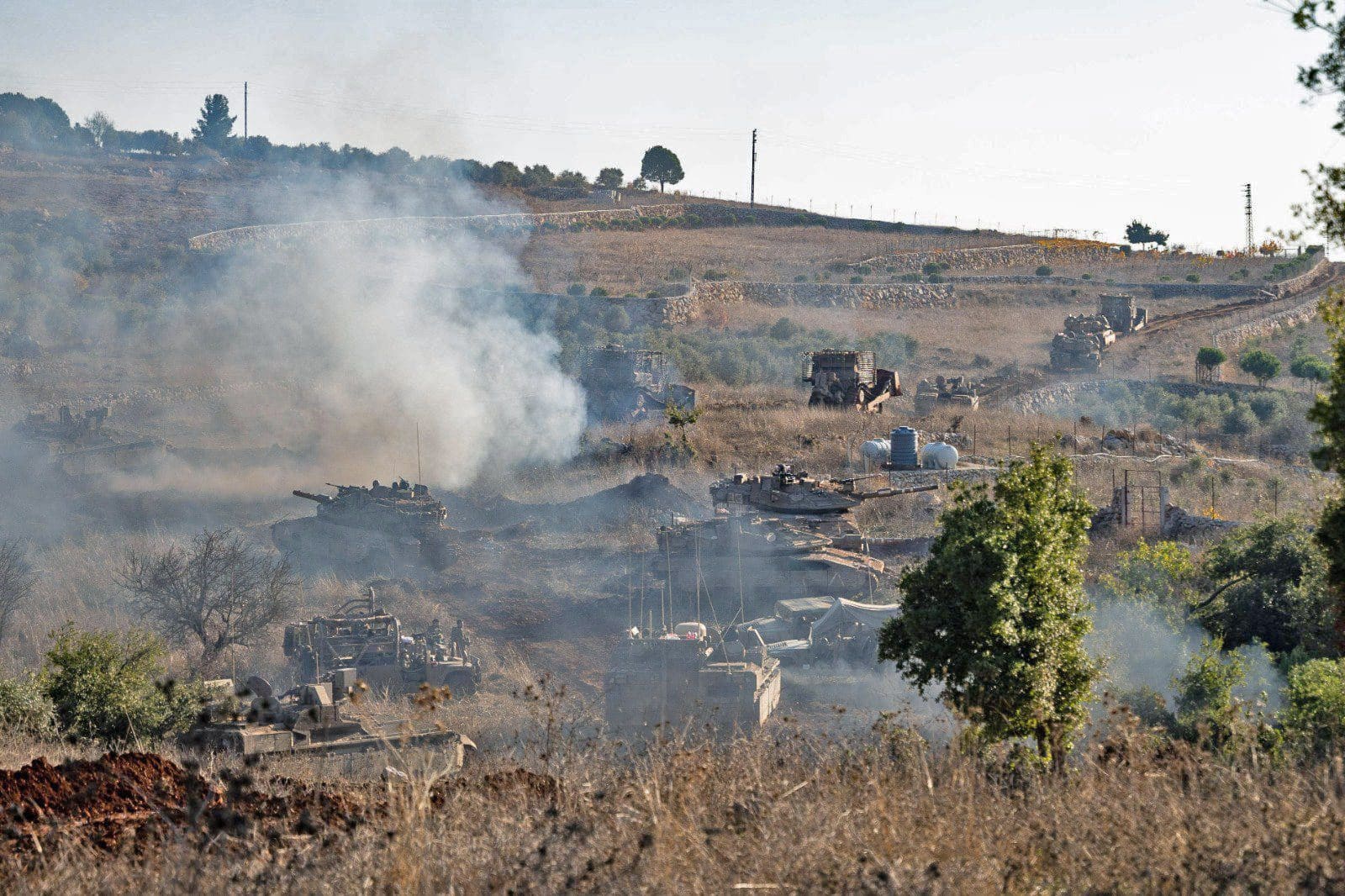
Six weeks into the ground campaign, Israeli figures put IDF losses at 40 soldiers killed in Lebanon since the invasion began, while Lebanon's health ministry reported the war's cumulative toll approaching 3,300 killed and more than 14,000 wounded across Lebanon since October 2023.
Israel launches ground invasion of southern Lebanon
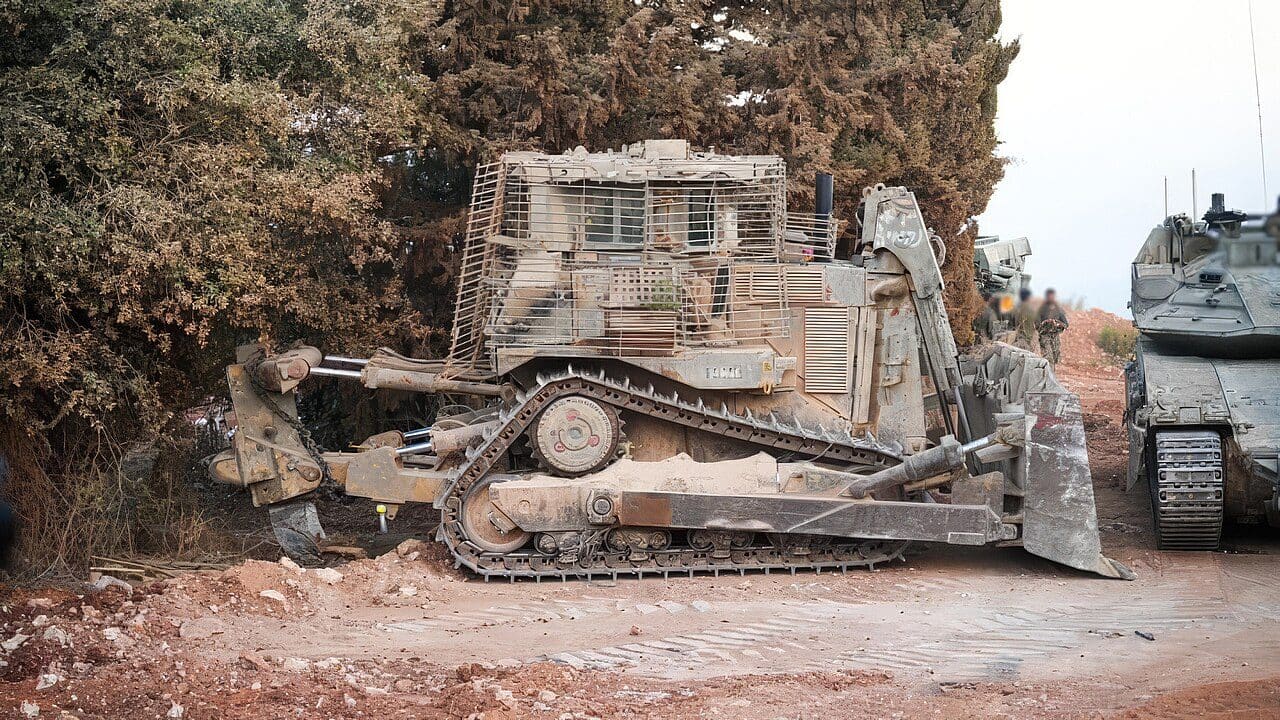
Israeli ground forces crossed into southern Lebanon in what the IDF described as a limited operation against Hezbollah infrastructure near the border, the first Israeli ground invasion of Lebanon since 2006.
Israeli strike kills Hezbollah leader Hassan Nasrallah
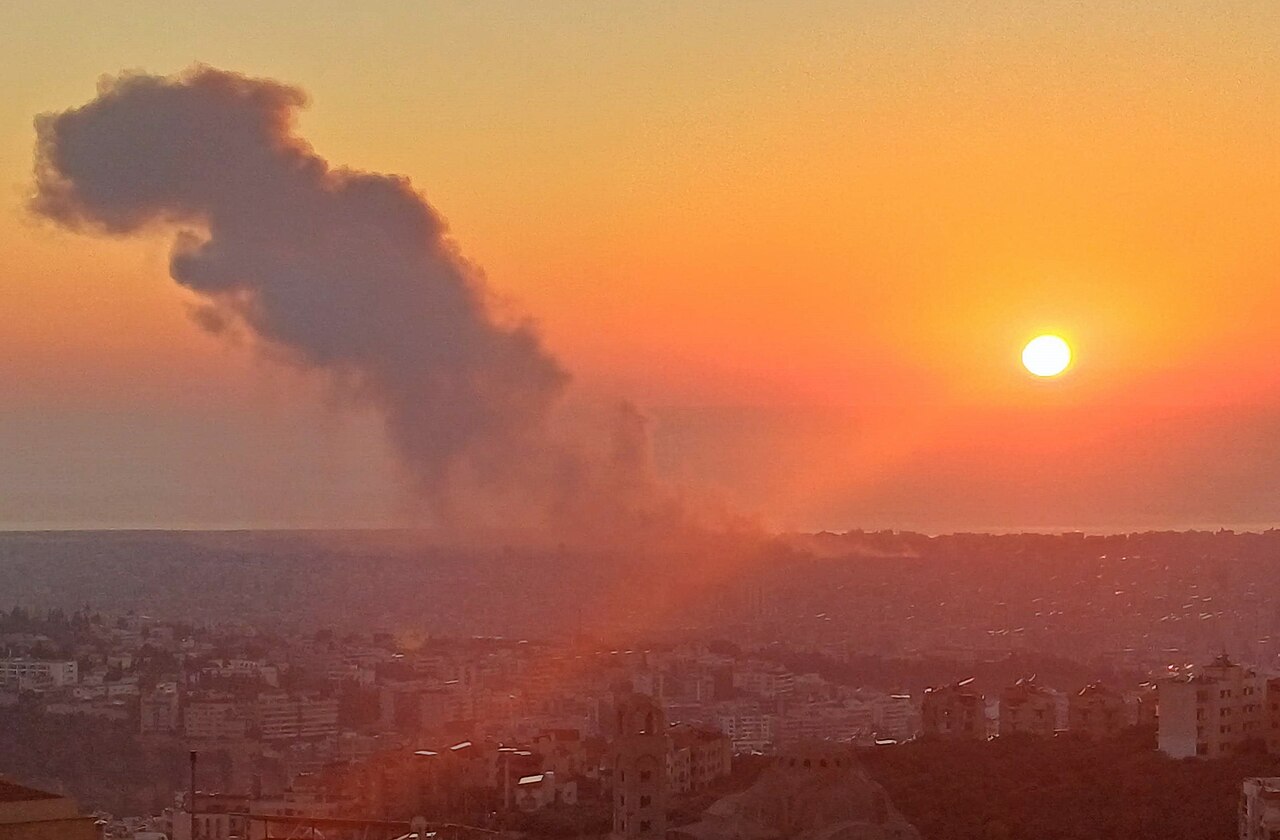
An Israeli airstrike using more than 80 bombs destroyed a Hezbollah command complex under residential buildings in Beirut's Dahieh district, killing Hezbollah Secretary-General Hassan Nasrallah along with senior IRGC officer Abbas Nilforoushan. Lebanese officials reported 33 killed and more than 195 wounded in the strike itself.
Pager and walkie-talkie attacks strike Hezbollah members
Thousands of pagers and walkie-talkies used by Hezbollah members exploded simultaneously across Lebanon over two days in an operation attributed to Israel. Lebanese authorities said 42 people were killed, including 12 civilians, and about 4,000 injured; an unnamed Hezbollah official said roughly 1,500 fighters were taken out of action.
Israel strikes Hodeidah port in response
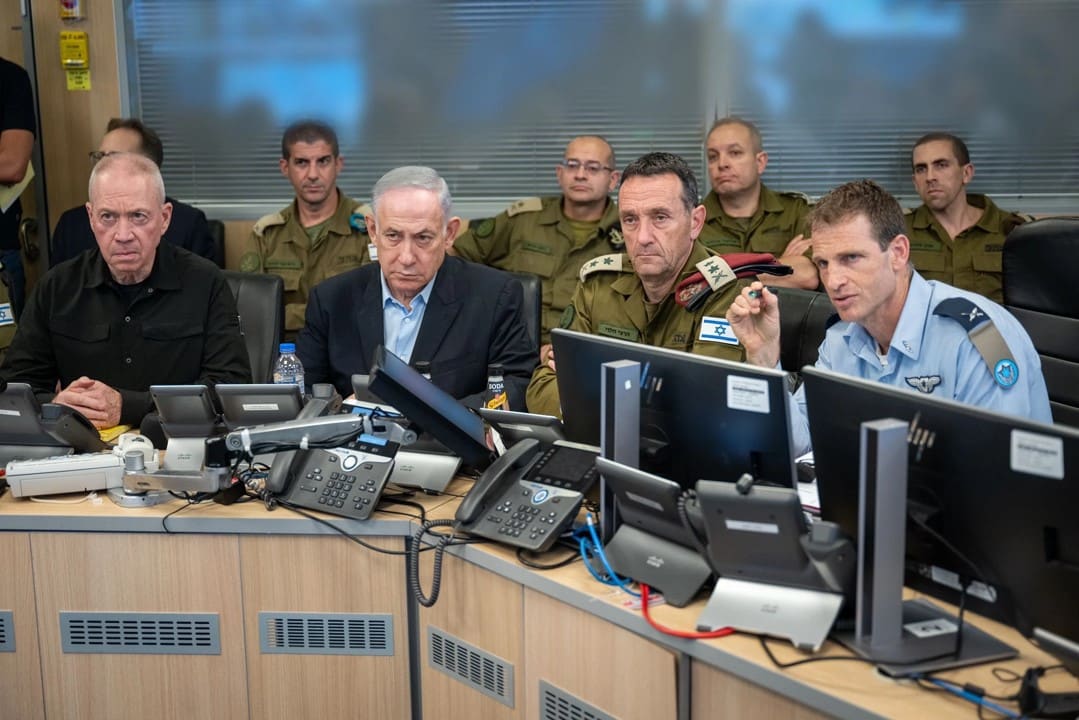
Israel struck port, fuel, and power infrastructure in the Houthi-held city of Hodeidah in retaliation for the Tel Aviv drone strike. The Houthi-run Yemeni health ministry said the strikes killed 3 people and wounded 87, many with severe burns, a figure Israel has not independently confirmed.
Houthi drone hits Tel Aviv, killing one
A Houthi drone struck an apartment building near a US embassy annex in Tel Aviv, killing one civilian and wounding about 10, the first Houthi strike to reach central Israel and kill someone there. The Houthis claimed responsibility.
Coal carrier Tutor sunk, one crew member killed
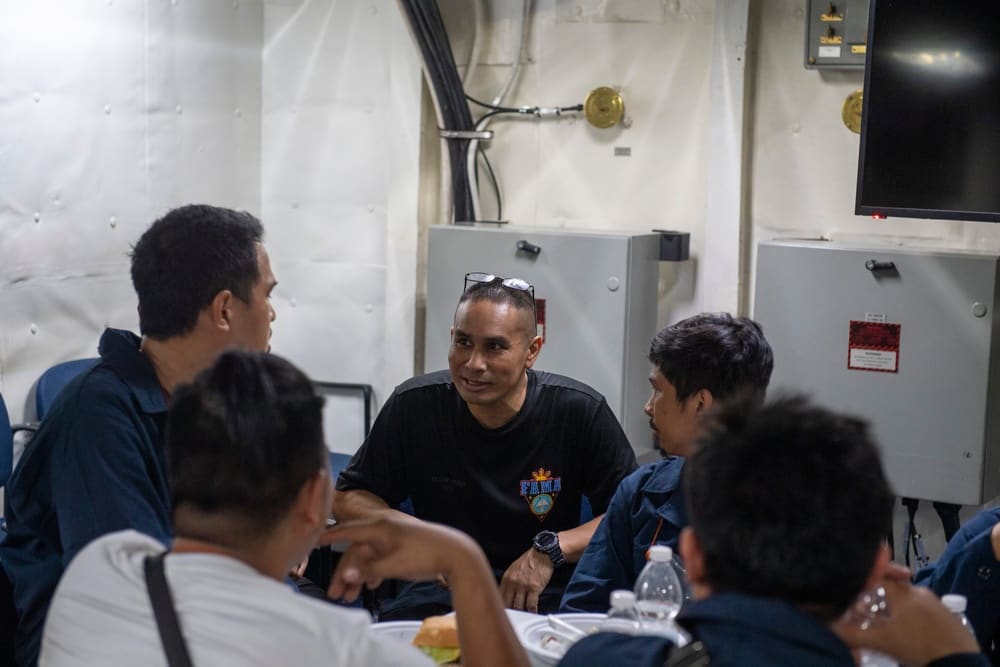
A Houthi attack sank the Greek-owned coal carrier Tutor and killed one crew member, the campaign's second confirmed ship loss.
UK conducts further Yemen strikes
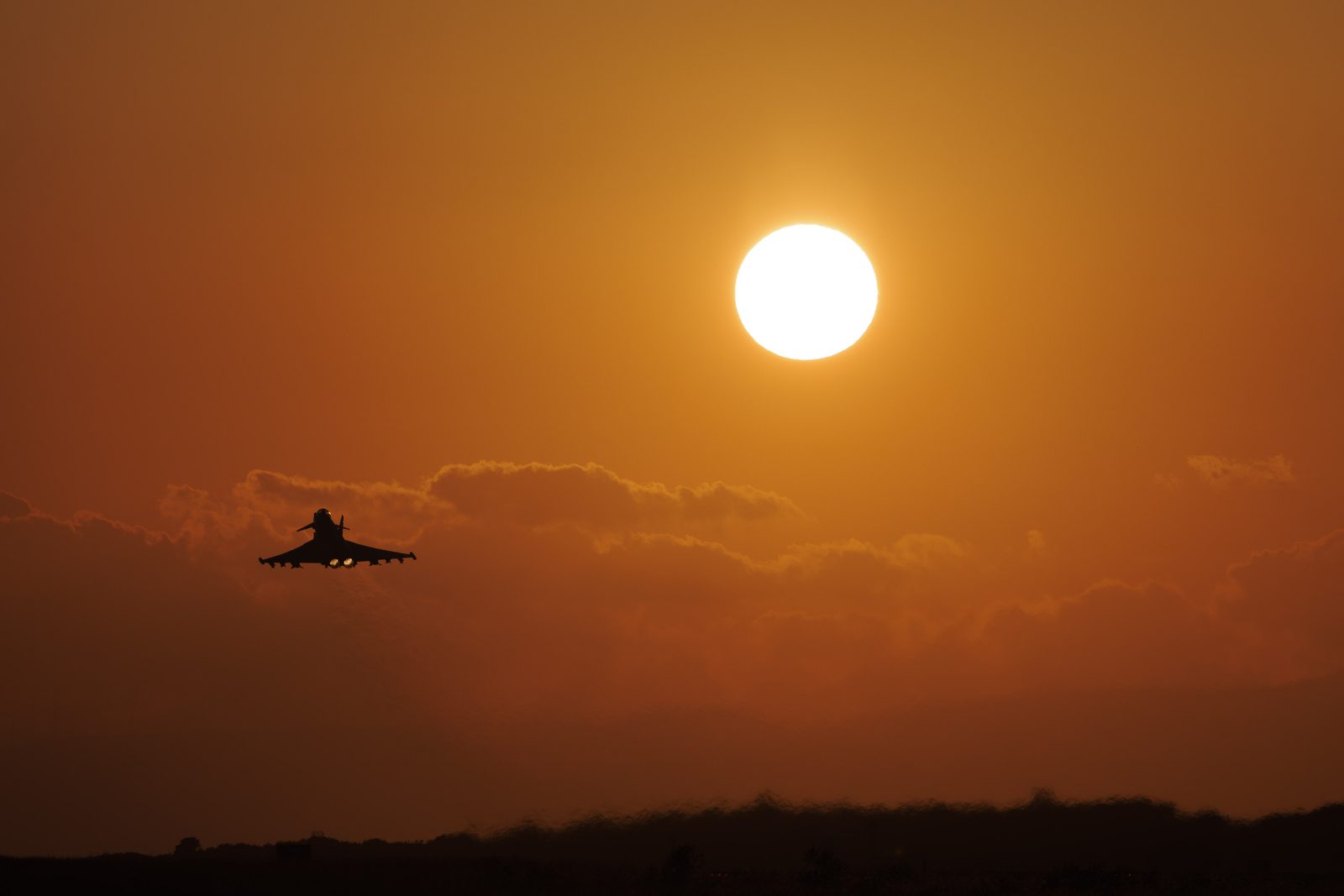
Royal Air Force Typhoons carried out another round of strikes against Houthi military targets in Yemen, part of the continuing UK contribution to the US-led response to the shipping campaign.
True Confidence strike kills 3 crew, first fatal attack on a ship
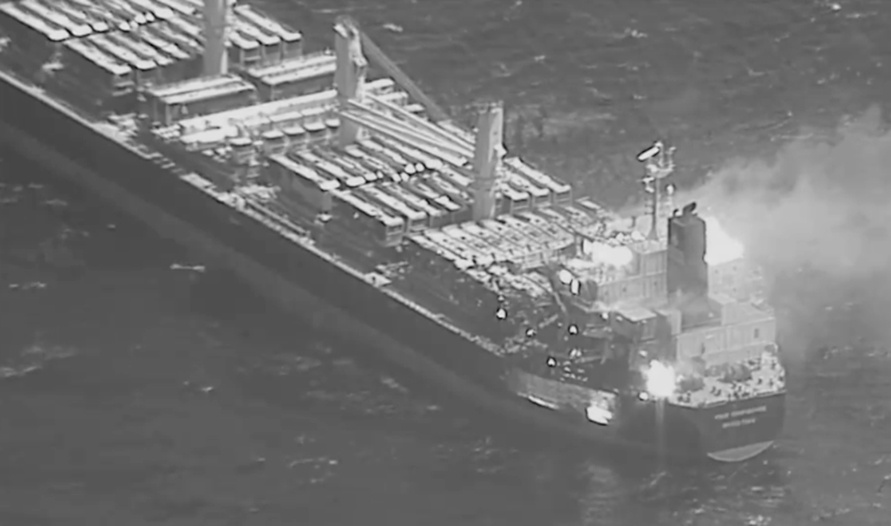
A Houthi anti-ship ballistic missile struck the bulk carrier True Confidence, killing three crew members, two Filipino and one Vietnamese, the first fatal attack on a merchant vessel in the campaign.
Houthi missile cripples the Rubymar, first ship lost in the campaign
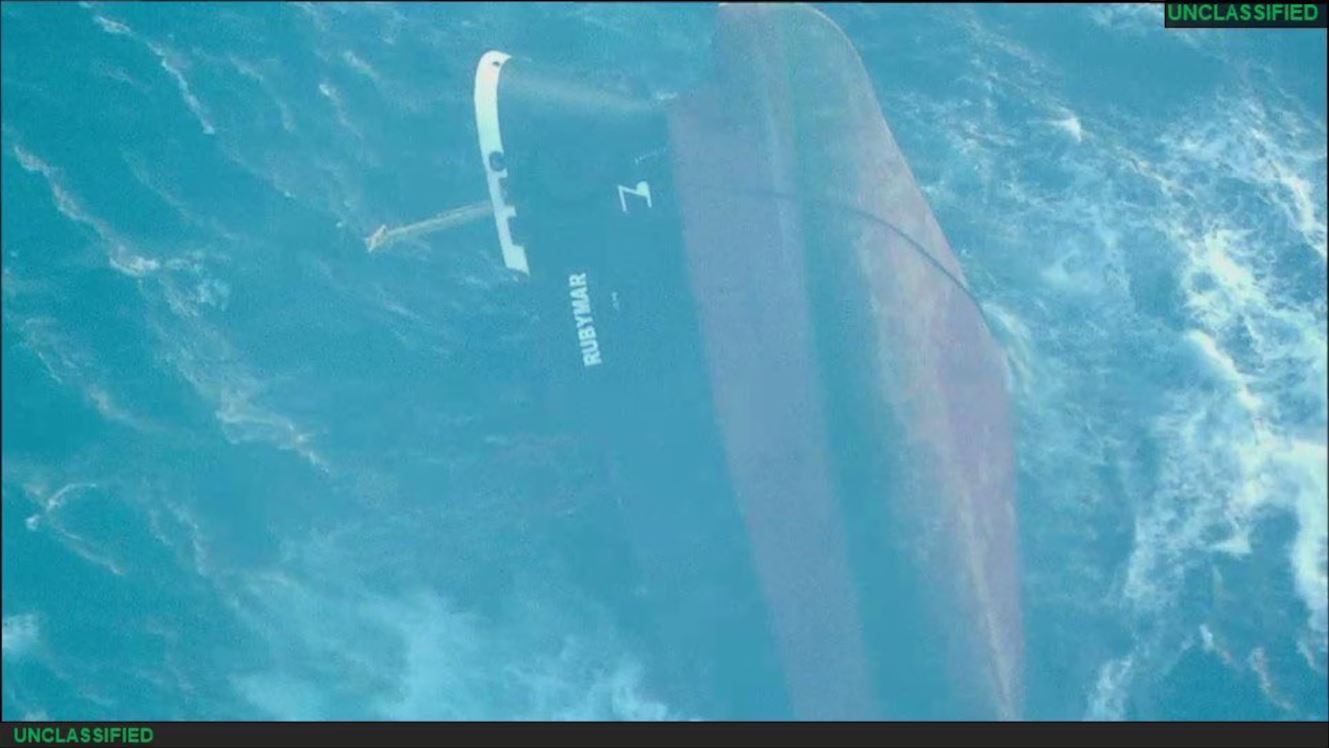
A Houthi anti-ship ballistic missile struck the Belize-flagged bulk carrier Rubymar in the Bab-el-Mandeb Strait. The crippled vessel was abandoned and sank on March 2, the first ship destroyed in the Red Sea campaign, according to the Yemeni government.
US strikes 85 targets in Iraq and Syria in retaliation
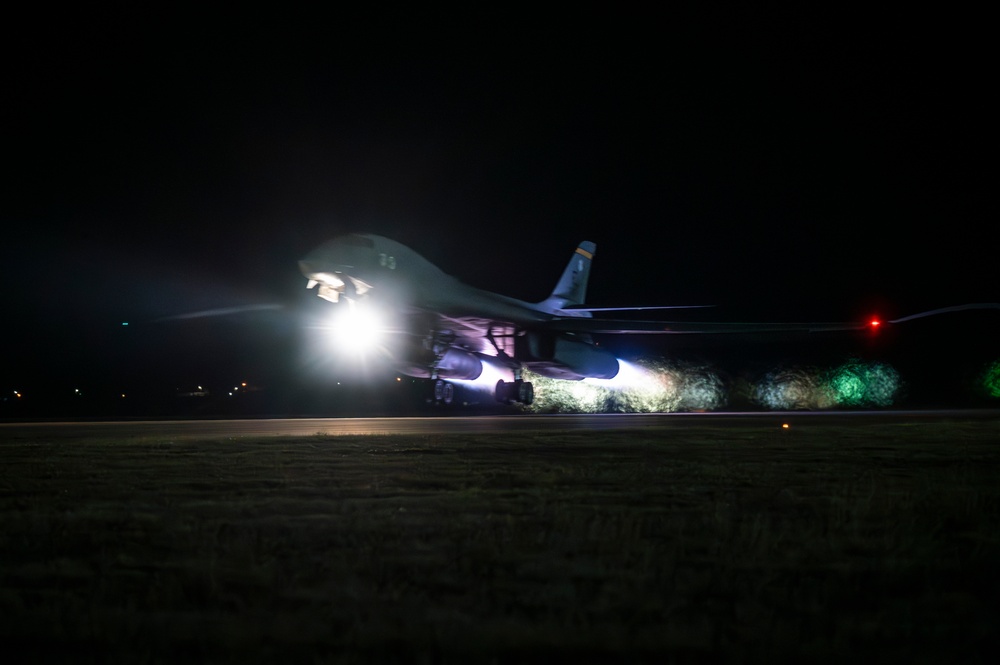
The US military struck 85 targets across seven facilities in Iraq and Syria linked to Iran's Revolutionary Guard Corps and allied militias, using more than 125 precision munitions delivered in part by B-1B bombers. The Syrian Observatory for Human Rights said at least 35 fighters were killed in Syria, and Iraqi security sources reported 16 to 17 militia fighters killed in Iraq.
Kataib Hezbollah announces pause on US attacks
Kataib Hezbollah, the dominant faction in the Islamic Resistance in Iraq, said it was suspending attacks on US forces to avoid, in its words, embarrassing the Iraqi government, days before the US retaliatory strikes it anticipated.
Tower 22 drone strike kills 3 US soldiers in Jordan
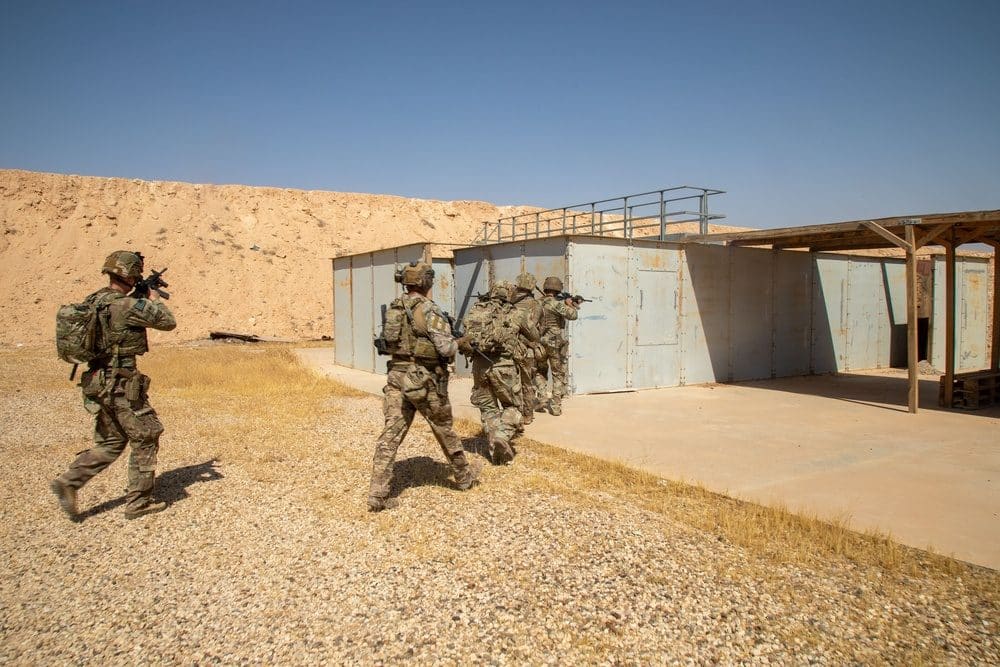
A one-way attack drone struck a US outpost known as Tower 22 in Rukban, Jordan, killing three US Army Reserve soldiers, Sgt. William Jerome Rivers, Spc. Kennedy Ladon Sanders, and Spc. Breonna Alexsondria Moffett, and wounding 47 others. It was the first US combat deaths of the post-October 7 regional escalation and was claimed by the Islamic Resistance in Iraq.
Mass rallies in Sanaa back the Houthi campaign
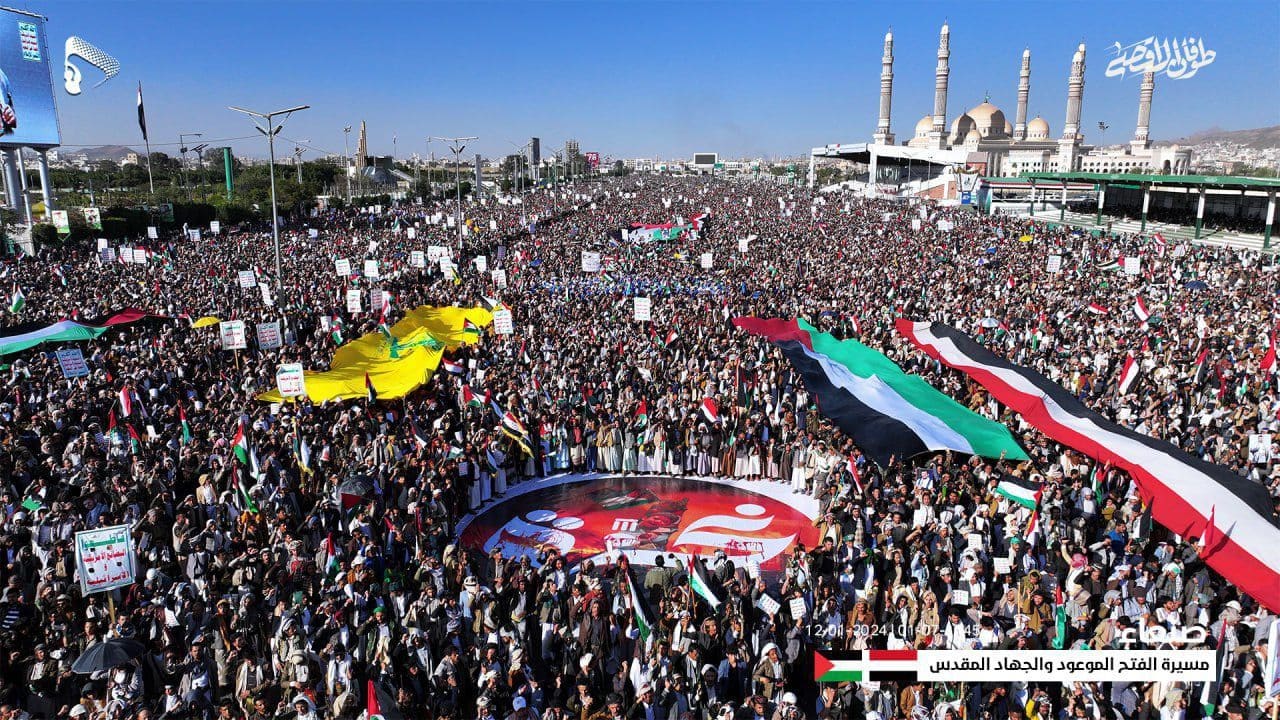
Tens of thousands rallied in Houthi-controlled Sanaa in the days after the Poseidon Archer strikes, voicing support for the group's Red Sea campaign and opposition to the US and UK strikes on Yemeni territory.
US and UK launch Operation Poseidon Archer
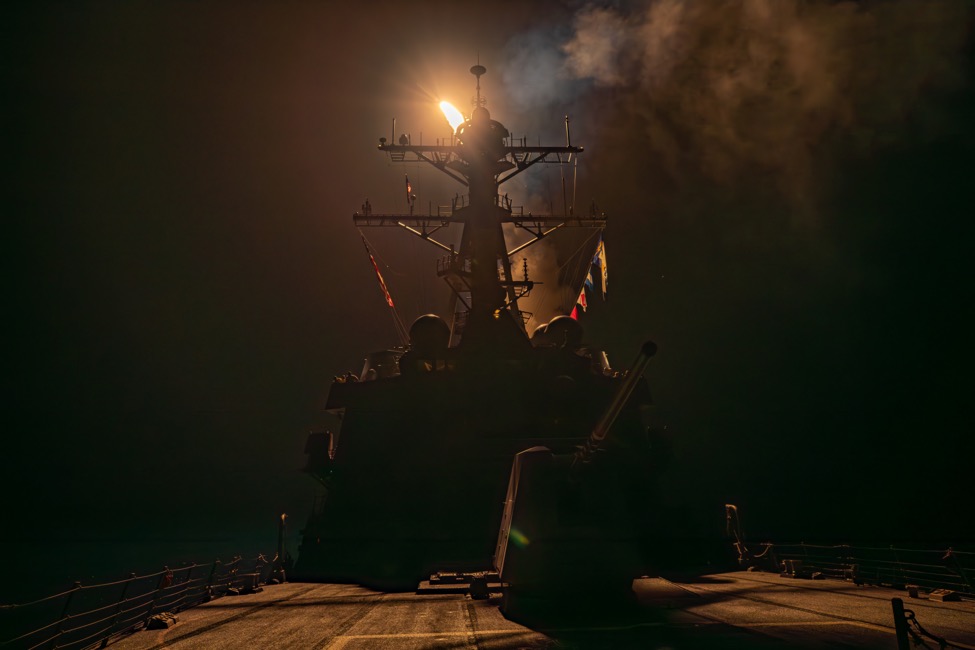
US and UK forces struck more than 60 Houthi military targets across Yemen with over 150 precision munitions, the first direct US-UK strikes on Houthi territory since the shipping campaign began.
US announces Operation Prosperity Guardian
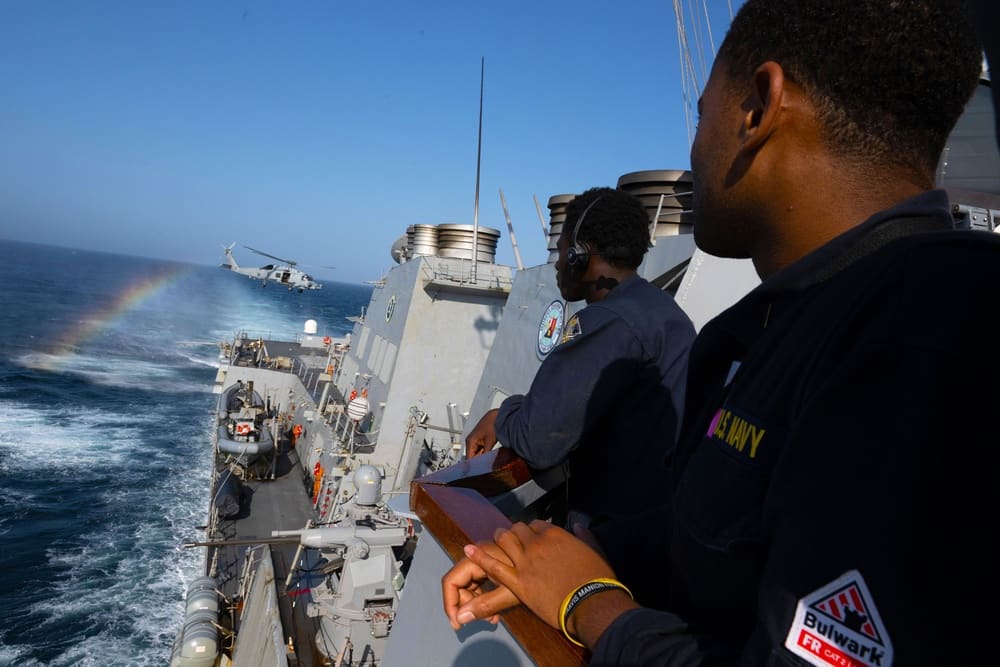
The United States announced a multinational naval coalition, Operation Prosperity Guardian, to escort commercial shipping through the Red Sea and Gulf of Aden as Houthi attacks on vessels continued to expand in scope.
Houthis seize the Galaxy Leader cargo ship
Houthi fighters hijacked the car carrier Galaxy Leader by helicopter in the Red Sea and held its 25 crew members, the opening act of a campaign the group explicitly tied to the Gaza war and framed as pressure on Israel and its allies.
USS Carney fights off the first Houthi missile and drone barrage
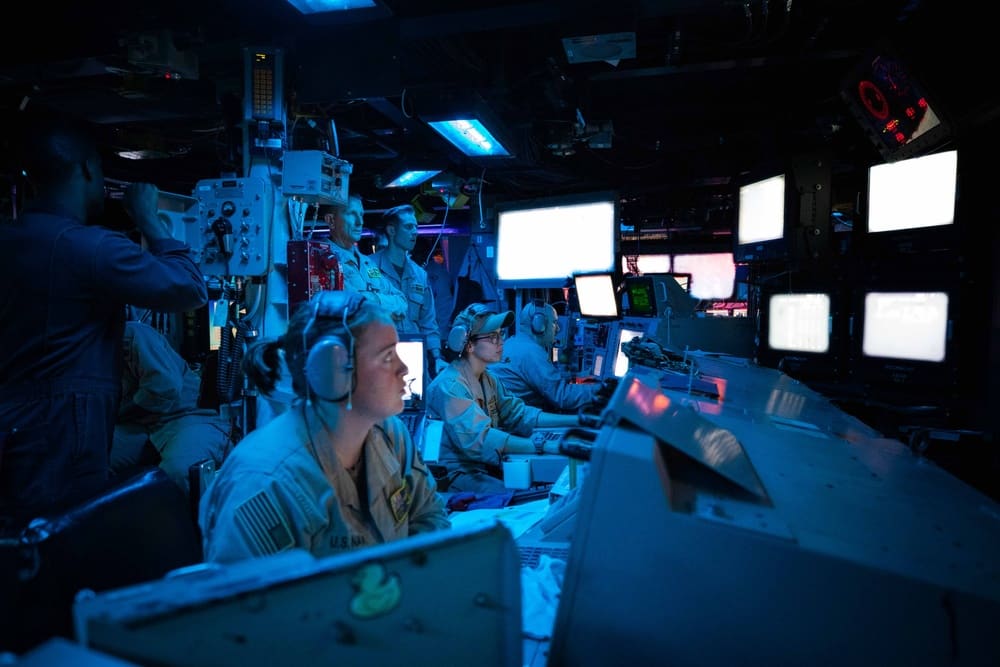
The destroyer USS Carney shot down four cruise missiles and 15 drones launched from Houthi-controlled Yemen toward the Red Sea over roughly ten hours, an engagement the US Navy described as its most intense combat action since World War II and the opening naval clash of what became the Red Sea shipping campaign.
Iran-aligned Iraqi militias begin striking US bases
The Islamic Resistance in Iraq, an umbrella of Iran-aligned Shia factions led by Kataib Hezbollah, claimed its first attack on US forces, a failed drone strike on a base near Irbil, opening a campaign that would grow to more than 170 attacks on US positions in Iraq, Syria, and Jordan over the following months.
Hezbollah opens a support front for Gaza
A day after Hamas's October 7 attack on Israel, Hezbollah began firing rockets and artillery at Israeli positions along the Lebanese border, opening what it called a support front intended to draw Israeli forces away from Gaza.
Frequently Asked Questions
What is the difference between this page and the Israel-Iran War and Israel-Palestine War pages?
This page tracks the network of Iran-aligned fronts around the direct fighting, meaning Hezbollah's campaign in Lebanon, the Houthis' Red Sea and Israel campaign from Yemen, and Iran-aligned Iraqi militia attacks on US forces. The direct state-on-state fighting between Israel and Iran that began February 28, 2026, is tracked separately on the [Israel-Iran War](/wars/israel-iran-war/) page, and the Gaza war between Israel and Hamas is tracked on the [Israel-Palestine War](/wars/israel-palestine-war/) page. All three conflicts overlap in cause and timing but are documented as separate pages here because each has its own distinct combatants, geography, and casualty record.
Why did Hezbollah, the Houthis, and Iraqi militias start fighting in October 2023?
All three announced their campaigns as support fronts for Hamas after the Gaza war began on October 7, 2023. Hezbollah opened cross-border fire on October 8, the Houthis began targeting Israel-linked shipping in mid-November, and Iran-aligned Iraqi factions under the Islamic Resistance in Iraq banner began striking US bases in the region on October 17, framing the US military presence as complicit in the Gaza offensive.
Are the Red Sea shipping attacks still happening?
The campaign has gone through several pauses. The Houthis agreed to stop attacking US vessels and shipping in a May 2025 ceasefire with Washington, then paused attacks on Israel entirely after an October 2025 Gaza ceasefire, before resuming missile and drone attacks on Israel in late March 2026 once the Israel-Iran war began. As of July 2026, Wikipedia's tracking page for the 2026 strikes describes the campaign as ongoing, though at a lower tempo than the 2023-2024 peak.
Is the Israel-Hezbollah ceasefire actually holding?
Only partially. A ceasefire has technically been in effect on the Lebanon front since April 16, 2026 (following an earlier one from November 2024 to March 2026), but it has been extended multiple times while Israeli strikes have continued to kill people in Lebanon throughout, including a single day in April 2026 where Lebanese officials reported 28 killed. Hezbollah was not a signatory to either ceasefire agreement, and as of July 2026 Israel says it will continue occupying part of southern Lebanon indefinitely.
How many US troops have been killed across these fronts?
Three US Army Reserve soldiers were killed in the January 28, 2024, drone strike on the Tower 22 outpost in Jordan, the only confirmed US combat fatalities from Iran-aligned Iraqi militia attacks. That remains the only front covered on this page with confirmed US troop deaths; no US personnel deaths have been publicly confirmed from the Houthi Red Sea campaign or the Lebanon front specifically.
What do 'Axis of Resistance' and 'Islamic Resistance in Iraq' mean?
Axis of Resistance is the informal term used in reporting and analysis for the network of Iran-aligned state and non-state actors covered on this page, including Hezbollah, the Houthis, and Iraqi militias, plus the government of Iran itself. Islamic Resistance in Iraq is the specific umbrella name used by Kataib Hezbollah and allied Iraqi factions for their own coordinated attacks on US forces; it is not a single organization but a coordinating label for several distinct armed groups.
Sources
- Timeline of the Red Sea crisis — Wikipedia
- Operation Prosperity Guardian — Wikipedia
- Houthi attacks on commercial vessels — Wikipedia
- 2026 Houthi strikes on Israel — Wikipedia
- Ship recently hit by Yemen's Houthi rebels sinks in the Red Sea, 1st vessel lost in conflict — PBS
- Rubymar cargo ship, earlier hit by Houthis, has sunk, Yemeni government says — Al Jazeera
- Israel strikes Houthi targets in Yemen — NPR
- Houthis announce end of Red Sea shipping attacks — Maritime Executive
- Until Israel stops: Yemenis rally for Houthis, Palestinians in Sanaa — Al Jazeera
- Hezbollah–Israel conflict (2023–present) — Wikipedia
- 2024 Lebanon electronic device attacks — Wikipedia
- Israel's military says it has killed Hezbollah leader Hassan Nasrallah — Al Jazeera
- 2024 Israel–Lebanon ceasefire agreement — Wikipedia
- How many people has Israel killed in Lebanon since the ceasefire? — Al Jazeera
- UN says Israel has killed 127 civilians in Lebanon since ceasefire with Hezbollah — The Times of Israel
- 2026 Lebanon war — Wikipedia
- 2026 Israel–Lebanon ceasefire — Wikipedia
- 8 April 2026 Israeli attacks on Lebanon — Wikipedia
- Israeli occupation of Southern Lebanon (2026) — Wikipedia
- Israel continues attacks on Lebanon despite agreeing to ceasefire — Al Jazeera
- Israel strikes Lebanon, testing days-old peace deal — Al Jazeera
- Islamic Resistance in Iraq — Wikipedia
- Tower 22 drone attack — Wikipedia
- Kataib Hezbollah says it suspends attacks on US forces — Al Jazeera
- February 2024 United States airstrikes in Iraq and Syria — Wikipedia
- Attacks on US bases during the Gaza war — Wikipedia
- Iraq in the 2026 Iran war — Wikipedia
- US troops attacked in Erbil as Iraqi militants consider options — The National
- Strikes kill two PMF fighters in northern Iraq amid wider war, group says — Al Jazeera