Documents
 United States In development
 Anduril Industries
Seabed Sentry
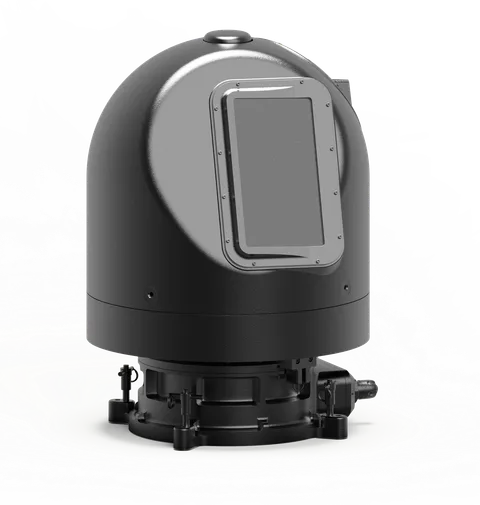
An AI-enabled, reconfigurable undersea sensor node that forms a persistent wireless network on the seabed for real-time sensing and communications. Introduced in 2025, it can be seeded by autonomous underwater vehicles, computes on the edge before transmitting, and is designed to be recovered, refurbished and reused.
Planned service entry 2025
Compiled from public sources ·primary reference ↗ ·last verified 2026-07-16
Procurement snapshot
Availability & export
US ITAR-controlled
Export needs U.S. State Dept (DDTC) approval; end-use & re-transfer restrictions apply.
Channel: Foreign Military Sales (FMS) or Direct Commercial Sale
Development status
Operator data not public
Planned service entry 2025. Status: announced.
Lifecycle cost (est.)
No public unit price to model from. Why so few systems publish one →
Interoperability
No standardised NATO calibre / datalink detected in public specs.
Derived guidance from public data, export regime by country of origin, lifecycle from the GAO ~30% acquisition rule. Verify eligibility, pricing and offsets with the manufacturer and your acquisition authority.
Overview
Seabed Sentry is Anduril's networked undersea sensor node, creating a persistent wireless underwater mesh for real-time sensing and communications with AI-enabled compute engineered for the deep sea. Introduced in April 2025, each node performs edge AI processing to understand what it is sensing before it communicates, which conserves scarce undersea bandwidth and reduces the data that must be sent up. Anduril describes a depth rating of over 500 meters, a payload capacity of more than 0.5 cubic meters, and endurance measured in months to years. The payload is modular and can be tailored to the mission, spanning optical sensors, environmental sensors and both active and passive sonar; for long-range acoustic sensing it leverages Ultra Maritime's Sea Spear. Nodes can be deployed by autonomous underwater vehicles to form a defensive grid protecting key maritime regions and infrastructure, and the system is designed for reuse: deployed to the seabed, then recovered, cleaned, recharged and redeployed to drive down cost. The one numeric field populated is the depth rating (recorded as a test depth of 500 m, Anduril's stated figure being over 500 m); payload volume and multi-month-to-year endurance are described in prose rather than forced into unrelated comparison fields.
Full specifications
Specifications compiled from public Anduril Industries and reference sources ↗. Published defense figures are approximations, treat comparisons as directional. Last verified 2026-07-16.
Compare with rivals
See how it stacks up
Frequently asked questions
What is the Anduril Industries Seabed Sentry used for? +
The Anduril Industries Seabed Sentry is a subsystems & sensors typically used for undersea surveillance, anti submarine warfare, seabed warfare.