Rafael Tests Upgraded SPYDER Air-Defense System on Drones
Rafael's upgraded SPYDER scored hit-to-kill intercepts on low-signature drones in a new trial, sharpening a system already exported to Romania, Czech Republic and beyond.

Photo by Pritishp333, Wikimedia Commons, CC BY-SA 3.0
Rafael Advanced Defense Systems completed a trial in Israel, reported July 30 through Aug. 1, 2026, of an upgraded SPYDER air-defense system that scored direct hit-to-kill intercepts against low-radar-signature drones and other simulated aerial threats in what the company called “complex scenarios.” The test used I-Derby ER and I-Derby LR missiles, extended-range variants of the system’s standard interceptor, and comes as low-signature drones, quadcopters and small fixed-wing types built with minimal radar cross-section on purpose, have become one of the fastest-proliferating threats any short-range air-defense system now has to answer.
What the trial actually tested
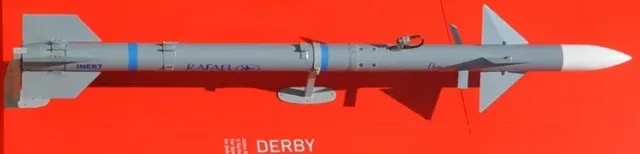
SPYDER, short for Surface-to-air PYthon and DERby, is Rafael’s mobile short-to-medium-range air-defense system, already fielded by a growing list of export customers. WeaponSpecs’ own database entry for SPYDER lists a 35 kilometer engagement range, an engagement altitude up to 16,000 meters, the ability to track four simultaneous targets, and a maximum intercept speed near Mach 4, cued by the system’s EL/M-2106 ATAR 3D radar, itself rated to roughly 40 kilometers. The system fires ground-launched variants of the Derby missile family, which WeaponSpecs’ database lists at 65 kilometers range and Mach 4 using active-radar homing, alongside shorter-range Python-5 missiles for closer engagements.
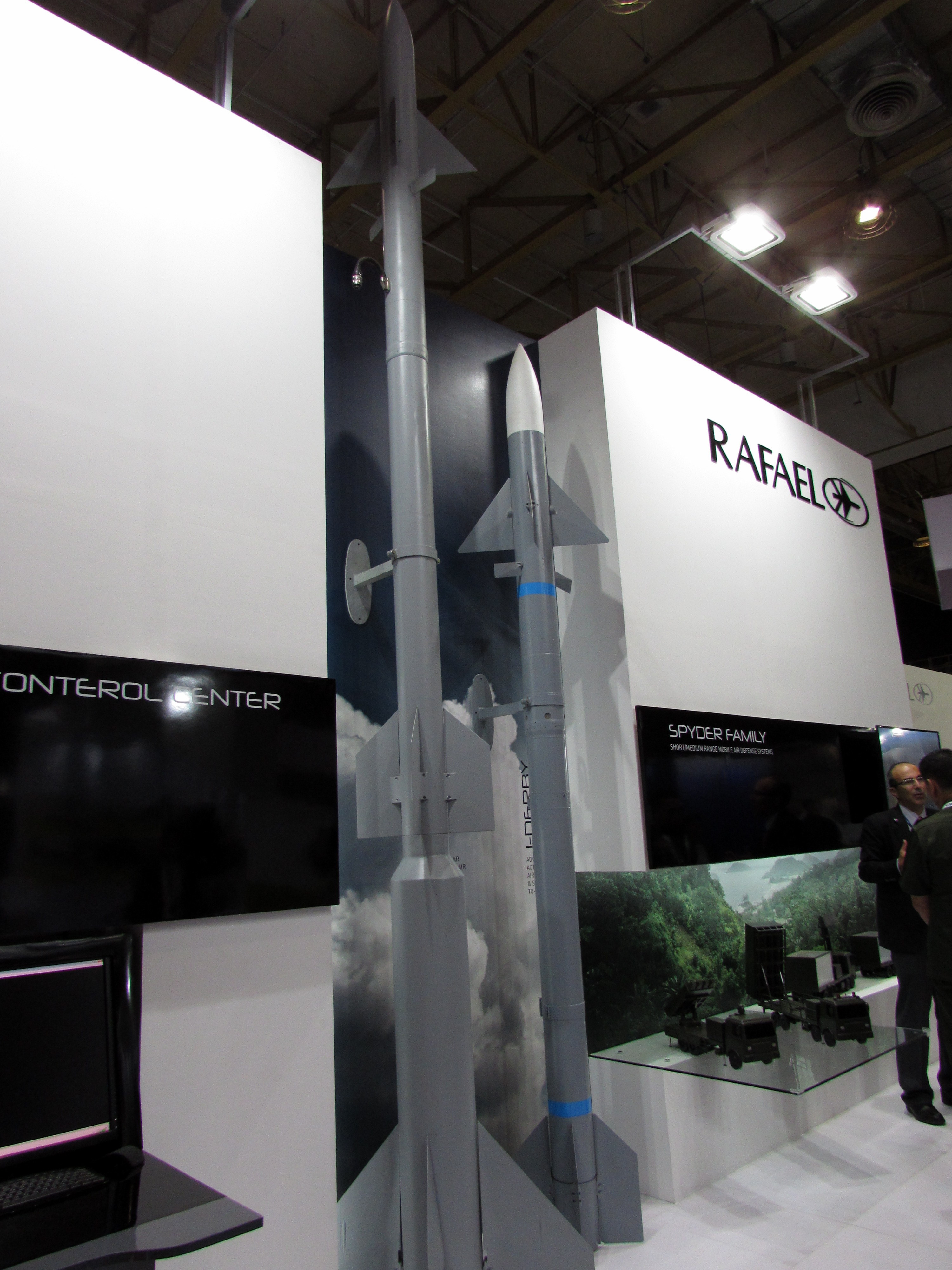
The variant fired in this trial, I-Derby ER, is not a new missile so much as a longer-legged version of the same family: it adds a booster stage to the standard Derby’s airframe rather than introducing new seeker technology, extending reach without requiring operators to learn or stock an entirely separate weapon. I-Derby LR, also used in the test, extends that reach further still. The point of firing both variants in the same trial was to demonstrate that the system’s engagement envelope against small, low-signature targets holds up across the different distances a real engagement could present, not just in a single best-case shot.
Rafael CEO Yoav Turgeman, whose surname also appears spelled “Tourgeman” across different outlets covering this story, a spelling inconsistency worth flagging rather than silently resolving, framed the upgrade as continuity rather than a one-off demonstration.
“Rafael is a global leader and a center of excellence for combat-proven air defense systems that address complex threats across a range of distances,” said Yoav Turgeman (also rendered “Tourgeman” in some reporting), CEO of Rafael Advanced Defense Systems (defence-industry.eu, VINnews, and EDR Magazine, all July 30, 2026).
Why low-signature drones are the harder problem
A conventional fighter jet or a ballistic missile presents a large, fast, radar-obvious target that a system like SPYDER was originally built to track. A small drone deliberately shaped and built to minimize its radar return is a different kind of problem entirely: it is slow enough that some legacy air-defense radars struggle to distinguish it from ground clutter or birds, and it is small enough that its radar cross-section can be a small fraction of a fighter’s. Rafael says the upgrade folds in target-classification software improvements drawn from lessons in Israel’s recent war and other international deployments, aimed specifically at closing that detection and discrimination gap, rather than simply adding a faster or longer-range missile to a system that could already reach a given target once it was actually tracked.
That distinction matters for how to read this trial. A hit-to-kill intercept means the interceptor physically struck the target rather than detonating a proximity-fused warhead nearby, a harder engineering problem against a small, low-signature target precisely because there is less margin for a near-miss to still count as a kill. Demonstrating that capability against drones specifically selected for low radar visibility is a more meaningful validation than a demonstration against an easier, more radar-reflective target would have been.
An established export platform getting a targeted upgrade
SPYDER’s customer base gives this upgrade practical weight beyond Israel’s own arsenal. The Philippines bought three SPYDER batteries for $141 million in 2021. Romania and the Czech Republic have both selected or fielded the system as part of their own air-defense modernization. The UAE purchased SPYDER in 2022. Each of those customers now has a stake in whether this drone-intercept upgrade eventually reaches their own fielded batteries, since a software and target-classification improvement can often be retrofitted to existing hardware rather than requiring a new missile buy.
This trial is a system upgrade and test, not a new sale. WeaponSpecs separately reported on Greece’s roughly $3.5 billion Israeli air-defense package, the Achilles Shield program, which includes SPYDER as one of three tiers in a layered air-defense architecture. That earlier story was about a contract; this one is about the underlying system getting sharper at exactly the threat category, small stealthy drones, that has driven so much of the recent global demand for exactly this kind of layered air defense in the first place.
Sources
- Rafael Test Fires Upgraded Spyder Missile System — Global Defense Corp, Aug 1, 2026
- Rafael completes SPYDER air defense trial with I-DERBY missiles against low-signature drones and multiple aerial threats — defence-industry.eu, Jul 30, 2026
- Rafael Tests Upgraded Spyder System Against Drone Threats — VINnews, Jul 30, 2026
- Rafael Successfully Completes Trial of Advanced SPYDER Air Defense System — EDR Magazine, Jul 30, 2026
Systems mentioned
Every system named in this story, with its photo and, where available, a video. Tap a card to open the full spec sheet.
Compare these side by side →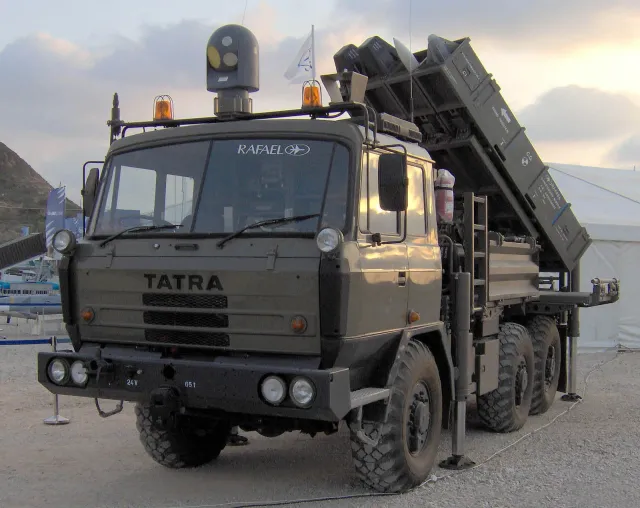
Frequently asked questions
What did Rafael's SPYDER test demonstrate? +
Direct hit-to-kill intercepts against low-radar-signature drones and other simulated aerial threats, using I-Derby ER and I-Derby LR missiles, in trials in Israel completed by Aug. 1, 2026.
What is SPYDER and who uses it? +
An Israeli mobile short-to-medium-range air-defense system built by Rafael, firing ground-launched Python and Derby missile variants. WeaponSpecs' own database lists a 35 km engagement range and four simultaneous targets for the baseline configuration. Export customers include Romania, the Czech Republic, the UAE and the Philippines, which bought three batteries for $141 million in 2021.
What prompted this upgrade? +
Rafael says it incorporates lessons from Israel's recent war and other international deployments, adding target-classification improvements aimed specifically at low-signature drones, a threat category that has proliferated rapidly.
How does I-Derby ER differ from the baseline Derby missile? +
WeaponSpecs' database lists the standard Derby at 65 km range and Mach 4. The I-Derby ER (Extended Range) variant used in this test adds a booster stage for longer reach without introducing an entirely new missile family.
More news


