Greece approves $4B Israeli 'Achilles Shield' air-defense deal
Greece's security council approved a roughly $4 billion, three-tier Israeli air-defense package, its largest single defense purchase and Israel's biggest arms export ever.

U.S. Missile Defense Agency, public domain
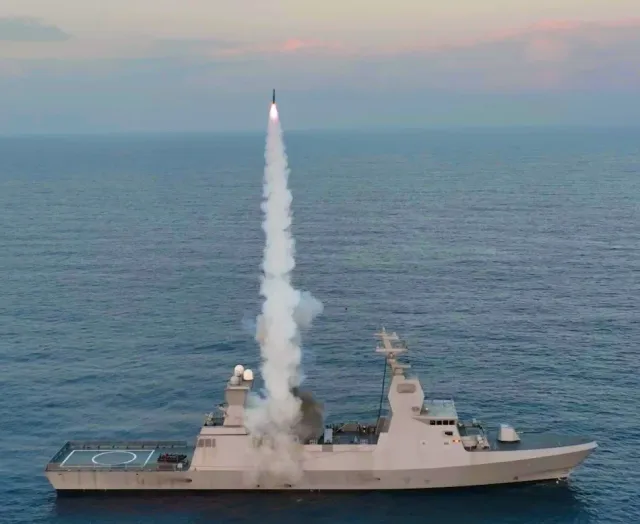
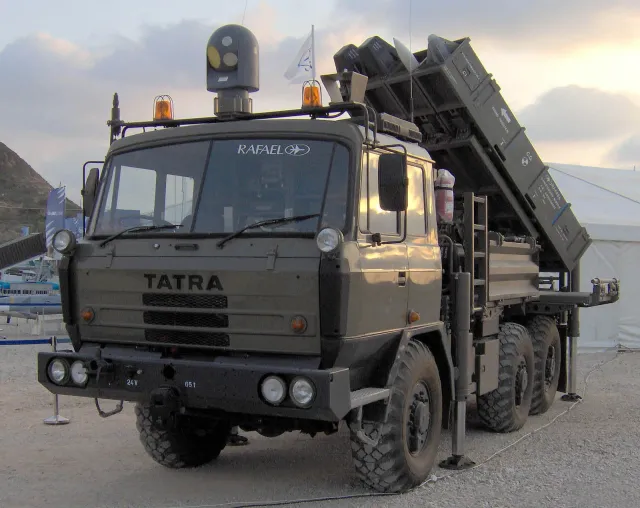
Greece’s National Security Council approved a roughly 3.5 billion euro, about $4 billion, air-defense package from Israel on July 23 and 24, the largest arms export in Israeli history and Greece’s biggest single defense procurement to date. The program, named Achilles Shield, layers three Israeli interceptor systems, Rafael’s David’s Sling, IAI’s Barak MX, and Rafael’s SPYDER, into a single national air-defense architecture aimed first at the Turkish border, not the whole country.
The deal surpasses Israel’s previous record arms sale, a roughly $3.5 billion Arrow system contract with Germany signed in 2023. For Athens, it is the centerpiece of a broader $31.89 billion armed-forces modernization program running through 2036 that also includes up to 40 F-35 fighters, new frigates from France and Italy, and British-built mini-submarines, a buildup driven in large part by Greece’s long-running strategic rivalry with Turkey.
Three tiers, three ranges, one gap
What makes Achilles Shield worth understanding as an architecture rather than a price tag is that it is not one system, it is three, each covering a different slice of the threat envelope. David’s Sling, built around Rafael’s Stunner interceptor, engages targets out to roughly 300 kilometers at speeds near Mach 7.5, aimed at cruise missiles, aircraft, and larger drones at long range. Barak MX, IAI’s medium-tier system built around the ELM-2084 radar, covers threats out to roughly 150 kilometers with its longest-range interceptor variant. SPYDER, using the Python-5 and Derby missile families, handles the close-in layer out to about 35 kilometers, the tier most likely to intercept fast, low-flying drones and short-range rockets that the other two systems are not optimized to catch.
The nearly ninefold spread between SPYDER's 35 kilometer close-in ring and David's Sling's 300 kilometer outer layer is the point of a tiered system: no single interceptor is efficient against every threat, so cost and reach are traded off tier by tier rather than solved with one universal missile.
That range spread is also why Achilles Shield is being rolled out in stages rather than switched on nationwide. Initial coverage under this contract is limited to Thrace and the eastern Aegean, the regions directly facing Turkey, with later procurement tranches intended to extend coverage to the rest of the country. Greece currently leans on aging Russian-made S-300, Tor, and Osa systems alongside American Patriot batteries for air defense, an inventory Defense Minister Nikos Dendias has described as needing exactly the kind of integrated, multi-tier replacement Achilles Shield is meant to provide.
Why Israel, and why now
The choice of an Israeli supplier over the Patriot or SAMP/T systems Greece already partially operates is itself a signal. Israel’s layered air-defense architecture, Iron Dome, David’s Sling, and Arrow stacked by range, has been combat-tested at a scale few other systems can claim, repeatedly intercepting real ballistic missile, cruise missile, and drone attacks rather than only performing in controlled test environments. That operational record, more than price alone, is what has made Israeli systems increasingly attractive to European buyers facing their own drone and missile threats, Germany’s 2023 Arrow purchase being the prior benchmark this Greek deal now exceeds.
“[The goal is] a range of weapons that create overlapping shields across the entire Greek territory, with an integrated command-and-control system,” said Nikos Dendias, Greece’s defense minister (Breaking Defense, July 23, 2026).
The 35-month timeline to full operational status, also stated by Dendias, is a useful anchor for judging how fast this actually moves. Three years is not an emergency deployment, it is a normal defense-procurement build-out, which fits the deal’s framing as long-term deterrence infrastructure against Turkey rather than a response to any single imminent threat. The requirement that Greek companies build at least a quarter of the network domestically similarly signals an industrial-base ambition alongside the military one, echoing how other NATO members have used major foreign defense purchases to seed local manufacturing capacity rather than simply importing finished hardware.
Greece has moved on multiple air-defense and counter-drone fronts this year; this desk has previously covered Greece’s separate Switchblade loitering-munition purchase as part of the same broader modernization push. Readers wanting the underlying specifications can find them on WeaponSpecs’ own profiles for David’s Sling, Barak MX, and SPYDER.
Sources
- Greece approves $4b Israel air defense procurement — Globes, Jul 23, 2026
- Greece Turns to Israel for $4 Billion Air Defense Shield, Highlighting Jerusalem's Growing Role in European Security — Algemeiner, Jul 23, 2026
- Greece Approves $4B Israeli Air Defense Deal — GovConExec, Jul 24, 2026
- Greece approves over $3.4B in air defenses for Achilles' Shield — Breaking Defense, Jul 23, 2026
Systems mentioned
Every system named in this story, with its photo and, where available, a video. Tap a card to open the full spec sheet.
Compare these side by side →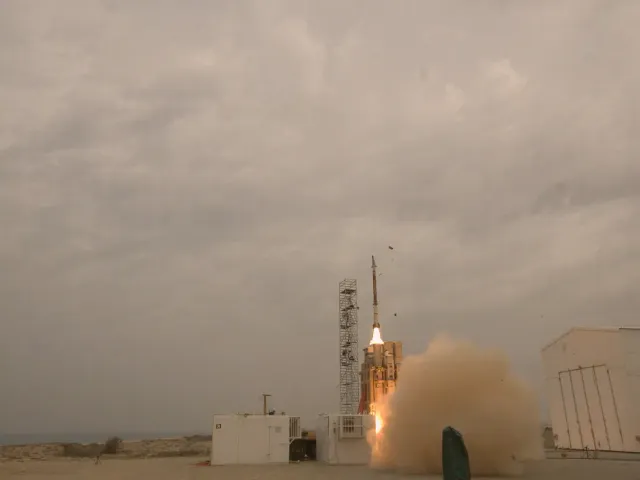
Frequently asked questions
What is Achilles Shield? +
Achilles Shield is Greece's name for a roughly 3.5 billion euro (about $4 billion) layered air-defense package built around three Israeli systems: Rafael's David's Sling for long-range threats, IAI's Barak MX for medium-range coverage, and Rafael's SPYDER for short-range defense, plus supporting drones.
How much does the deal cost, and how was it approved? +
The package is valued at roughly 3.5 billion euros, about $4 billion, and was approved by Greece's National Security Council (KYSEA) on July 23 to 24, 2026.
Where will Achilles Shield actually be deployed first? +
Initial coverage is limited to Thrace and the eastern Aegean, the regions facing Turkey. Full national coverage is planned for later procurement tranches, not this initial contract.
How much of the system will Greece build itself? +
Greek industry is required to manufacture at least 25 percent of the network domestically, under terms Defense Minister Nikos Dendias described when announcing the deal.
More news


