F-35 Trilateral Drill Tests New Interchangeability Standard
Australia, Japan and U.S. air forces jointly rearm and refuel F-35s at austere airfields; roughly 1,000 personnel and 40 aircraft took part.

U.S. Air Force photo by Staff Sgt. Destani Hill, DVIDS, public domain
Australia, Japan and the United States are running a trilateral F-35 exercise built around a single idea: any of the three nations’ ground crews should be able to rearm and refuel any other nation’s jet. Exercise Southern Cross 26 began July 6 and runs through July 17 at Royal Australian Air Force Bases Darwin and Tindal in the Northern Territory, involving roughly 1,000 personnel and 40 aircraft, according to Stars and Stripes, Australian Defence Magazine and Asia Pacific Defence Reporter.
Why “interchangeability” is the point, not just a buzzword
Fifth-generation fighters like the F-35A Lightning II are only as useful as the airfield network that can keep them armed, fueled and flying. In a contested environment, that network is exactly what an adversary would try to degrade first, striking runways, fuel depots or the specific national contingent of maintainers a jet normally depends on. Southern Cross 26’s core drill directly targets that vulnerability: U.S. Air Force, Japan Air Self-Defense Force and Royal Australian Air Force ground crews are training to arm and refuel each other’s F-35As at forward, austere airfield conditions, so a jet low on fuel or ordnance can land at whichever participating base has functioning personnel and equipment, regardless of whose flag is on the aircraft.
Royal Australian Air Force Chief Air Marshal Stephen Chappell framed the stakes in blunt terms, telling reporters, per Stars and Stripes, that “it’s incredibly important we do so at this time in history to continue to deter decisions that would undermine the security and prosperity and stability of the Indo-Pacific.” U.S. Pacific Air Forces Commander Gen. Kevin Schneider put the practical case more simply: “There is so much more that we can get out of this platform by working together.” Air Commodore Peter Robinson, in Asia Pacific Defence Reporter’s coverage, described the trilateral partnership as “critical to a secure, safe and prosperous Indo-Pacific” and said the goal is deepening relationships and enhancing the three nations’ collective ability to deter regional coercion.
What actually happened on the flight line
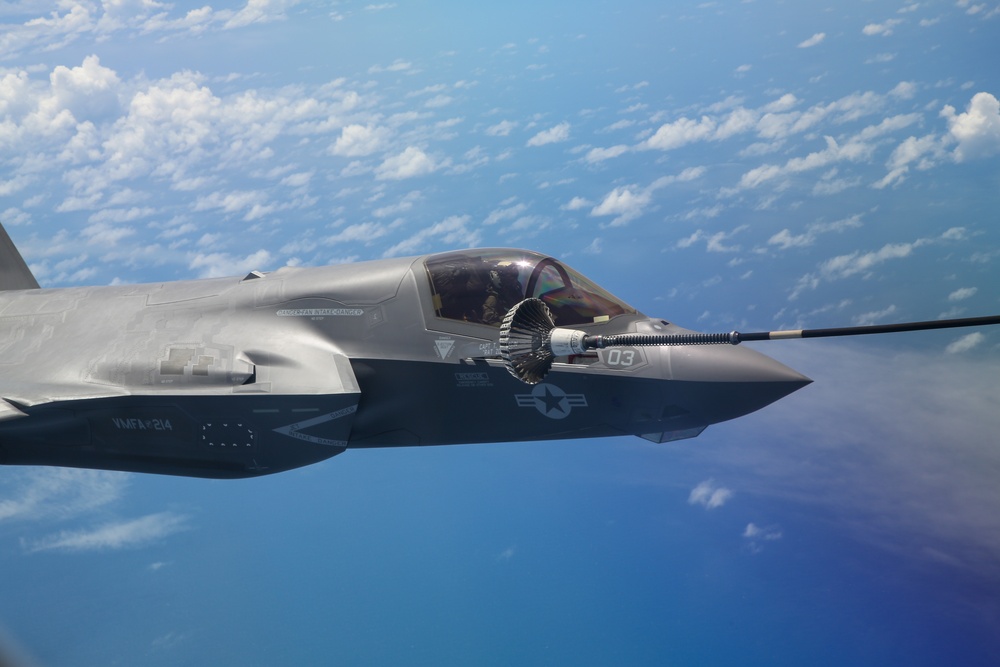
The Royal Australian Air Force launched eight F-35As, including two flown by visiting U.S. Air Force pilots, while American, Japanese and Australian maintainers rearmed and refueled each other’s jets on the ground, according to Stars and Stripes’ reporting. Australian Defence Magazine and Asia Pacific Defence Reporter both describe the broader activity as forward arming and refueling point, or FARP, operations: a doctrine built to let modern air forces launch, complete a mission, replenish from the ground, and be ready to launch again before an adversary can detect and respond to the turnaround. AIM-120 AMRAAM air-to-air missiles were the primary weapon involved in the rearming drills, alongside live inert weapons; as is standard for exercises of this kind, none of the three source outlets published a complete loadout manifest for all 40 participating aircraft.
A notable piece of the buildup happened before the exercise formally started: an Australian KC-30A Multi-Role Tanker Transport, operated by No. 33 Squadron out of RAAF Base Amberley, refueled Japanese F-35As over the Pacific Ocean en route to Australia, a bilateral flight that itself demonstrated cross-nation aerial refueling ahead of the main trilateral drill. Asia Pacific Defence Reporter’s coverage adds that the exercise more broadly emphasized operating as a trilateral task force in a high-end warfighting scenario, including integrated and agile operations across northern Australia, activity Robinson said lays groundwork for “more advanced agile combat employment operations” in future iterations. Stars and Stripes also noted the exercise’s press-conference day, July 9, fell on the same day China test-fired a nuclear-capable ballistic missile into the South Pacific, a coincidence of timing the outlet flagged as context rather than evidence of any direct connection between the two events.
The third exercise in a pattern, not a one-off
Southern Cross 26 is the latest step in a trilateral series that started under a 2024 memorandum of intent between the three air forces. Exercise Cope North 25 ran February 3 to 21, 2025 at Andersen Air Force Base, Guam, and was the first time F-35s from all three nations trained together, involving more than 2,300 personnel and roughly 80 air assets under U.S. Pacific Air Forces’ largest multilateral exercise. Exercise Bushido Guardian 25 followed September 29 to October 10, 2025 at Misawa Air Base in northern Japan, a bilateral Australia-Japan exercise dating to 2019 that added the U.S. Air Force as a full participant for the first time, with roughly 750 personnel across the three services.
Southern Cross 26 differs from both in two ways: it relocates the trilateral format to Australian territory for the first time, and it puts interchangeable maintenance and refueling front and center as the exercise’s defining objective rather than one element among several. That progression, Guam to Japan to Australia, also rotates the exercise through each partner’s home turf and the specific basing and logistics challenges that come with it, a deliberate design choice consistent with building a genuinely shared operating concept rather than one country hosting the other two as guests each time.
Sources
- US, Australia, Japan employ stealth fighters in first-time air power exercise — Stars and Stripes, Jul 9, 2026
- Exercise Southern Cross 2026 commences — Australian Defence Magazine, Jul 8, 2026
- Exercise Southern Cross 26 gets underway — Asia Pacific Defence Reporter, Jul 9, 2026
- Exercise Cope North 25 debuts trilateral F-35 training in Guam — GlobalSecurity.org (mirroring Australian Department of Defence release), Feb 10, 2025
- Bushido Guardian 25 unites Australian, Japanese, USAF F-35s — AeroTime, Sep 30, 2025
Systems mentioned
Every system named in this story, with its photo and, where available, a video. Tap a card to open the full spec sheet.
Compare these side by side →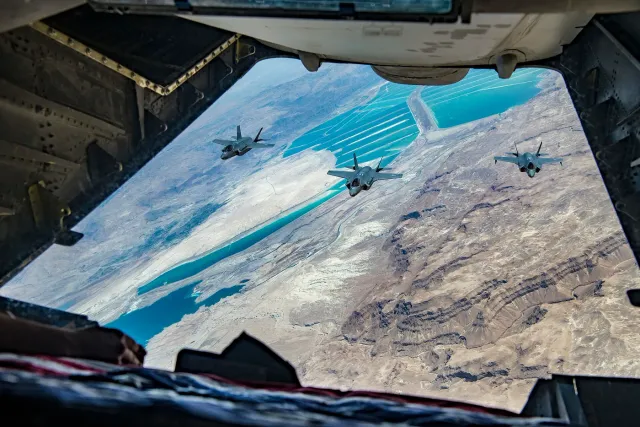
Fighter aircraft
F-35A Lightning II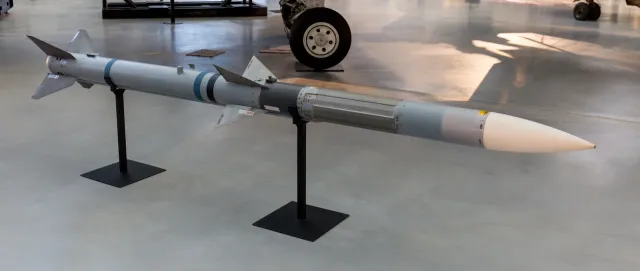
Missile
AIM-120D AMRAAMFrequently asked questions
What does 'interchangeability' actually mean in this exercise? +
It means ground crews from any of the three nations can rearm and refuel any other nation's F-35, not just their own. In a contested environment where a forward airfield could be damaged, overwhelmed or cut off from its usual support chain, that lets a jet keep flying by turning around at whichever allied base has functioning crews and equipment, instead of grounding it while it waits for its own nation's personnel to arrive.
What ordnance were the aircraft carrying? +
The exercise focused on AIM-120 AMRAAM air-to-air missiles alongside live inert weapons for the rearming drills; organizers have not published a full loadout manifest for the 40 participating aircraft, which is standard practice for exercises of this kind.
How is this different from Exercise Bushido Guardian? +
Bushido Guardian 25, held September 29 to October 10, 2025 at Misawa Air Base in Japan, was a bilateral Australia-Japan exercise dating back to 2019 that added the U.S. Air Force as a full participant for the first time last year. Southern Cross 26 relocates the trilateral format to Australia and puts all three air forces on equal footing from the start, with interchangeable maintenance and refueling as the explicit focus rather than a secondary element.
Is the KC-30A the same aircraft as the U.S. KC-46? +
No. The KC-30A is Australia's variant of the Airbus A330 MRTT, an Airbus-built tanker Royal Australian Air Force's No. 33 Squadron operates from RAAF Base Amberley. The KC-46 Pegasus is a separate Boeing 767-derived tanker the U.S. Air Force flies. They share a broad refueling role but are different airframes built by different manufacturers, and the KC-46 was not part of this exercise.
More news


