Sea-Air-Space 2026: What It Means for Procurement
Sea-Air-Space 2026 was real: April 19-22, National Harbor, 400+ exhibitors. Zero of its 8 headline naval announcements disclosed a dollar figure.

U.S. Navy photo by Mass Communication Specialist 3rd Class Brendan McCormack, public domain, via DVIDS
Zero of Sea-Air-Space 2026’s eight headline naval announcements carried a disclosed dollar figure. The show ran April 19-22 at National Harbor, Maryland, and produced a genuine wave of naval news: a new unmanned anti-submarine vessel, a distributed shipbuilding push, two unmanned-surface-vessel partnerships, a missile-booster development agreement, a budget-driven funding cut, and a torpedo-defense system unveiling. What it did not produce was a single priced Navy contract. The two real dollar-figure Navy contract actions that actually touched the same unmanned-vessel programs on display, a $2.1 billion Medium Unmanned Surface Vessel (MUSV) prototype down-select and a Lionfish unmanned undersea vehicle production award worth more than $347 million, landed on the Navy’s own contracting calendar 33 and 78 days after the show opened, not during it. This is the second in a recurring series covering major defense trade shows through that lens, not what got unveiled on the floor, but what a procurement office should actually do with it. See also the first, on Eurosatory 2026.
What actually happened at Sea-Air-Space 2026, and when?
Sea-Air-Space 2026 ran April 19-22, 2026, at the Gaylord National Resort & Convention Center in National Harbor, Maryland, the Navy League of the United States’ annual maritime and naval defense exposition. More than 400 companies exhibited, and organizers expected roughly 16,000 attendees from 57 countries, a scale that makes it the U.S. Navy’s single largest annual industry gathering. Naval News ran a dedicated event-coverage hub tracking announcements across the four-day run, and the volume of naval-specific news out of the show was real: at least eight distinct announcements touching unmanned surface vessels, unmanned undersea vehicles, shipbuilding capacity, naval munitions, and next-generation ship concepts, all inside a single week.
Which naval announcements at the show actually had money behind them?
None of them, at least not in the form of a disclosed contract value. Every headline naval item that came out of the show floor itself was a partnership, a memorandum, a capability demonstration, or a budget disclosure, categories that signal industrial intent without committing anyone to a price.
| Date (2026) | Days since show opened | Announcement | Companies | Category | Dollar figure disclosed |
|---|---|---|---|---|---|
| Apr 20 | 1 | Spectre, a high-speed unmanned surface vessel for anti-submarine warfare (~52m, ~250t, 30kt top speed, extreme endurance, quiet acoustic signature), to be built at Fincantieri’s Wisconsin shipyards | Fincantieri Marine Group + Saildrone | Unmanned surface | No |
| Apr 20 | 1 | Distributed-shipbuilding capacity expansion: 2.5M+ outsourced hours planned in 2026 (+30% vs 2025), 1,000+ added job-equivalent capacity across 25 partner locations in 11 states, 37 Arleigh Burke-class DDG hull sections now built by partners before final integration (versus historically fewer than 5) | HII (Ingalls Shipbuilding + Newport News Shipbuilding) + distributed partners | Shipbuilding capacity | No |
| Apr 21 | 2 | MUSV strategic partnership agreement | Hanwha + Magnet Defense | Unmanned surface | No |
| Apr 22 | 3 | Memorandum of Agreement to co-develop a first-stage solid rocket booster for the Advanced Reactive Strike (AReS) system, a deployable surface-launched extended-range stand-off strike weapon | Northrop Grumman + Hanwha Aerospace | Naval munitions | No |
| Apr 22 | 3 | FY2027 budget documents revealed a “strategic pause” on the AGM-88G AARGM-ER anti-radiation missile: funding cut from roughly $200M in FY2026 to about $24.3M in FY2027 (only about $20,000 of which is newly appropriated FY2027 procurement money), even as the Navy still says it aims to field the missile operationally this year | U.S. Navy budget disclosure | Naval munitions | Yes, but it is a cut, not new contract money |
| Apr 22 | 3 | Push to expand guided-rocket sales into the U.S. Navy market | LIG Defense & Aerospace | Naval munitions | No |
| Apr 23 | 4 | ”Global Fast Sealift” dual-use concept vessel (31,000t, ~217m length, up to 800 containers/CEUs, variants for drone-mothership, arsenal-ship/strike-support, and half-brigade sealift roles), unveiled alongside an MOU to co-develop next-generation naval ship concepts | Hanwha Ocean + Leidos Gibbs & Cox | Unmanned surface / shipbuilding concept | No |
| Apr 23 | 4 | Layered torpedo-defense system unveiled, integrating multiple defensive technologies | Ultra Maritime | Naval munitions defense | No |
| May 22 | 33 | Navy selected 7 companies (Sea Machines, Leidos, Saronic Technologies, Galliano Marine Services, PacMar Technologies, Birdon, HII) to build MUSV prototypes for at-sea testing, July-October 2026; each gets $15M plus eligibility for follow-on production of 5-10 vessels in FY2027, inside a $2.1B MUSV Marketplace program | U.S. Navy (PEO Unmanned & Small Combatants) + 7 contractors | Unmanned surface | Yes: $15M x 7 = $105M testing tranche, inside a $2.1B program |
| Jul 6 | 78 | HII awarded an option-year production contract for the Lionfish small unmanned undersea vehicle (SUUV, built on the commercial REMUS 300 platform), for mine countermeasures, ISR, anti-submarine warfare, and electronic warfare roles; program could total more than $347M over 5 years and scale to as many as 200 vehicles; 42 already delivered as of late 2025 | HII | Unmanned subsurface | Yes: $347M program total |
The NAVSUP command, whose officials briefed a contracting panel during the show, is a useful reminder of just how much Navy money moves through the system in a given year without a single press release from an exhibitor.
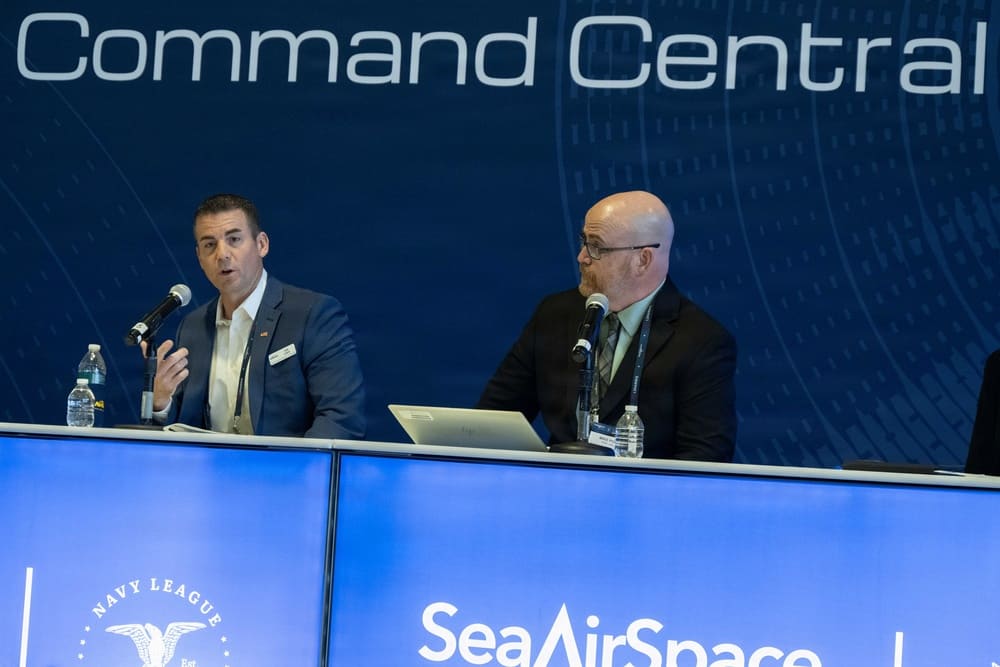
NAVSUP alone awards more than 40% of Navy contracts, by the command’s own figure. None of the eight items above were NAVSUP contract actions, and none carried a number NAVSUP-style contracting would recognize as a price.
Why did the real unmanned-vessel contract news land a month after the show closed?
Because a Navy source-selection and contracting process runs on its own calendar, one that has no particular reason to line up with a trade-show exhibit schedule. Sea-Air-Space is where the U.S. Navy’s Arleigh Burke-class destroyers, submarines, and their supporting unmanned systems get demonstrated and pitched to a room full of officers and program managers. It is not where the Navy’s own acquisition offices sign anything, and the unmanned-vessel news that broke during the show made that gap obvious in hindsight.
The Fincantieri-Saildrone Spectre partnership and the Hanwha-Magnet Defense MUSV agreement both put new unmanned surface vessel programs in front of a Sea-Air-Space audience the same week Navy officials were on the show floor. Neither is the MUSV Marketplace program itself. That program, worth roughly $2.1 billion and structured to replace the Modular Attack Surface Craft program the Navy retired in March 2026, ran its own down-select on May 22, 33 days after the show opened, picking seven companies (Sea Machines, Leidos, Saronic Technologies, Galliano Marine Services, PacMar Technologies, Birdon, and HII) for a $15 million-per-company at-sea prototype testing tranche running July through October 2026, with eligibility for a follow-on production award of 5 to 10 vessels in FY2027. The Navy’s stated ambition is a fleet of 4 to 30 MUSVs by 2030, concentrated on Indo-Pacific operations. None of the seven winners’ names appeared in the Sea-Air-Space headline coverage above; the show and the down-select are related by subject matter, not by calendar.
The gap is wider still on the undersea side. HII’s Lionfish small unmanned undersea vehicle, built on the commercial REMUS 300 platform, had already delivered 42 units by late 2025. Its option-year production contract, a program that could total more than $347 million over five years and scale to as many as 200 vehicles, was awarded July 6, 2026, 78 days after Sea-Air-Space opened. That is roughly eleven weeks between the show floor and the actual production dollars for a category the show was actively showcasing. A buyer reading only show-week coverage would see two new unmanned-vessel partnerships and conclude the segment was accelerating. It was, but the money moved on a separate, slower, far less publicized schedule.
What happened to naval munitions programs like AARGM-ER at Sea-Air-Space 2026?
The AGM-88G AARGM-ER anti-radiation missile got the opposite kind of news: a real number, moving the wrong direction. FY2027 budget documents released around the same week as the show revealed what the Navy itself calls a “strategic pause” on the program, cutting its funding from roughly $200 million in FY2026 to about $24.3 million in FY2027, of which only about $20,000 is newly appropriated FY2027 procurement money. The Navy says it still intends to field the missile operationally this year, a claim hard to square with a budget line cut by more than 87%. This is a Navy budget disclosure, not a manufacturer claim, so it does not carry the “unverified state figure” caveat this column applies to Russian or Chinese specification claims, but it deserves the same discipline: a stated intent to field a weapon and a budget line that funds fielding it are two different things, and the second one just shrank by nearly $176 million.
Elsewhere in naval munitions, the show produced two more items with no dollar figure attached: the Northrop Grumman-Hanwha Aerospace AReS booster agreement and LIG Defense & Aerospace’s push for expanded U.S. Navy guided-rocket sales. Both are industrial positioning, not commitments, the same “watch, don’t bank on” category as Ultra Maritime’s torpedo-defense unveiling and Hanwha Ocean’s Global Fast Sealift concept vessel, none of which yet exists as a signed build contract.
What should a naval buyer or analyst actually take from Sea-Air-Space 2026?
Track the Navy’s own contracting calendar separately from show-week partnership news, and do not let a well-produced announcement stand in for a priced government commitment. The chart below plots exactly that gap: six show-week reveals landing within 1 to 4 days of the show opening, against two dollar-backed Navy contract actions landing 33 and 78 days later.
The two dollar-backed contract actions landed 8 to nearly 20 times further from opening day than any show-floor reveal, real Navy money moves on a calendar the exhibit hall never touches.
The green bars are show-week reveals. The red bars are the two Navy contract actions that actually put a disclosed dollar figure behind an unmanned-vessel program the show was showcasing, and both landed well after the exhibit hall closed. A Virginia-class submarine or Columbia-class submarine buyer tracking the undersea segment, or an analyst following Mk 54 torpedo or wider anti-submarine warfare investment, should treat Sea-Air-Space as a reveal, not a ledger. Compare the platforms actually named here by type in the warship category or submarine category, or run your own procurement-relevant comparison in the Advisor, before treating a Sea-Air-Space headline as a signed program.
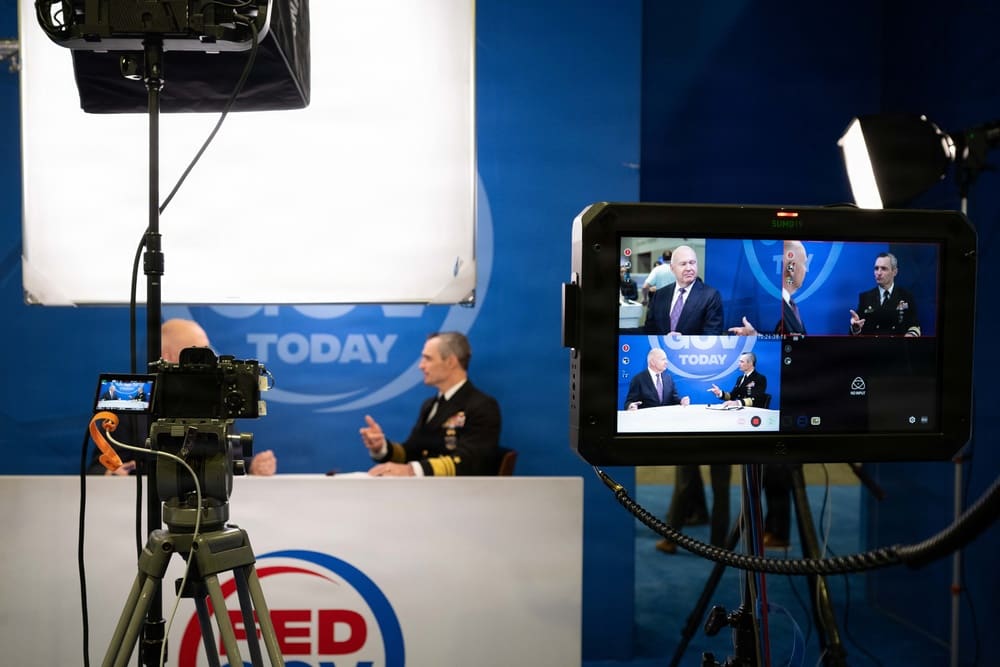
None of this makes Sea-Air-Space 2026 a wasted week. It is where industrial relationships get formed, where a program like MUSV Marketplace gets a public airing months before its down-select, and where officers like 2nd Fleet’s commander explain priorities on the record. It is simply not where the government’s money moves. That happens on SAM.gov and the Navy’s own contracting calendar, on a schedule that runs independent of any trade show, and the 33- and 78-day gaps above are the evidence.
Systems in this comparison
Every system covered above, with its photo and, where available, a video. Tap a card to open the full spec sheet.
Compare these side by side →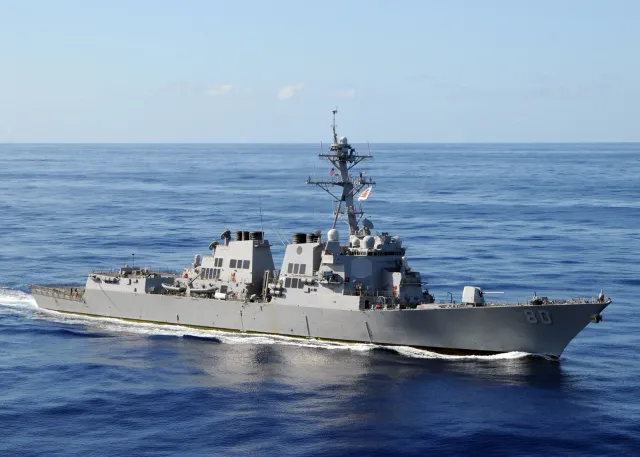
Warship
Arleigh Burke-class Destroyer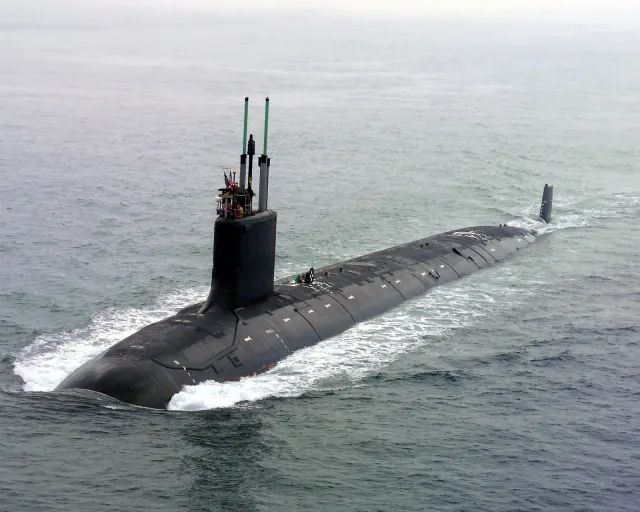
Submarine
Virginia-class Submarine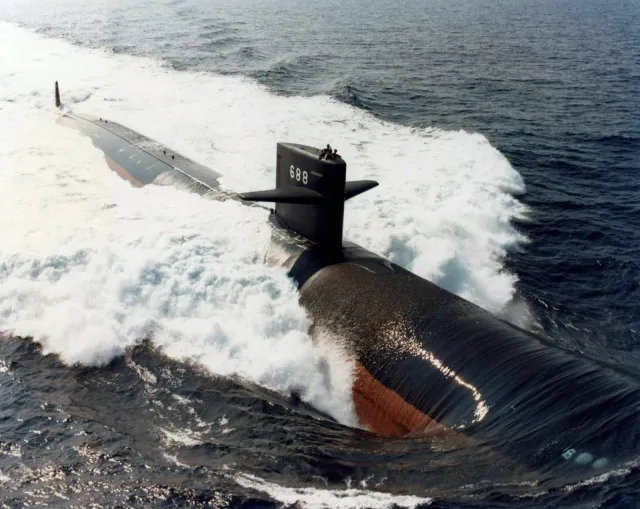
Submarine
Columbia-class Submarine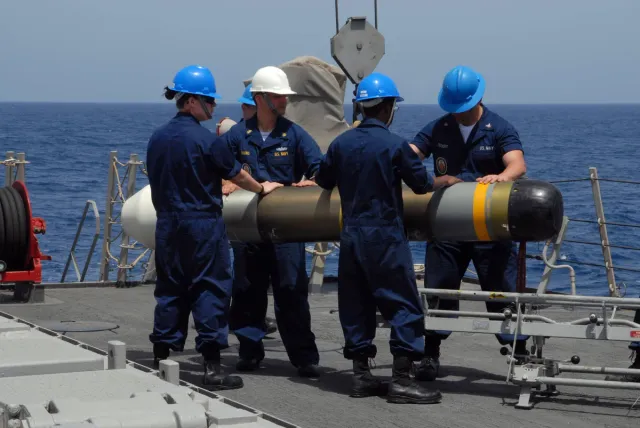
Munitions
Mk 54 torpedo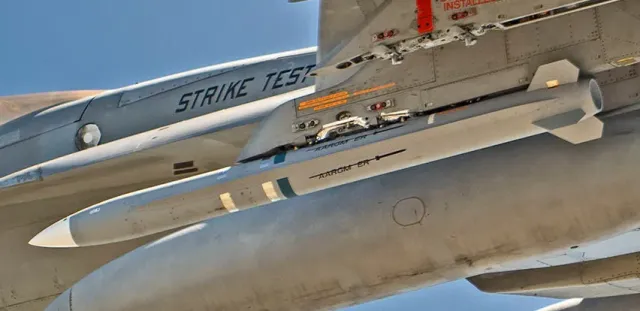
Missile
AGM-88G AARGM-ERFrequently asked questions
When and where was Sea-Air-Space 2026 held? +
April 19-22, 2026, at the Gaylord National Resort & Convention Center in National Harbor, Maryland. It is the Navy League of the United States' annual maritime and naval defense exposition, and drew more than 400 exhibiting companies and roughly 16,000 attendees from 57 countries.
Did any naval contract get signed at Sea-Air-Space 2026 itself? +
Not among the show's headline naval announcements. Partnerships (Fincantieri-Saildrone, Hanwha-Magnet Defense), an MOA (Northrop Grumman-Hanwha Aerospace on the AReS rocket booster), an MOU (Hanwha Ocean-Leidos Gibbs & Cox), capability demonstrations, and a budget disclosure (the AGM-88G AARGM-ER funding cut) all landed during show week, April 19-23, 2026, but none carried a disclosed dollar figure or delivery schedule.
What is the Fincantieri-Saildrone Spectre program? +
A partnership, not a priced contract, announced April 20, 2026 to build Spectre, a high-speed unmanned surface vessel for anti-submarine warfare, at Fincantieri's Wisconsin shipyards. No dollar figure has been disclosed.
What happened to the Navy's AARGM-ER missile program around Sea-Air-Space 2026? +
FY2027 budget documents released around the same week revealed a 'strategic pause' on the AGM-88G AARGM-ER anti-radiation missile, cutting its funding from roughly $200 million in FY2026 to about $24.3 million in FY2027, even as the Navy says it still intends to field the missile operationally this year.
What should a naval buyer or analyst actually take from Sea-Air-Space 2026? +
Track the Navy's own contract actions separately from show-week partnership news. The real dollar-figure decisions touching the same unmanned-vessel programs Sea-Air-Space exhibitors showcased, the MUSV prototype down-select and HII's Lionfish UUV production contract, landed 33 and 78 days after the show opened, not during it.
Related reading


